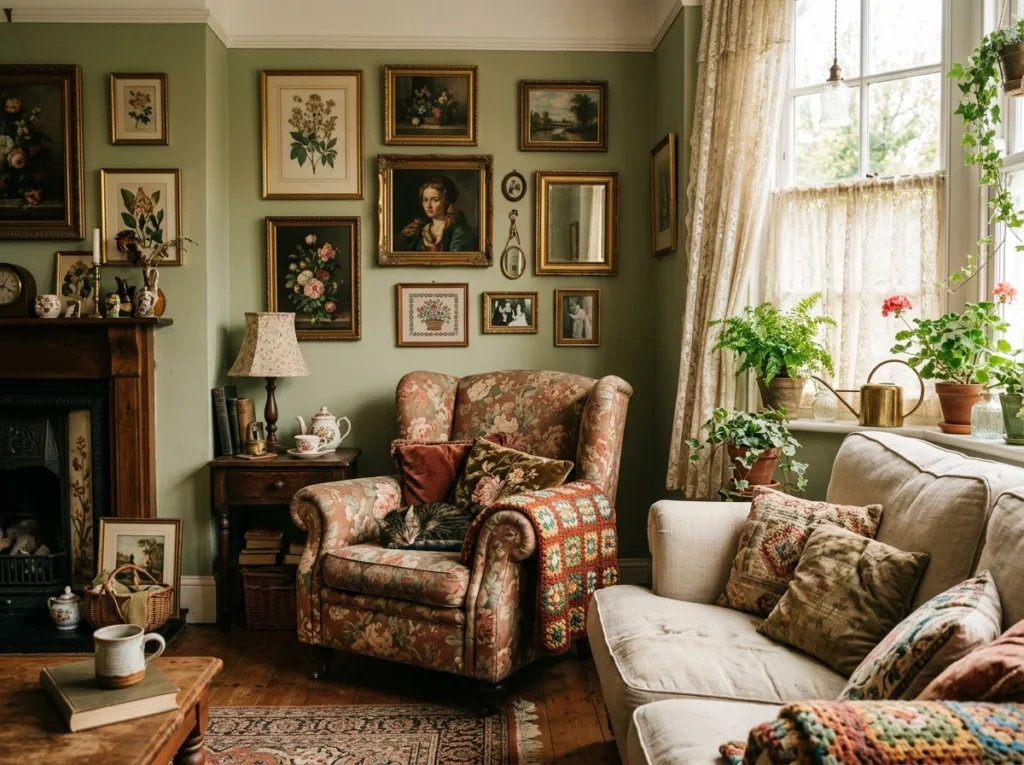
For years, the rule was simple: keep it white, keep it minimal, keep it quiet. But somewhere along the way, all those beige living rooms started feeling less like sanctuaries and more like waiting rooms.
Pinterest searches for “grandmacore kitchens” alone have jumped over 500% in recent months — proof that people are craving rooms with personality again, not just rooms that photograph well.
This isn’t a call to throw out minimalism entirely. It’s an invitation to layer in color, texture, and a little nostalgia until your home actually feels like you.
Below are 15 cozy maximalist decor ideas pulling from the grandmacore and “eccentric aunt” trends taking over in 2026 — proof that more can absolutely mean better.
1. Mix a Floral or Kitsch Print Into Your Seating
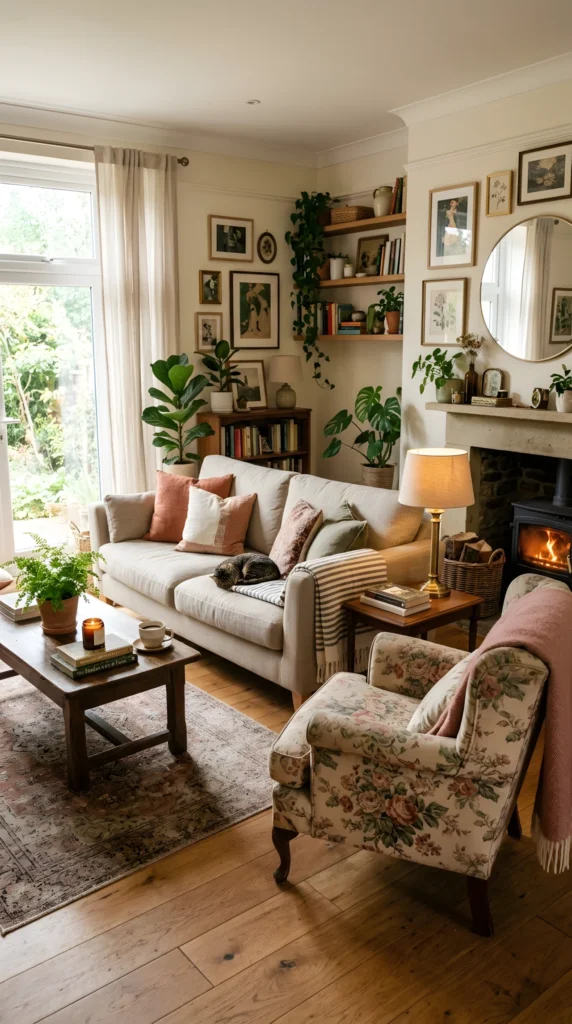
Your sofa and armchair don’t need to match. Let one piece carry a floral, gingham, or kitsch pattern while the rest of the room stays calmer — it instantly adds character without redoing the whole space.
Thrift stores are the best place to start, since reupholstering a single secondhand armchair in a bold print costs far less than buying new furniture. Keep the surrounding walls and rug neutral so the patterned piece has room to stand out instead of competing for attention.
2. Frame Wall Art in Worn, Vintage-Looking Frames
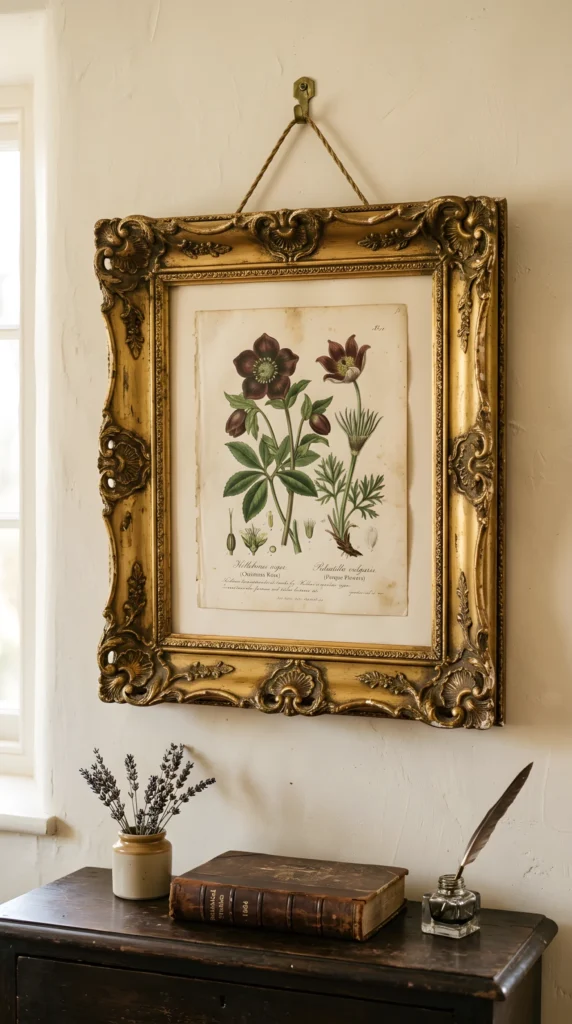
Skip the sleek black frames. A slightly chipped gold frame or an ornate antique one makes even a simple print feel like it’s been collected over decades, not bought last week.
This trick works just as well with cheap prints or thrifted paintings — the frame does most of the heavy lifting. Mix a few different frame styles together rather than buying a matching set, since that’s exactly the kind of imperfection that makes grandmacore walls feel authentic.
3. Bring In Granny-Square Crochet Patterns
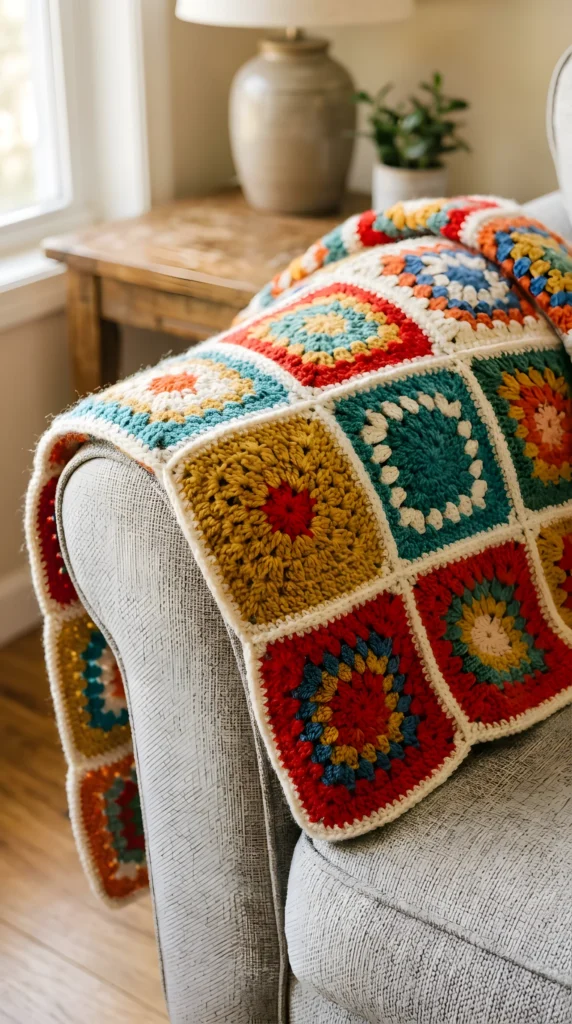
Whether it’s an actual crochet blanket or granny-square-patterned tile in a bathroom, this pattern adds a playful dopamine hit of color that instantly reads as cozy and maximalist.
A handmade or vintage crochet throw draped over a sofa arm is the easiest entry point if you’re not ready to commit to tile. For a bigger statement, granny-square tile in a small powder room turns an overlooked space into one of the most memorable rooms in the house.
4. Go Bold With an Eccentric Aunt Gallery Wall
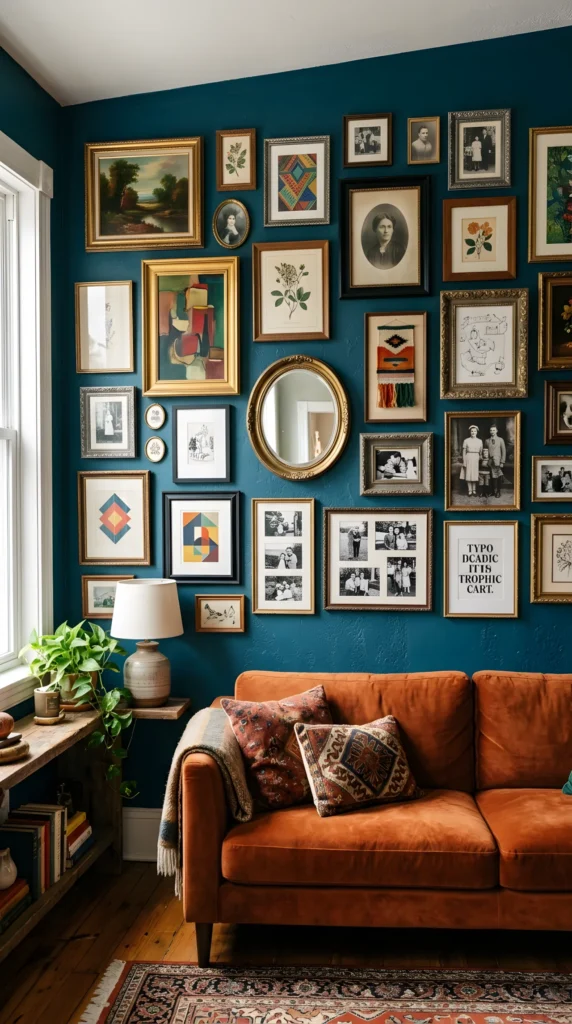
Forget matching frames and a neat grid. An eccentric aunt gallery wall mixes paintings, photos, mirrors, and even small shelves at different sizes — a little chaotic, intentionally so.
Start by laying everything out on the floor first to find a rhythm before you start hammering nails. The goal isn’t symmetry; it’s a wall that looks like it grew naturally over years of collecting, not one that was planned in an afternoon.
5. Layer Velvet With Leather
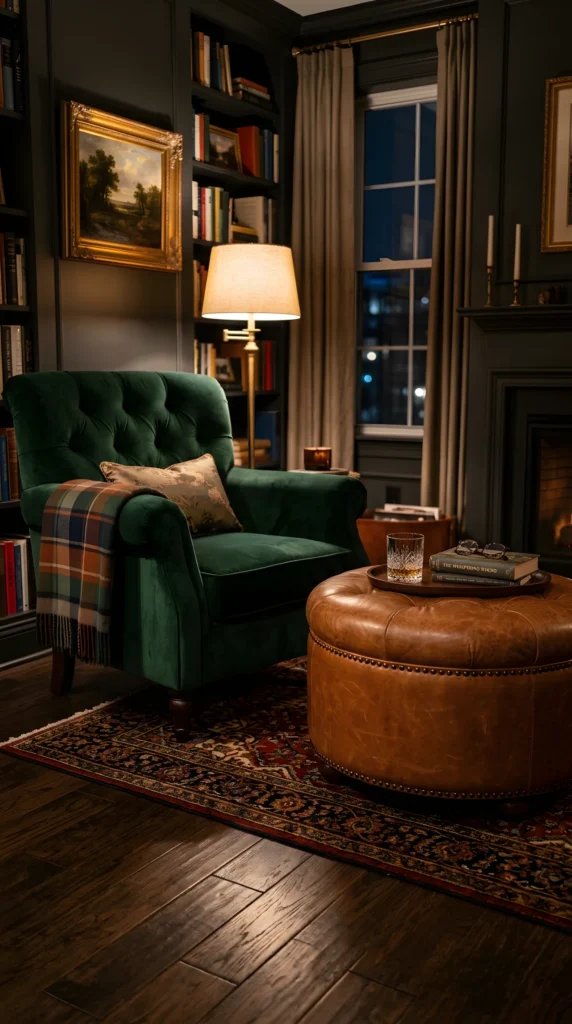
Maximalism thrives on texture contrast. Pair a velvet accent chair with a leather ottoman or sofa — the visual richness alone makes a room feel layered and collected.
The trick is choosing textures that feel intentionally opposite: soft against structured, matte against slightly worn. Even a single velvet throw pillow on a leather sofa can introduce this same push-and-pull without a full furniture overhaul.
6. Add Gingham Wallpaper to a Kitchen or Nook
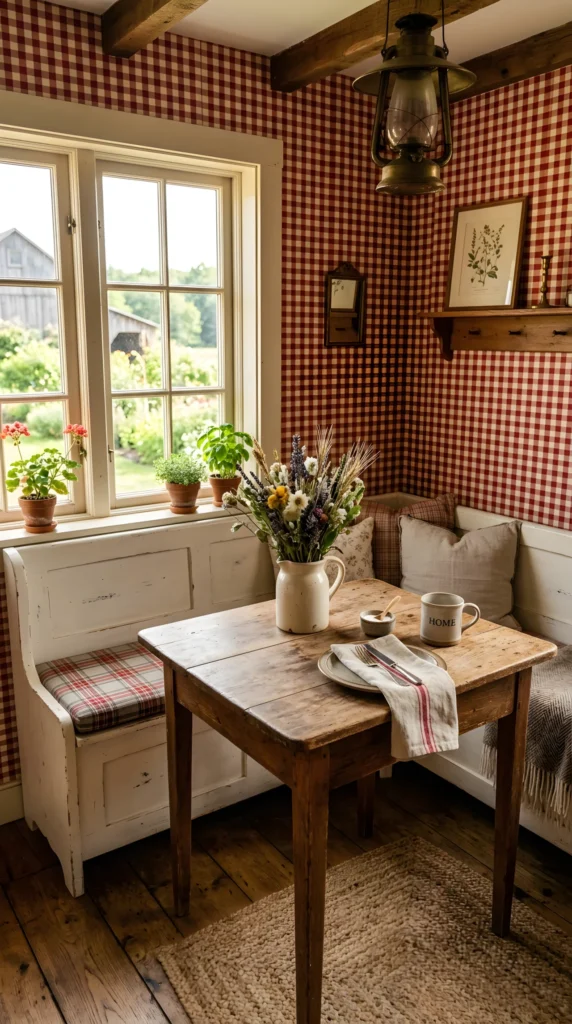
Gingham is having a major grandmacore moment. A small breakfast nook or pantry wall wrapped in gingham wallpaper brings warmth and nostalgia without overwhelming the whole kitchen.
Because it’s such a busy pattern, gingham works best contained to one wall or a small built-in nook rather than spread across an entire room. Pair it with simple wood furniture and a few dried flowers to let the pattern feel charming instead of overwhelming.
7. Hang a Copper Pot Rack
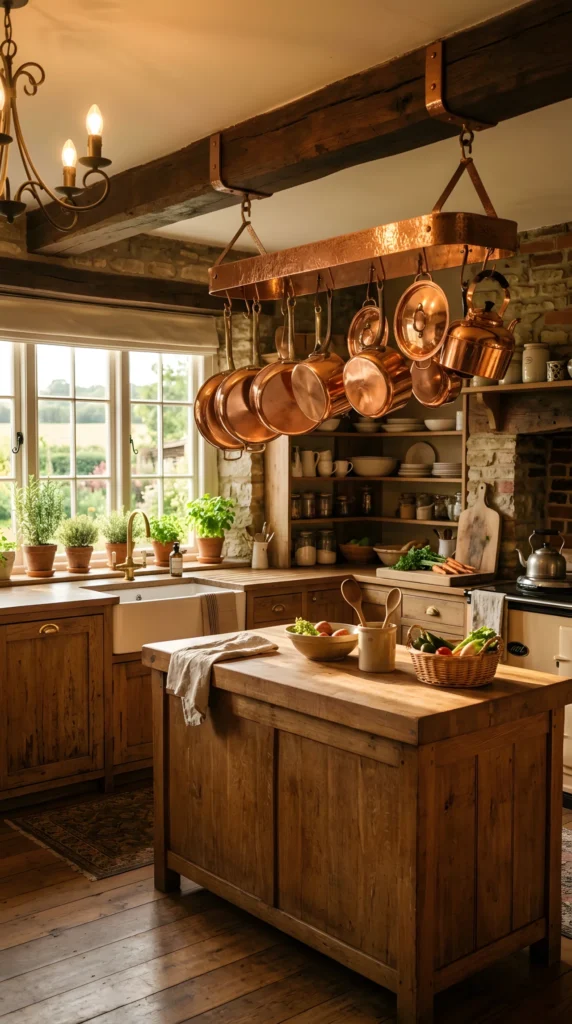
A long pot rail in brass or copper keeps your most-loved cookware on display while freeing up cabinet space — equal parts function and old-world charm.
It also solves a real storage problem in smaller kitchens where cabinet space runs short. Choose pieces with some patina rather than brand-new, mirror-polished pans; the slightly weathered look is what gives this idea its lived-in, collected-over-time character.
8. Style Hardware Like Jewelry for the Home
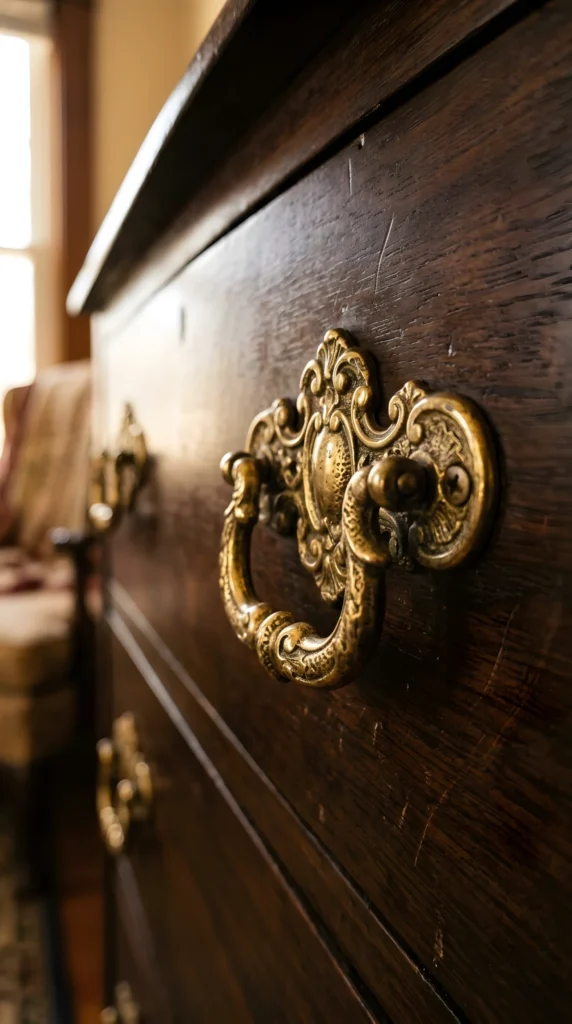
Swap plain knobs for ornate brass pulls, or cluster vintage collectibles on open shelves. Think of hardware and small objects as accessories your room wears, not afterthoughts.
This is one of the cheapest maximalist upgrades available, since a full set of cabinet hardware costs far less than new cabinetry. Mix a few different metal finishes — aged brass next to dark bronze — for the eclectic, collected-over-time feel this trend is built on.
9. Embrace High-Gloss and Metallic Accents
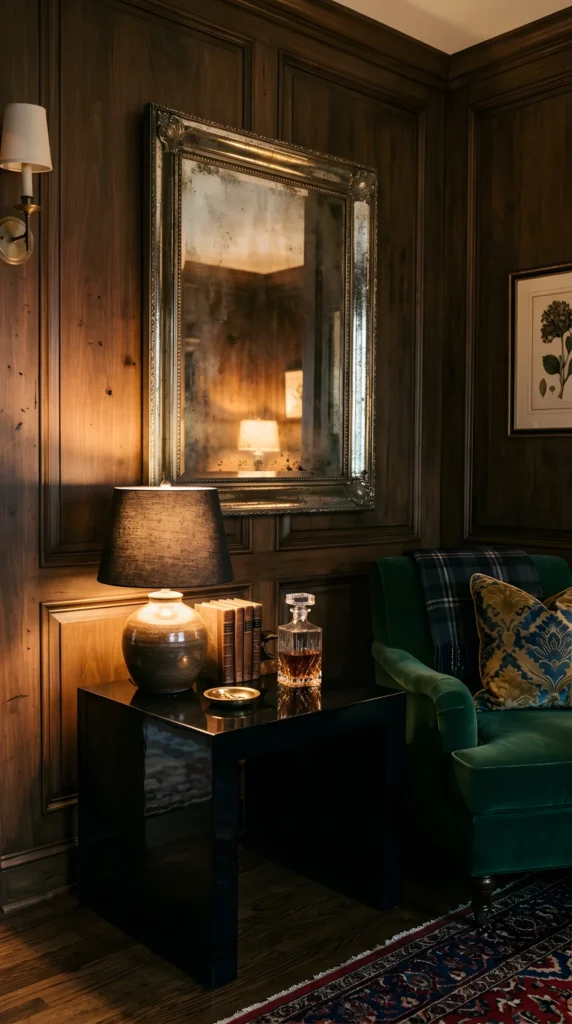
A pair of antiqued mercury glass mirrors or a high-gloss lacquered side table introduces sparkle into a wood-heavy room, catching the light in a way matte finishes can’t.
These accents work especially well in rooms that already lean heavy on natural materials like wood and linen, since the shine creates contrast instead of competing with other shiny surfaces. Even one small mercury glass vase on a shelf can add this glint without overwhelming the room.
10. Pair Grandma’s Lamp With a Modern Sofa
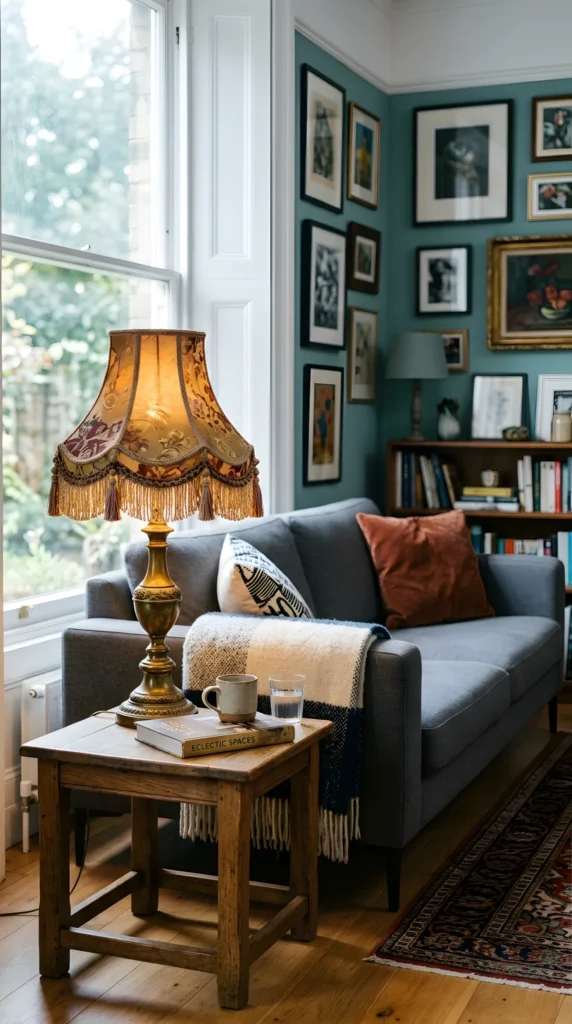
The juxtaposition of an heirloom lamp beside sleek, contemporary furniture is the heart of the “old meets new” trend — each piece makes the other look more interesting.
If you don’t have a family heirloom on hand, estate sales and thrift stores are full of similar fringed or brass lamps for very little money. The contrast works because it signals a home that was built over time, not furnished all at once from a single catalog.
11. Build a Coffee Table Moment With Mixed Heights
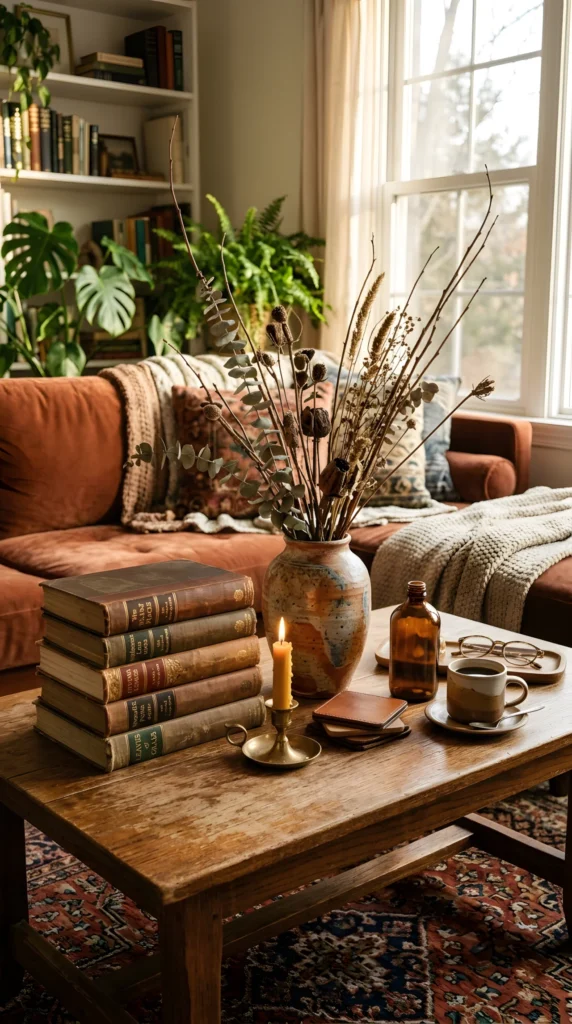
Stack a few vintage books, add a ceramic piece for visual weight, then top it off with something organic like dried branches — instant curated clutter that feels collected, not messy.
Using odd numbers of objects and varying their heights is the same trick professional stylists use to make any flat surface look intentional. Swap the books and ceramics seasonally to keep the moment feeling fresh without buying anything new.
12. Display Collections as Functional Art
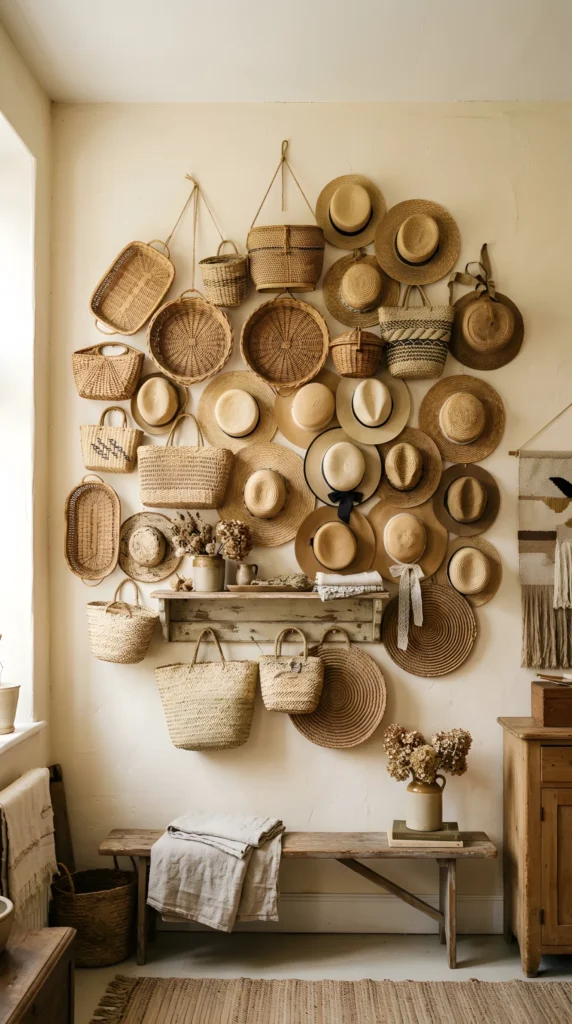
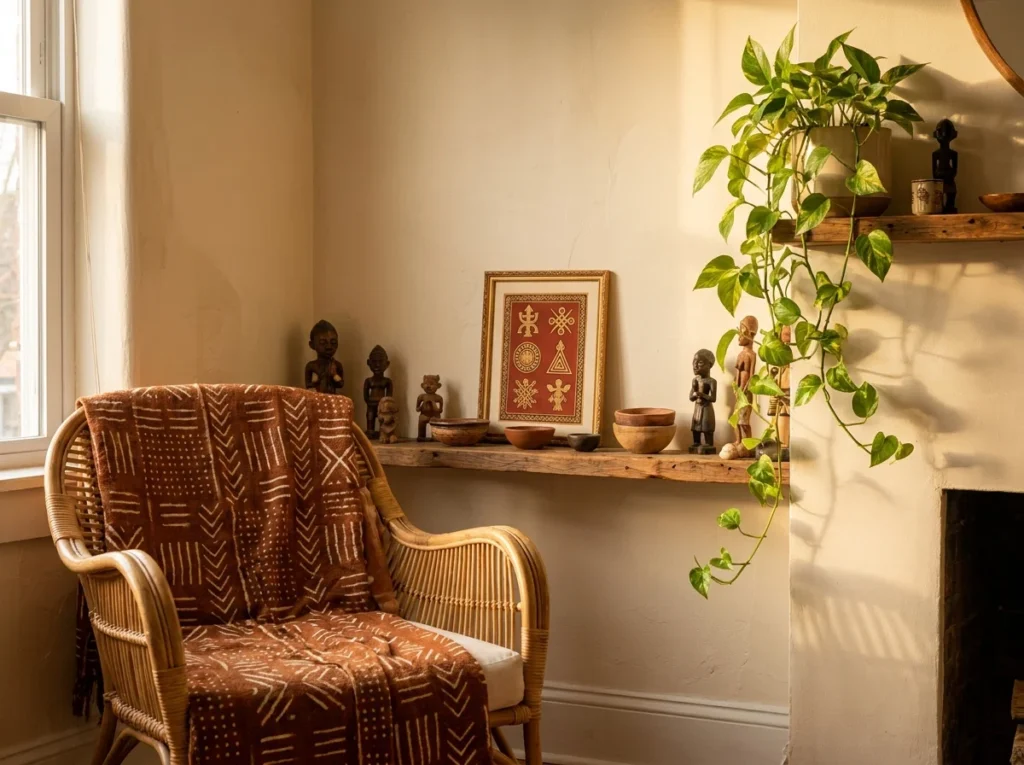
Instead of boxing up your travel souvenirs or vintage hats, turn them into a wall display. A cluster of hats, baskets, or ceramics becomes both storage and decor.
This idea is especially powerful for anything you already own but never see, since displaying it costs nothing beyond a few nails or hooks. Group similar items together by color or material so the wall reads as one curated collection rather than a scattered assortment.
13. Pick a Color Palette Before You Get Excited
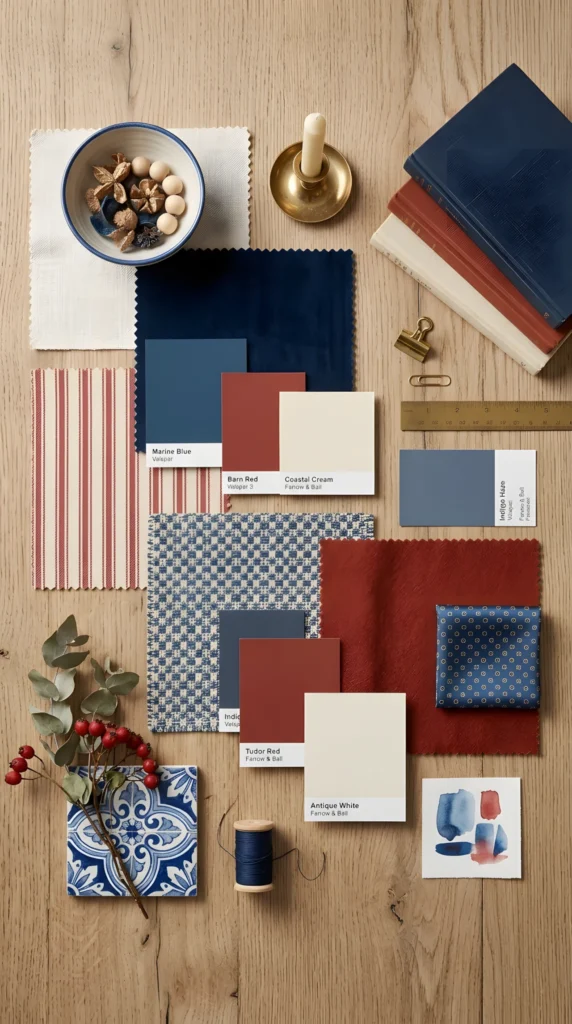
The biggest risk with maximalism is tipping into chaos. Choose two or three core colors — like blue, red, and warm cream — and let every pattern and object pull from that same family.
This single rule is what separates a curated maximalist room from one that feels overwhelming to live in. Before buying anything new, lay out a few fabric swatches or paint chips together to make sure they actually work as a family, not just individually.
14. Try Neo Deco Curves and Brass Hardware
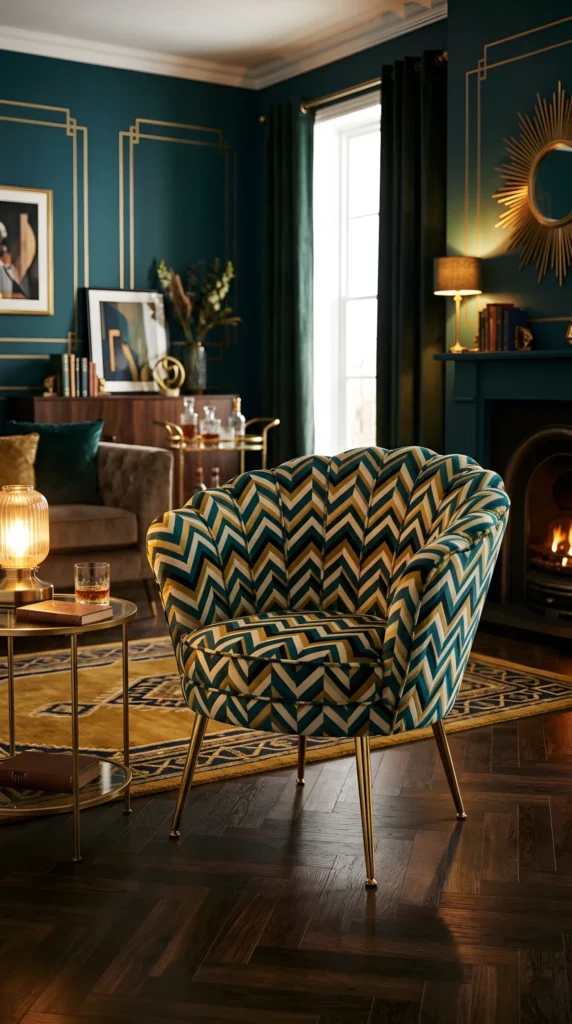
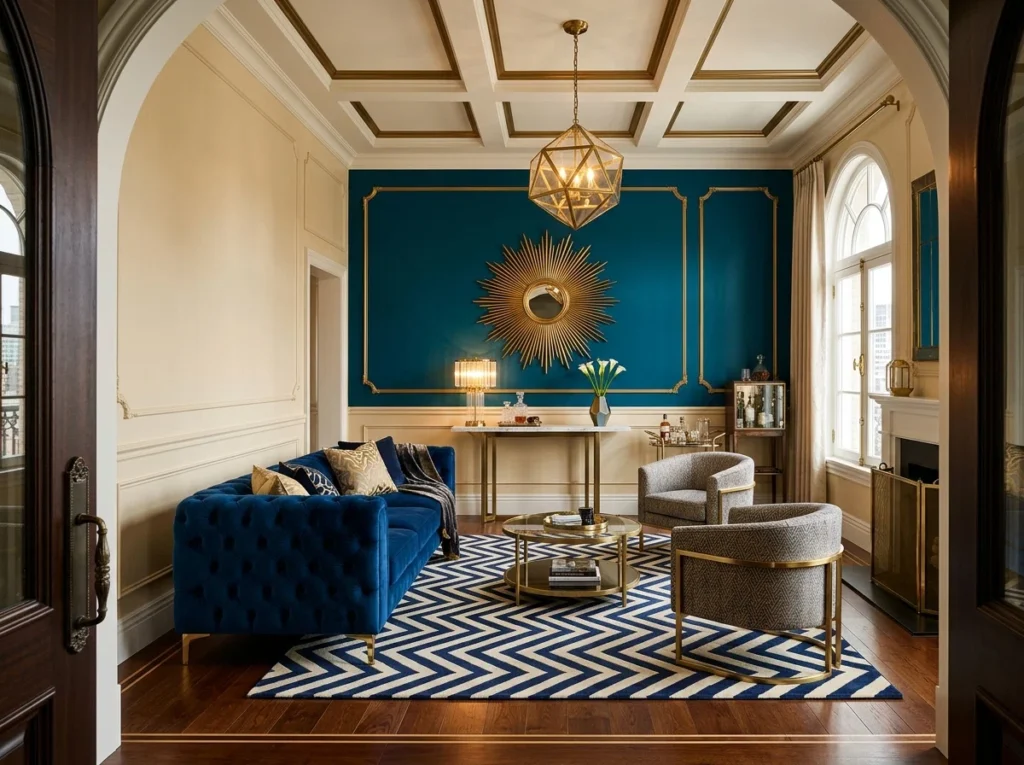
Furniture with fan-shaped arches, chevron details, and chrome or brass hardware brings a 1920s-revival drama that pairs surprisingly well with cozy, lived-in spaces.
One curved chair or a single chevron-patterned cabinet is usually enough to introduce this drama without making the room feel like a themed set. Pair it with warmer, softer textiles nearby so the sharp geometry doesn’t feel cold.
15. Give Your Eyes a Place to Rest
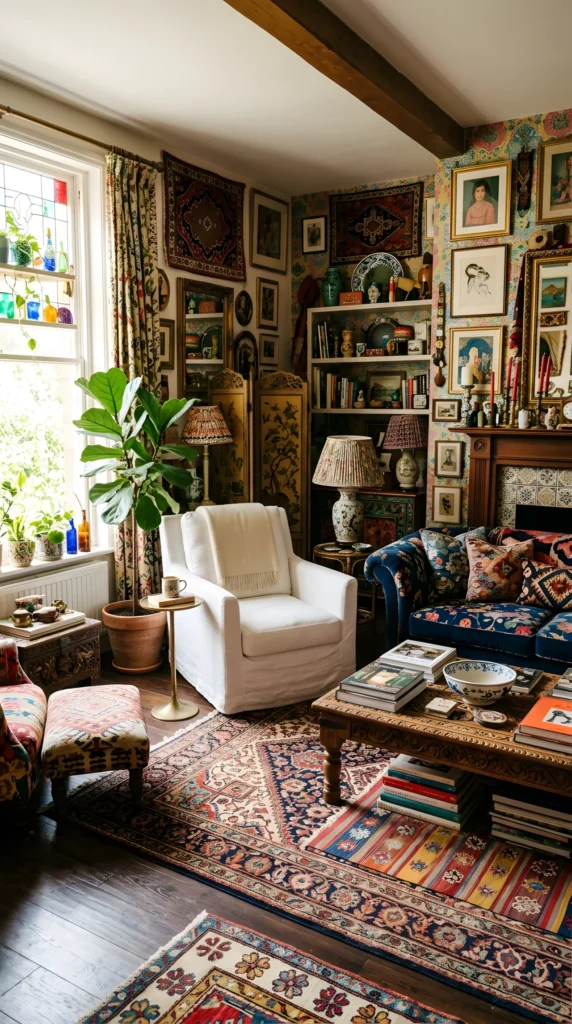
Even the boldest maximalist rooms need a pause. One piece of crisp white furniture, a plain rug, or an empty stretch of wall between busy areas keeps the whole look feeling curated instead of cluttered.
Designers call this a “resting point,” and it’s often the single difference between a maximalist room that feels exciting and one that feels exhausting to be in. If a room feels overwhelming no matter what you try, removing one or two items is usually a faster fix than adding anything new.
Maximalism done well isn’t about filling every surface — it’s about filling your home with things that actually mean something to you. Start with one idea that excites you most, build a color palette around it, and let the rest of the room follow. The coziest homes were never the emptiest ones. They were the most lived-in.