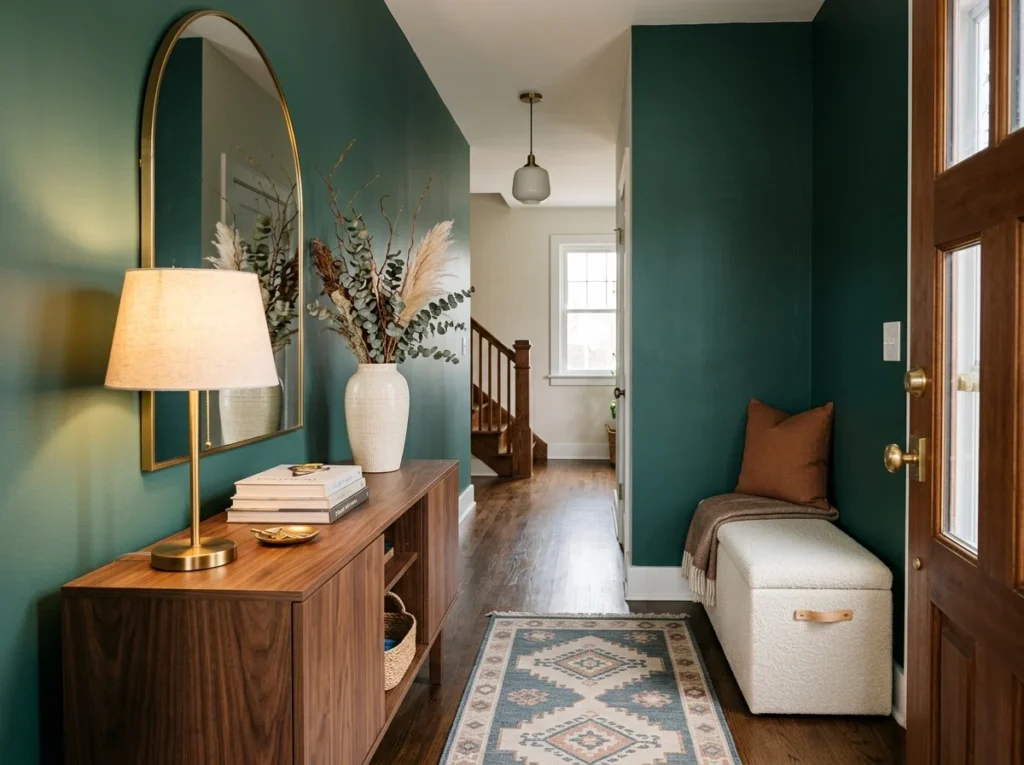
Your entryway is the first thing every guest sees — and the first thing you see every time you come home. Yet most entryways are an afterthought: a shoe pile, a coat hook, and a surface that collects everything.
The right combination of furniture, light, and a few deliberate details can turn even a narrow corridor into a space that genuinely sets the tone for the rest of the house. Here are 15 entryway decor ideas pulling from the biggest trends of 2026.
1. Start With a Console Table as Your Anchor
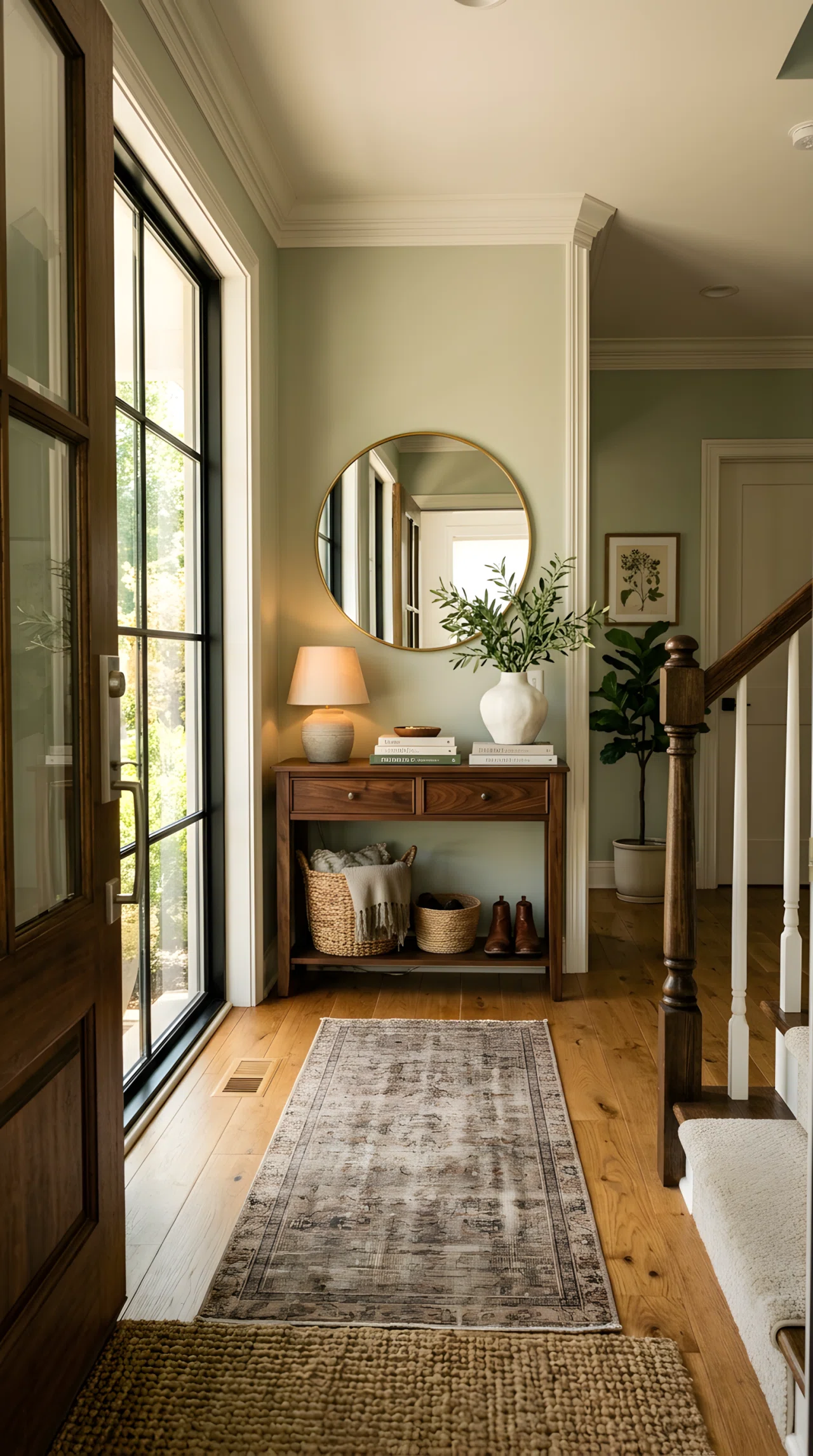
Every great entryway is built around one piece of furniture, and the console table is almost always the right choice.
It gives you a styling surface, a visual anchor for the wall above, and a practical landing zone for keys. In 2026, warm wood finishes are returning strongly after years of gray and pale natural tones — a rich walnut or oak console immediately makes an entryway feel grounded.
2. Hang a Statement Mirror Above the Console
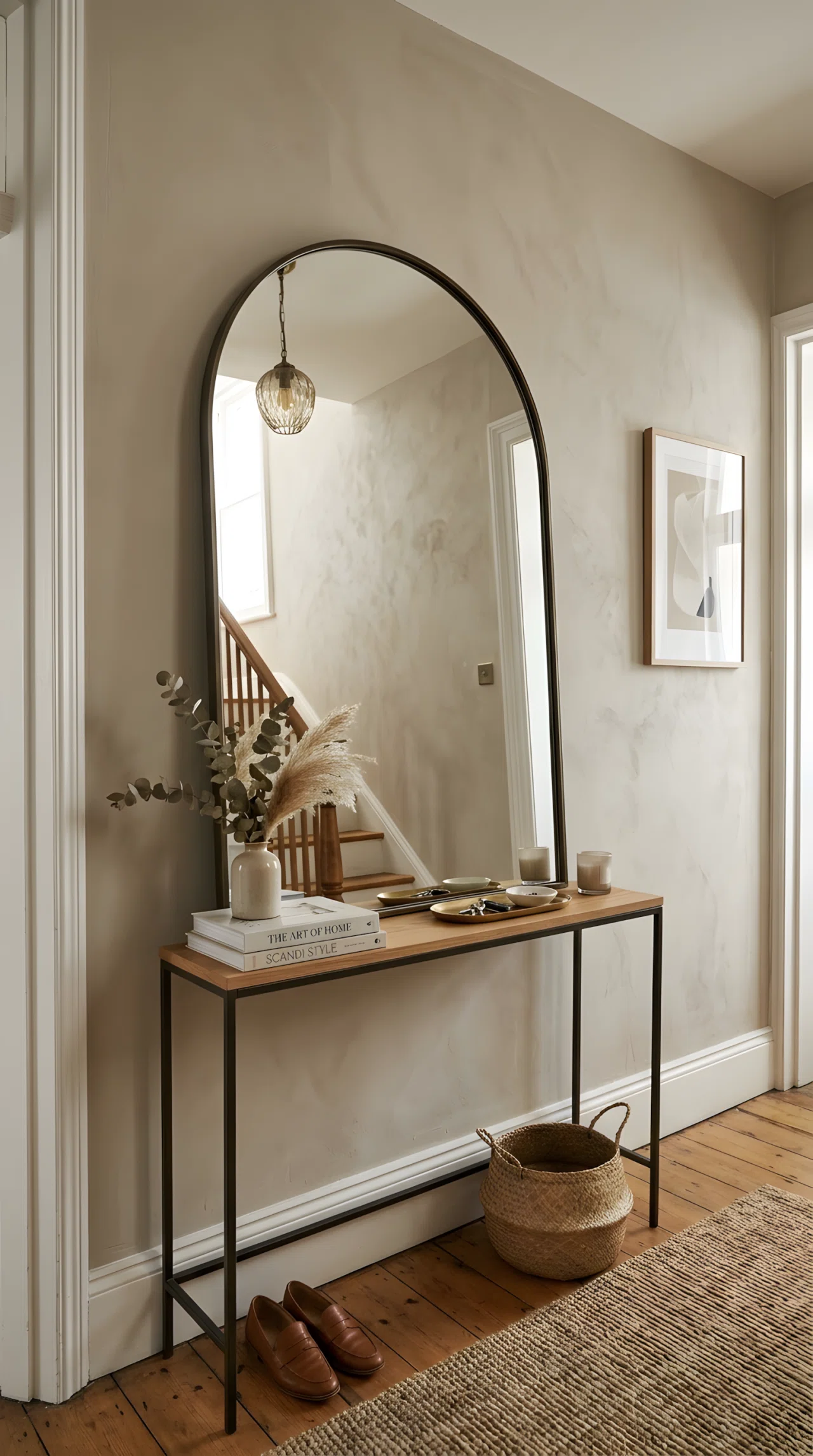
A large mirror above the console does three things: makes the entryway feel larger, bounces light into what is often the darkest part of the house, and gives everyone a final look before walking out.
Arched and organic-shaped mirrors are among the most-saved entryway items on Pinterest in 2026. Lean it against the wall instead of mounting for an effortless, commitment-free alternative.
3. Style the Console Like a Vignette
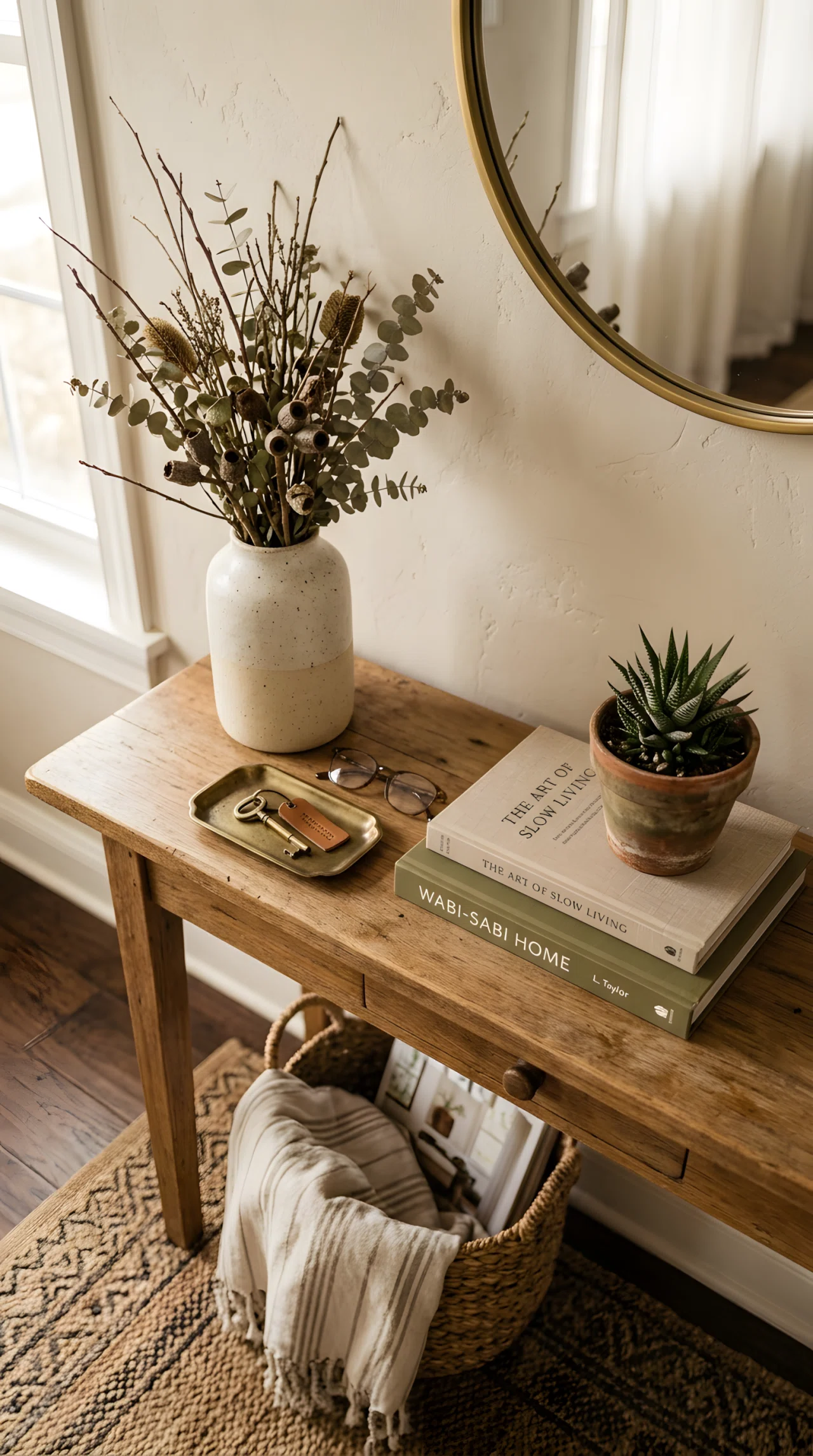
A styled console — a lamp, one tall sculptural object, a small tray for keys, and something organic like a branch or plant — transforms a functional surface into the first design moment of the home.
Keep it to five objects or fewer and vary the heights. This is the detail that separates an entryway that looks designed from one that just looks accumulated.
4. Add a Storage Bench for Function and Form
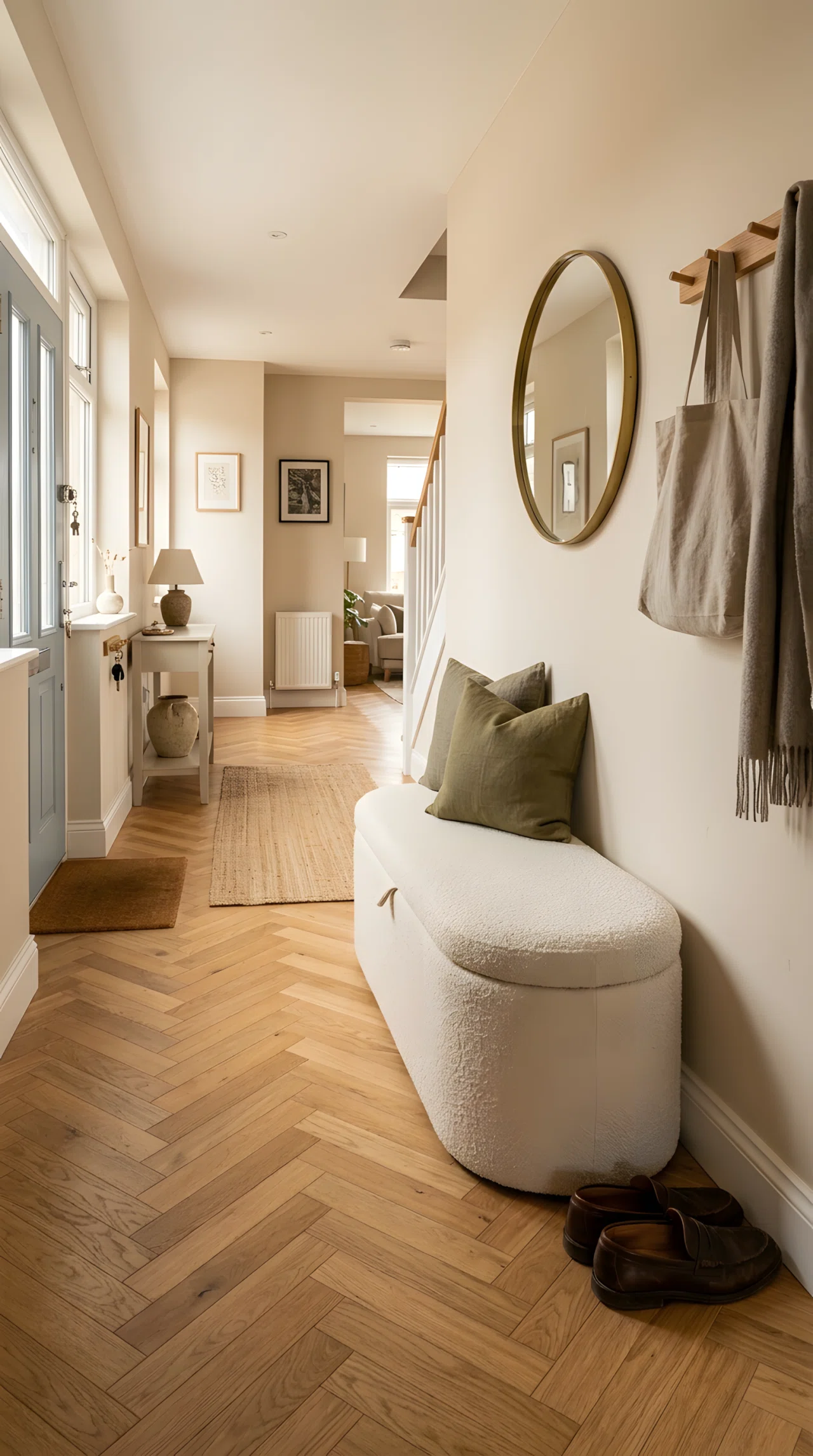
A bench with built-in storage solves two problems at once — somewhere to sit when removing shoes, and hidden storage for entryway clutter.
Upholstered benches in bouclé or linen are performing strongly in 2026, bringing softness to what is often the hardest-surfaced room in the house. Position it opposite the console for balance, or use it alone in a smaller space.
5. Layer Your Lighting
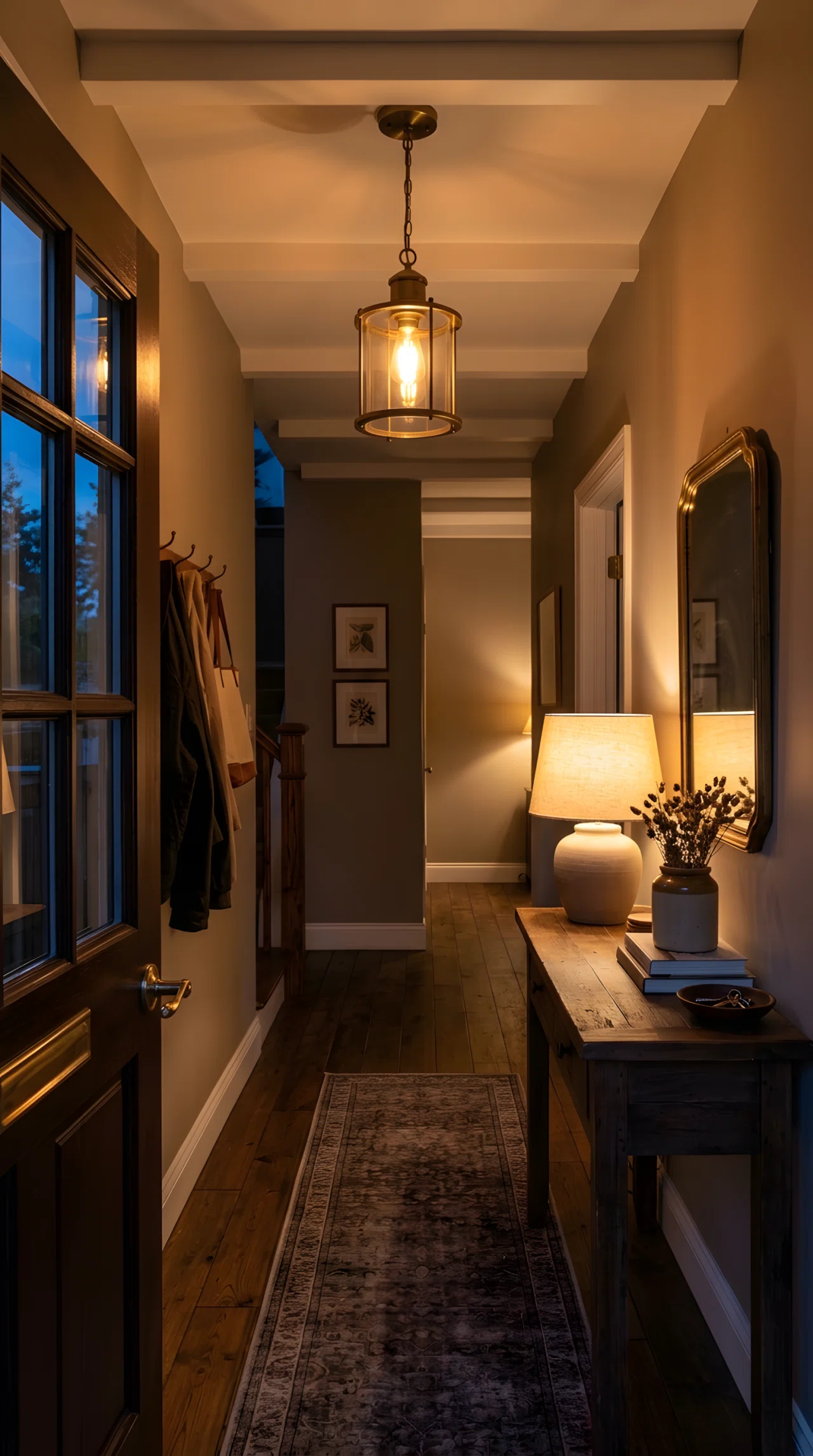
Most entryways rely on a single overhead fixture that casts flat, uninviting light. Adding a table lamp on the console creates a warm secondary source that works at any time of day.
Warm-toned bulbs around 2700K are the standard recommendation in 2026 — the shift from cool to warm light is one of the most impactful and affordable changes available.
6. Paint the Entryway a Bold or Saturated Color
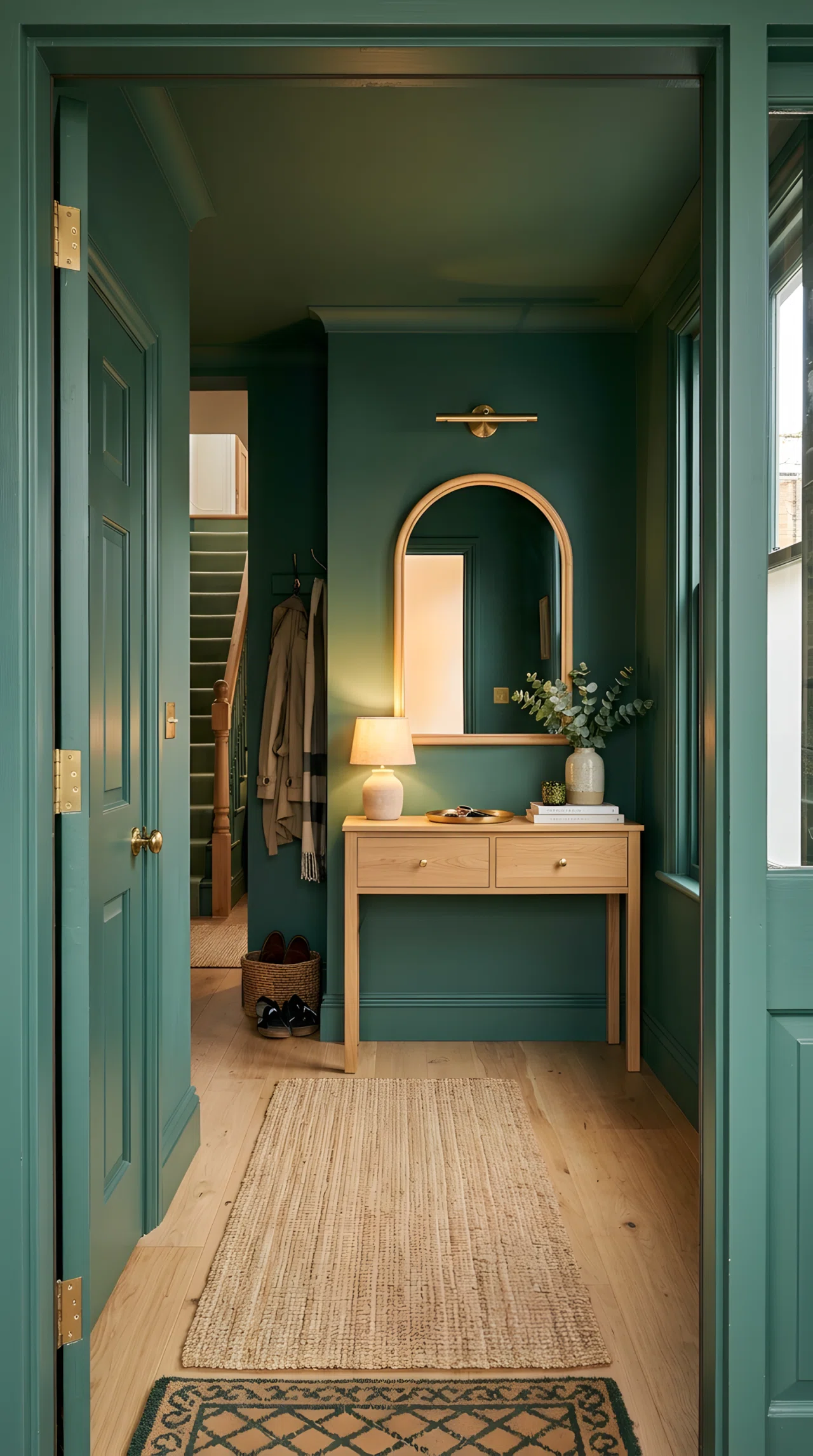
Because entryways are small and transitional, they handle bold colors that would overwhelm a larger room. A deep jade green, rich navy, warm terracotta, or the icy blue trending on Pinterest in 2026 all make an immediate statement and set an expectation for the rest of the house.
Paint the trim the same color as the walls for a color-drenched effect that feels deliberately considered.
7. Install a Wood Slat Divider Wall
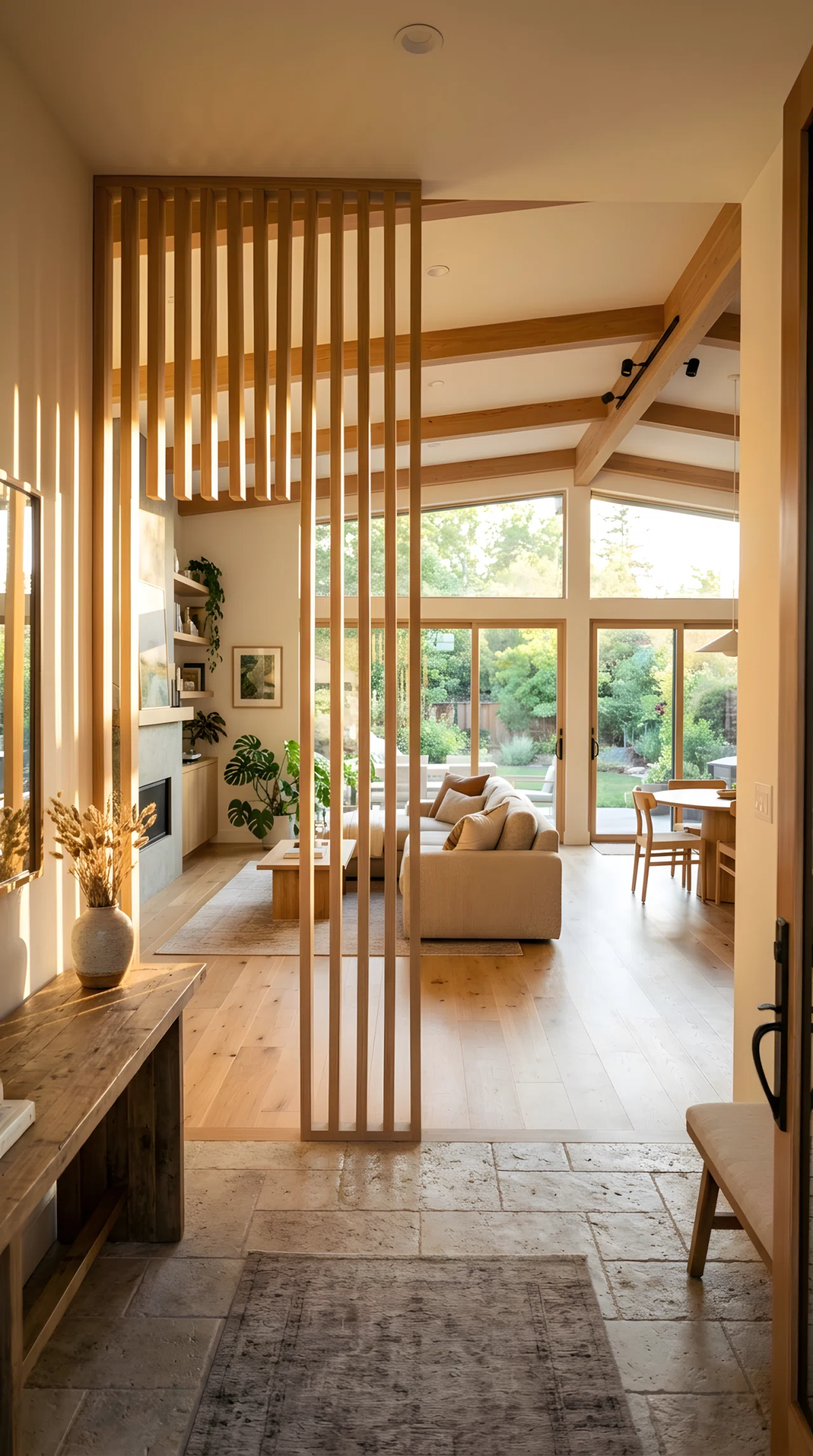
In open-plan homes where the entryway bleeds into the living room, a vertical wood slat panel creates a sense of arrival and separation without closing off the space.
This is one of the most-saved entryway ideas on Pinterest in 2026. The slats filter the view between zones while allowing light through, adding immediate architectural quality that no furniture arrangement can replicate.
8. Put Down a Rug That Can Take the Wear
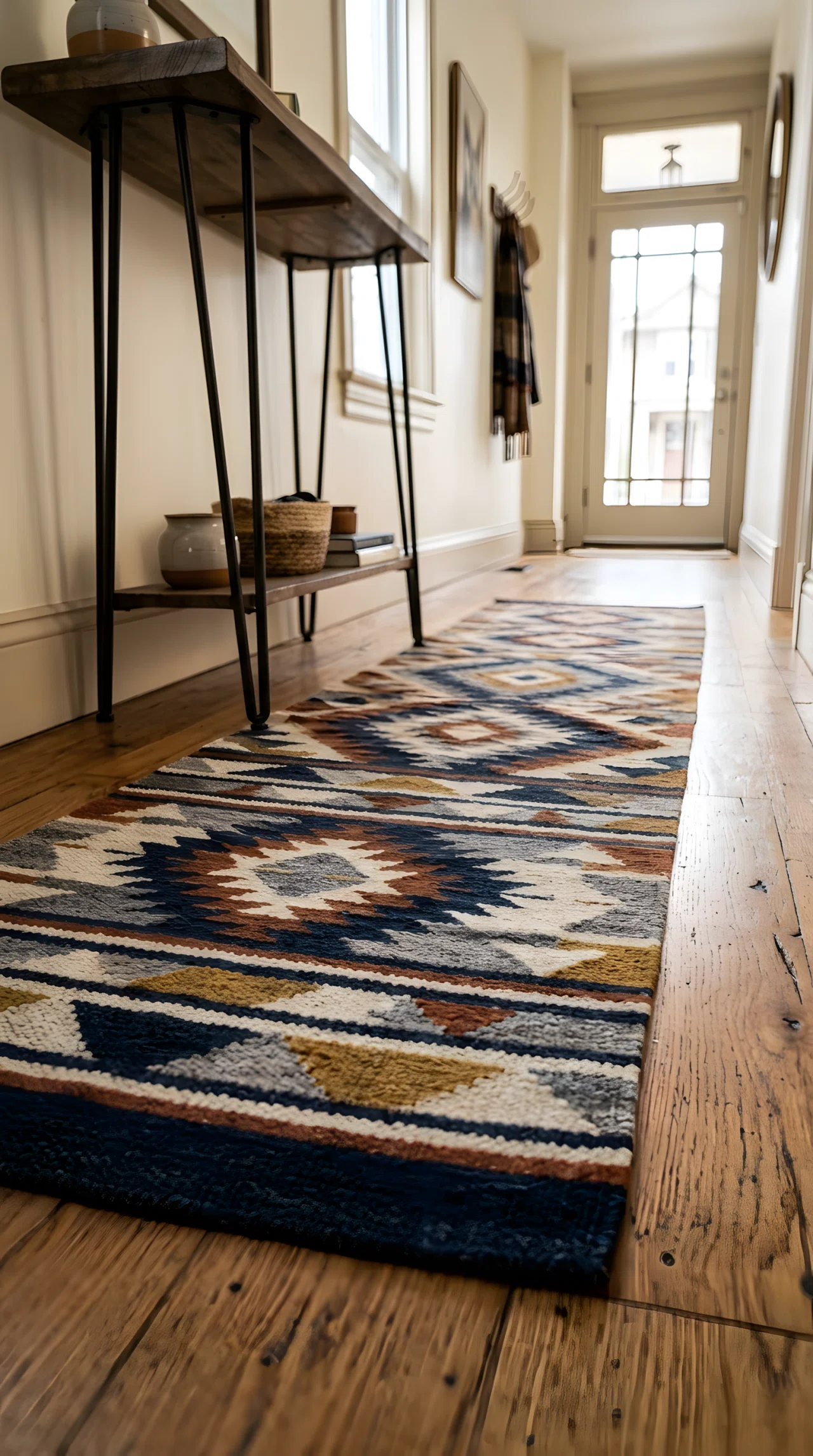
An entryway without a rug feels unfinished, but an entryway rug takes more abuse than any other in the house. Choose a flatweave, low-pile, or washable style in a pattern that doesn’t show dirt — a small geometric print, a subtle stripe, or natural jute all work.
The rug also defines the entry zone visually, which matters especially in open-plan spaces where the boundary between entry and living room is otherwise invisible.
9. Add Wall Molding or Trim Detail
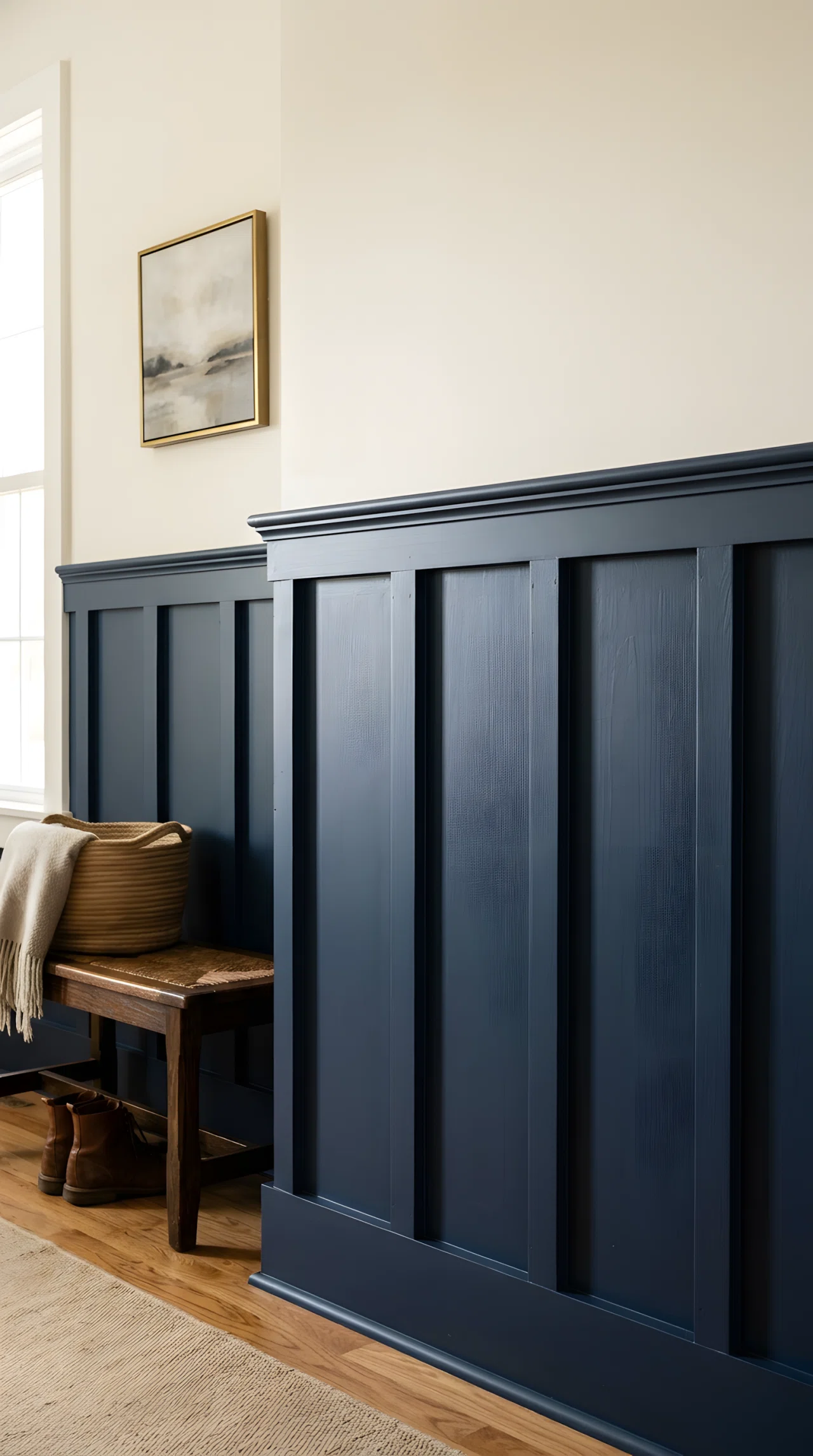
Crown molding, picture rail, or a simple board-and-batten panel applied to one entryway wall adds architectural character that new construction rarely includes.
Even a basic chair-rail molding dividing the wall into two painted zones changes the space dramatically. It’s a weekend DIY project that costs little in materials but has an outsized effect on how finished the entryway feels.
10. Hang Hooks That Earn Their Place Visually
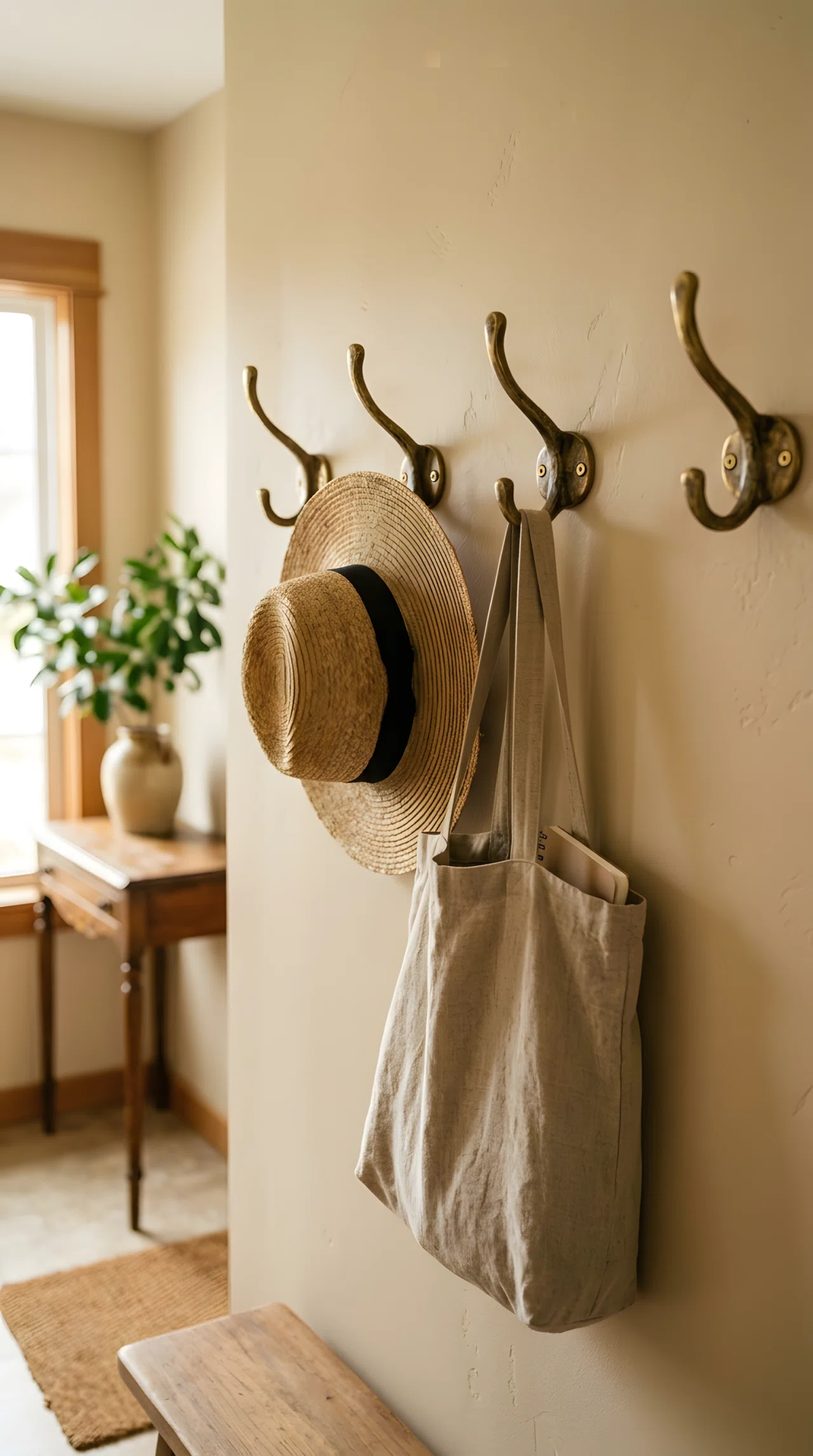
Standard utility hooks can be replaced with something that contributes to the design. Sculptural brass hooks, ceramic knobs, or a vintage-style coat rack serve the same function while becoming a deliberate design element.
In 2026, mixing a decorative item — a straw hat or woven basket — onto the hooks alongside functional pieces blurs the line between storage and styling.
11. Use Sculptural Branches or Dried Stems in a Tall Vase
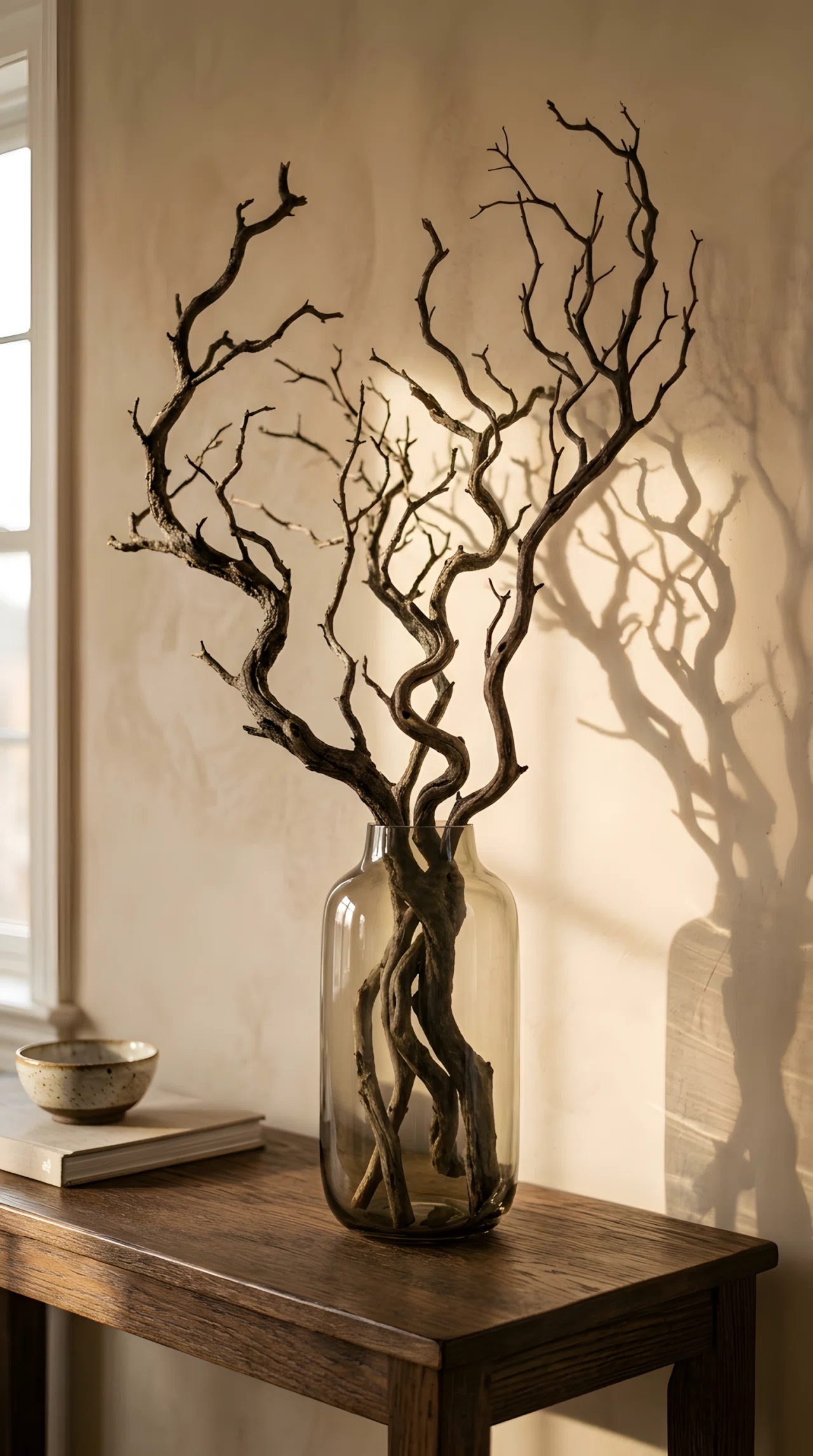
A tall vase holding a few sculptural branches — dried, foraged, or faux — draws the eye upward and creates height and drama that flowers rarely achieve.
It works especially well in narrow entryways where floor space is limited, since it adds vertical interest without taking more than a few inches of console surface.
12. Create a Gallery Wall That Tells a Story
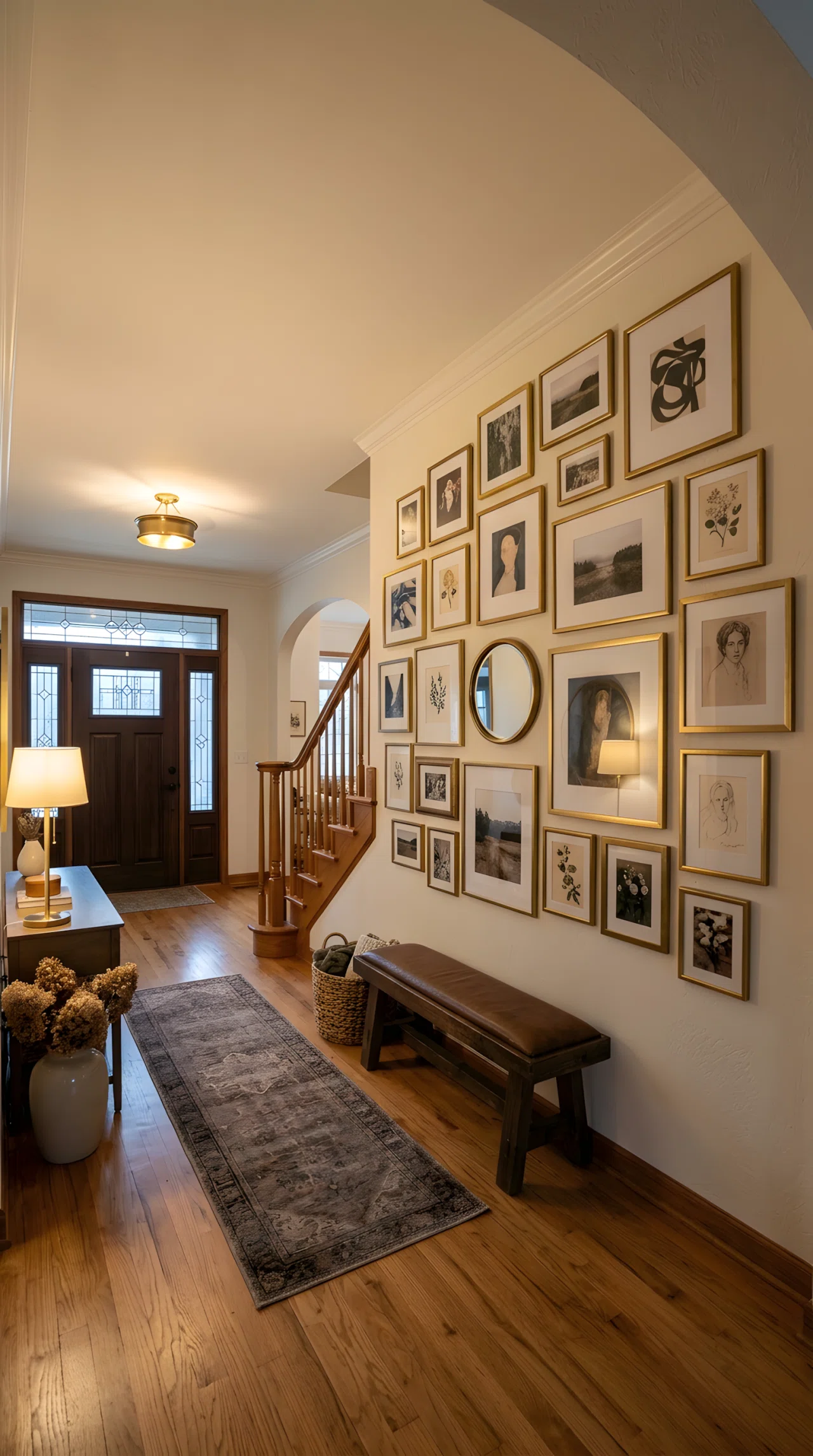
In larger entryways, a gallery wall turns a blank surface into the most personal design statement in the house. Mix frames of different sizes within the same finish, and pull all art from the same color palette so the collection reads as curated rather than random.
Include one or two pieces with personal meaning alongside decorative prints for a wall that feels layered rather than assembled.
13. Bring in One Curved Furniture Piece
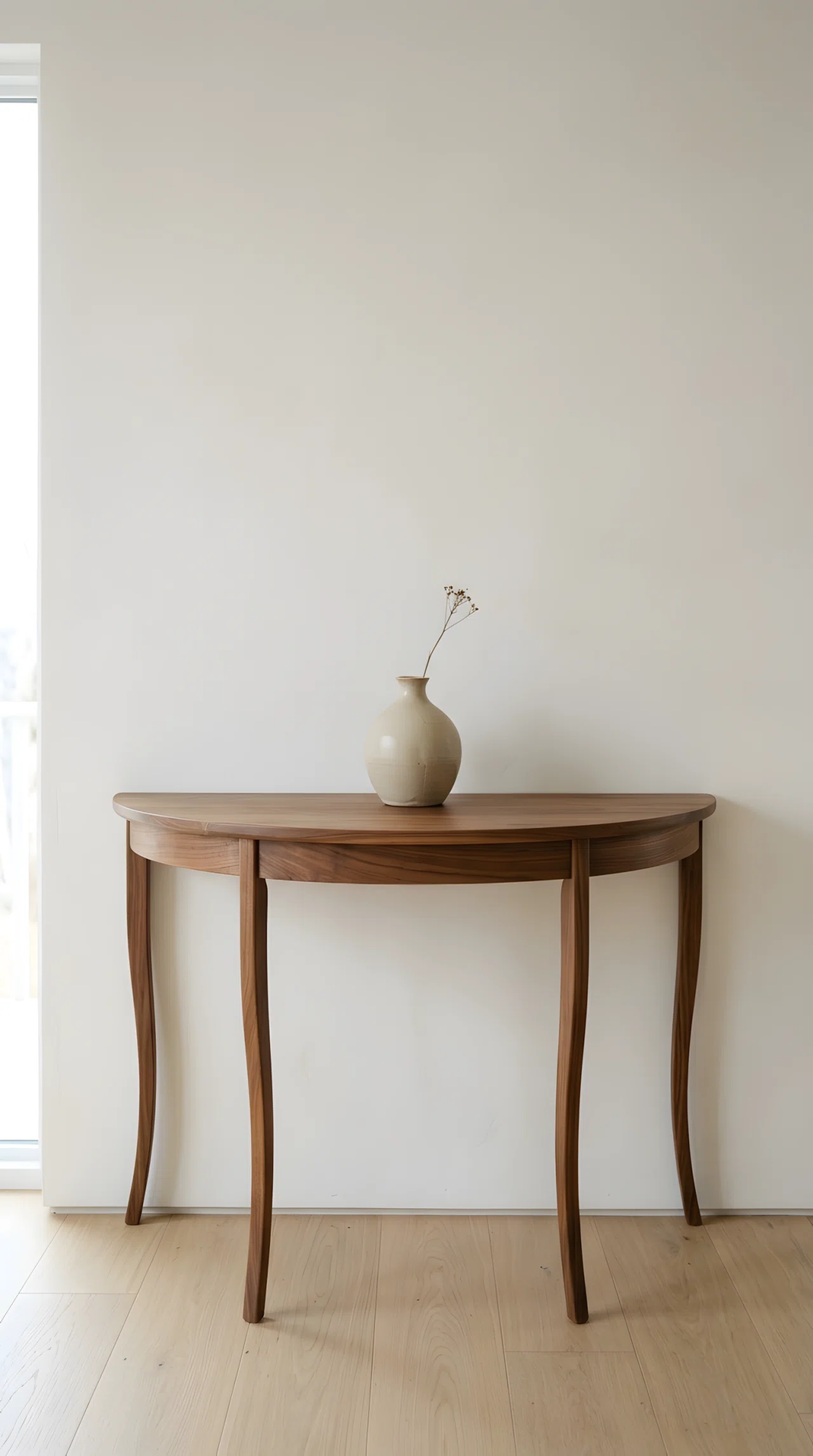
Curved furniture — a round-backed bench, a half-moon console, or an arched mirror — softens the hard angles most entryways accumulate from door frames and rectangular rugs.
This is one of the strongest design directions of 2026 across all rooms, and a single curved piece in a small space has an outsized effect. It shifts the entryway from transactional to genuinely welcoming.
14. Keep One Surface Completely Clear
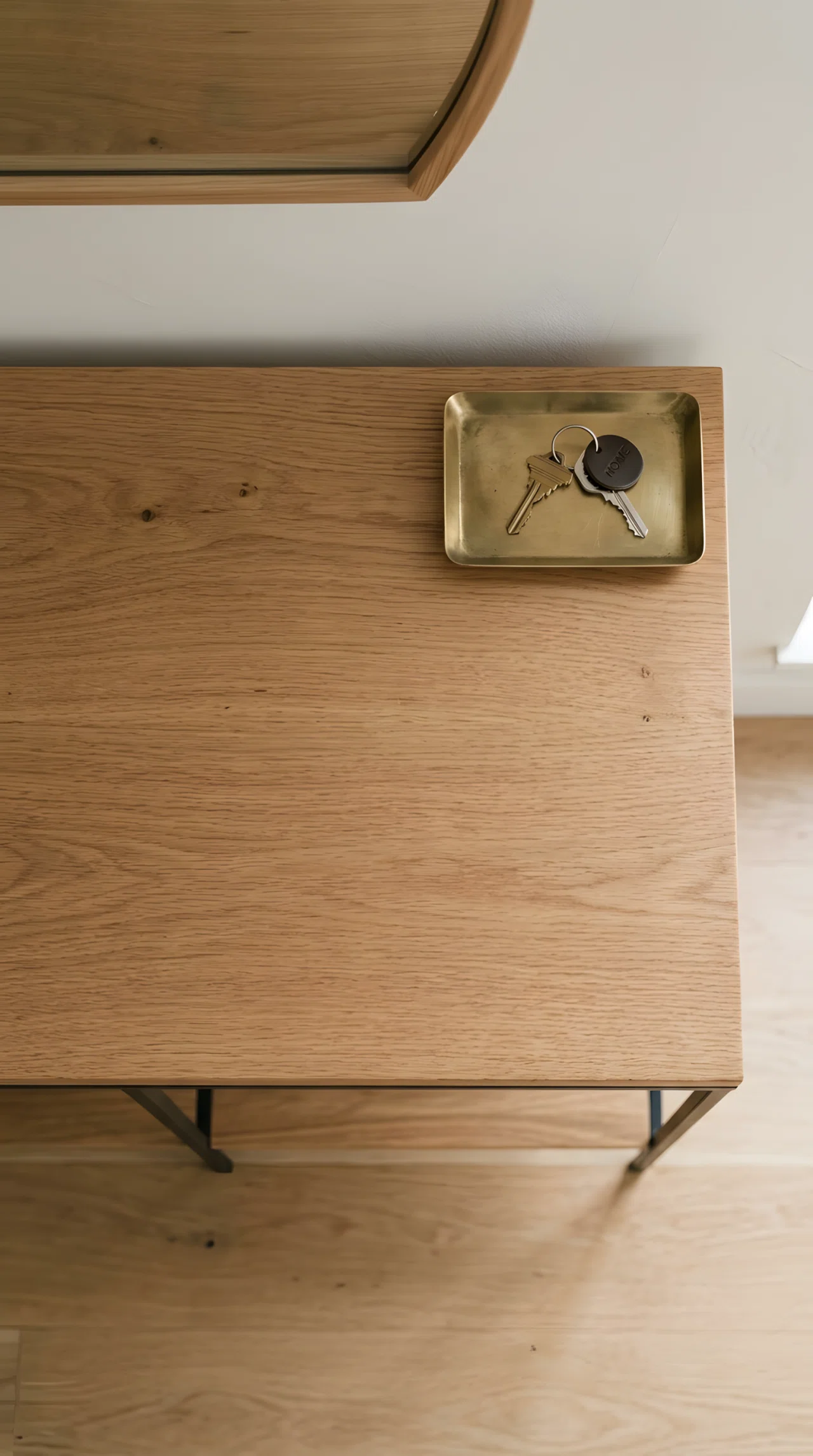
The hardest entryway challenge isn’t adding the right things — it’s keeping the wrong things out. A single clear surface, even just one half of the console top, creates breathing room that makes everything around it look intentional.
A small tray corrals keys into one contained zone, which is usually enough to maintain the visual clarity the rest of the styling depends on.
15. Make It Smell Like Home
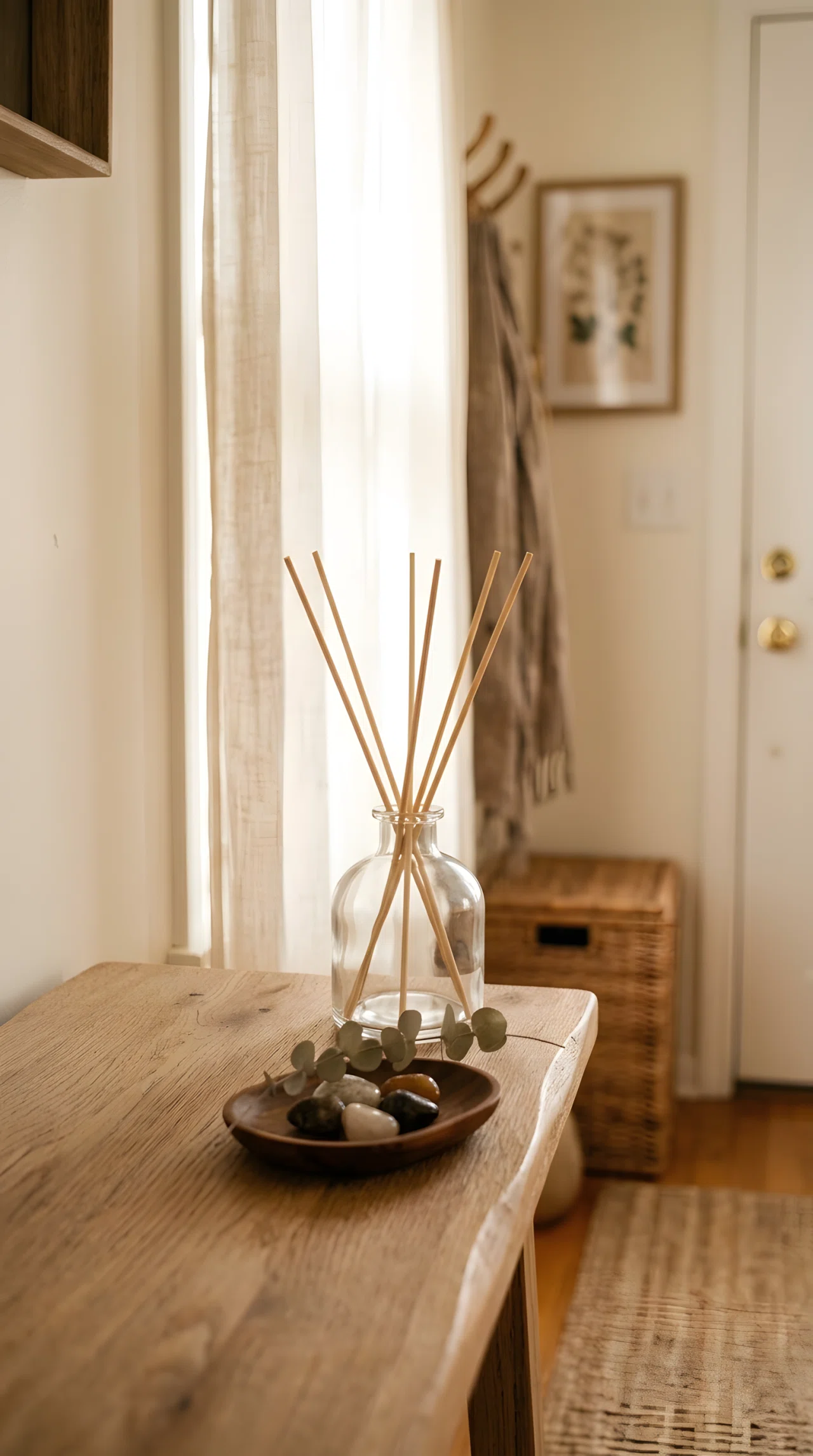
Scent is the most immediate impression an entryway makes. A reed diffuser or candle with a consistent, welcoming fragrance — warm wood, fresh linen, or subtle citrus — conditions both guests and residents to associate arriving home with something pleasant.
It costs almost nothing and works even when everything else in the space is still a work in progress.
An entryway doesn’t need to be finished all at once. Start with the console table and the mirror, add a rug and a lamp, and let the space develop from there. The best entryways feel like a genuine introduction to the house they belong to — not a showroom, not an afterthought.