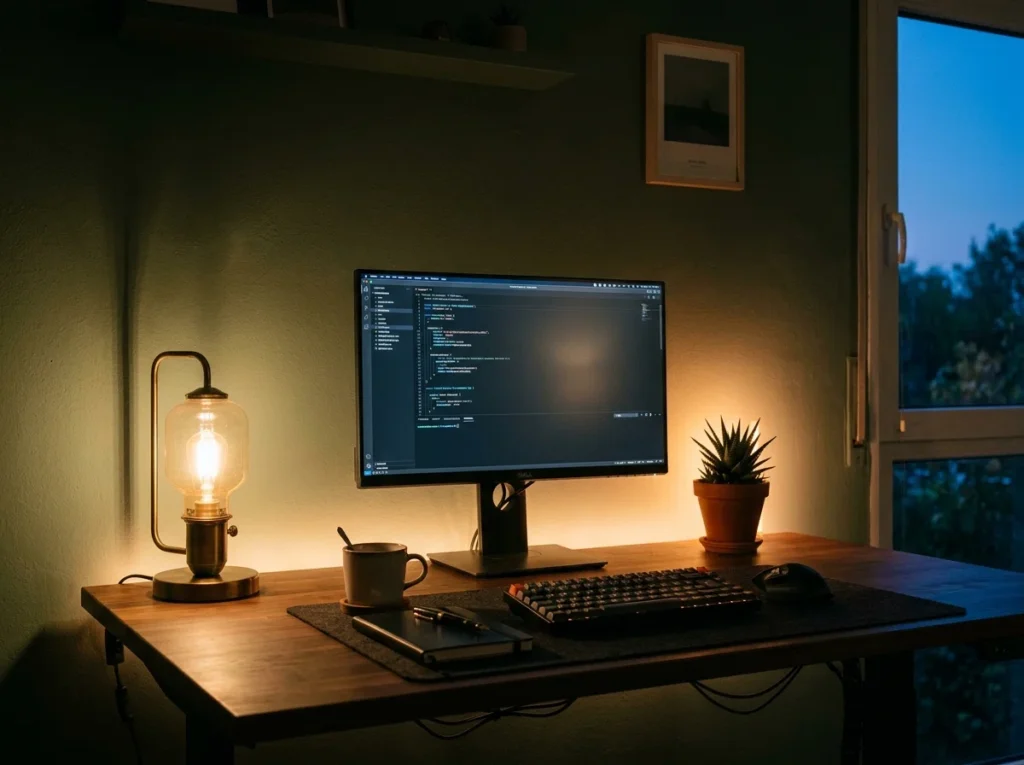
Most home offices were designed out of necessity, not intention. A desk shoved into a corner, a chair borrowed from the dining table, and a backdrop that makes every video call look like an afterthought.
In 2026, hybrid and remote work is permanent for millions of people in their 20s and 30s, which means the home office deserves the same care as any other room in the house.
These 15 ideas will help you turn whatever space you have, whether it’s a full room, a bedroom corner, or a single wall, into somewhere you actually want to open your laptop.
1. Invest in a Solid Wood Desk
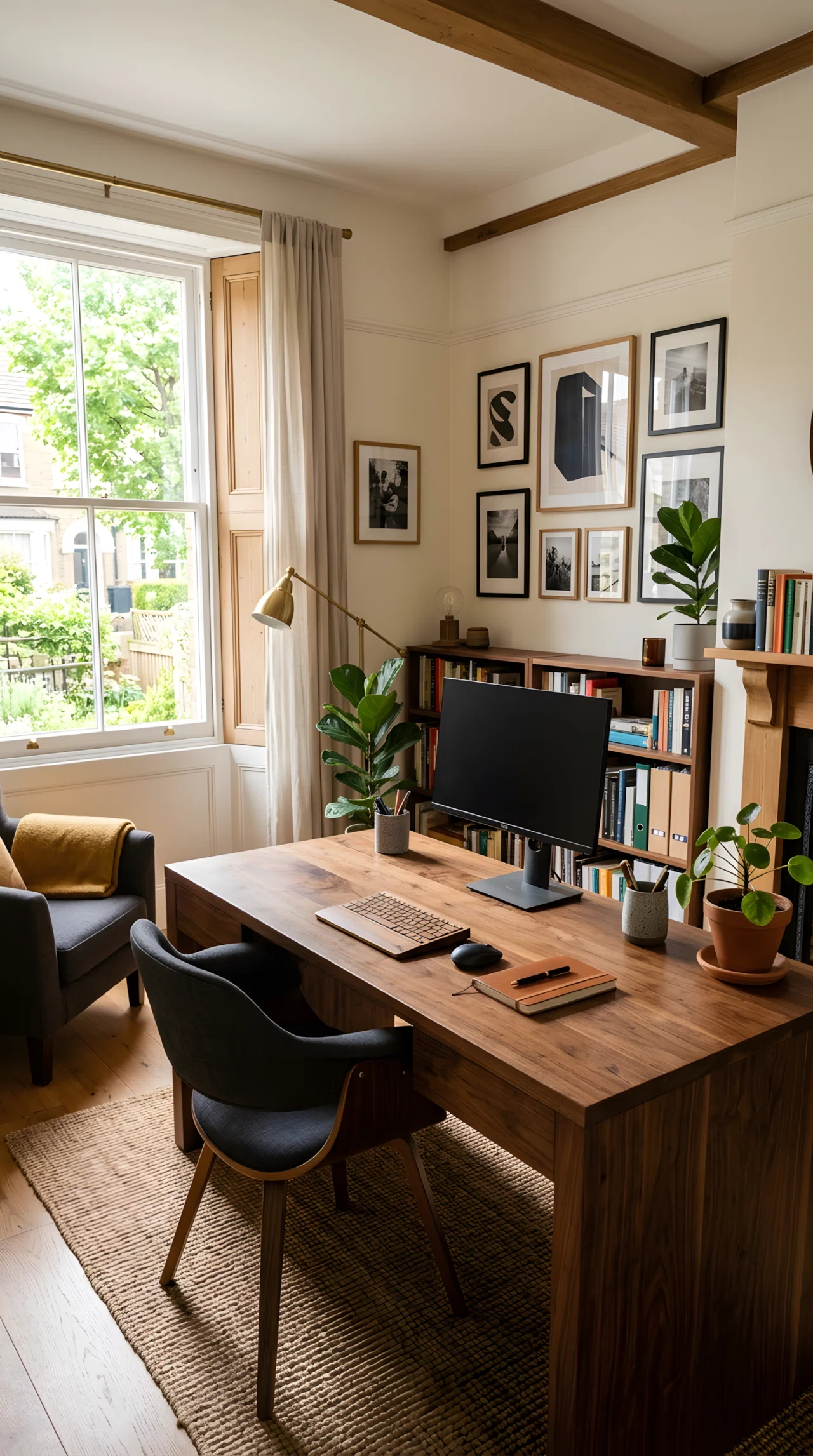
The single most impactful upgrade in any home office is the desk. A solid wood desk in a warm walnut, oak, or ash finish immediately makes the space feel less temporary and more like a room that belongs in your home.
White laminate desks telegraph “emergency setup” in a way that warm wood never does. Look for the IKEA Alex desk in oak veneer, the Wayfair Tresanti sit-stand desk in walnut, or handmade solid wood desks on Etsy from independent makers.
2. Get an Ergonomic Chair That Also Looks Good
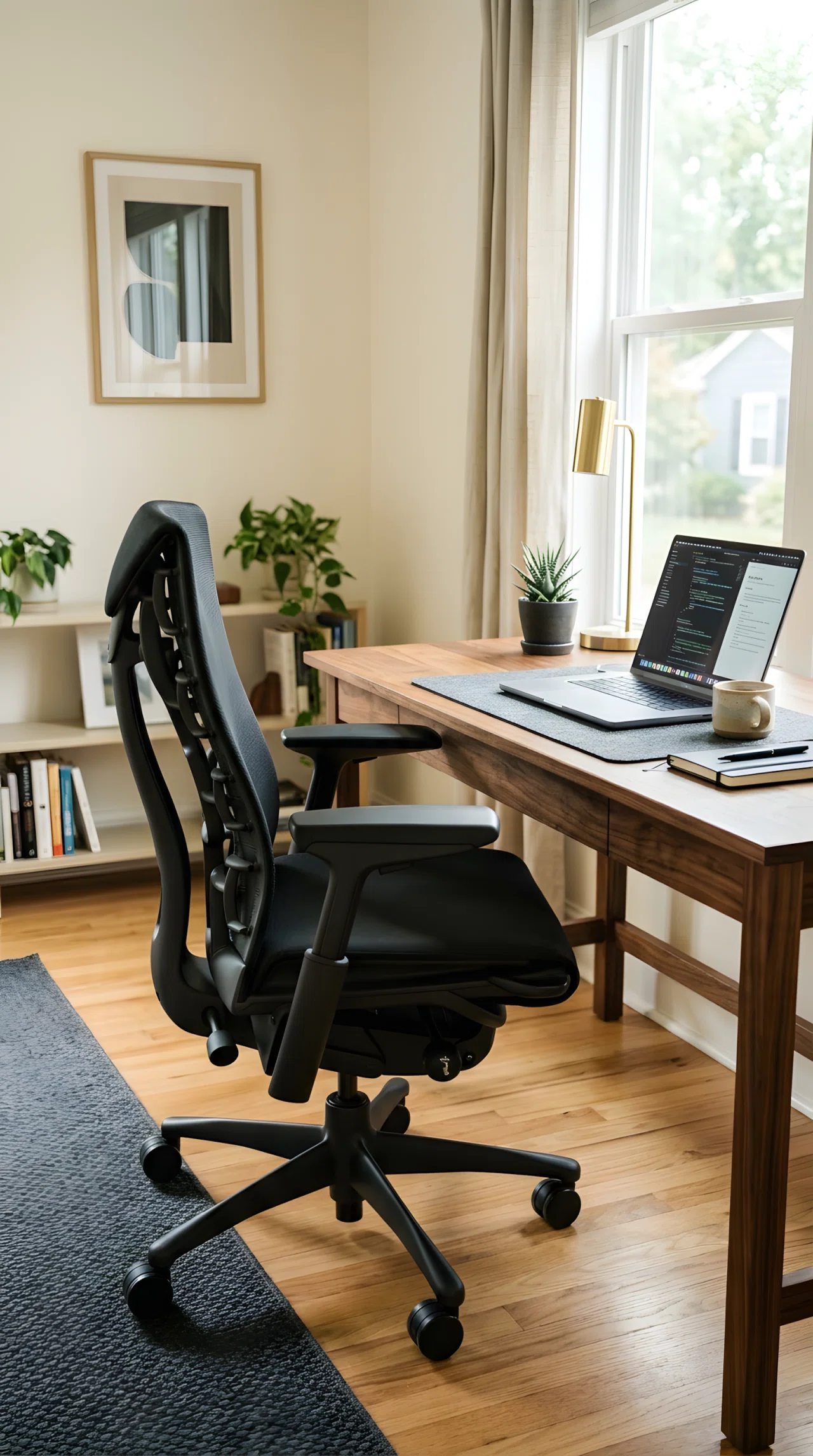
An ergonomic chair is one of the best investments a remote worker can make, and in 2026 the options that prioritize both back support and aesthetics are wider than they have ever been.
The Branch Ergonomic Chair, available on Amazon, offers lumbar support and a minimal look that doesn’t scream office furniture. For a tighter budget, the IKEA Markus in black delivers solid ergonomics at a much lower price point.
3. Layer Your Lighting
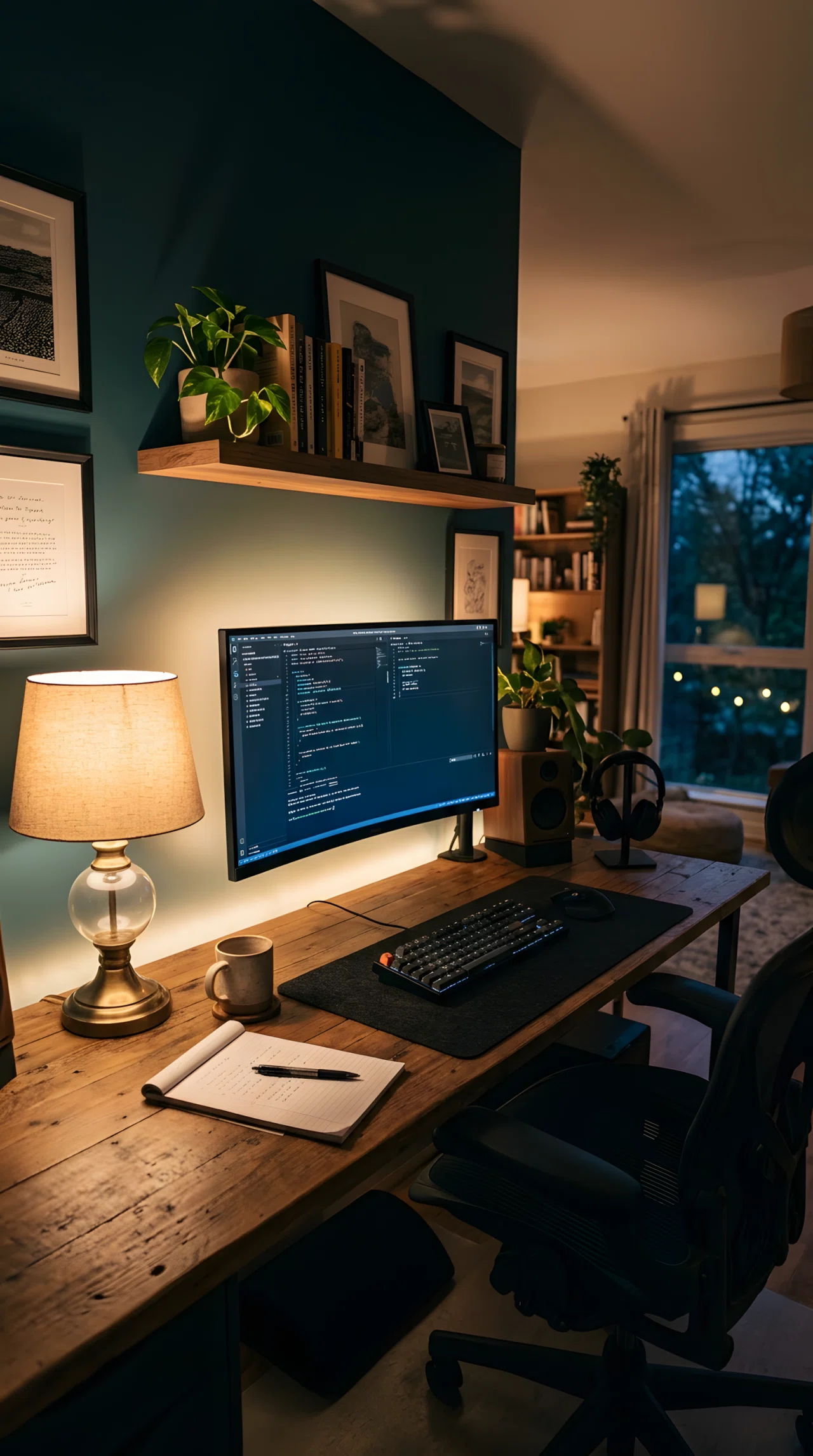
Overhead lighting alone makes a home office feel flat and draining by late afternoon. Adding a warm desk lamp at around 2700K for focused task lighting, plus a small ambient lamp or LED strip behind the monitor, creates a layered effect that is easier on the eyes and makes the space look significantly more considered.
The BenQ ScreenBar Halo, available on Amazon, is a popular pick for its adjustable color temperature and clean profile that doesn’t clutter the desk.
4. Paint the Wall Behind Your Desk
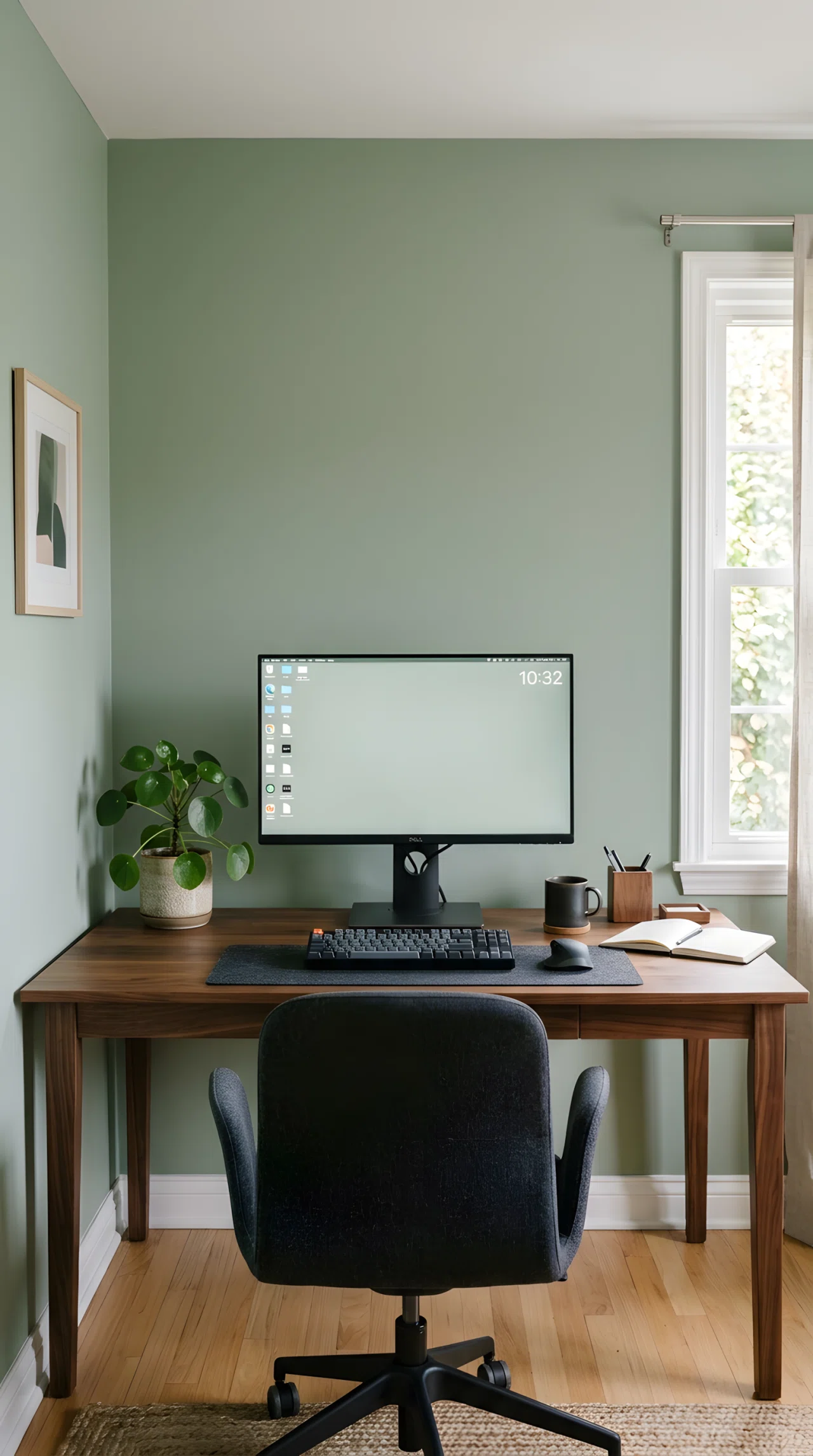
The wall behind your desk is the backdrop every colleague sees during video calls, so it’s worth treating it as a design decision.
Sage green, dusty rose, and powder blue are among the strongest home office wall colors trending on Pinterest in 2026, all of them warm enough to look good on camera without washing out skin tones.
Grab a sample pot from Sherwin-Williams or Benjamin Moore before committing, and paint just the one wall.
5. Add a Small Desk Plant
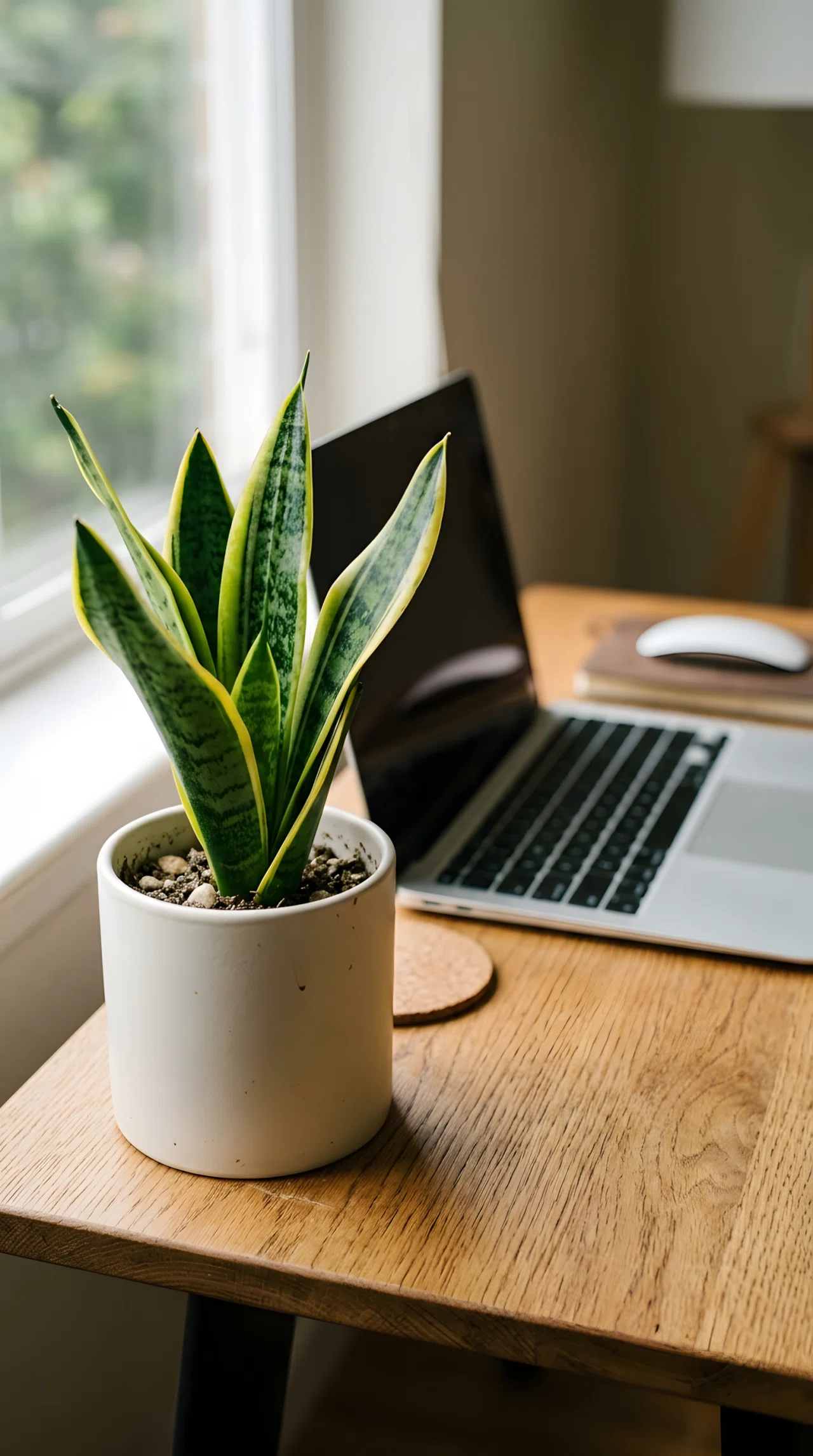
A plant on the desk or just behind a monitor adds visual life to an otherwise flat work surface and has measurable effects on focus and stress levels according to multiple workplace studies.
A small snake plant, a pothos cutting in a propagation vase, or a ZZ plant all thrive in indoor light conditions without demanding much attention.
The Bloomscape desk plant collection on the Bloomscape website ships plants that are already sized for desk use, and Etsy sellers offer handmade propagation vases at a range of price points.
6. Style Your Bookshelf as a Video Call Backdrop
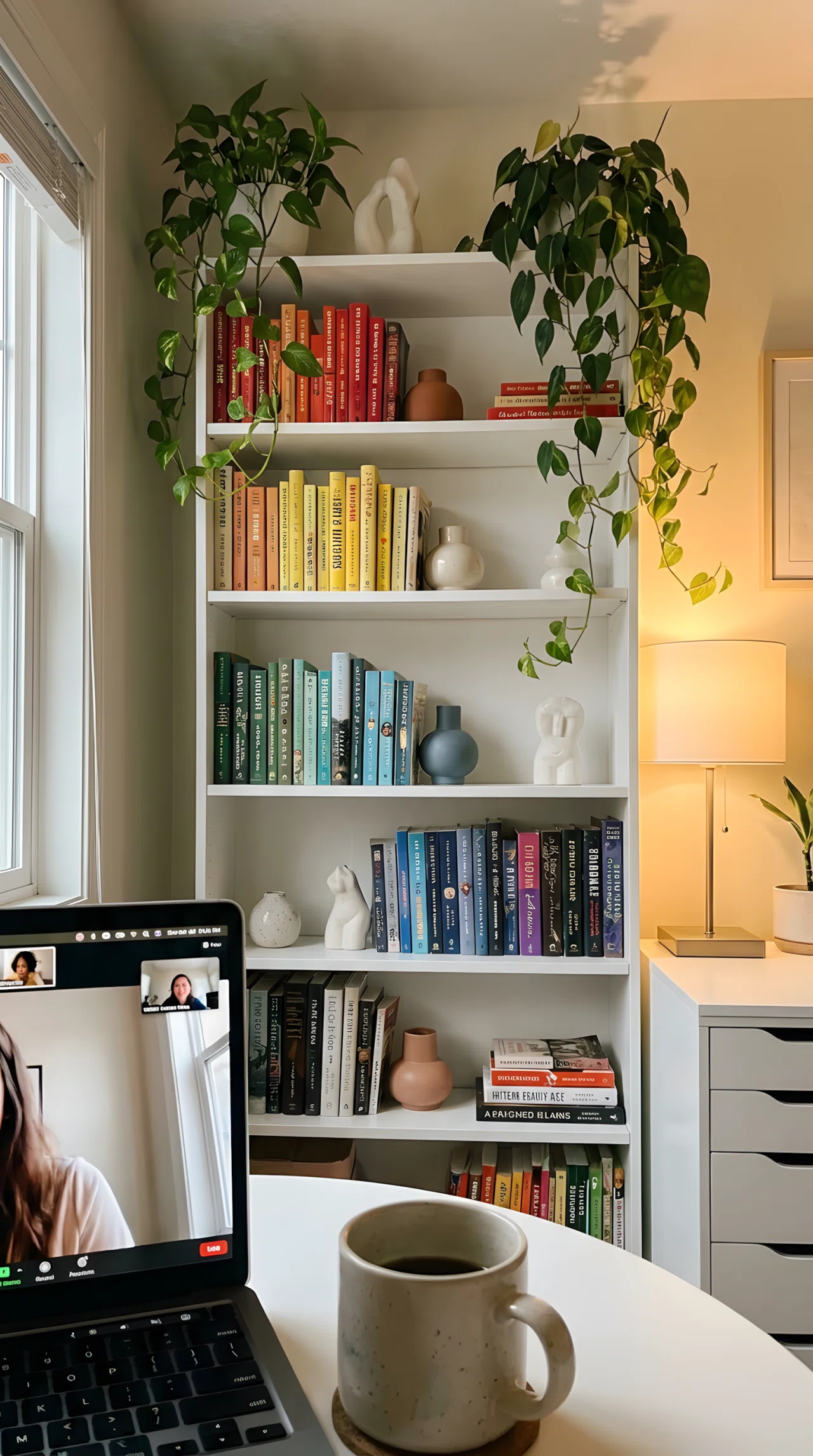
A well-styled bookshelf visible behind you on video calls functions as both storage and a personal introduction to everyone you meet online.
Books arranged by color, a few small plants, one or two ceramic objects, and a framed photo or print create a backdrop that looks real and polished at the same time.
The IKEA Billy bookcase is a classic foundation. Style it with objects from H&M Home or your own collection of meaningful items.
7. Manage Your Cables Properly
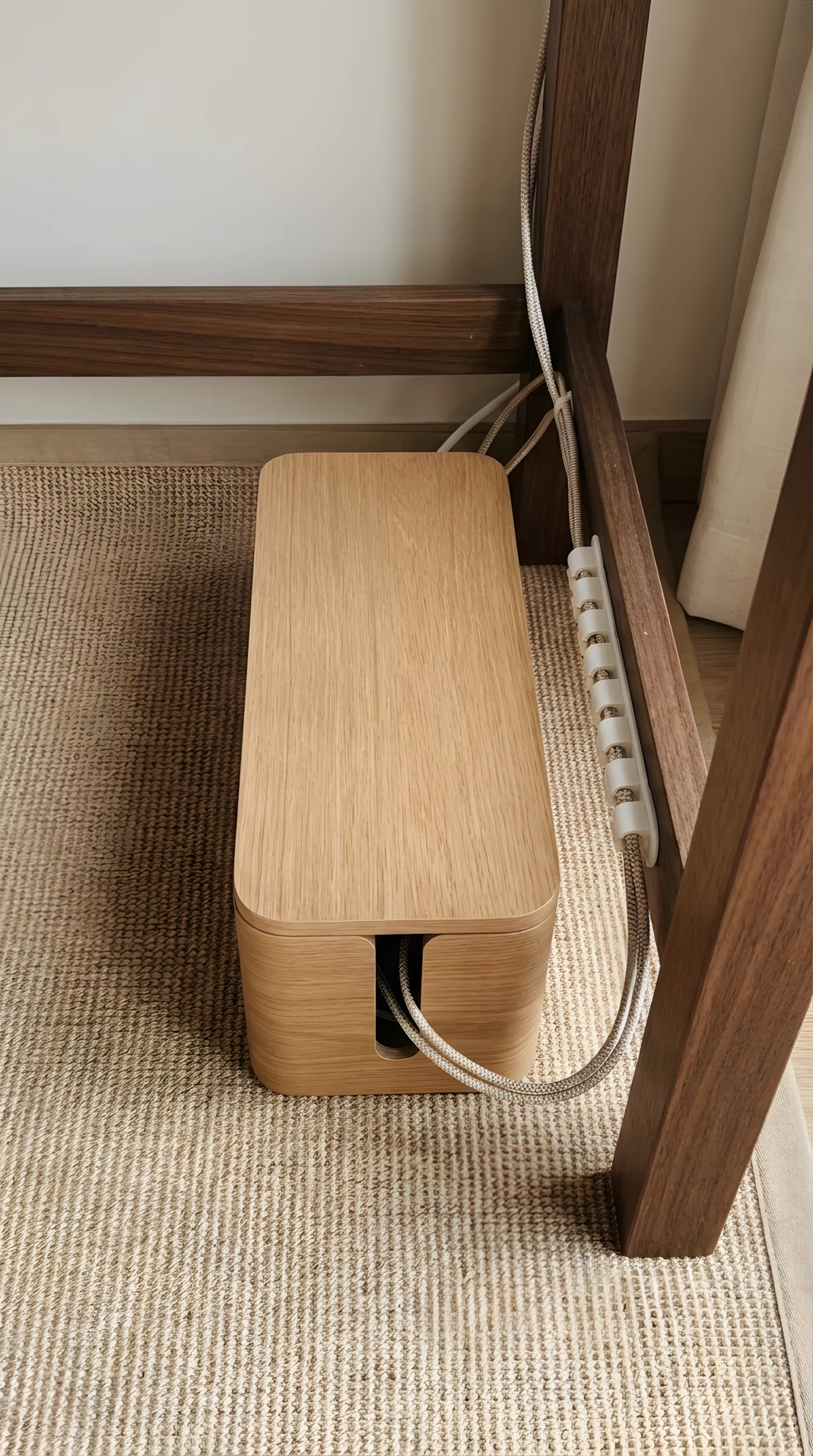
Cable clutter is the fastest way to undermine an otherwise well-styled home office. A cable management box hides the power strip and excess cable length under or beside the desk, and adhesive cable clips route individual cords along the desk leg so nothing pools on the floor.
The JOTO cable management box on Amazon (under $20) fits most power strips. Pair it with Command adhesive cable clips for a renter-friendly, tool-free installation.
8. Hang a Pegboard for Flexible Storage
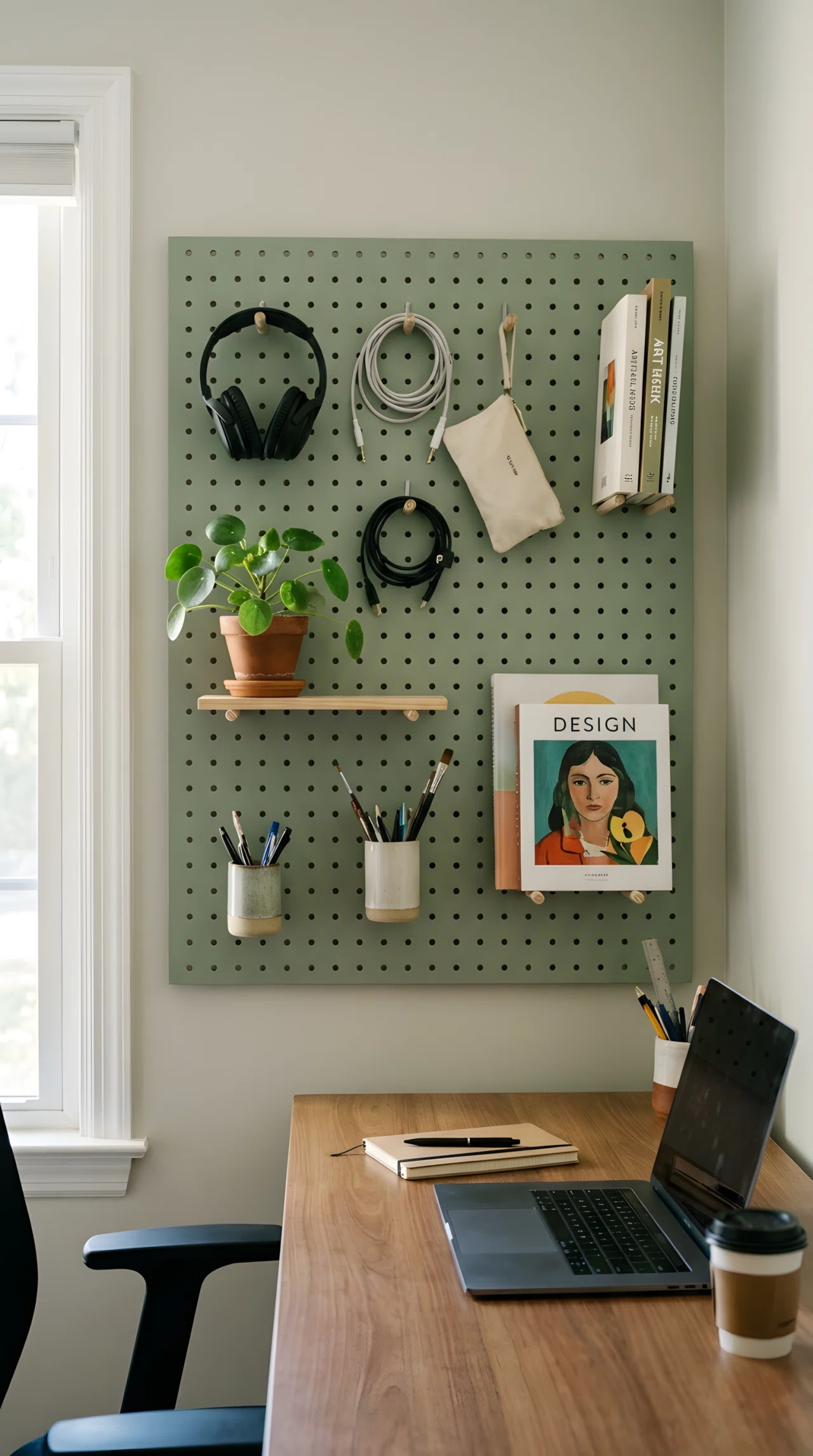
A painted pegboard mounted above or beside the desk gives you fully reconfigurable storage for stationery, small plants, headphones, and desk accessories without adding anything to the desk surface itself.
Paint it the same color as the wall so it reads as an architectural feature rather than a utility panel. The IKEA Skadis pegboard comes with a starter set of hooks and shelves, available in-store and on IKEA’s website. Aftermarket Skadis accessories are also widely available on Etsy and Amazon.
9. Put Down a Rug to Define the Work Zone
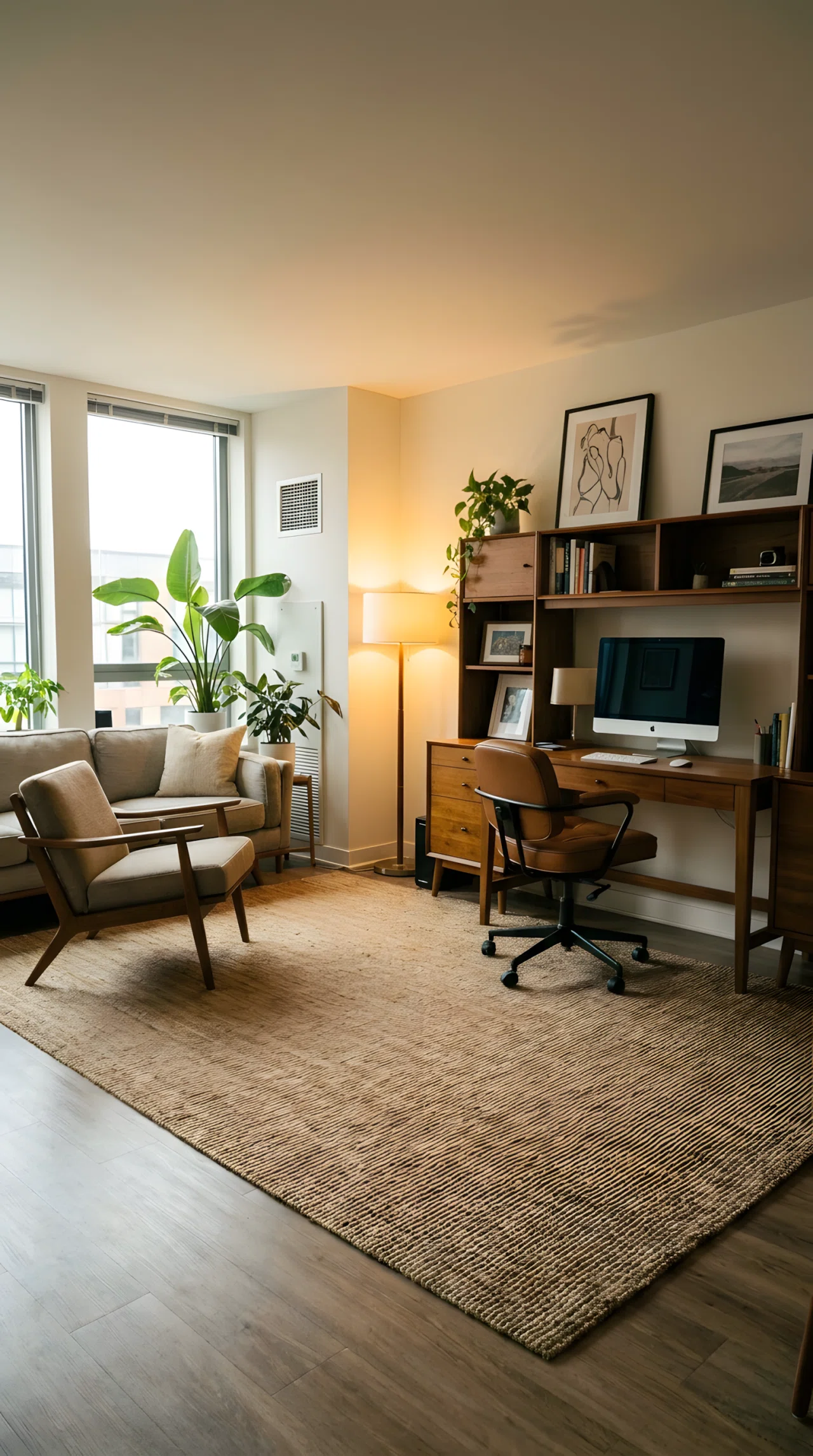
In shared spaces or open-plan apartments, a rug under the desk and chair visually separates the work zone from the rest of the room. This makes it easier to mentally switch into and out of work mode, and it makes the home office corner look deliberate rather than improvised.
A flatweave or low-pile rug works best under a desk chair so the chair rolls easily. The Ruggable washable rug collection, available at Target and Ruggable.com, is a practical pick because the cover is machine-washable without replacing the entire rug.
10. Mount Your Monitor on an Arm
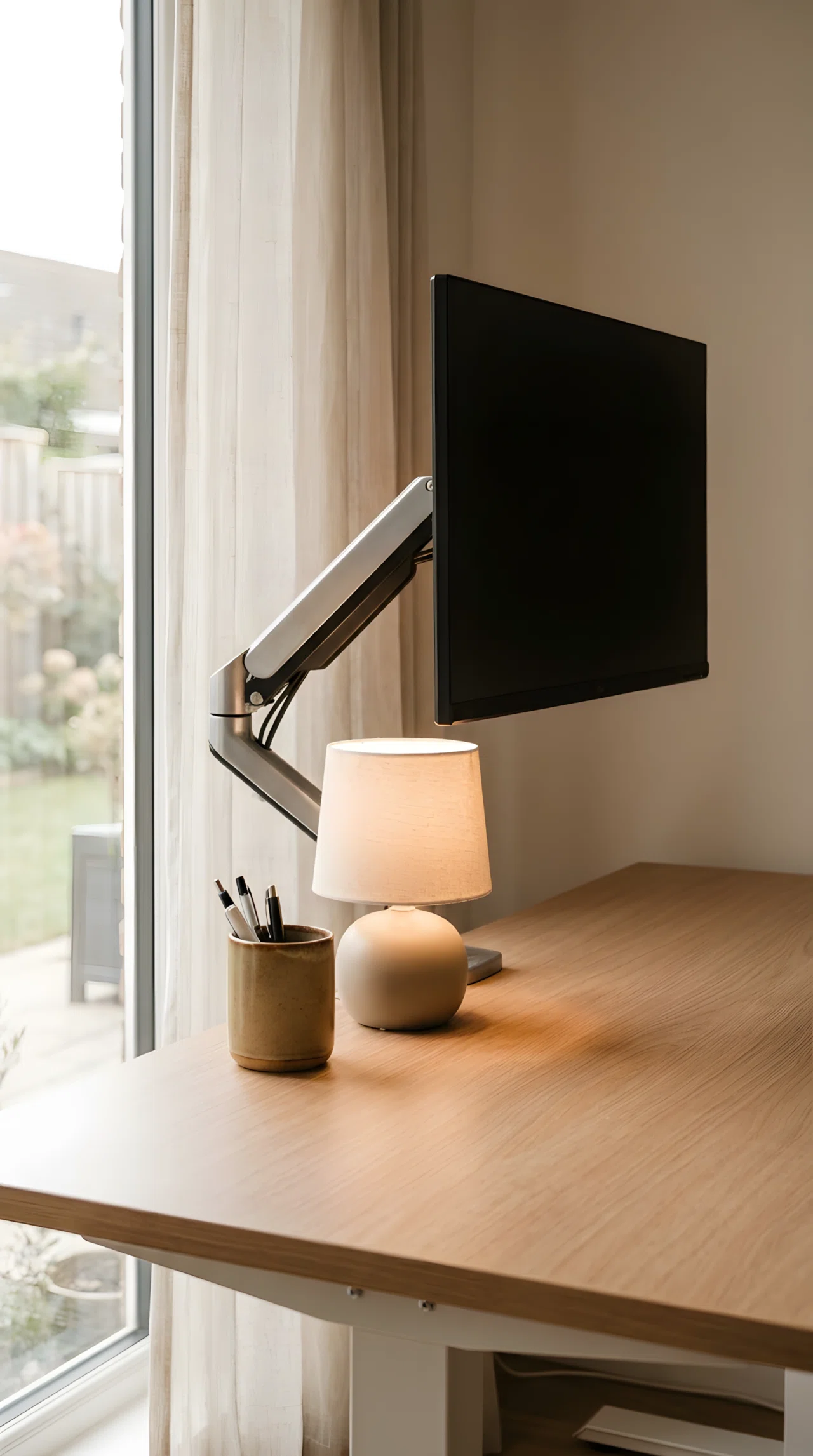
A monitor arm clears the desk surface completely below the screen, which immediately makes the workspace look cleaner and more intentional. It also allows precise height and angle adjustment for better posture during long work sessions.
The Ergotron LX Monitor Arm, available on Amazon and the Ergotron website, is the most recommended option across remote work communities for its build quality and smooth adjustment mechanism. It fits most standard monitors and mounts to any desk with a clamp or grommet fitting.
11. Choose a Calm, Earthy Color Palette for Accessories
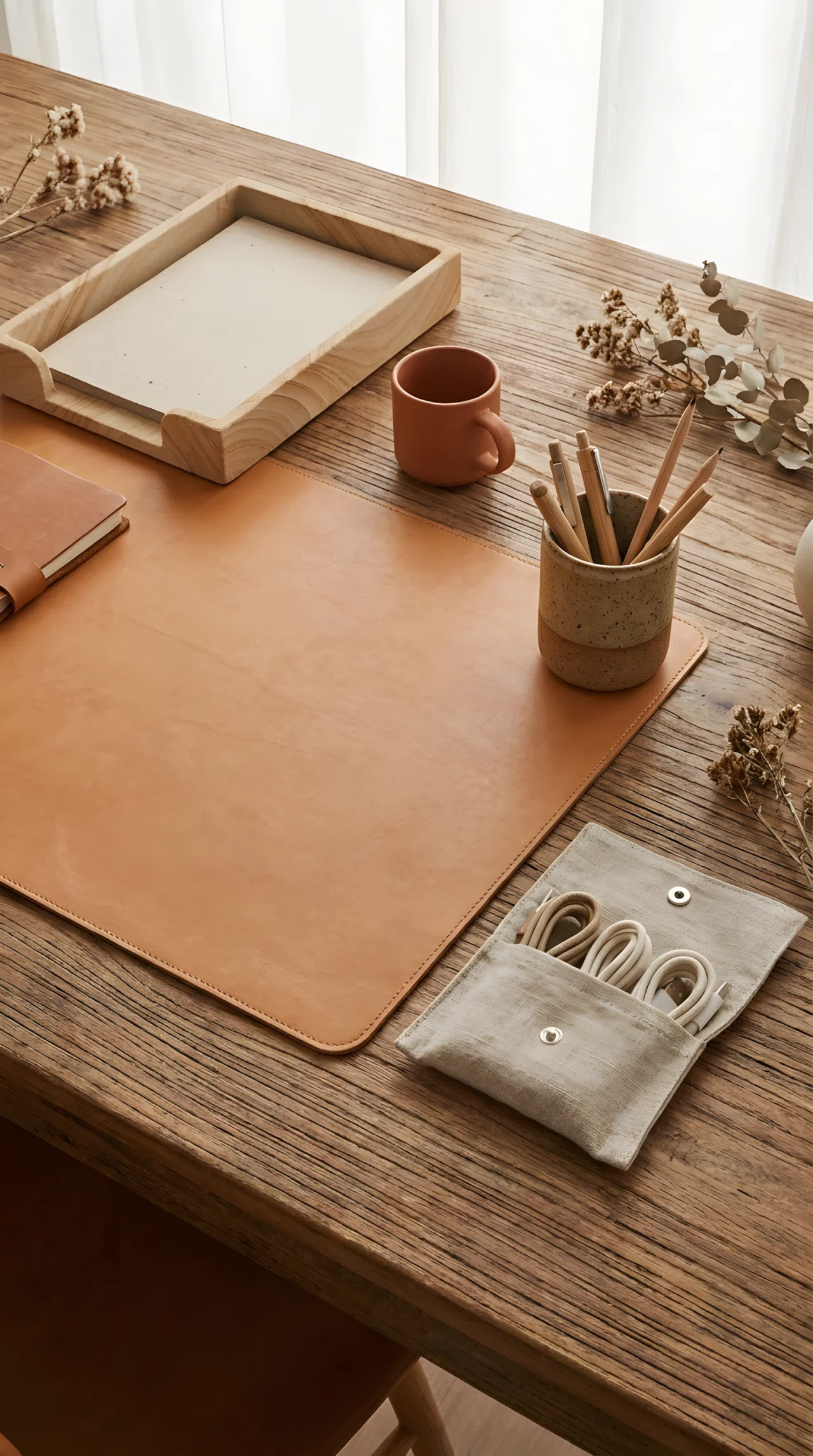
Desk accessories in matching earthy tones, warm neutrals, or a single accent color make even a small desk surface look cohesive and styled.
A ceramic pen holder, a leather desk mat, a stone paper tray, and a linen cable organizer all pull from the same visual language and take up no more space than their plastic alternatives. The Grovemade desk collection is a premium option worth browsing.
For more accessible prices, H&M Home and Muji both carry coordinated natural-material desk accessories.
12. Add a Scent Diffuser for Focus
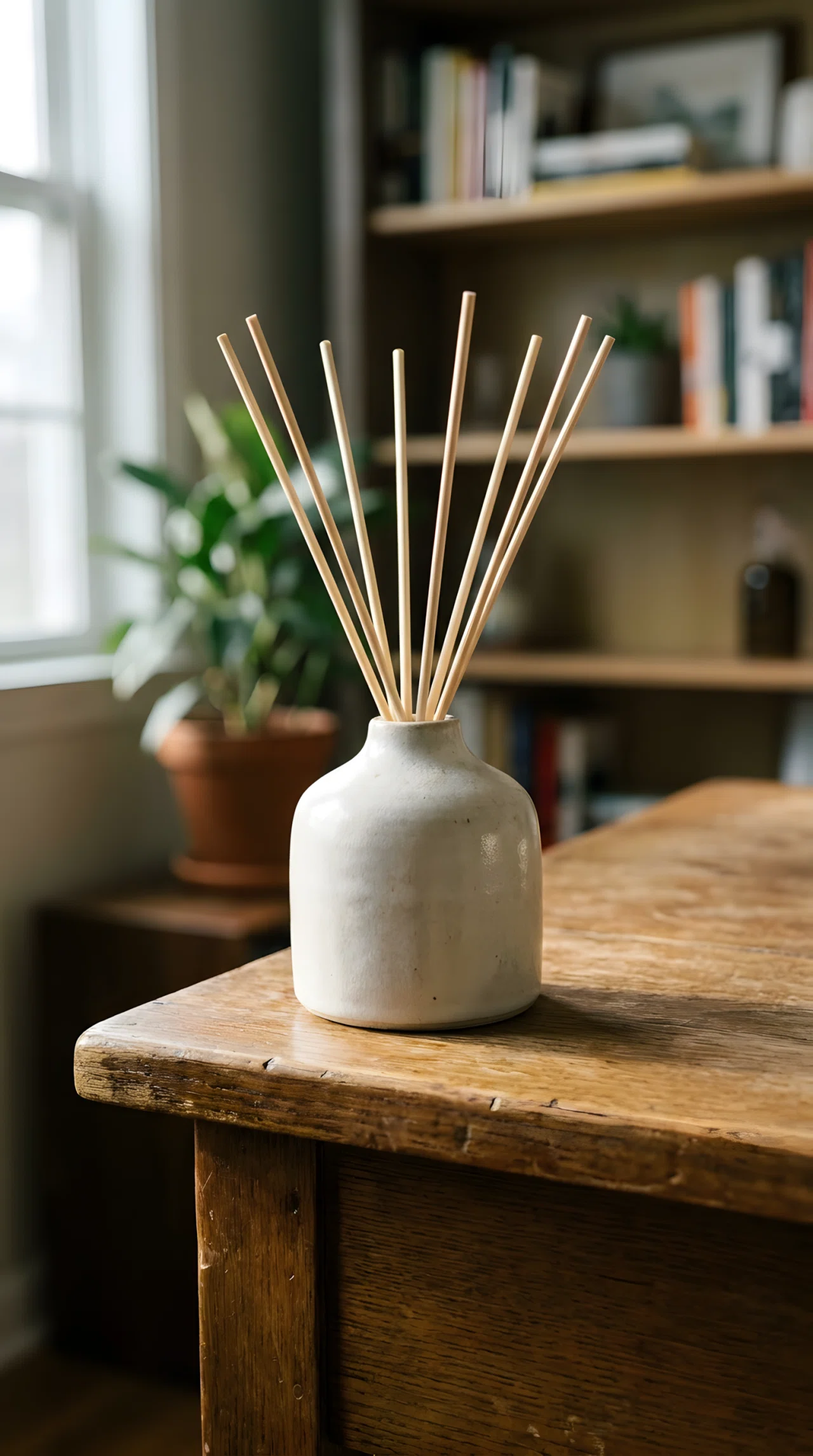
Scent is one of the most underused tools in a home office. A consistent scent associated with work sessions can become a focus cue that the brain starts responding to automatically over time.
Rosemary, peppermint, and eucalyptus are associated with improved alertness in research settings, while cedarwood and sandalwood tend to reduce cortisol.
The Vitruvi Stone Diffuser, available at Nordstrom, has a ceramic design that looks good on any desk. More affordable options are widely available on Amazon and Shopee.
13. Create a Micro Relaxation Zone
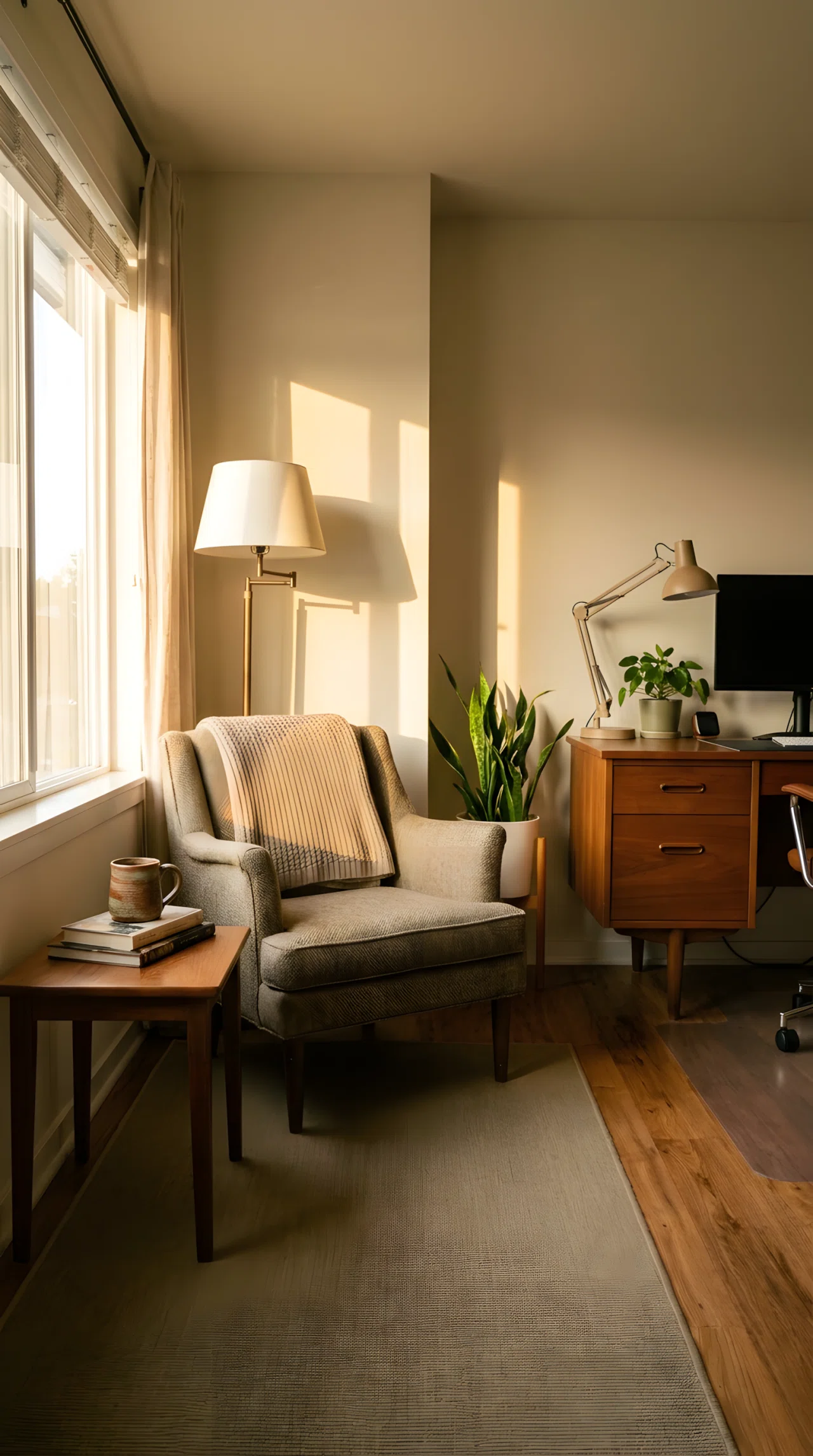
The most productive home offices in 2026 include a place to step away from the desk without leaving the room. A small armchair or floor cushion in the corner, a side table for a coffee mug, and a reading lamp create a secondary zone that signals permission to pause.
Even a floor cushion and a low side table from IKEA or Shopee is enough to establish this zone. The physical separation from the desk, even just a few feet, changes the quality of breaks significantly.
14. Use Personal Objects as Emotional Anchors
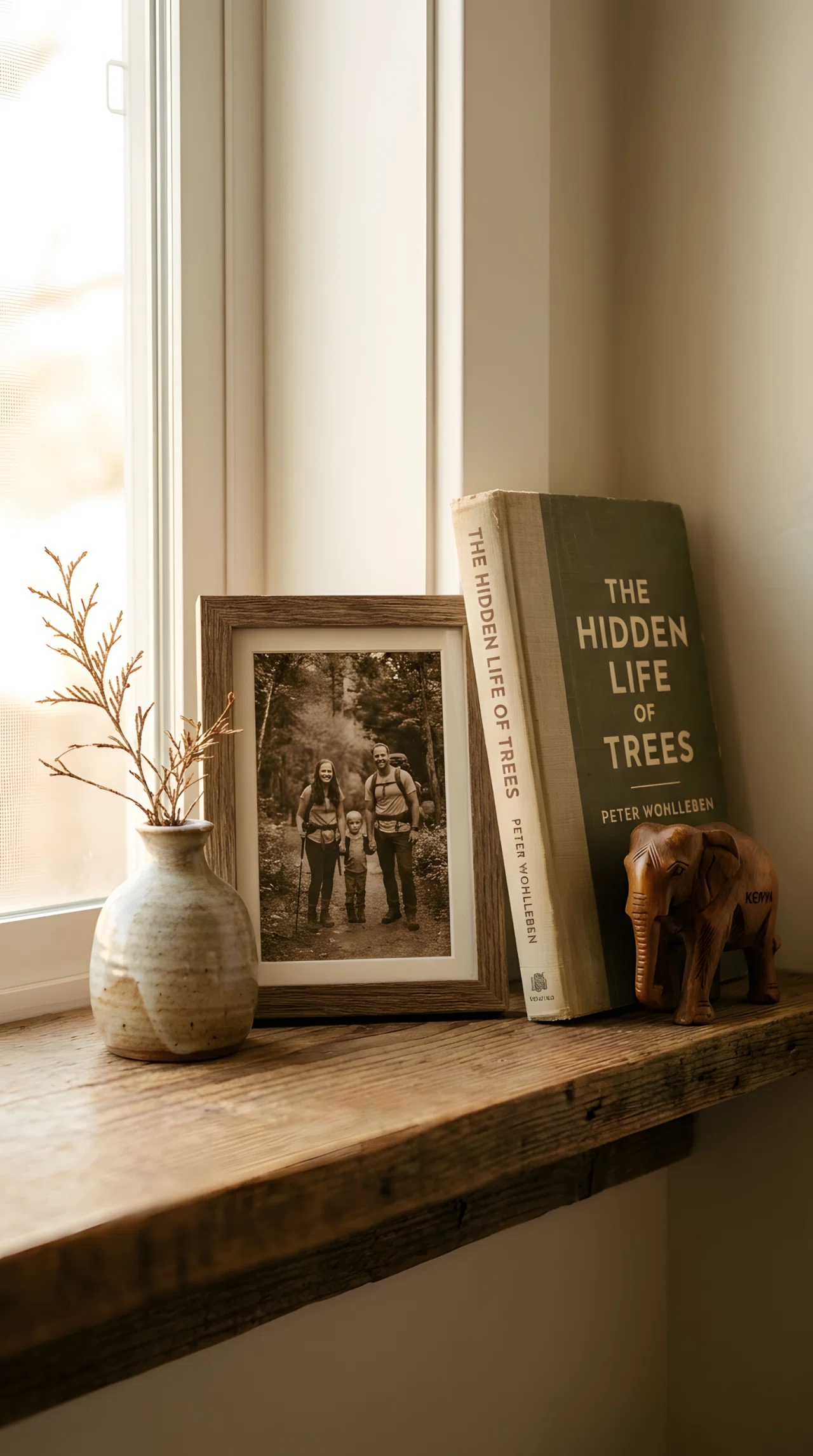
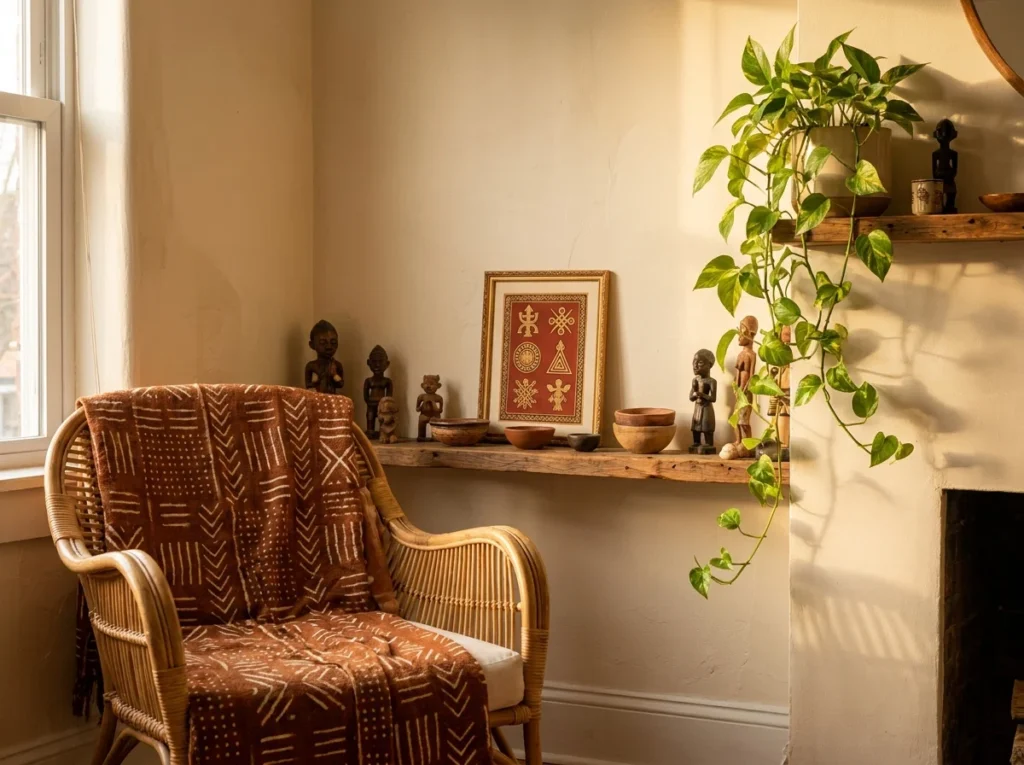
The most visually interesting home offices in 2026 are those that include objects with genuine personal meaning alongside the functional ones. A small souvenir from a meaningful trip, a ceramic piece from a local market, a framed photograph, or a book that matters to you on the desk shelf makes the space feel inhabited rather than installed.
These objects provide visual variety and serve as quiet motivation during long work sessions. Source them from your own collection first, then from Etsy sellers and independent makers rather than mass-market home stores.
15. Style the Desk Surface Like a Vignette
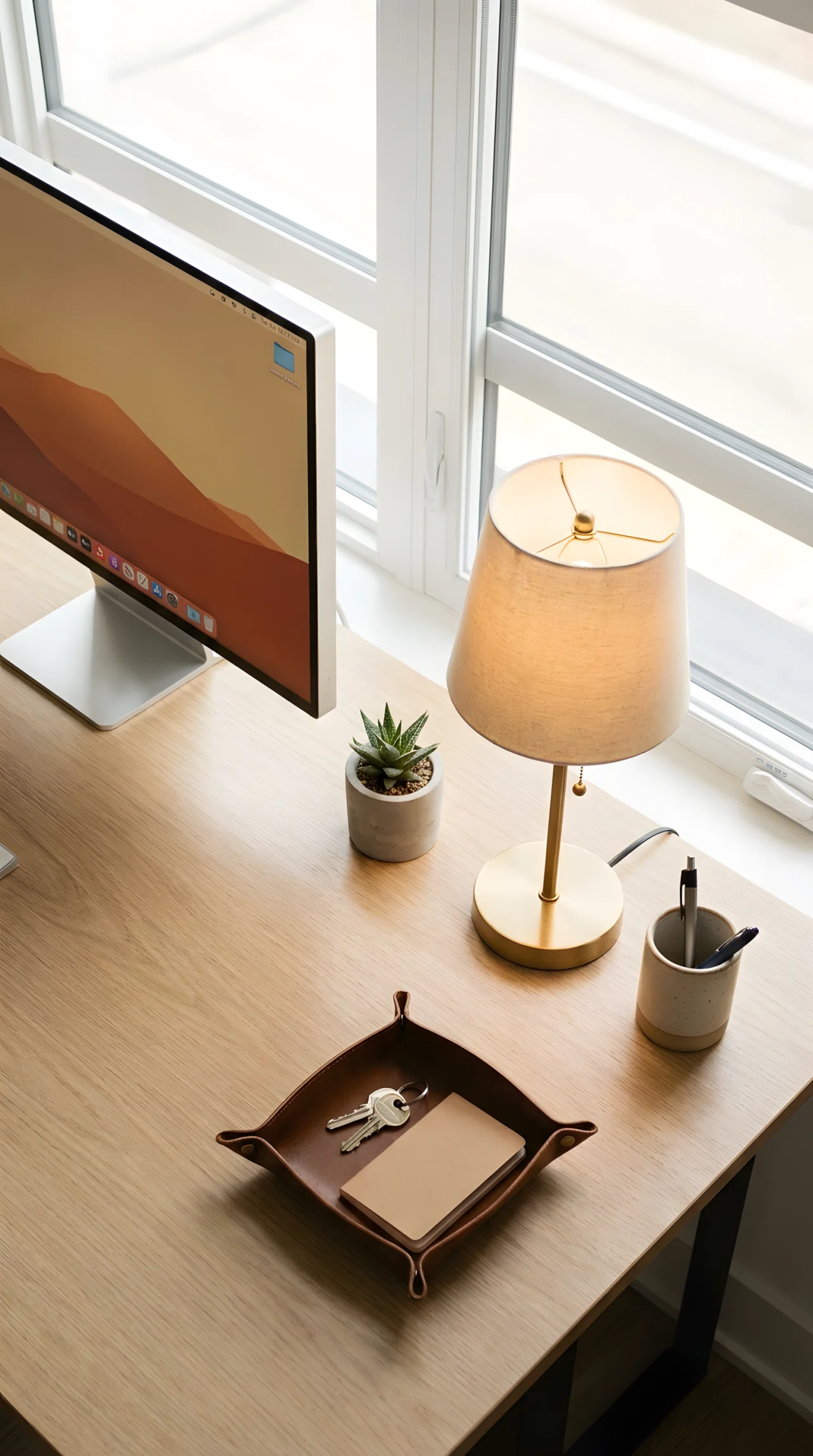
A clear desk with only three to five intentional objects on it looks far more expensive and considered than a full one. Remove everything from the desk surface, then add back only what genuinely earns its place: your monitor, a lamp, one plant, a ceramic pen holder, and a small tray for daily essentials.
Everything else finds a home in a drawer, on a shelf, or in a cable management box. This editing step costs nothing and is often the single biggest visual improvement a home office can make without buying a single new thing.
A home office worth working in doesn’t happen by accident. Start with the desk and the chair, add light and a plant, and build from there. The best remote setups feel like a genuine part of the home, not a temporary arrangement that never got resolved.