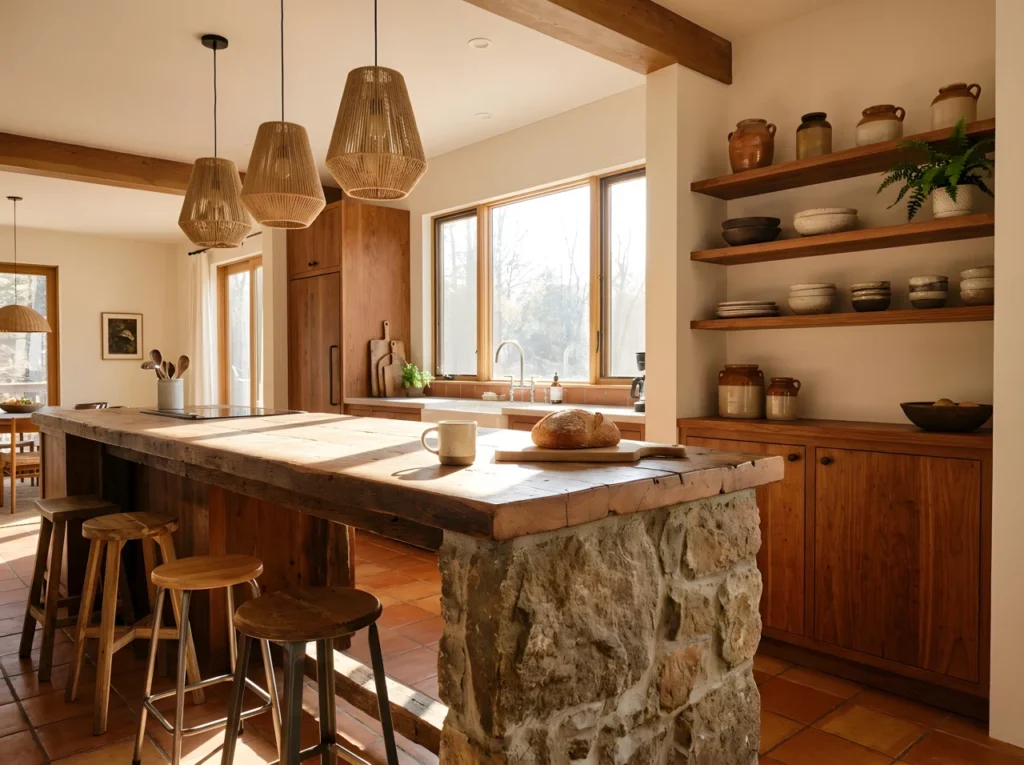
Everyone wants a kitchen island that feels like the heart of the home, but most end up with counter space that just collects mail and keys. The gap between a Pinterest-worthy island and yours often comes down to a few overlooked details.
This kitchen island roundup skips the generic advice and goes straight into layouts, materials, and lighting placements that actually transform an ordinary kitchen island into a functional, photo-ready focal point you’ll want to show off every single day.
1. Wrap-Around Islands for Seamless Open Kitchen Flow
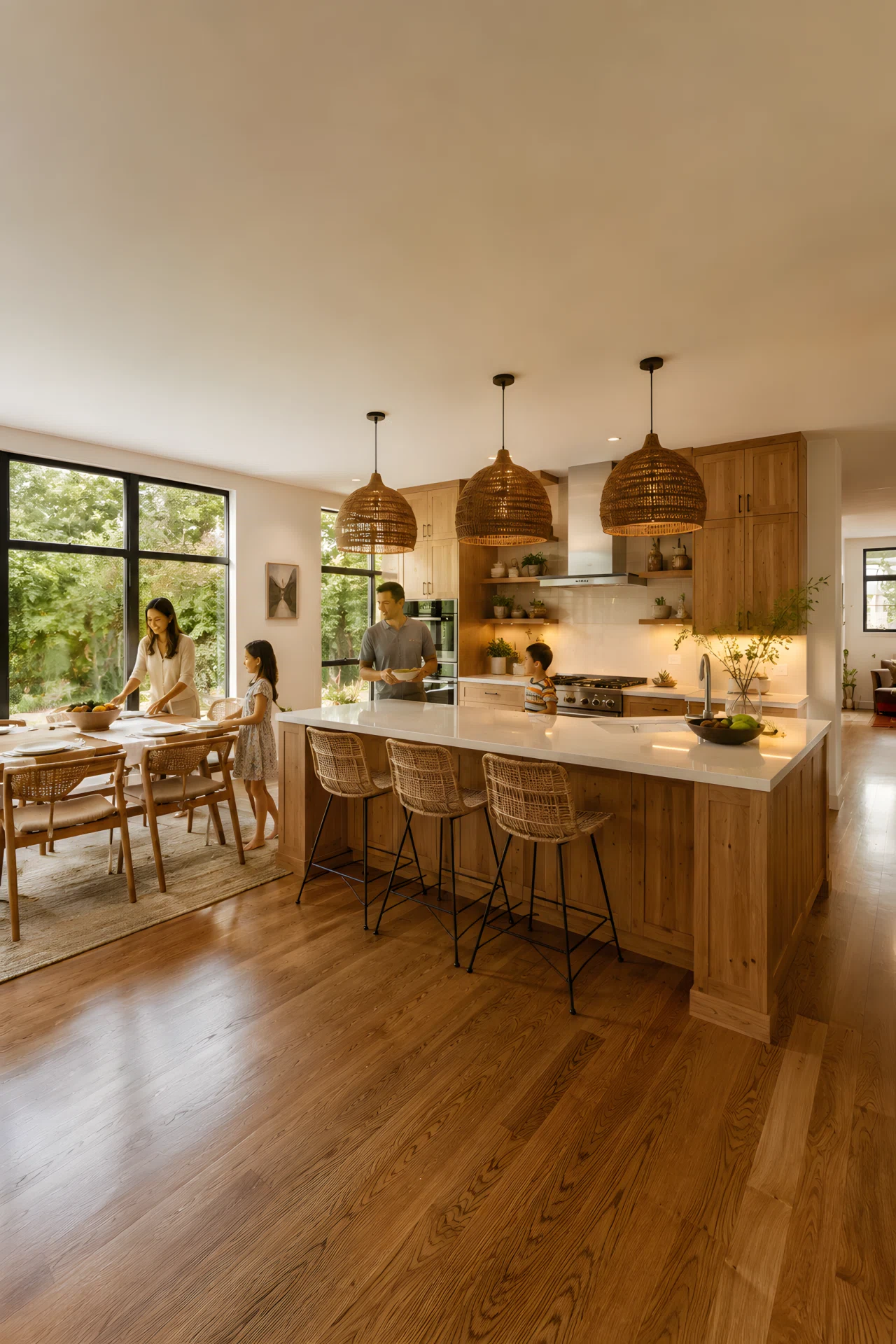
An open kitchen design lives or dies by how well the island connects cooking, eating, and gathering zones. A wrap-around island lets one continuous surface handle prep, seating, and serving without forcing you to squeeze past corners during a busy dinner.
This kitchen layout idea with island works especially well in open island kitchen concepts, where sightlines matter as much as square footage. It keeps the space feeling connected instead of chopped into disconnected work stations.
2. Layered Pendant Lighting Positioned to Highlight the Island’s Best Angle
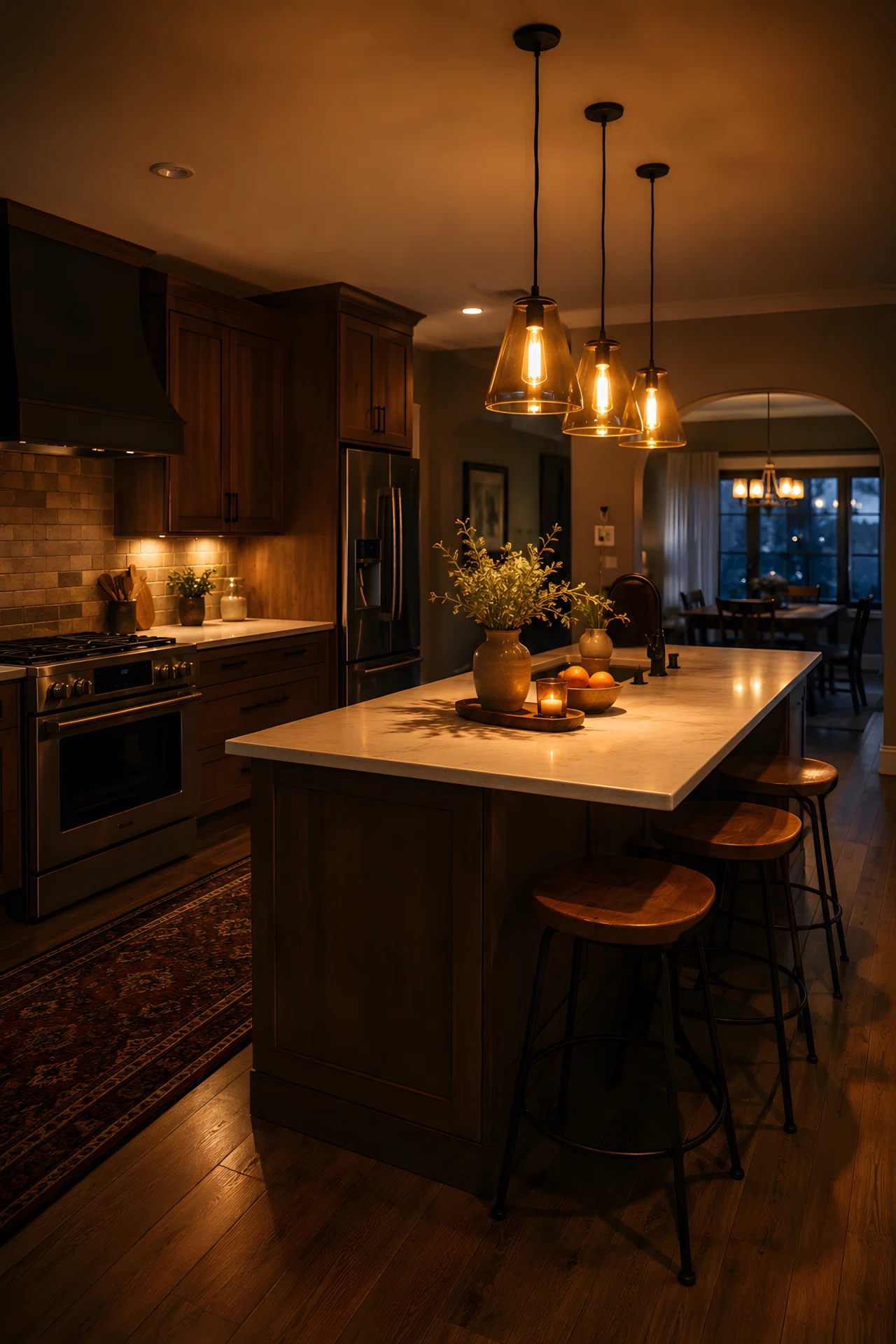
Great kitchen island lighting isn’t about the fixture, it’s about where light falls. Positioning pendants slightly off-center or in a staggered row draws attention to the island’s shape and countertop texture rather than washing the whole room in flat brightness.
This small adjustment turns a functional island into a styled focal point, especially in a cozy kitchen where warm, directional light does more visual work than an extra fixture ever could.
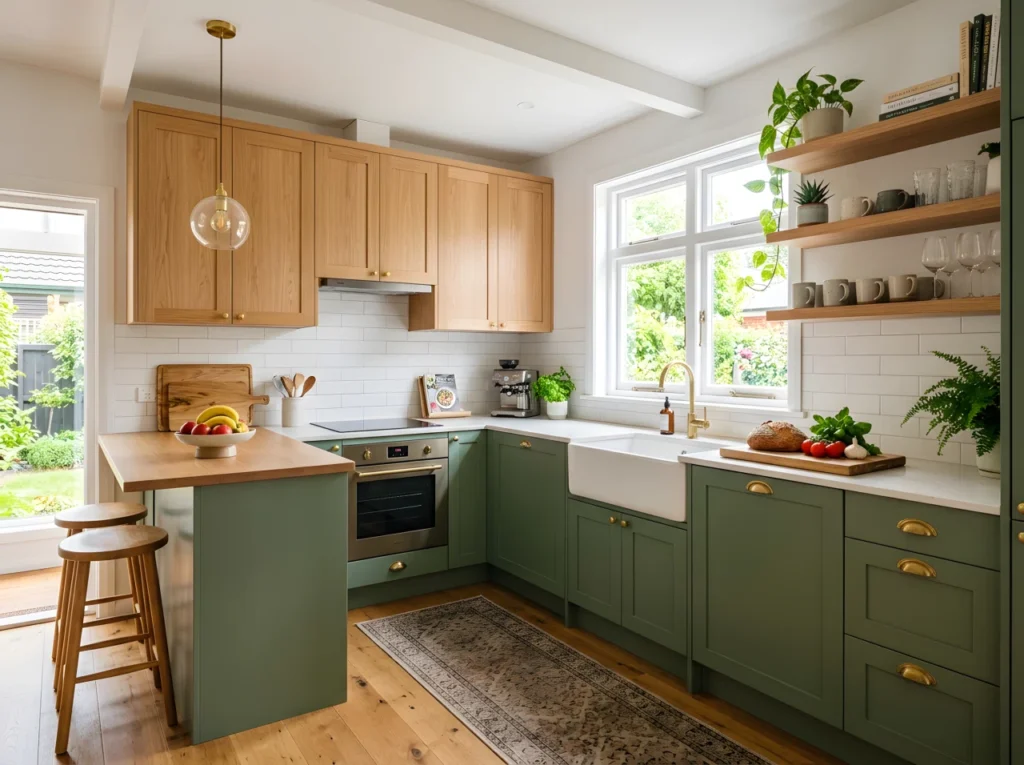
3. Compact Islands That Make Small Kitchens Feel Bigger
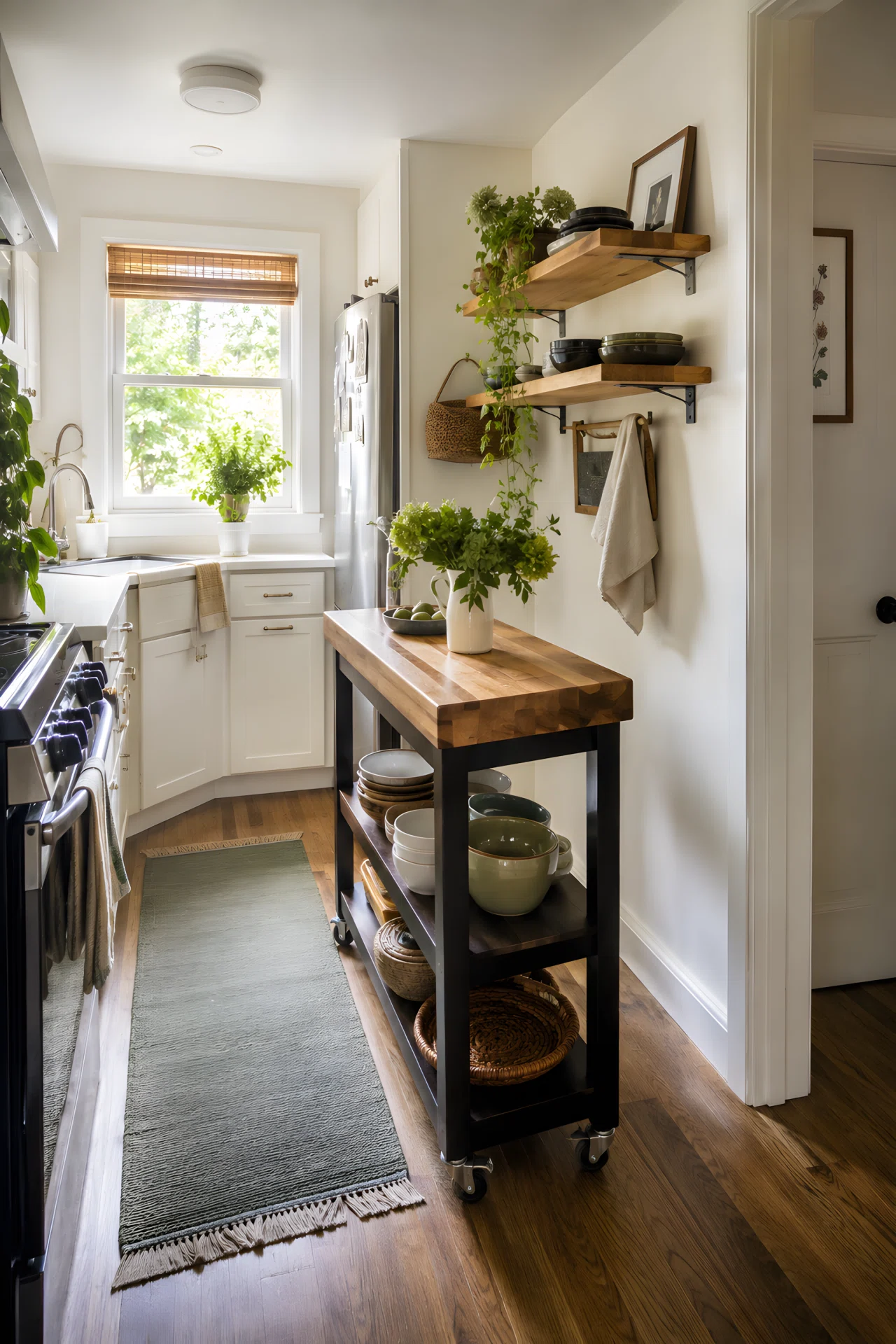
Small kitchen design doesn’t mean giving up on an island altogether. A narrow rolling island or a slim fixed unit adds prep space and storage without blocking the natural walking path between counters.
Choosing an island scaled to the room instead of squeezing in a standard-size one keeps the layout functional and visually balanced, proving that even a modest footprint can still feel like a real gathering spot.
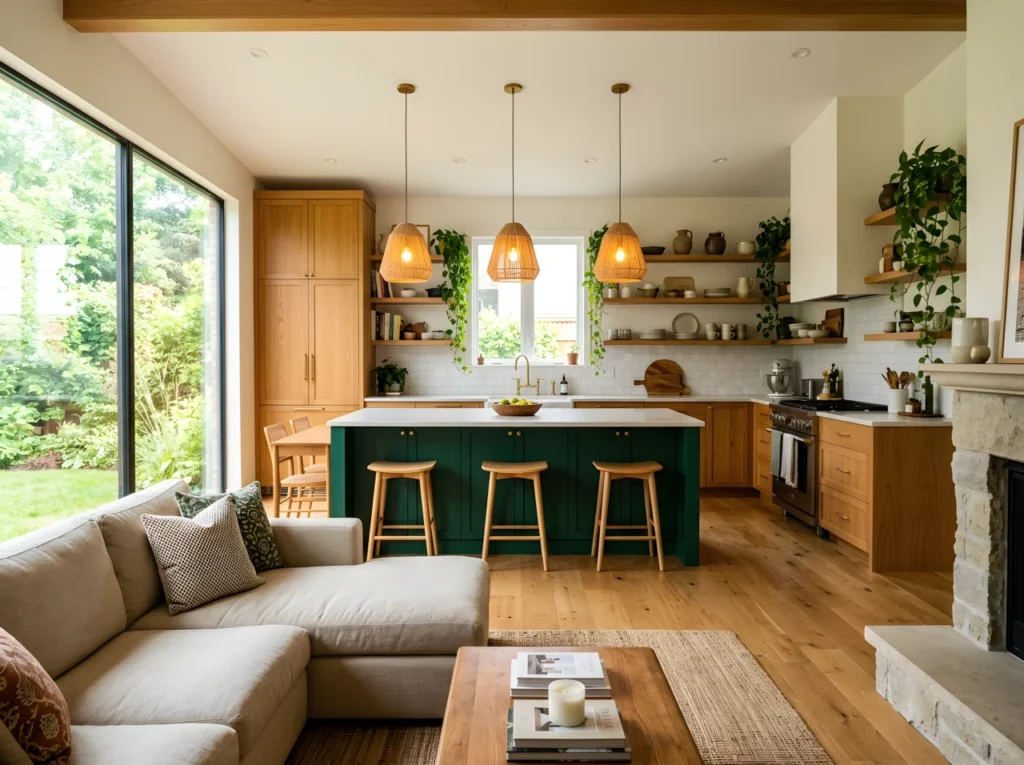
4. Earthy Stone and Wood Combos for a Grounded Island Look
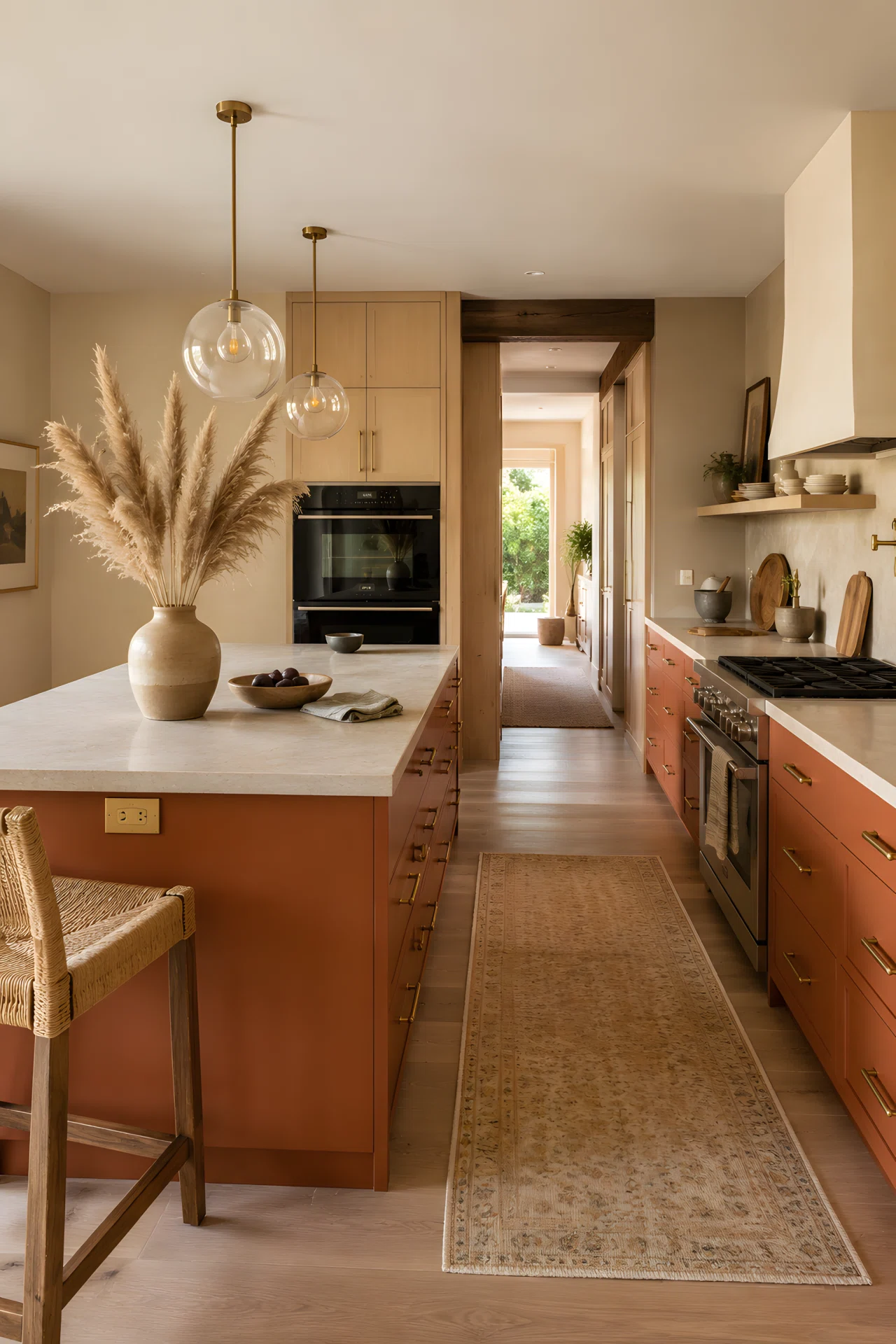
An earthy kitchen island leans into raw, textured materials like honed limestone, unlacquered brass, and unfinished oak. These finishes age gracefully instead of looking dated after a few years, which is exactly what makes a design feel timeless.
Pairing warm terracotta or sand-toned cabinetry with the island’s stone top adds contrast without competing, giving the whole kitchen a calm, collected feeling that never goes out of style.
5. Freestanding Furniture-Style Islands for a No-Renovation Upgrade
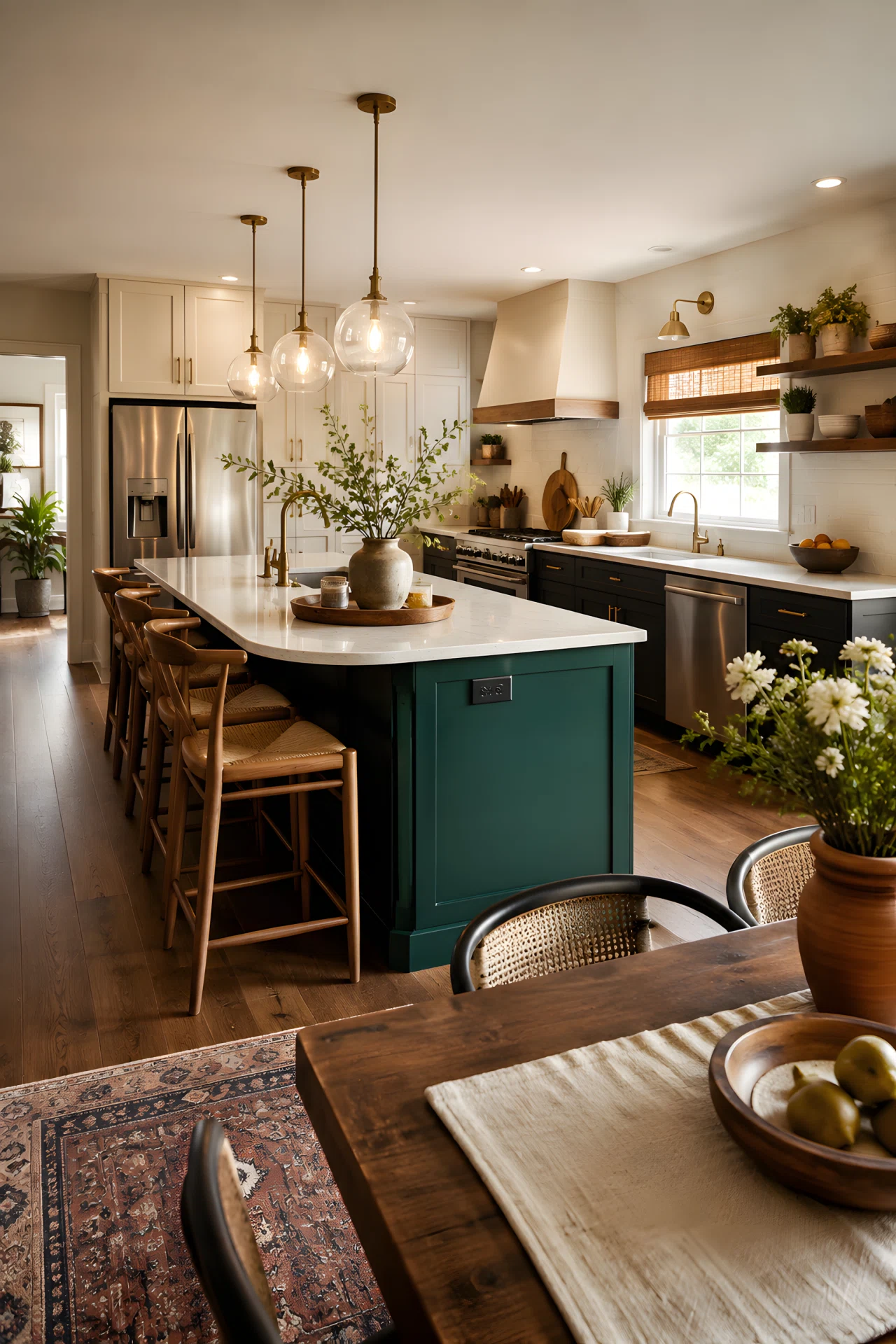
Not every kitchen island idea requires construction. A freestanding cart or vintage-inspired cabinet on casters brings extra counter space and storage into an open kitchen design without touching plumbing, electrical, or flooring.
It’s a low-commitment way to test what island size and style actually suits daily life before investing in a permanent build, and it can always be rolled aside when the space needs to breathe.
6. Curved Islands That Soften a Kitchen’s Hard Lines
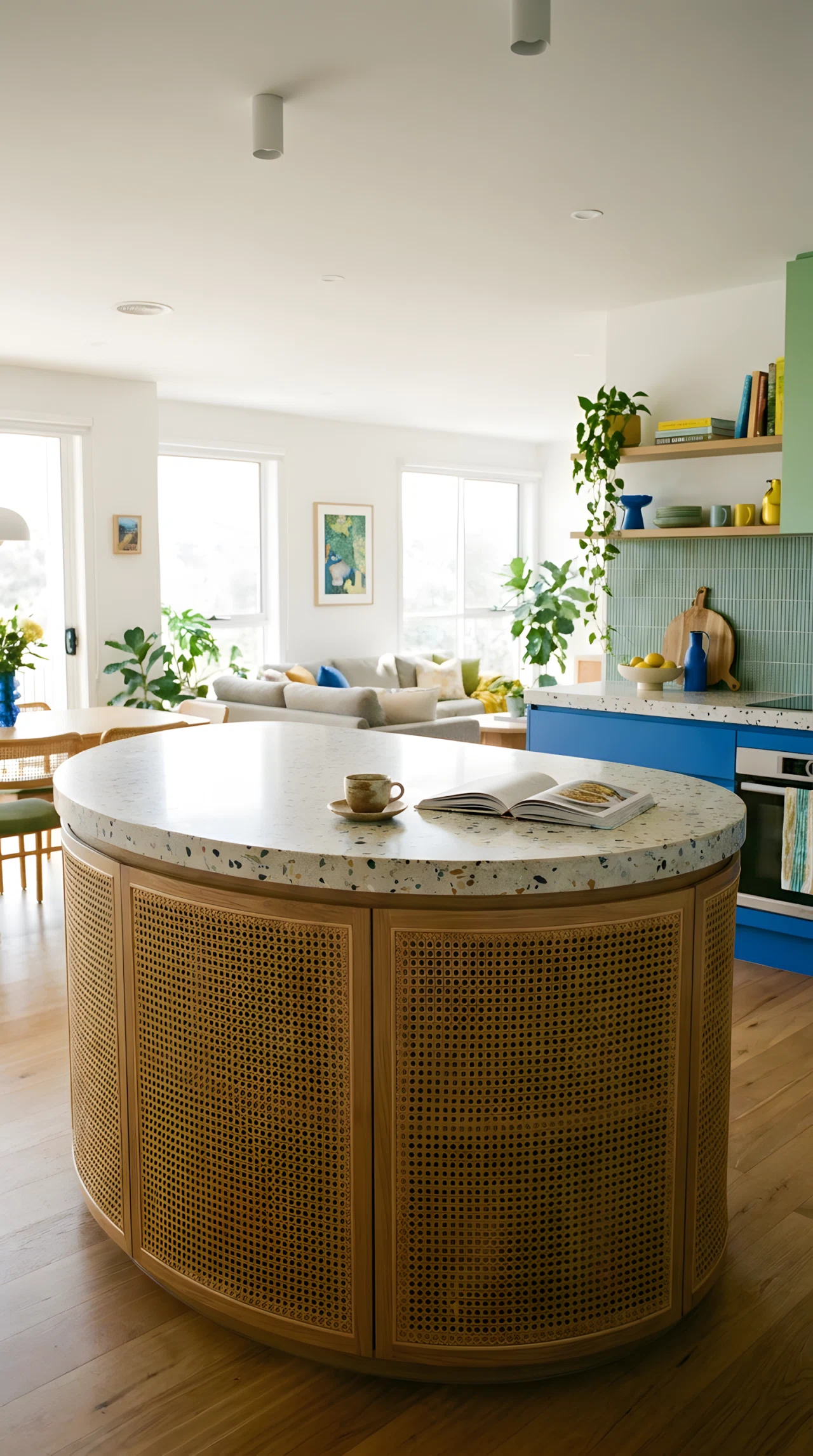
A curved or rounded island breaks up the sharp angles common in most kitchen layouts, creating an easier flow for foot traffic and conversation. This kitchen island inspiration works well when the island sits near a walkway or open living space.
The soft edges also read as more modern and less boxy, giving even a traditional kitchen a fresh, current feel without changing the cabinetry style underneath.
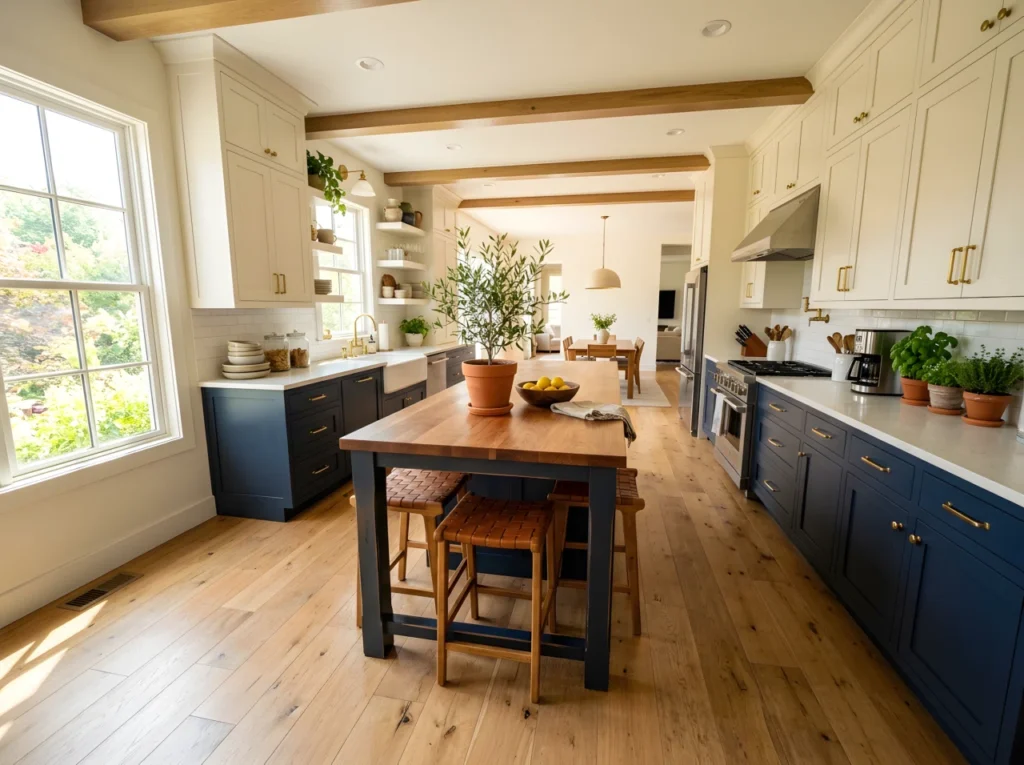
7. Two-Tone Islands That Add Contrast Without Overwhelming the Room
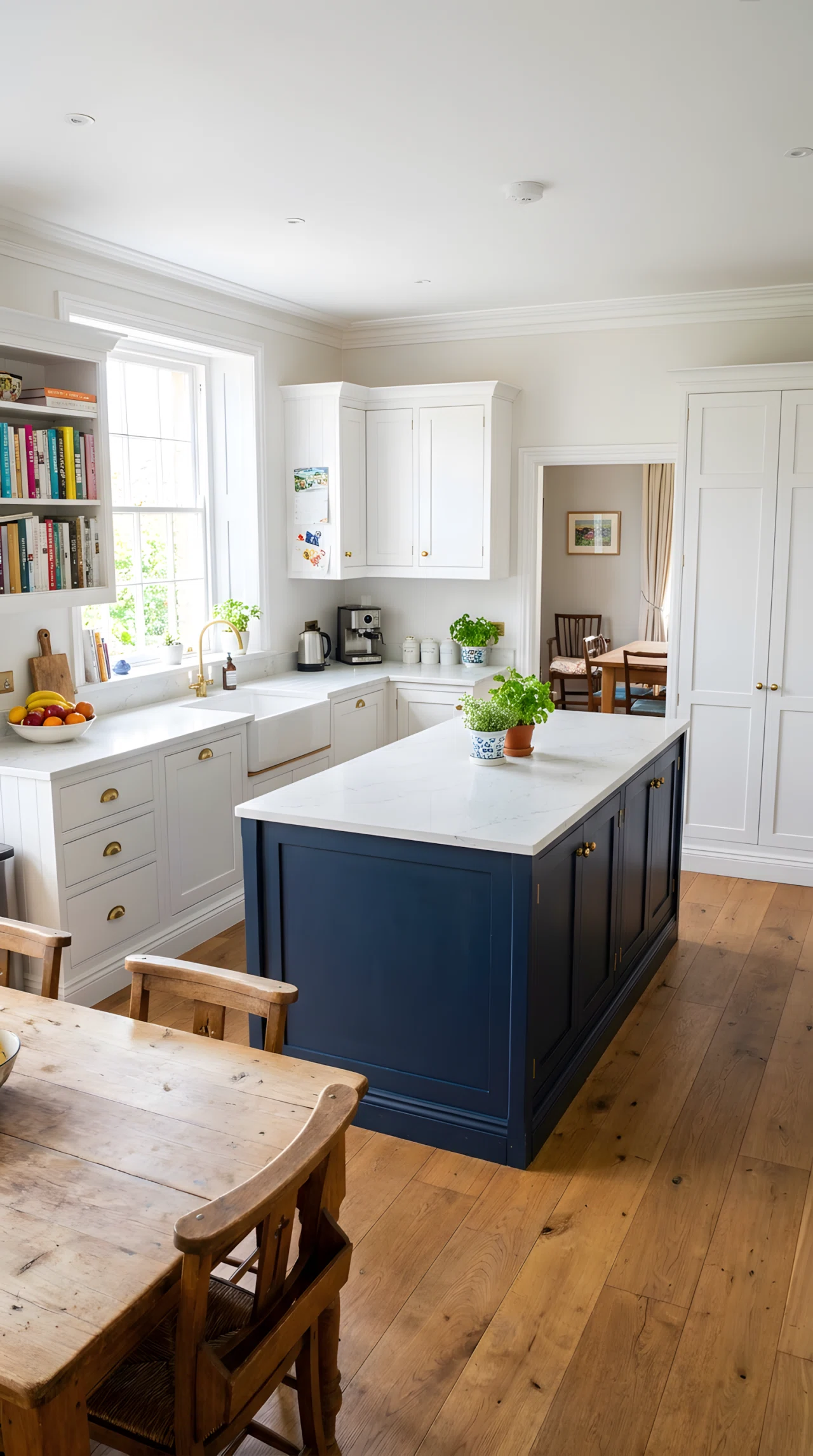
A two-tone kitchen island pairs a different cabinet color on the island than on the surrounding cabinetry, instantly making it read as a deliberate design statement instead of an accident. Deep navy or forest green against white perimeter cabinets is a classic combination that still feels current.
Keeping the countertop material consistent across both tones ties the look together so the contrast feels intentional rather than mismatched.
8. Hidden Storage That Keeps Island Countertops Clutter-Free
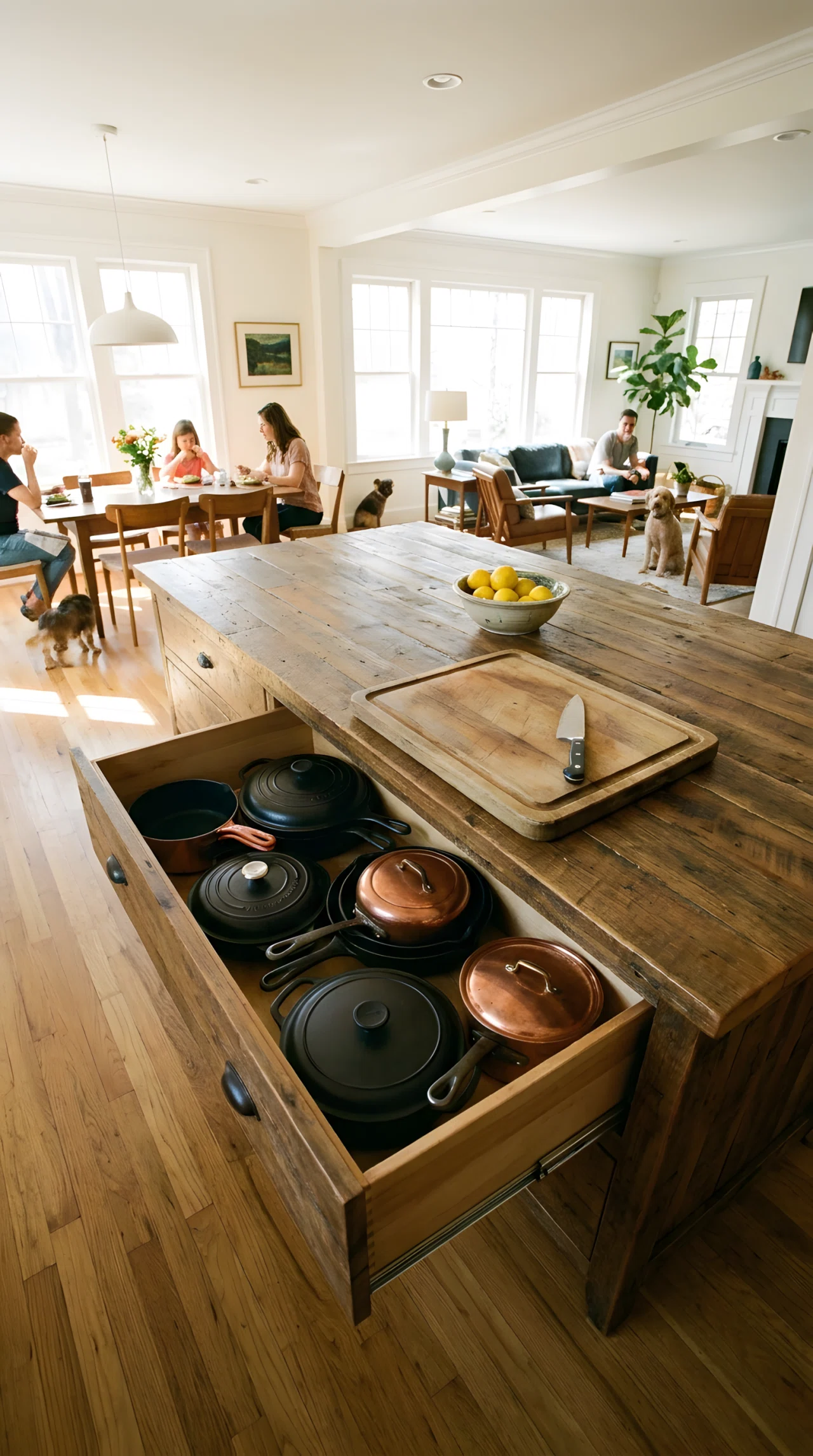
The best kitchen island ideas hide as much as they display. Pull-out trash bins, tip-out trays near the sink, and deep drawers for pots keep daily essentials out of sight but within arm’s reach.
This kind of smart organization is what actually keeps a countertop clear enough to photograph on a random Tuesday, not just after a deep clean before guests arrive.
9. Positioning a Window Behind the Island Instead of Above the Sink
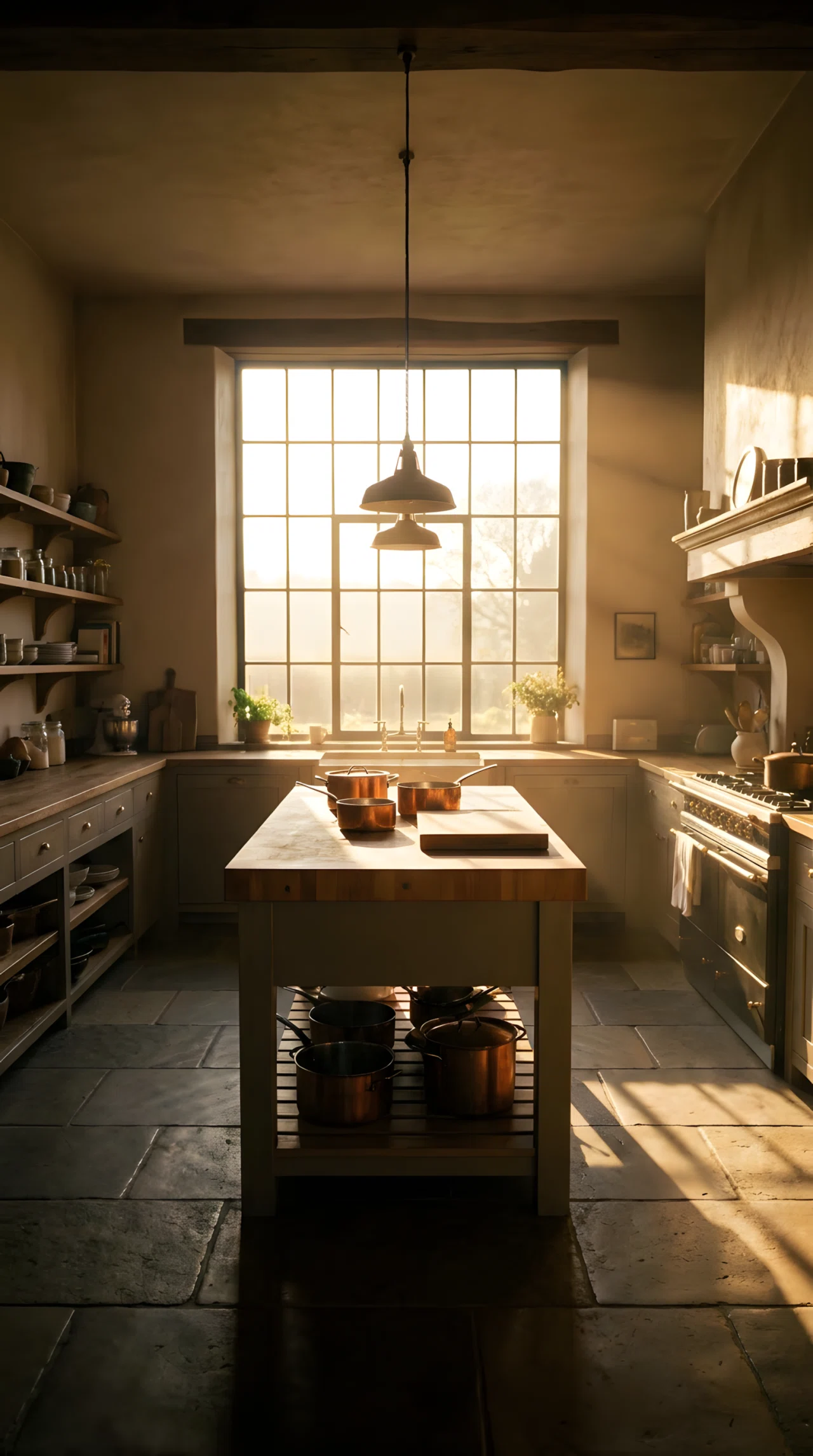
Most kitchens put the window over the sink by default, but placing it behind the island changes how light moves through the whole room. Morning sun spills directly across the countertop instead of getting blocked by upper cabinets.
This positioning also makes the island the brightest spot in the kitchen throughout the day, naturally drawing people toward it instead of the perimeter counters.
10. Mixed-Height Seating That Makes an Island Work for Every Moment
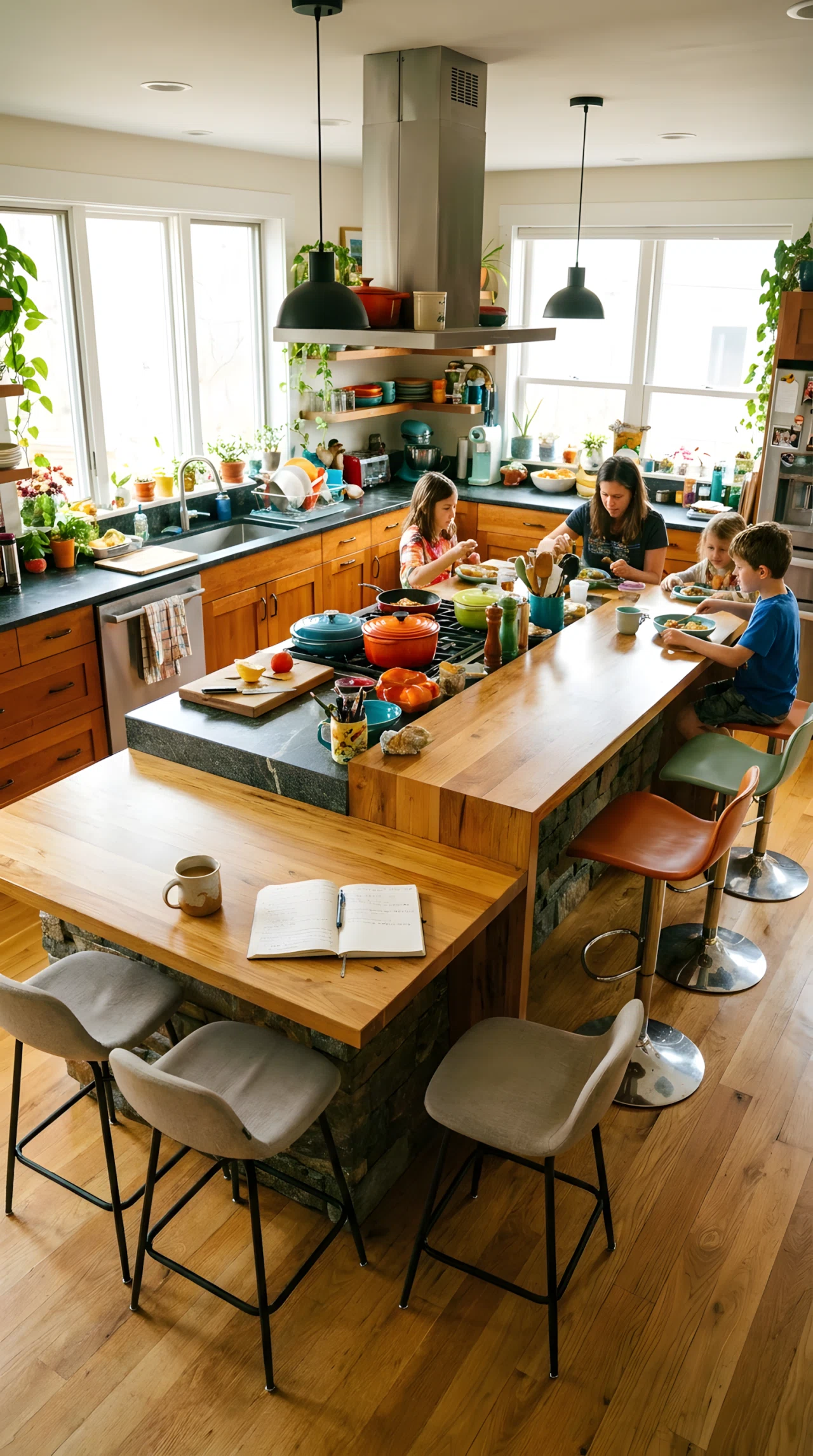
Bar-height stools alone can feel formal and impractical for kids or quick homework sessions. Combining a lower counter-height section with a taller bar section lets the same island serve breakfast, homework, and cocktail hour without rearranging furniture.
This kind of layered seating is one of the more functional kitchen island ideas for households with a wide age range, since everyone finds a spot that actually fits.
11. Modern Farmhouse Islands with Shiplap Paneling and a Farmhouse Sink
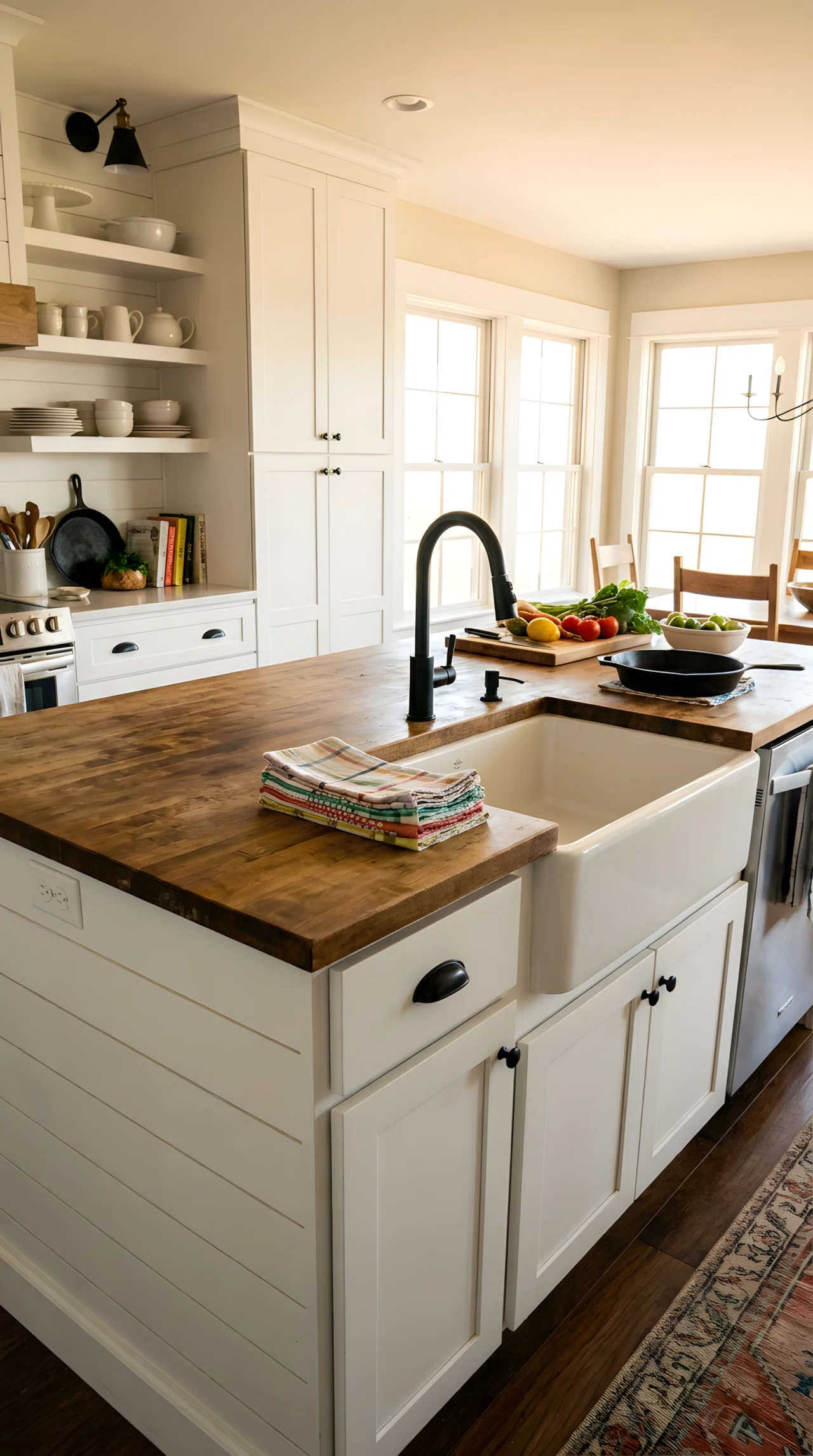
A modern farmhouse kitchen island earns its charm from small architectural details, not just white paint. Shiplap paneling on the island’s base and a deep apron-front sink instantly signal the farmhouse aesthetic without tipping into costume territory.
Pairing it with matte black fixtures and a worn wood countertop keeps the look grounded and functional instead of overly decorative, so the island still holds up to daily meal prep.
12. Waterfall-Edge Countertops That Make an Island Look Custom-Built
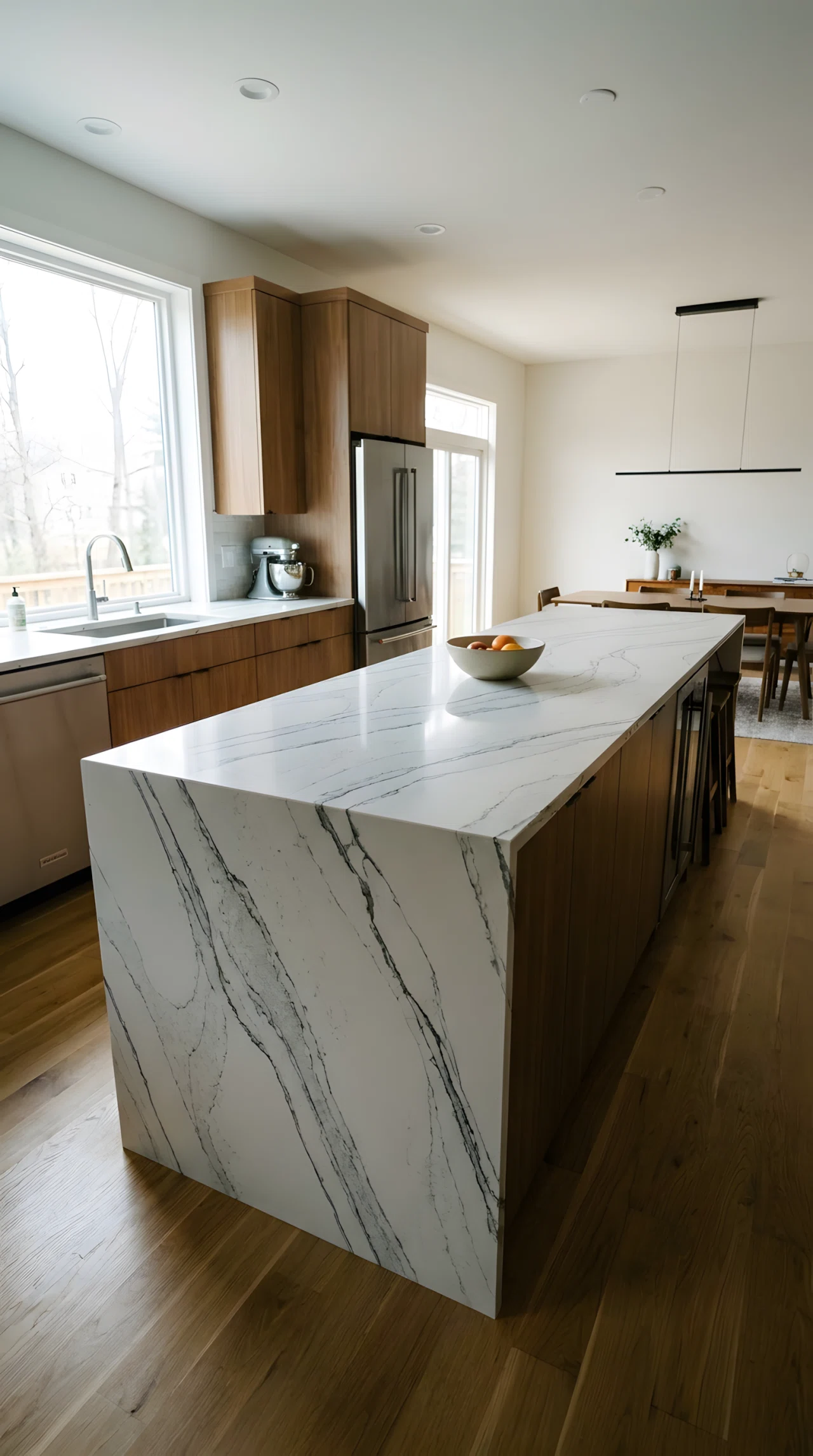
A waterfall edge, where the countertop material wraps down the sides of the island to the floor, is one of the simplest ways to make a builder-grade island look custom. The continuous surface reads as one solid, intentional piece rather than a slab set on a box.
It works especially well with dramatic veining, since the pattern flows uninterrupted from the counter straight down the side panel.
13. Curated Open Shelving That Gives an Island a Lived-In Kitchen Aesthetic
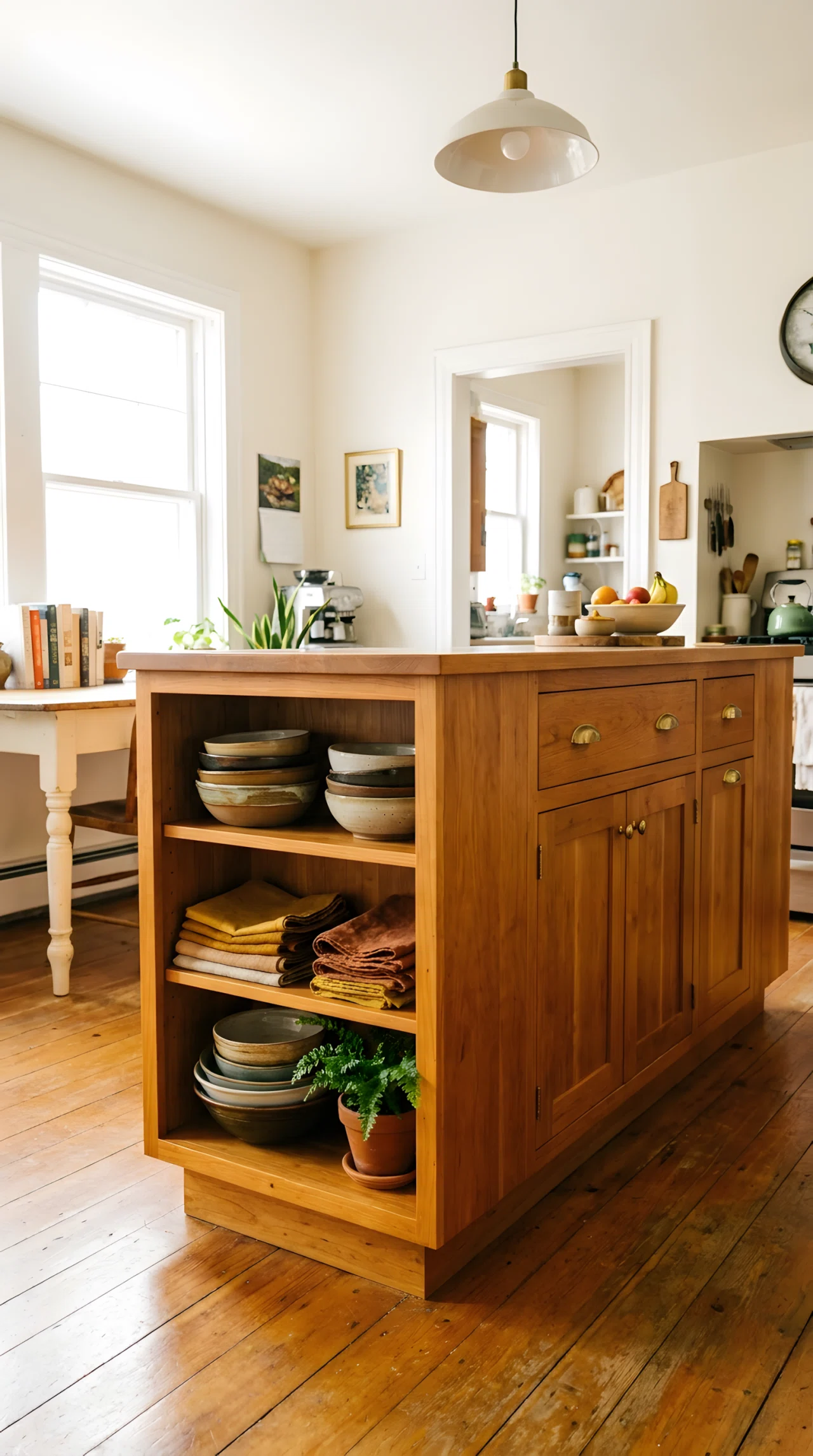
Swapping one closed cabinet end for open shelving turns an island into a spot for everyday kitchen aesthetic styling. A few ceramic bowls, a stack of linen napkins, and one plant is usually enough, more than that starts to look cluttered instead of curated.
This detail also breaks up a wall of matching cabinetry, giving the island a bit more personality without touching the layout at all.
14. Black Statement Islands That Anchor a Light, Airy Kitchen
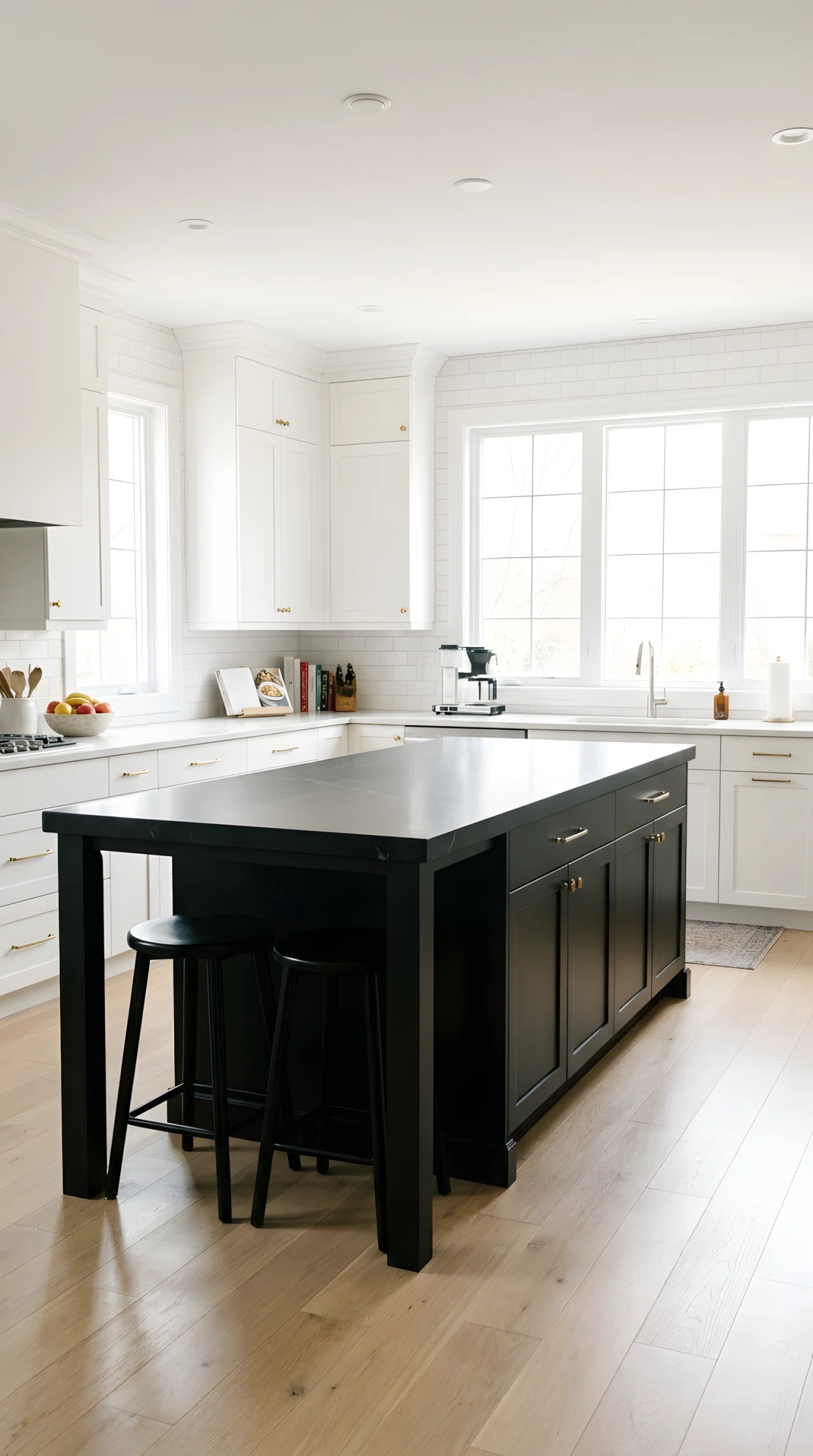
A single black island in an otherwise white or light-toned kitchen acts like punctuation, it gives the eye somewhere to land. Charcoal or matte black cabinetry paired with brass or unlacquered hardware keeps the contrast feeling rich instead of harsh.
It’s a bold move that still reads as timeless because the drama comes from color, not from a trend-driven shape or finish that dates quickly.
15. Built-In Charging Stations That Keep Devices Off the Island Surface
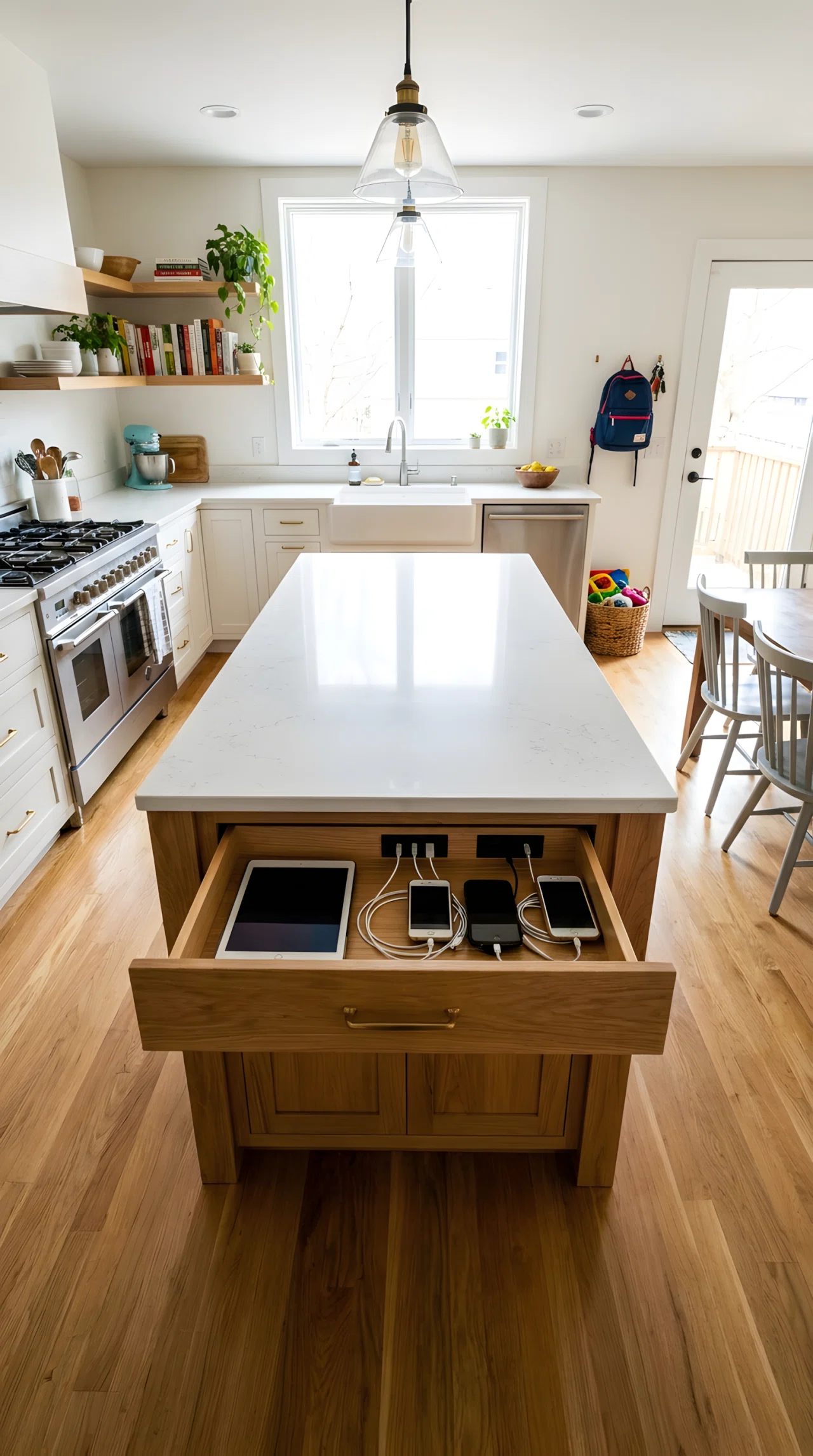
A dedicated charging drawer or outlet tucked into the island’s end panel solves one of the most common clutter problems in busy households, tangled cords and phones taking up prep space. It’s a small addition that has an outsized impact on how clean the island looks day to day.
It’s especially useful for households juggling homework, recipes on a tablet, and everyday devices in one shared space.
Bringing an island idea to life is really about picking the two or three details that matter most for how you actually live, then letting the rest follow. Whether that means a wrap-around layout for better flow, pendant lights angled just right, or a single black cabinet for contrast, small choices add up fast.
Start with whichever idea solved a problem you’ve been putting up with for too long. A kitchen island doesn’t need to check every box at once, it just needs to work for the mornings, dinners, and everyday moments that actually happen in your space.