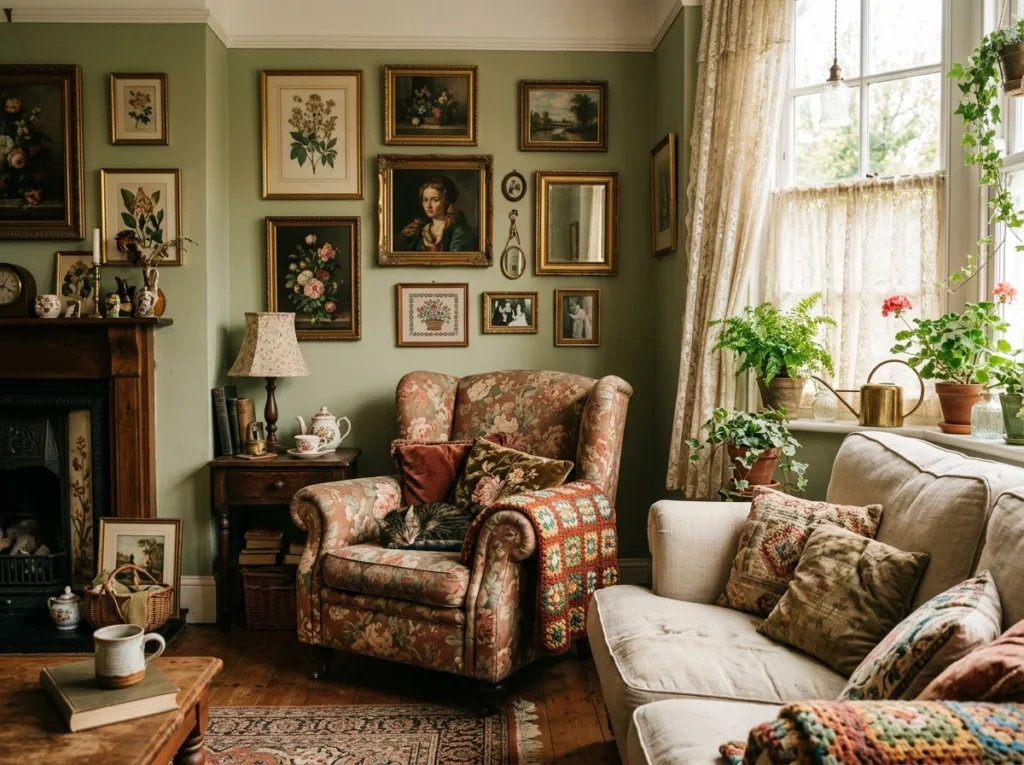
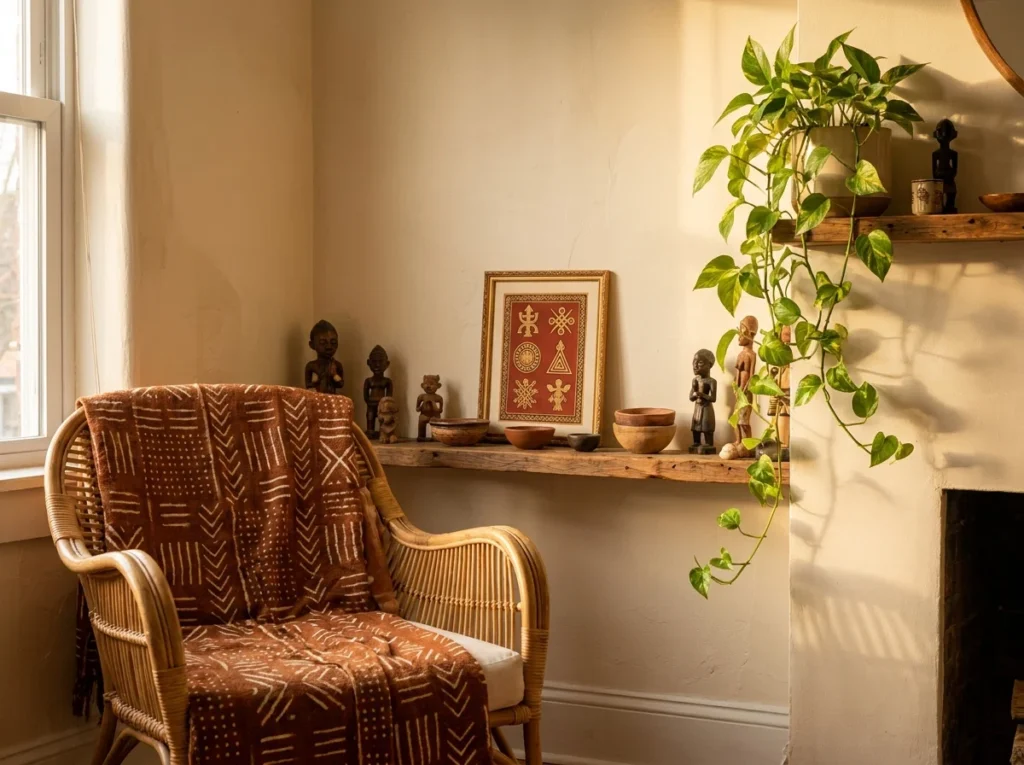
There’s a specific kind of room that stops your scroll completely — not because it’s perfectly staged, but because it feels like someone actually lives there and has stories to tell.
That’s the promise of Afrohemian decor, the fusion of African craft traditions and bohemian layering that Pinterest named its fastest-growing home trend of 2026, with searches up 220% year over year.
For anyone in their 20s and 30s building a home that feels personal rather than generic, this aesthetic is less of a trend and more of a mindset: collect intentionally, layer meaningfully, and let every corner hold something worth looking at. Here are 15 ideas to get you started.
1. Start With One Hero Textile and Build Around It
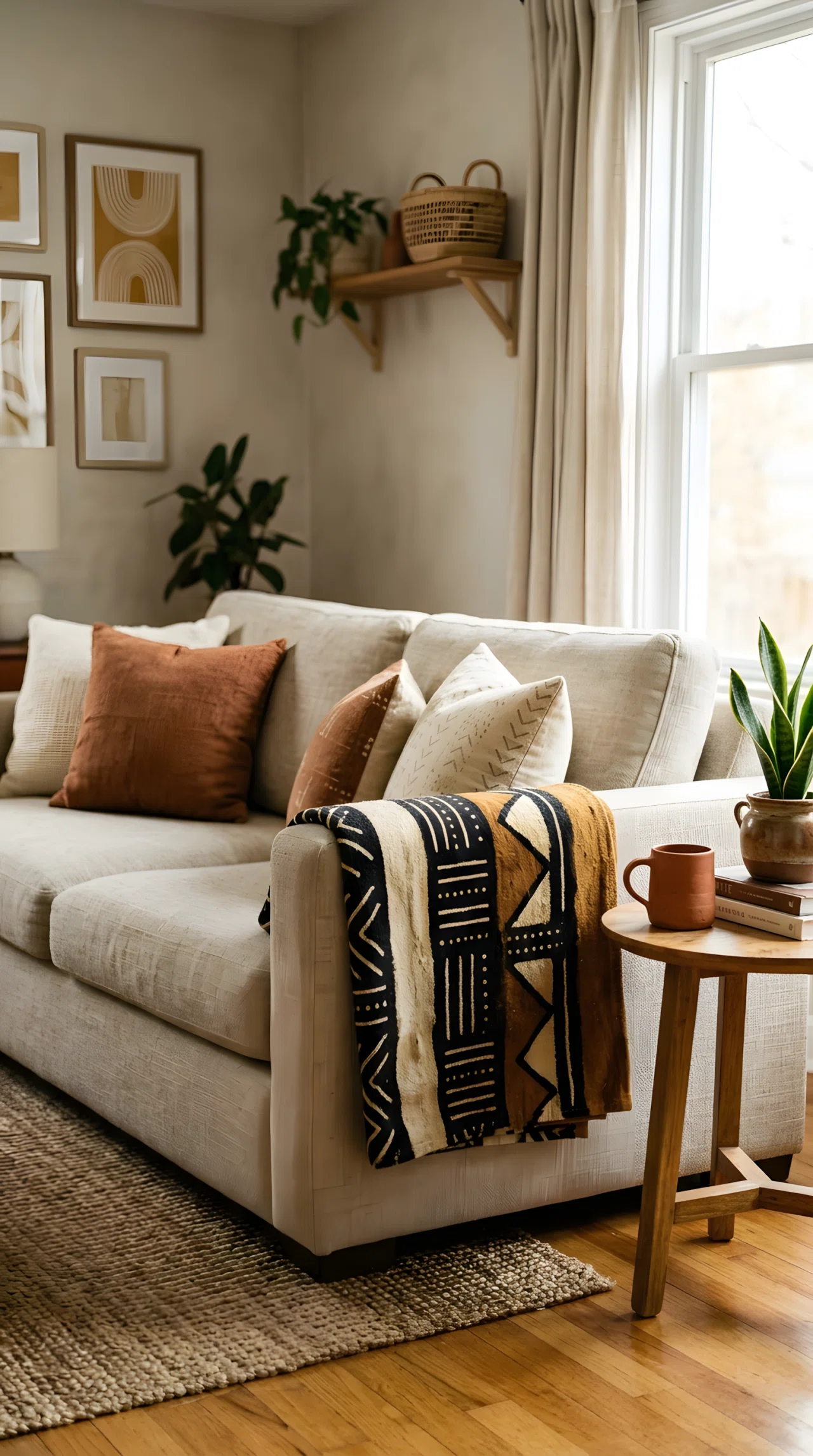
Every great Afrohemian room begins with one strong piece of fabric. A mudcloth throw, an Adire-dyed pillow cover, or a Kente-inspired textile sets the color story for everything else in the room.
Let this piece dictate your palette — pull two or three colors from it and use them to guide every other purchase. Starting here prevents the layered look from tipping into chaos, because everything else in the room is already speaking the same visual language.
2. Bring In an Adire Fabric Detail
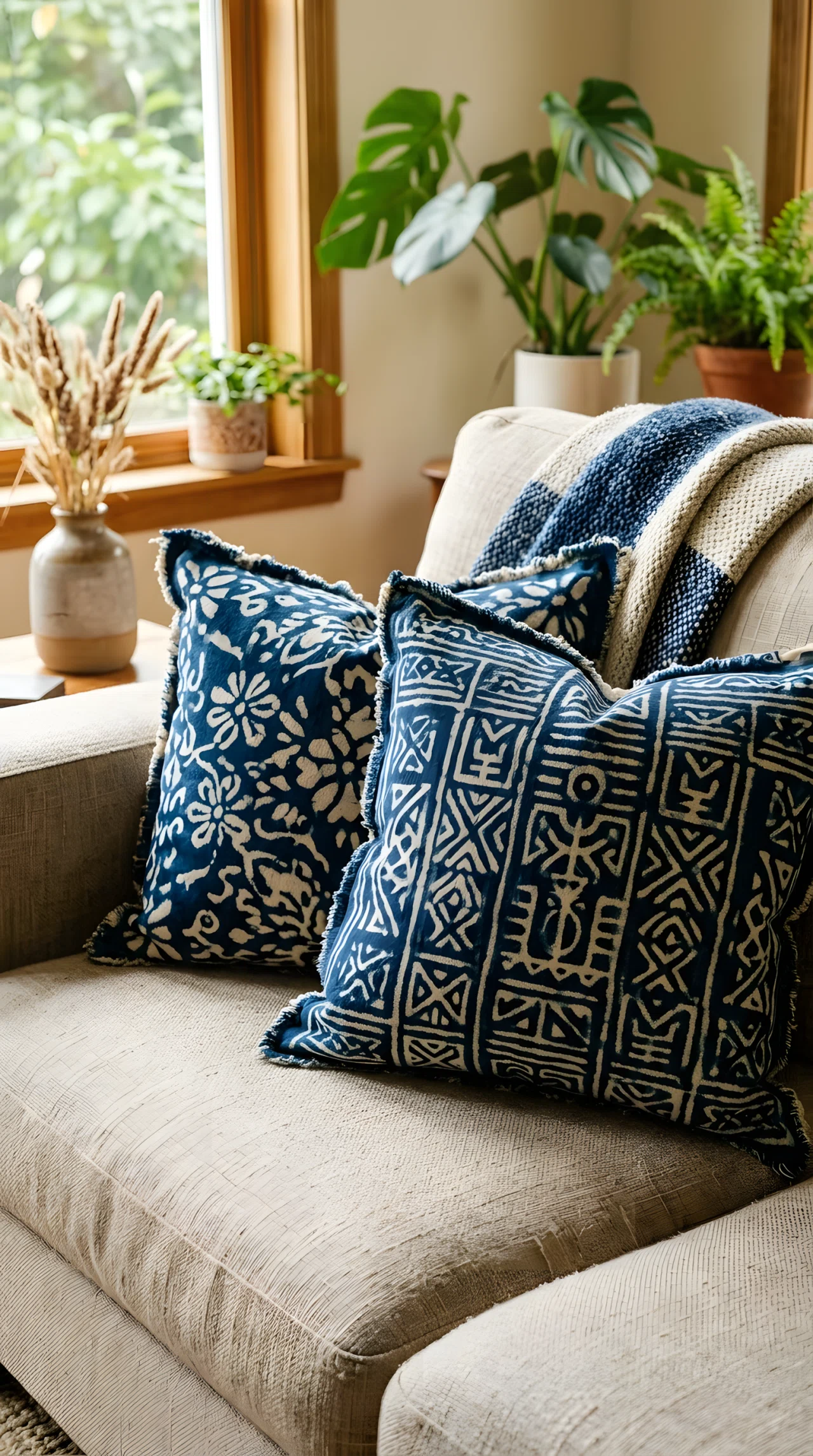
Adire is an indigo-dyed cloth from the Yoruba people of southwestern Nigeria, created using a wax-resist technique that produces intricate, one-of-a-kind patterns.
Searches for “Adire fabric decor” are up 130% on Pinterest in 2026, making it one of the most searched home textiles of the year. Use it as a throw pillow cover, a draped sofa runner, or frame small pieces in simple black frames as affordable wall art with genuine cultural depth.
3. Layer a Natural Fiber Rug as Your Foundation
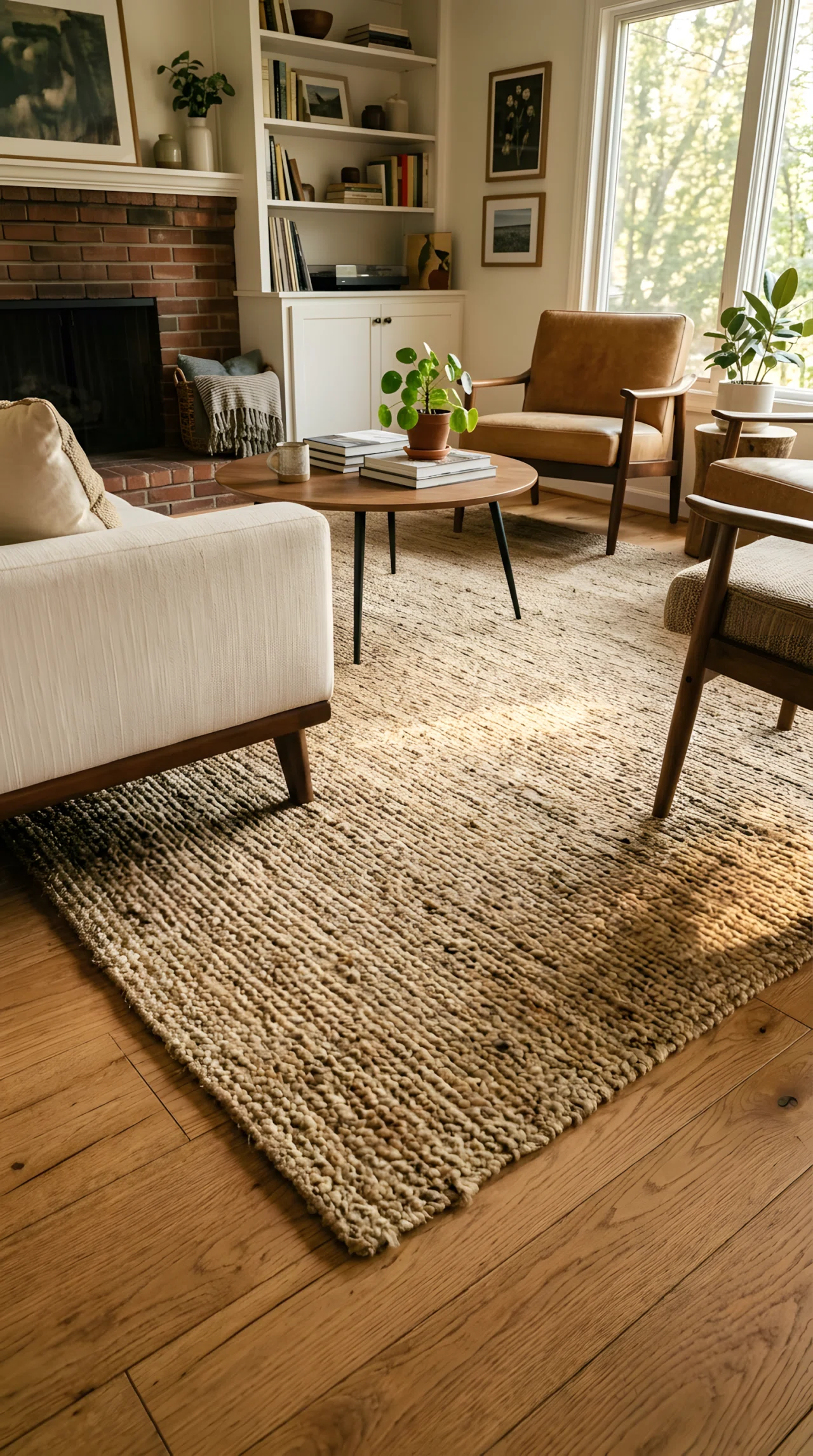
A handwoven rug in earthy tones — jute, sisal, seagrass, or a traditional African textile weave — anchors the whole room and gives everything above it a grounded, natural foundation.
In Afrohemian spaces, the rug does more than define a zone; it introduces texture at floor level that sets the tone for all the layers above it. Look for visible hand-weaving imperfections rather than machine-made uniformity — that’s exactly what makes a rug feel collected rather than bought.
4. Add a Rattan Accent Chair
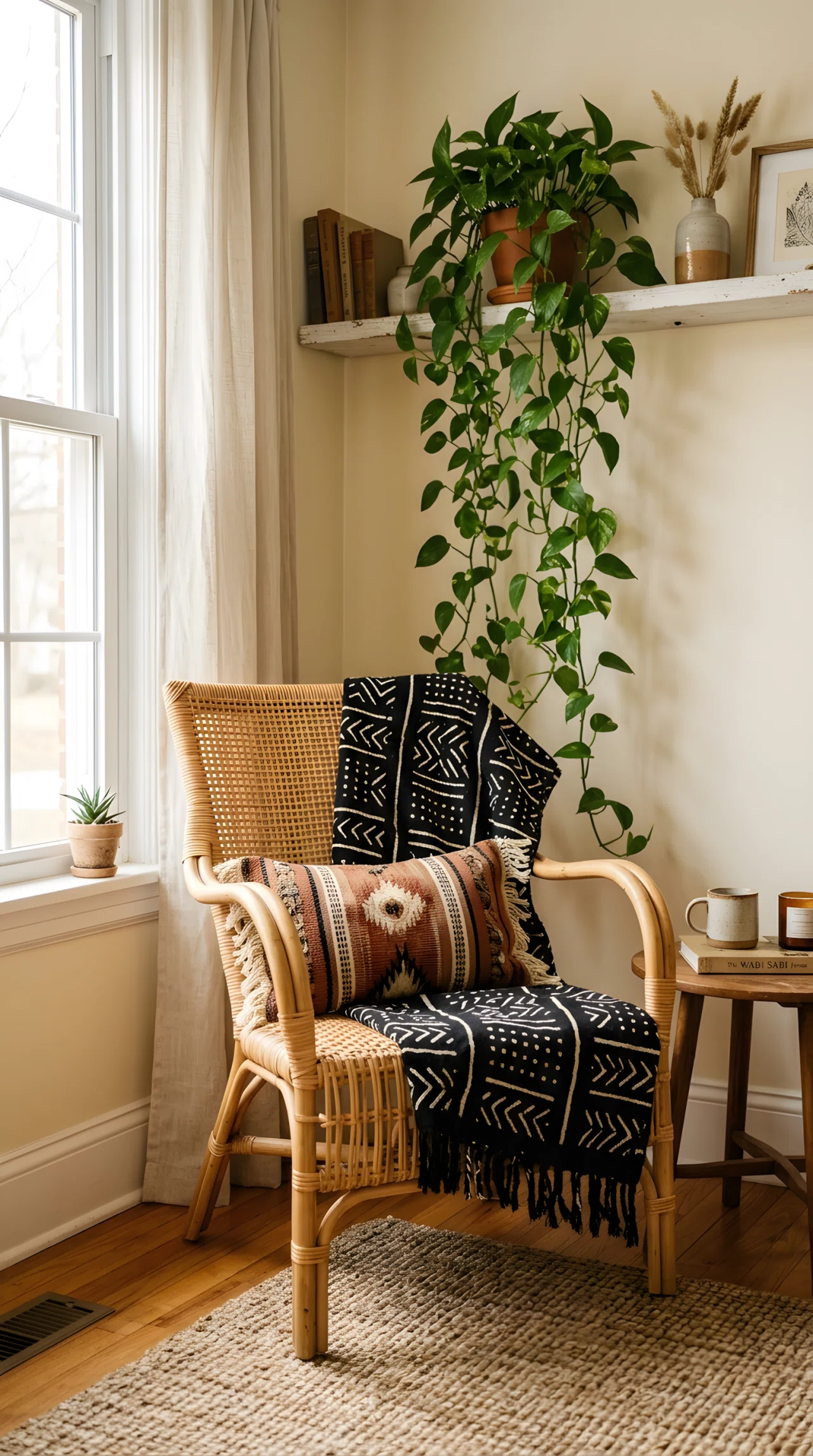
Rattan furniture is experiencing one of its strongest moments in years, with searches up 50% on Pinterest in 2026.
A rattan accent chair paired with a mudcloth throw and a few textured cushions creates an instant Afrohemian reading corner that works in a living room, bedroom, or even a larger entryway. The natural material adds warmth and organic texture without competing with the bold patterns that define this aesthetic.
5. Display Tonga Baskets as Wall Art
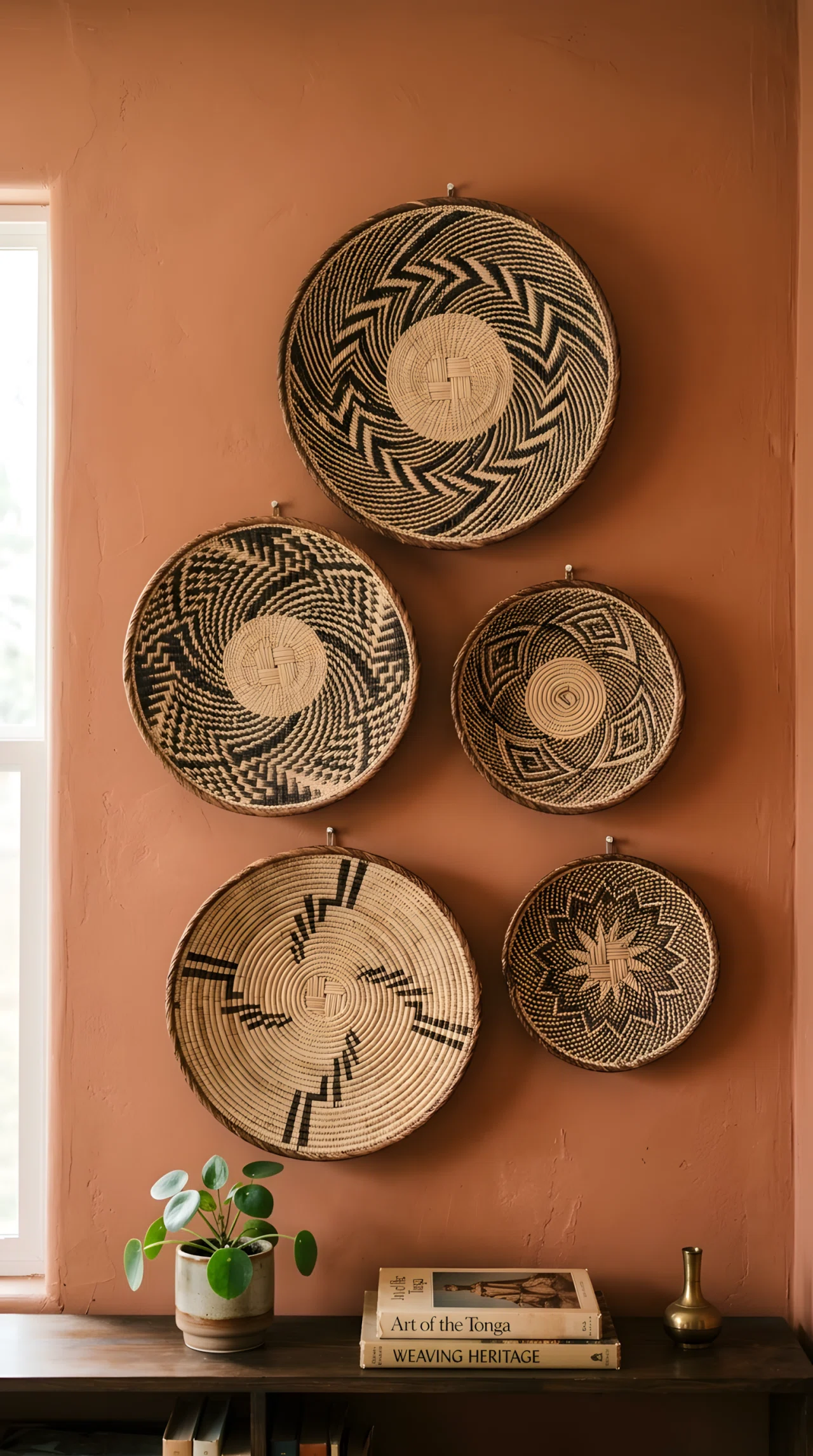
Tonga baskets — traditional handwoven baskets from Zimbabwe — have crossed fully from craft object to wall art in 2026. A cluster of three to five baskets of varying sizes arranged on a plain wall creates a richly textural installation that costs far less than a canvas print and carries genuine artisan provenance.
Mix sizes and weave patterns rather than matching sets, and leave space between them so each basket reads as an individual piece within the arrangement.
6. Use Earthy, Saturated Color on Your Walls
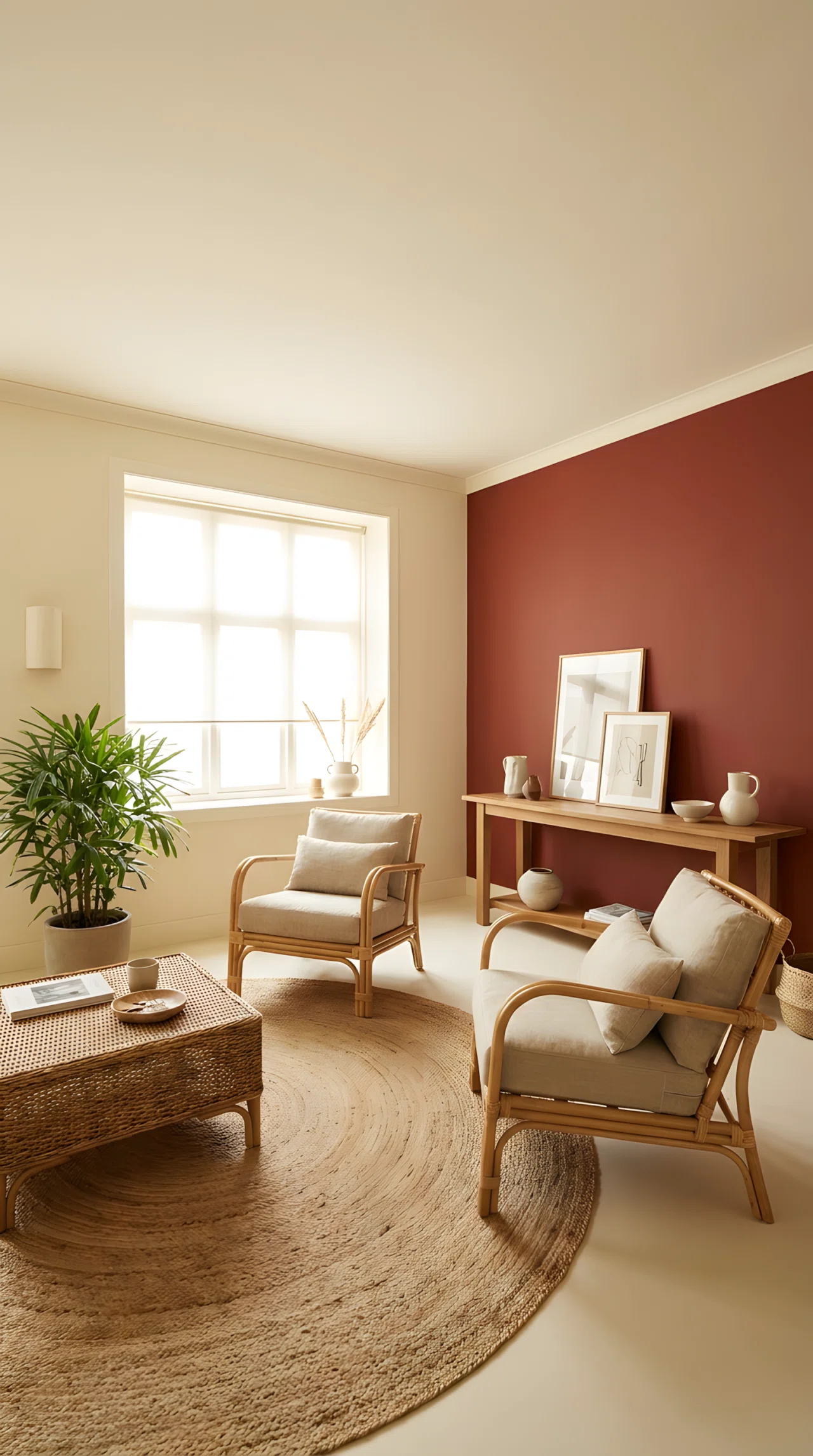
The Afrohemian palette is built on colors pulled from natural landscapes — earthy ochre, clay red, deep indigo, warm terracotta, and muted forest green.
Moving away from the generic off-white or greige that dominated the previous decade and choosing one of these tones for a feature wall immediately shifts the room into a richer, more grounded visual territory. Off-white or warm cream on the remaining walls lets the textiles and objects carry the room without competing with the wall color.
7. Hang Ethiopian-Inspired Wall Art
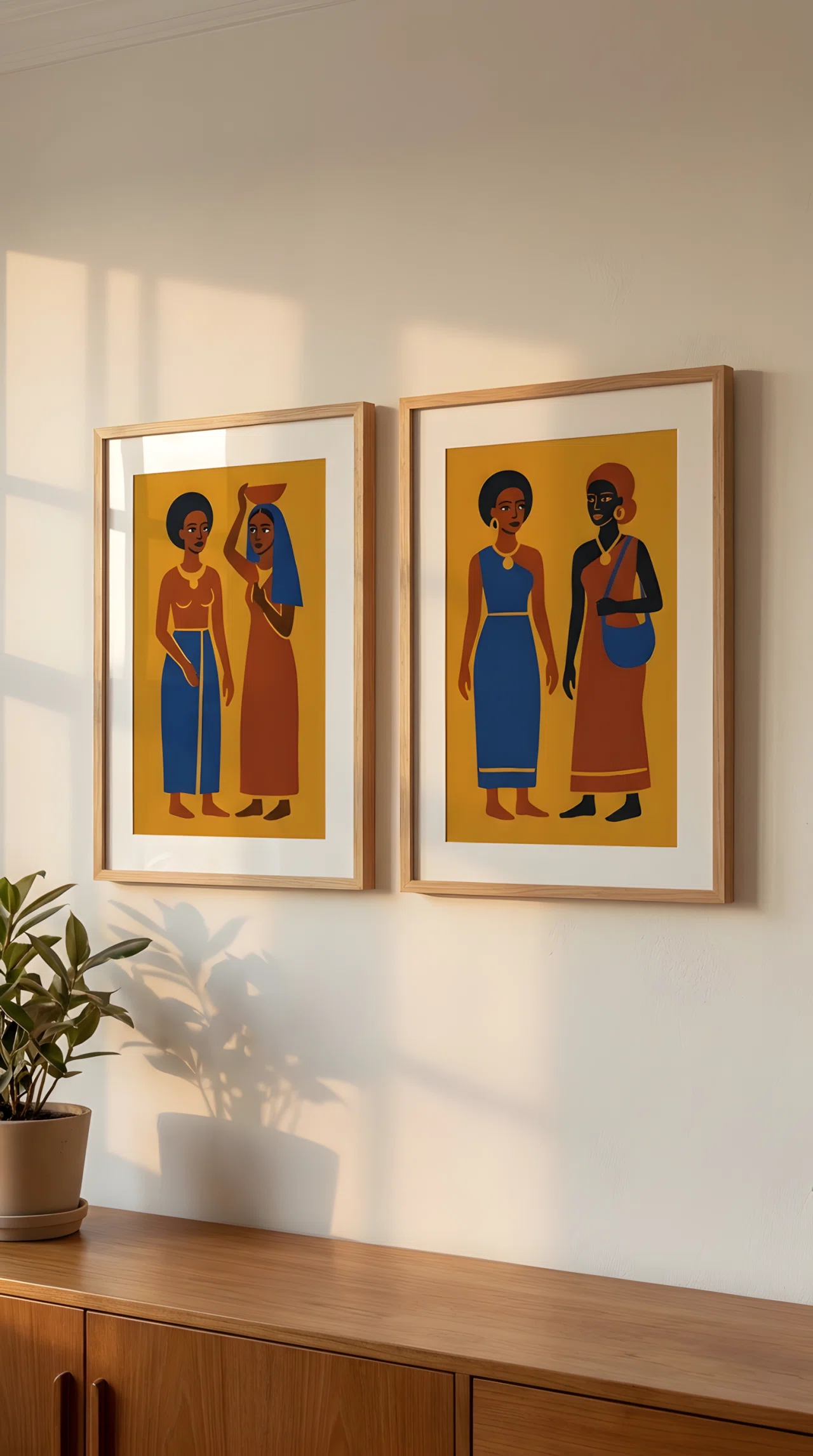
Ethiopian wall art — with its bold, graphic use of color, figurative motifs, and hand-painted quality — brings a layer of visual storytelling that printed art rarely achieves.
Original pieces from independent African artists are increasingly accessible through online marketplaces, and prints of Ethiopian art are widely available at affordable price points. Frame them in simple natural wood or thin black frames so the art itself remains the focus rather than the framing.
8. Introduce Carved Wood Objects
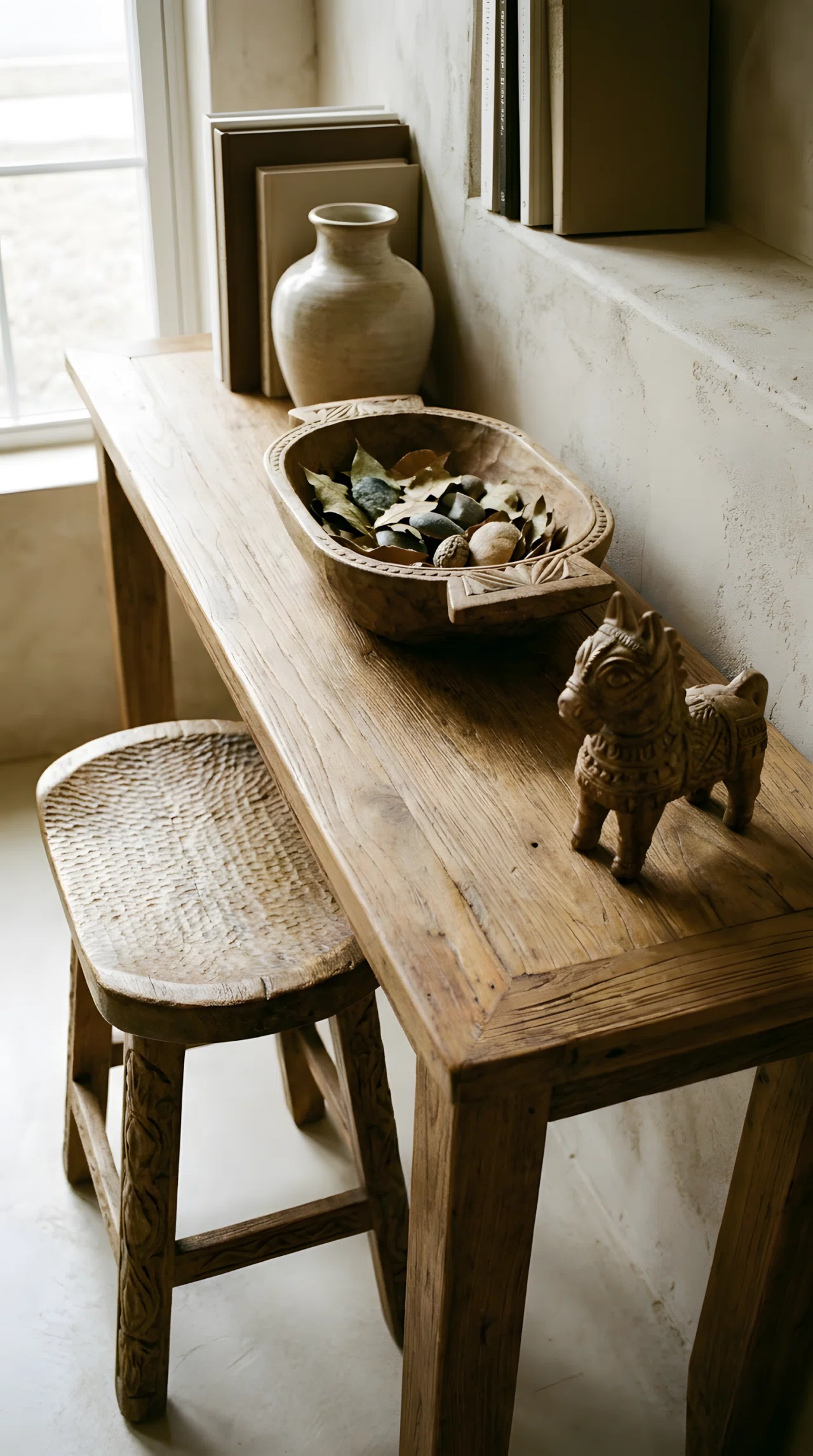
Carved wooden stools, bowls, figurines, and wall panels add the kind of handmade weight and permanence that mass-produced decor can’t replicate.
In Afrohemian interiors, carved wood functions as both decorative object and cultural marker — a physical reminder that someone made this with their hands. A carved wooden stool used as a side table, or a set of carved bowls grouped on a shelf, introduces this dimension without requiring significant investment.
9. Layer Woven Cushions in Contrasting Patterns
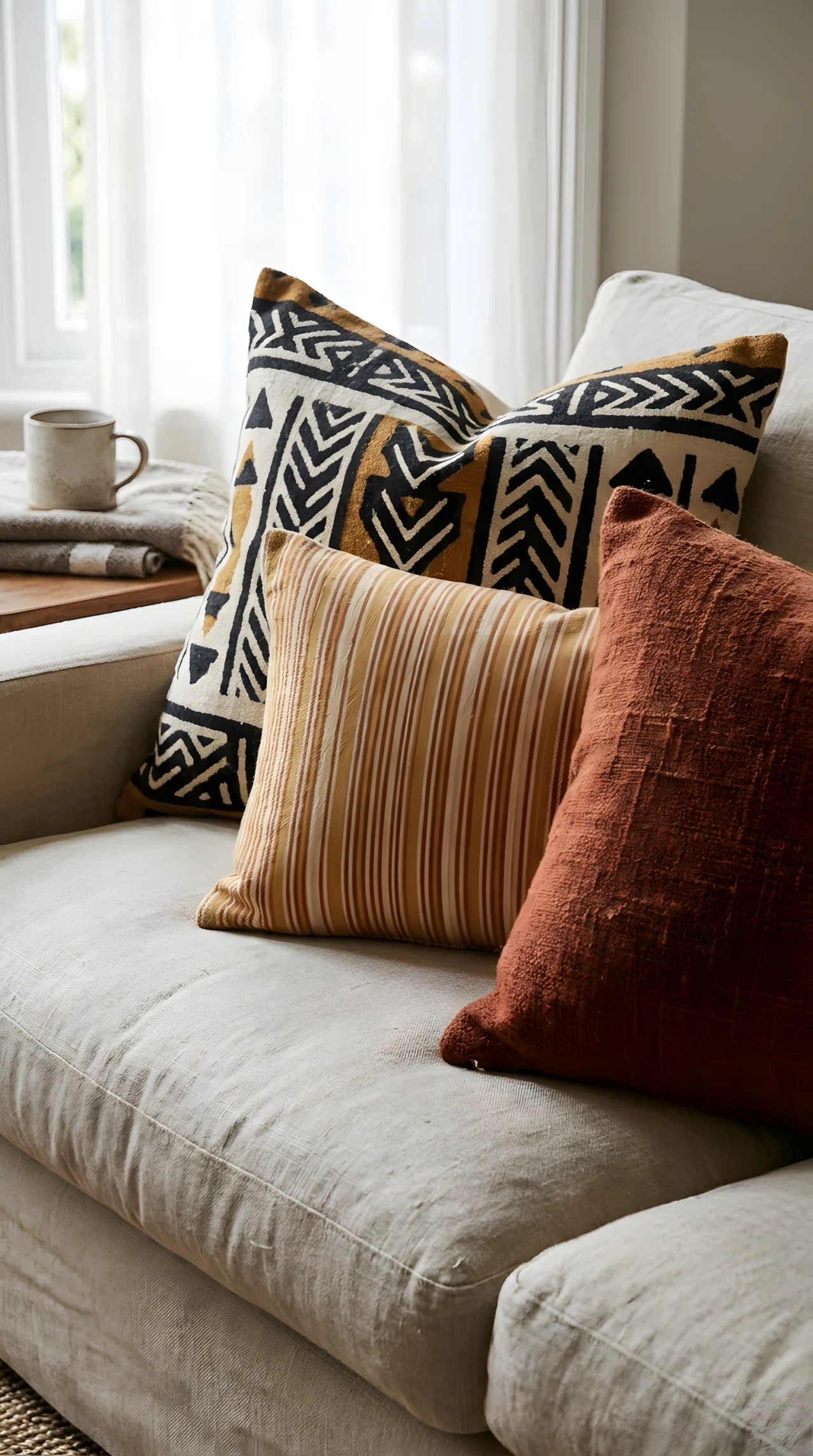
Pattern mixing is central to the Afrohemian aesthetic, and cushions are the lowest-commitment way to practice it. Pair a bold geometric mudcloth print with a smaller-scale stripe and a solid textured weave — keeping all three within the same color family prevents the combination from feeling overwhelming.
The goal is layering that looks collected rather than matched, like each piece arrived from a different source and found its way to the same sofa.
10. Swap a Standard Lampshade for a Woven One
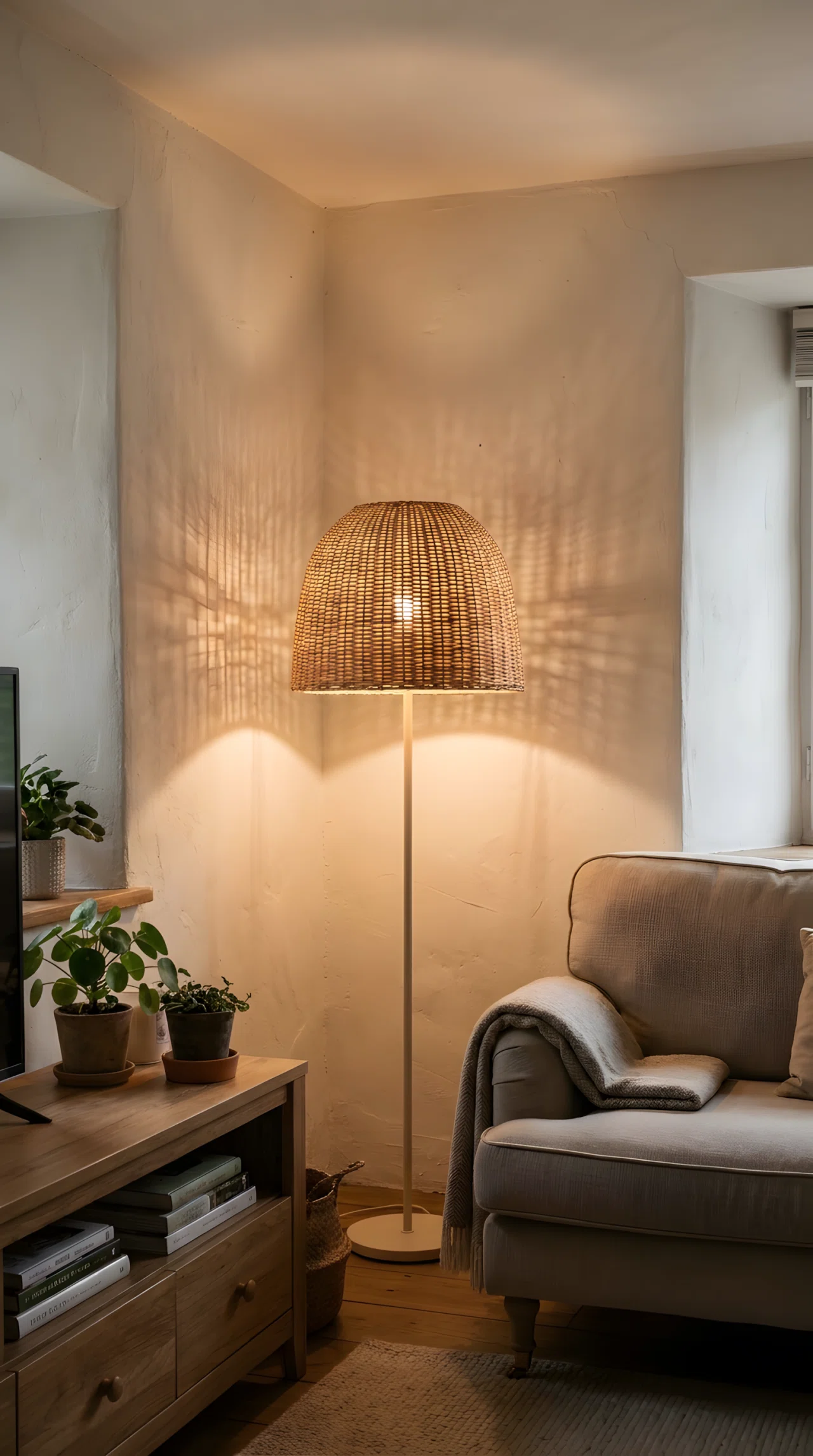
A woven rattan or natural fiber lampshade casts warm, dappled light through its weave and immediately changes the quality of light in a room — from flat and functional to atmospheric and soft.
This single swap on a floor lamp or table lamp introduces both texture and the kind of slow, warm lighting that Afrohemian interiors are known for. It’s one of the most affordable upgrades available with one of the most immediately visible effects.
11. Use Raw Ceramics and Soapstone as Accents
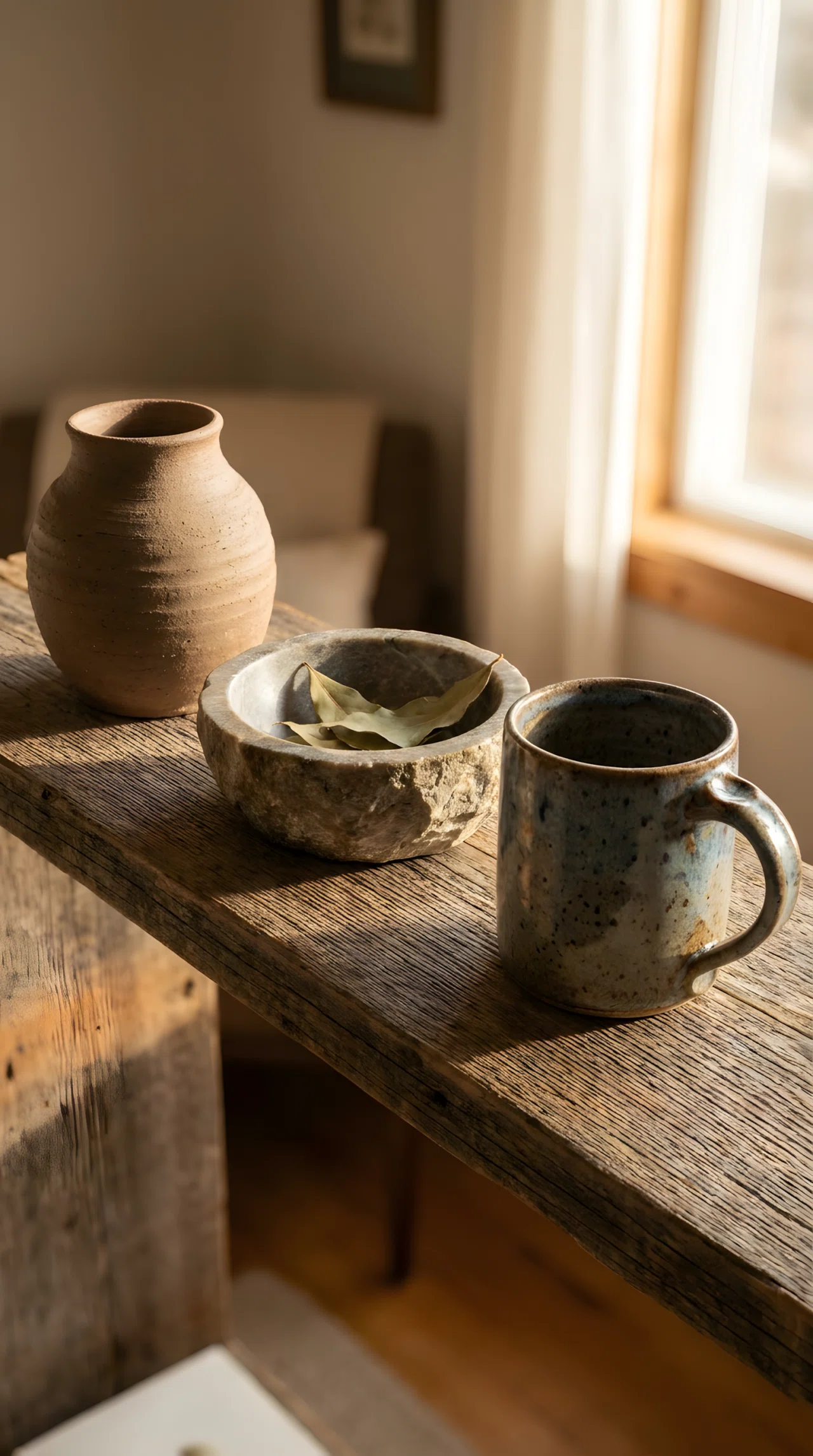
Hand-thrown ceramics with visible fingerprints, uneven glazes, and organic shapes sit naturally within the Afrohemian aesthetic because they share its core value: visible human craft.
Group two or three pieces of different heights on a shelf or console — a raw clay vase, a soapstone bowl, a hand-glazed ceramic mug — and let their imperfections read as the point rather than the problem.
12. Hang Bamboo Beaded Curtains as a Room Divider
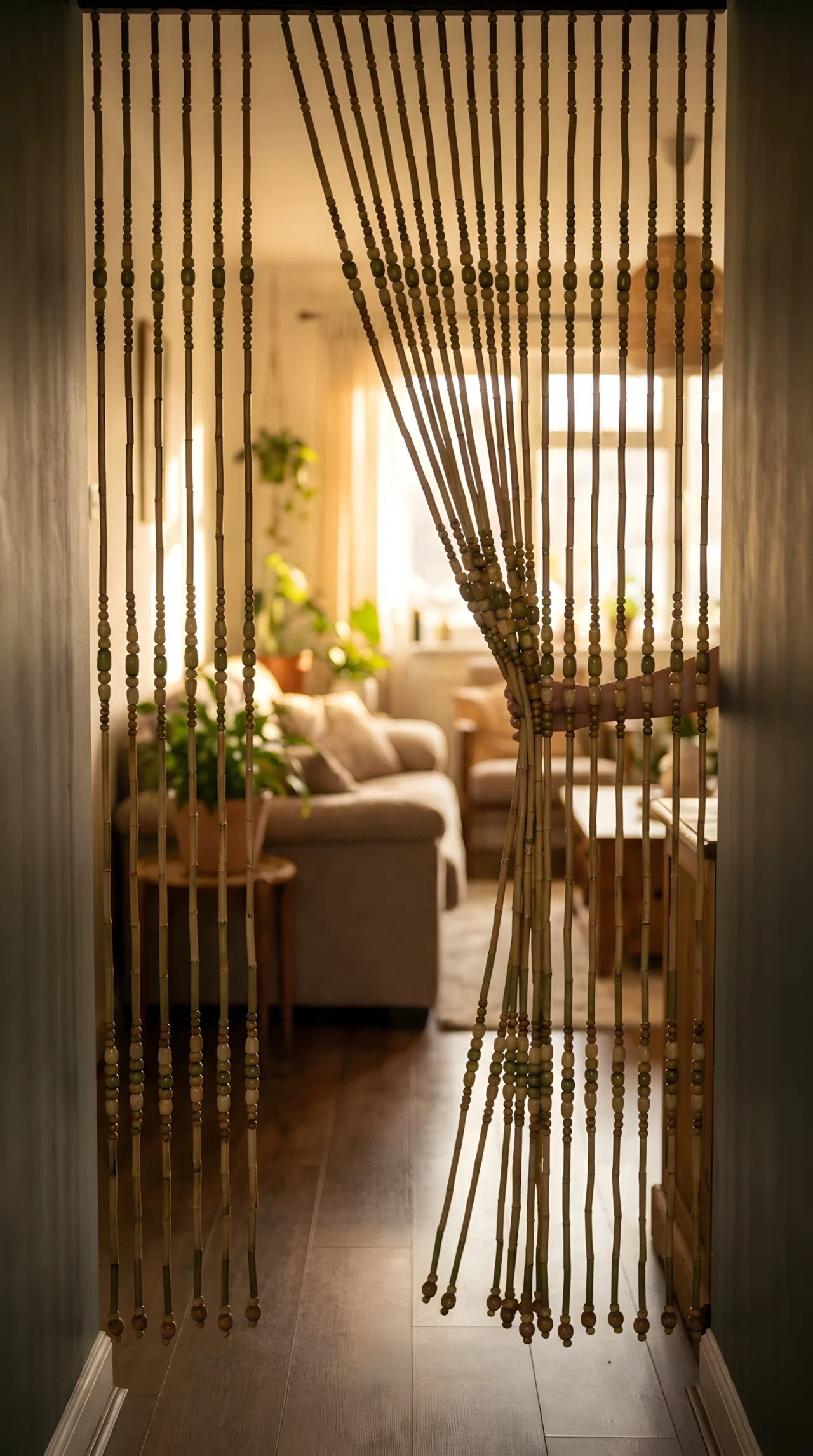
Bamboo beaded curtains are up 60% in Pinterest searches in 2026, and their appeal in Afrohemian interiors is obvious — they create a soft, tactile partition between spaces while adding movement, sound, and natural texture in a way no fabric curtain can match.
Use them between a living room and a hallway, or as a decorative frame around a reading corner, to add a layer of personality that costs almost nothing and takes five minutes to install.
13. Build a Storytelling Shelf
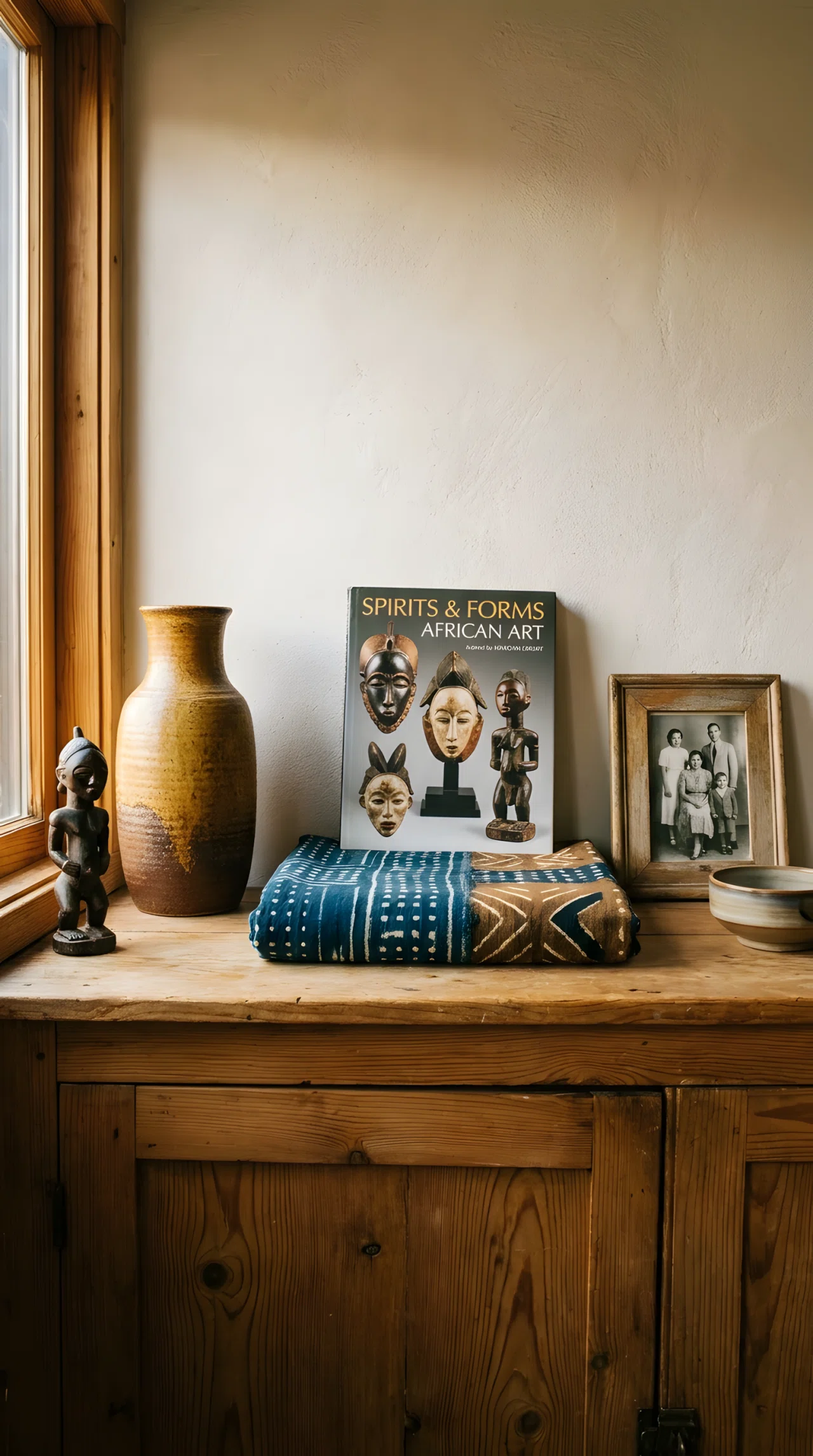
An Afrohemian shelf isn’t styled — it’s curated. Gather objects that carry personal meaning: a small carved figure from a trip, a ceramic piece from a local market, a book on African design history, a framed photograph, a small basket.
Group them by color and height rather than by type, and let the collection grow slowly over time. This is the kind of shelf that guests stop at and ask about, which is exactly the point.
14. Bring Plants Into Every Corner
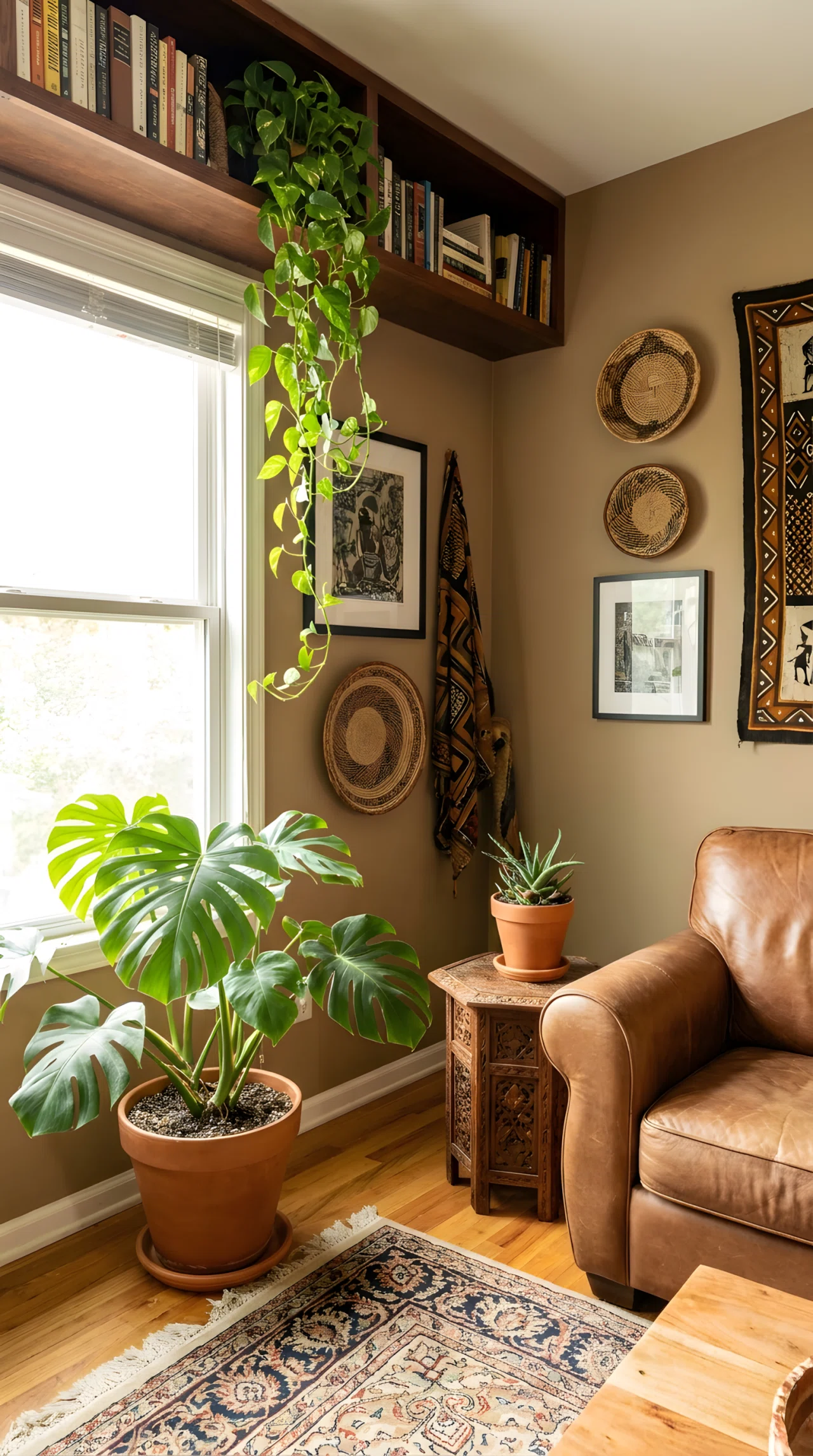
Lush, abundant greenery is inseparable from the Afrohemian aesthetic. Trailing pothos on high shelves, a large-leafed monstera on the floor, small succulents on the windowsill — plants at different heights add a living, breathing layer that connects the whole room to the organic, natural world the aesthetic is rooted in.
Choose hardy varieties that genuinely suit your light conditions so they thrive long-term rather than becoming a recurring replacement cycle.
15. Let the Room Grow Over Time
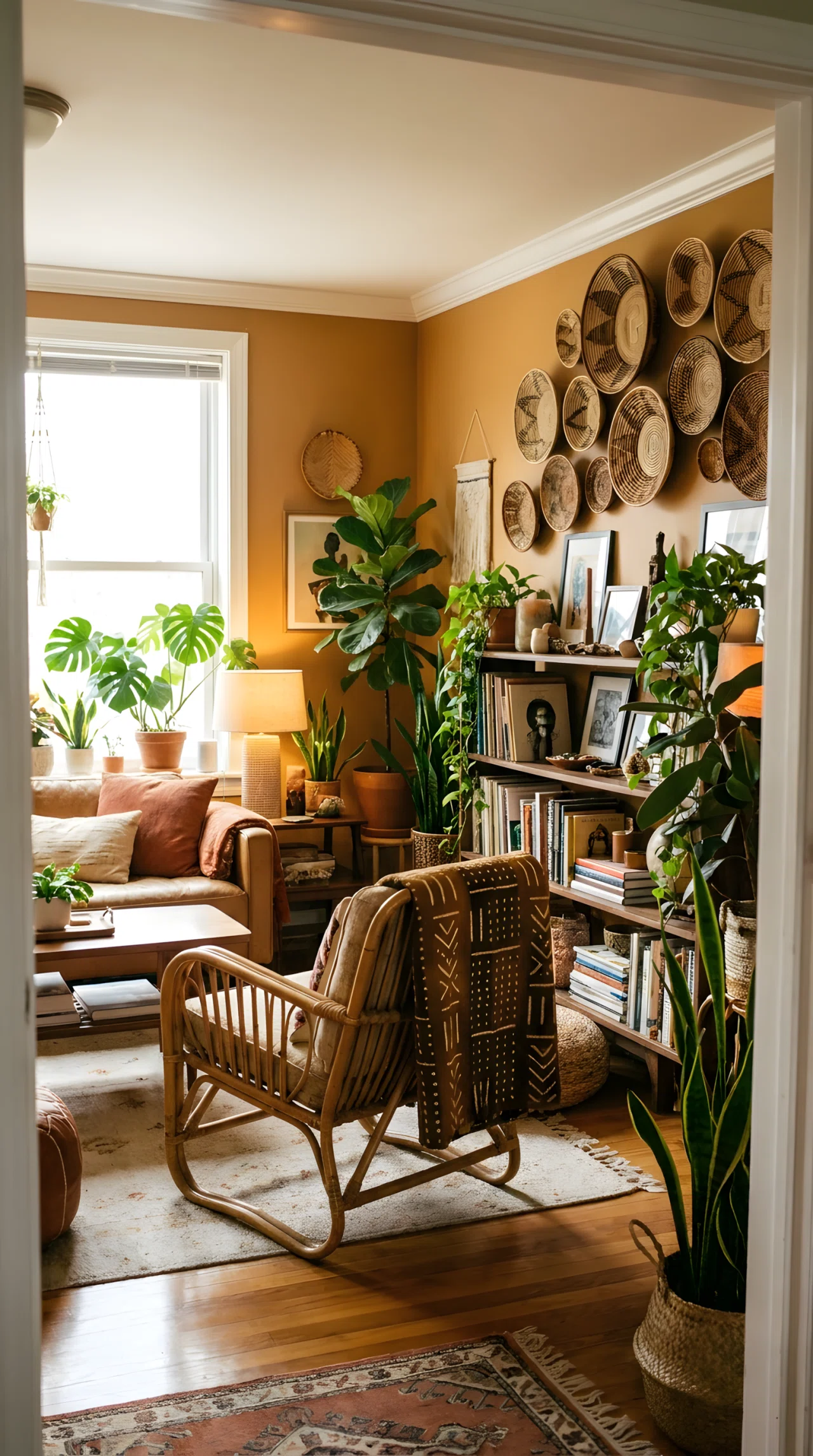
The single most important principle of Afrohemian decor — and the one most at odds with the speed of modern shopping — is that the best rooms in this style were never furnished all at once. Buy one piece that genuinely moves you, live with it, and let the next purchase respond to it.
A room built this way develops a coherence and a personality that no single shopping session can manufacture. The spaces that stop your scroll were built slowly, intentionally, and with real care for what each object means.
Afrohemian decor isn’t a checklist — it’s a way of thinking about your home as a place that tells your story. Start with the one idea from this list that resonates most, and let the rest follow at whatever pace feels right.