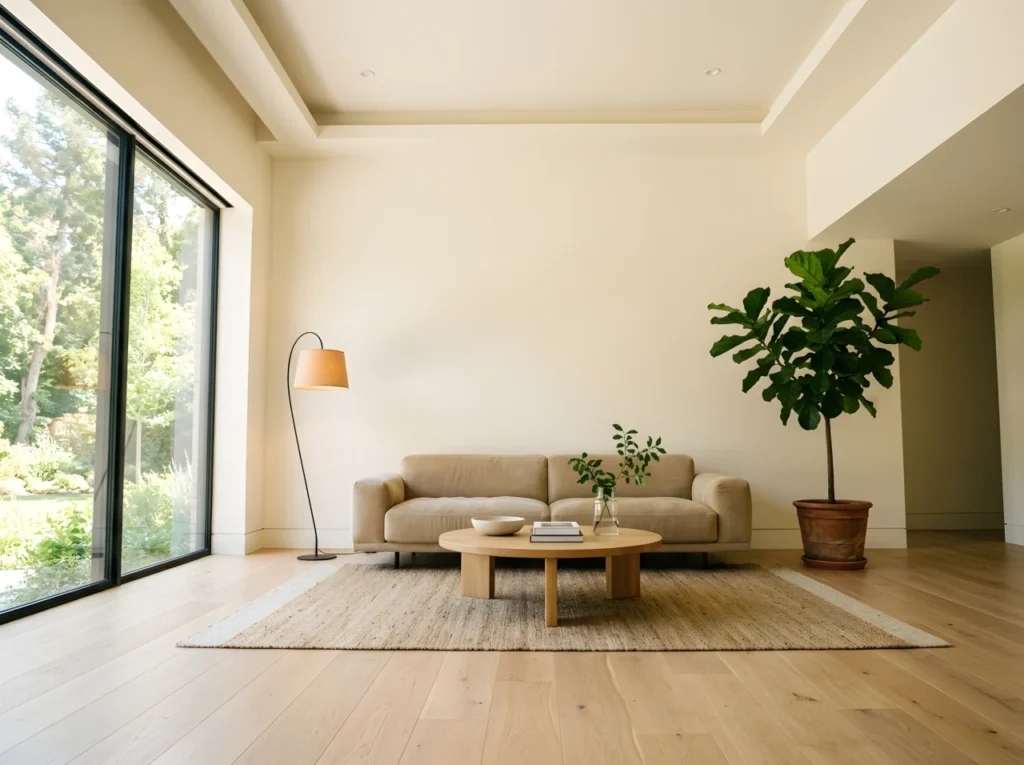
Your living room looks tidy, yet it still feels flat, cold, or strangely uninviting. Minimalist living room ideas often promise calm, but many end up sterile instead of soulful, leaving your space empty rather than elevated.
The real secret isn’t removing more, it’s choosing better. A truly minimalist living room balances clean lines with warmth, texture, and intention, so every corner feels curated instead of empty. Here’s where to start.
1. Layer a Nordic Minimalist Living Room With Natural Wood Tones
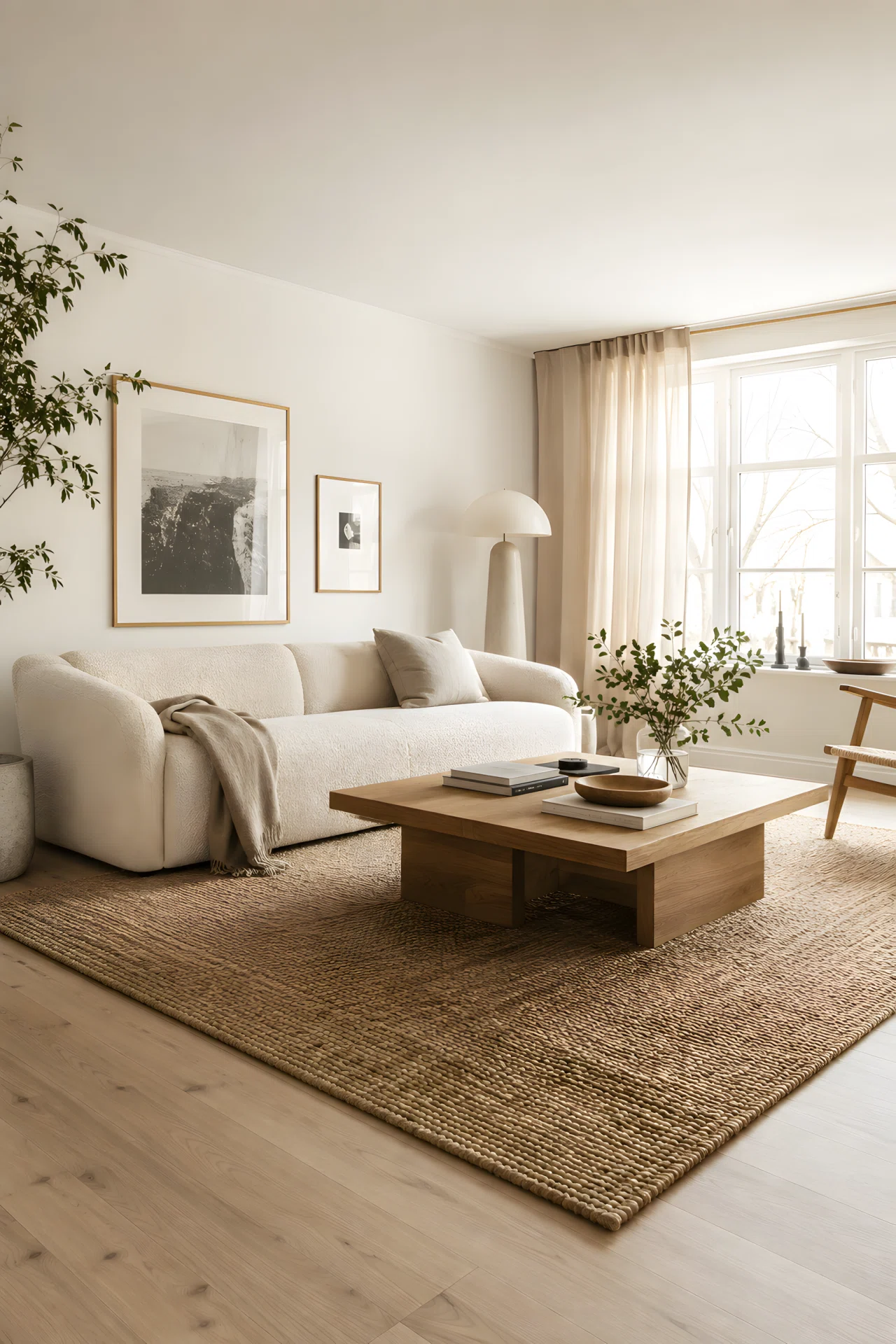
A Nordic minimalist living room leans on light woods, soft whites, and simple silhouettes to create a space that feels airy without feeling bare. Scandinavian minimalism works because it treats every material as intentional, letting texture do the visual work instead of color or clutter.
Add a low wood coffee table, a boucle throw, and a single sculptural lamp to anchor the room. This combination keeps the living room grounded, functional, and effortlessly calm.
2. Choose a Warm Neutral Palette to Soften a Minimalist Living Room
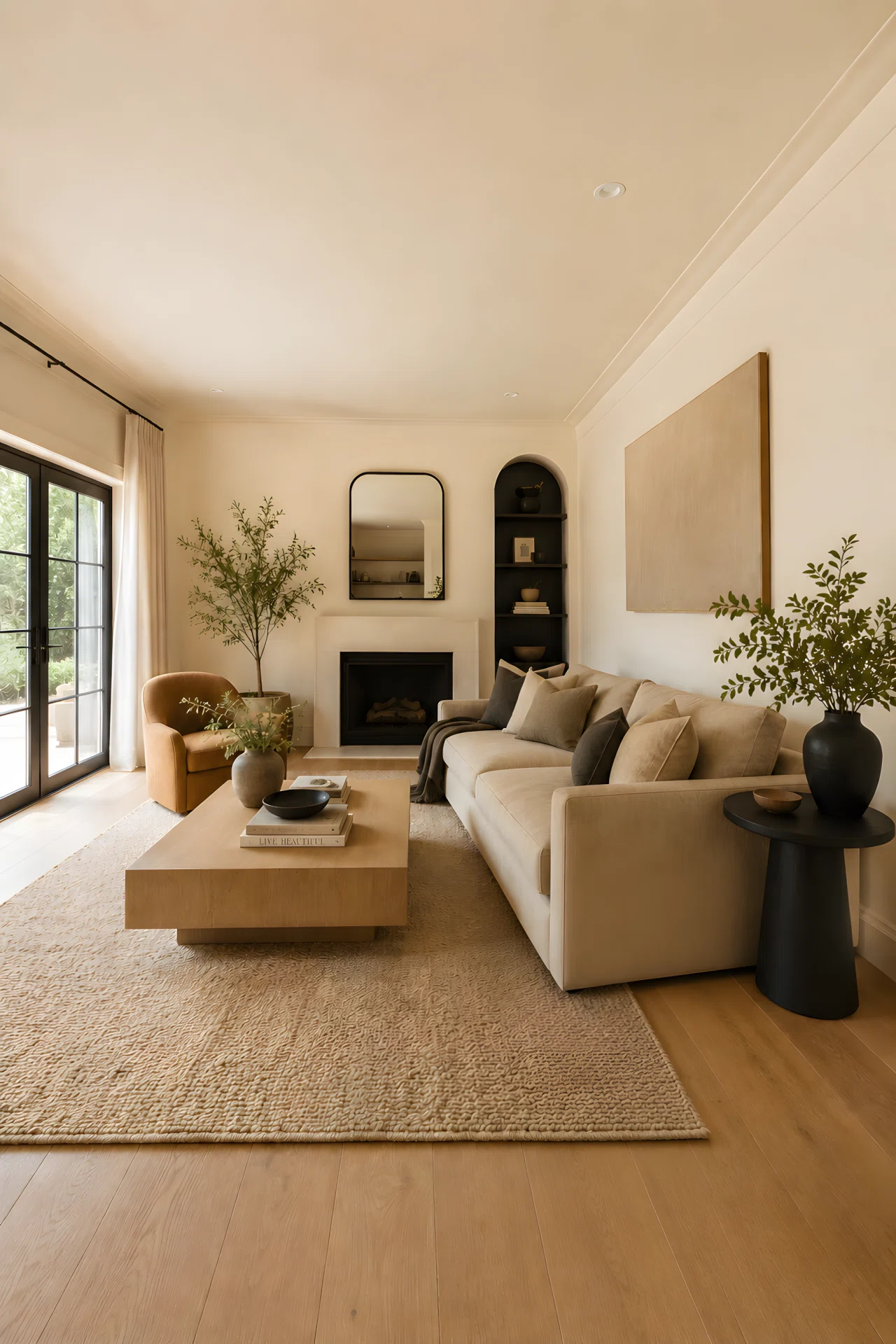
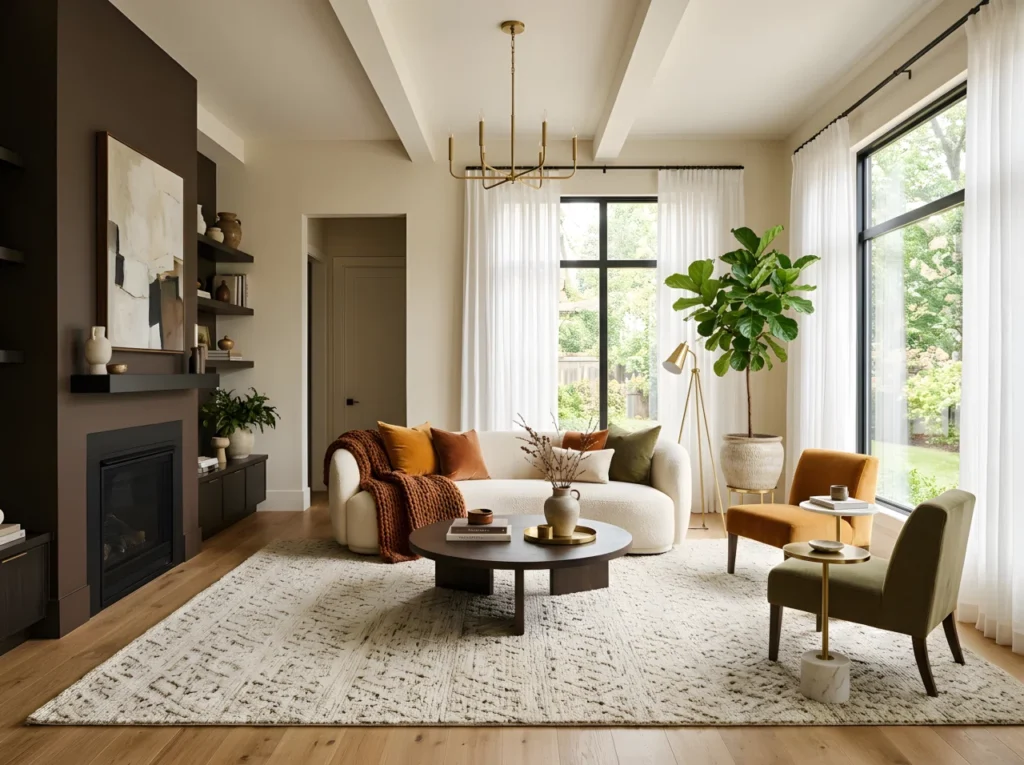
Minimalist doesn’t have to mean cold. A warm neutral palette built from creamy whites, sand, and soft camel tones keeps the living room simple while still feeling inviting. This shift away from stark white walls is one of the biggest minimalist living room trends shaping cozy, livable spaces.
Pair your walls with light oak furniture and matte black accents for gentle contrast. The result feels curated, warm, and far from boring.
3. Maximize a Small Minimalist Living Room With Multi-Functional Furniture
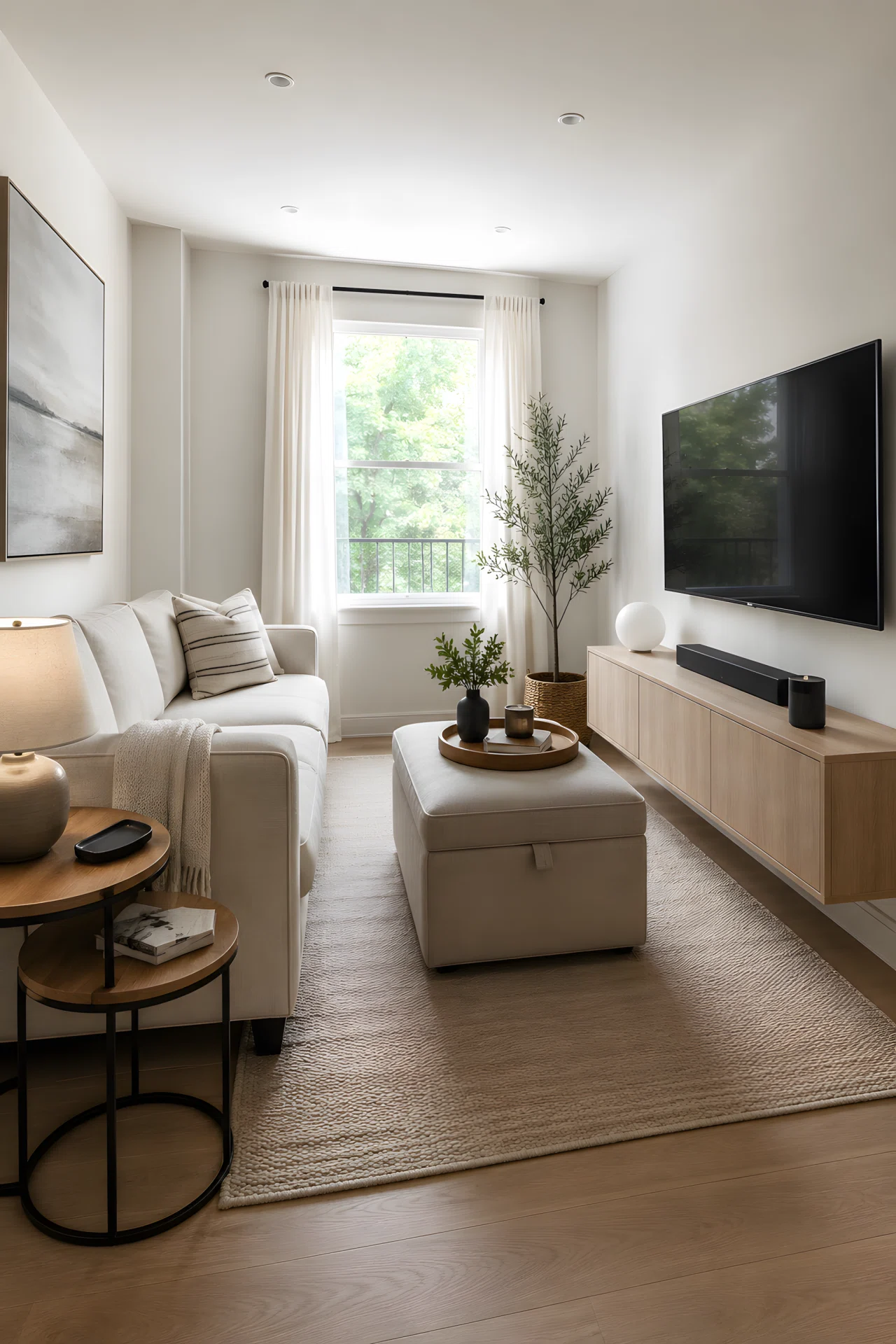
A small living room doesn’t need less style, it needs smarter choices. Multi-functional furniture like a storage ottoman, nesting tables, or a slim console with hidden compartments keeps the space open while still supporting everyday life. This is where minimalist living room ideas turn genuinely practical.
Choose furniture that earns its footprint instead of filling corners for the sake of it. Every piece should serve at least two purposes.
4. Bring Cozy Texture Into a Minimalist Living Room Without Clutter
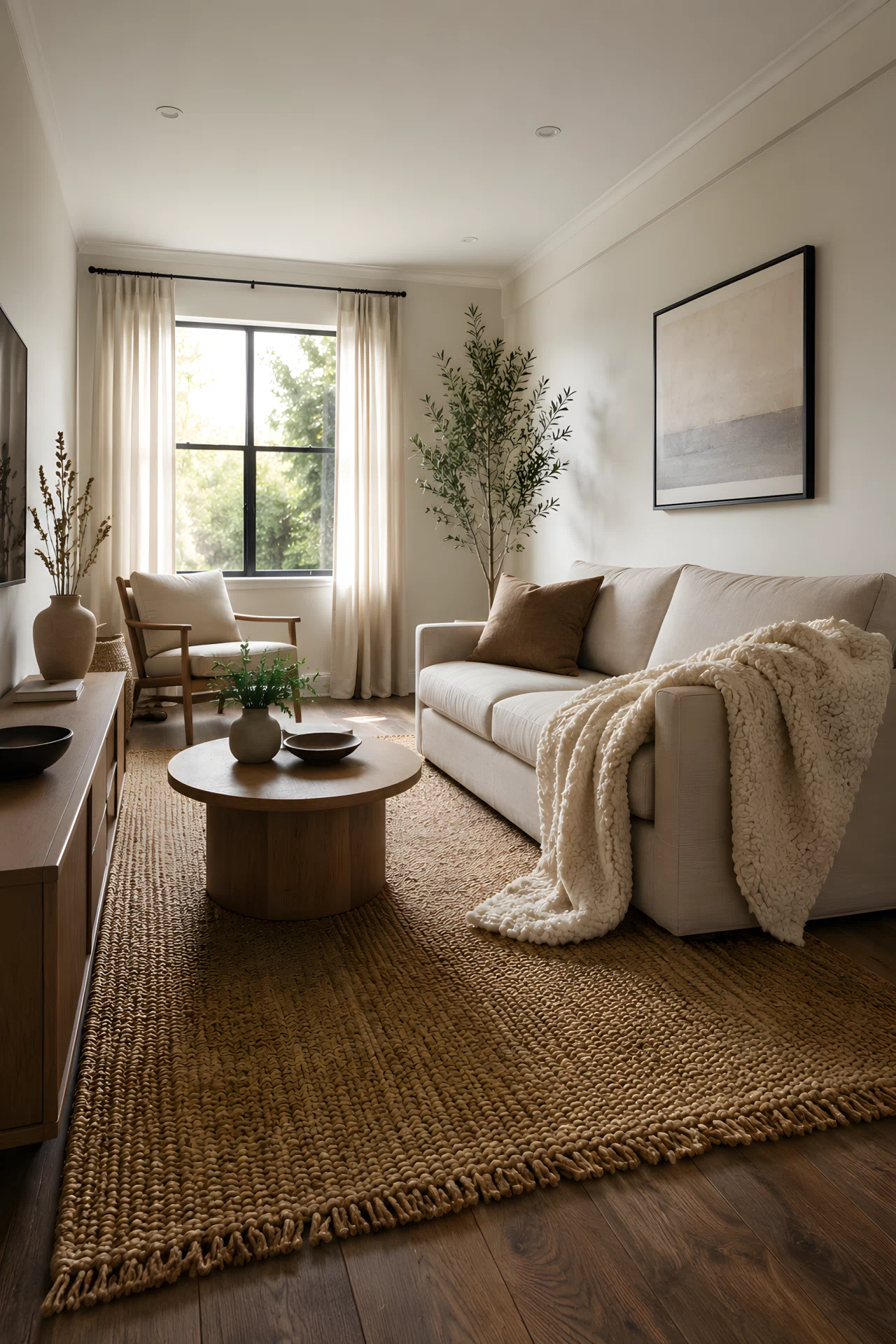
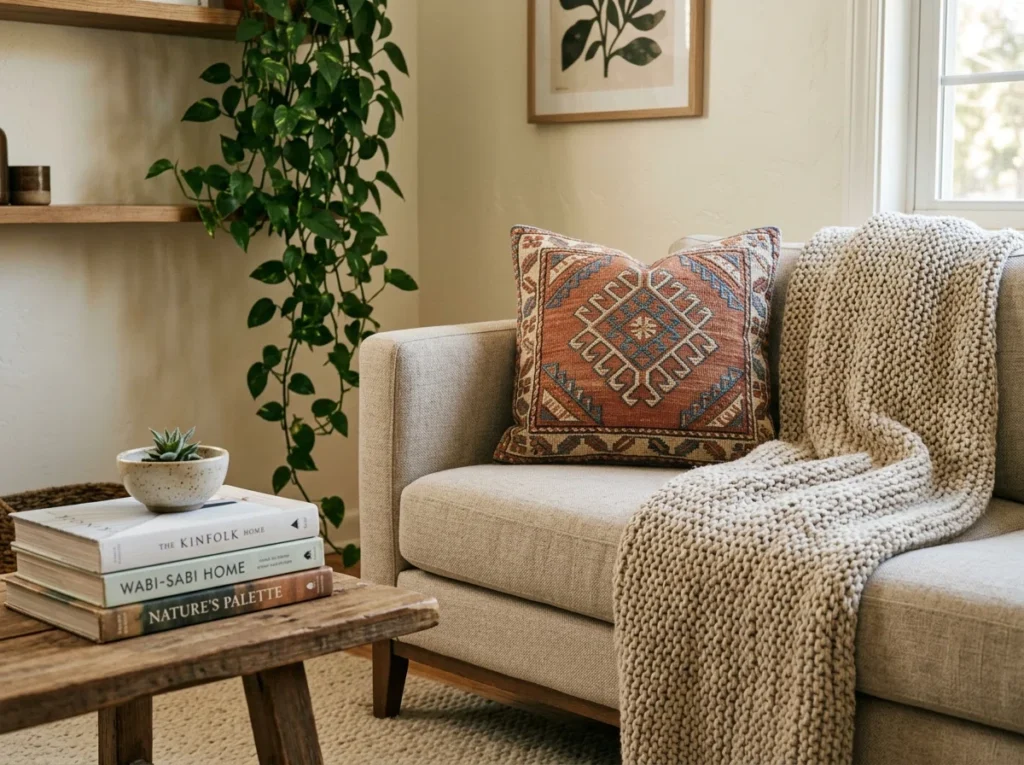
A cozy living room design and minimalism aren’t opposites. Layering a boucle throw, a linen cushion, and a woven jute rug adds warmth without breaking the clean, simple foundation of the room. Texture becomes the personality, so the space still feels calm and uncluttered.
Stick to two or three textures at most so the room stays cohesive. Too many materials can quietly undo the simplicity you’re building.
5. Position Natural Light to Make a Minimalist Living Room Feel Bigger
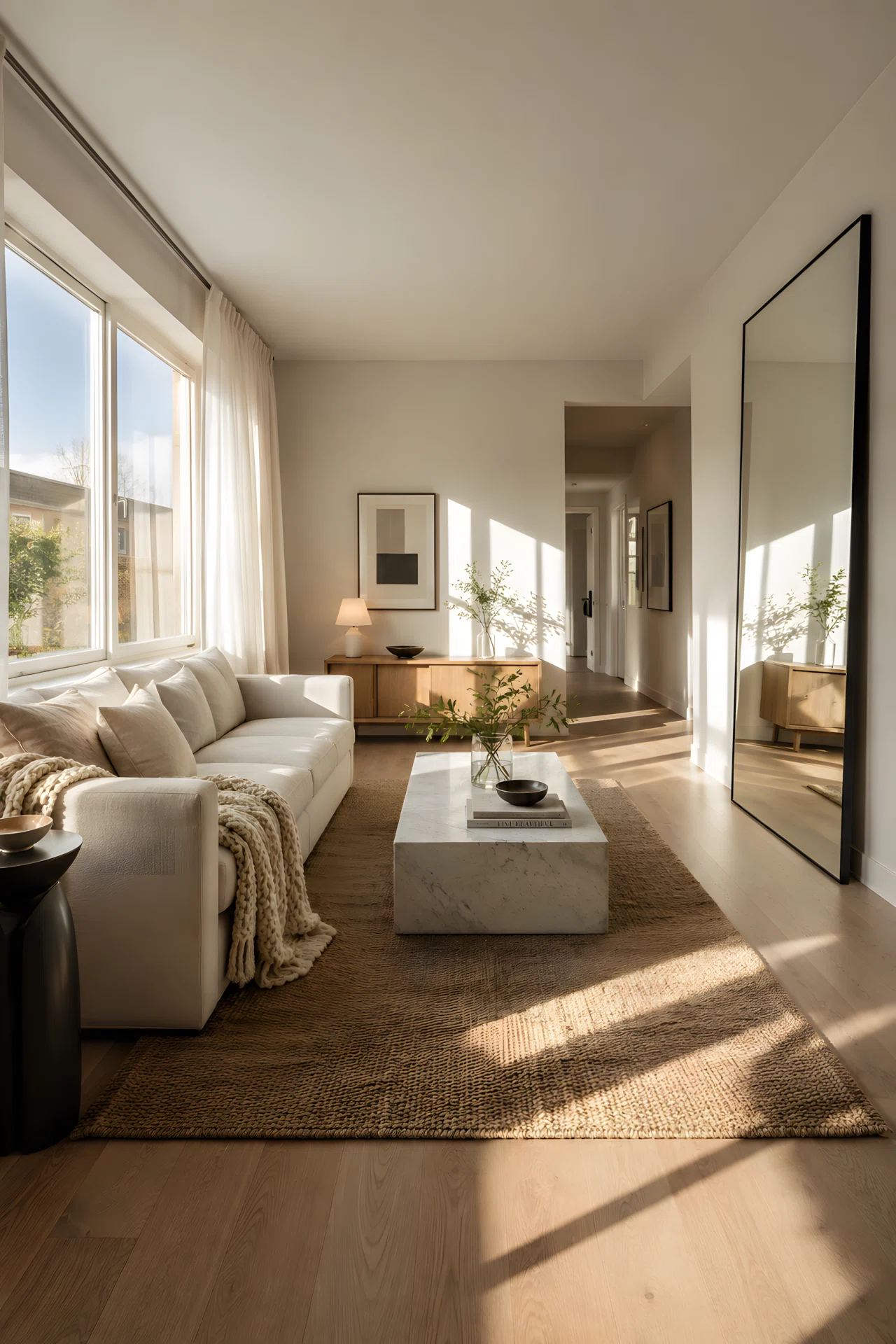
Lighting position matters more than lamp style in a minimalist living room. Placing a sofa near a window, using sheer curtains, and reflecting light with a mirror opposite the window can make even a modest room feel open and airy. This subtle shift changes how the entire space reads.
Avoid placing large furniture in front of windows, even if it seems convenient. Protecting your light source keeps the whole room feeling brighter.
6. Blend Japandi Elements Into a Minimalist Living Room for Quiet Balance
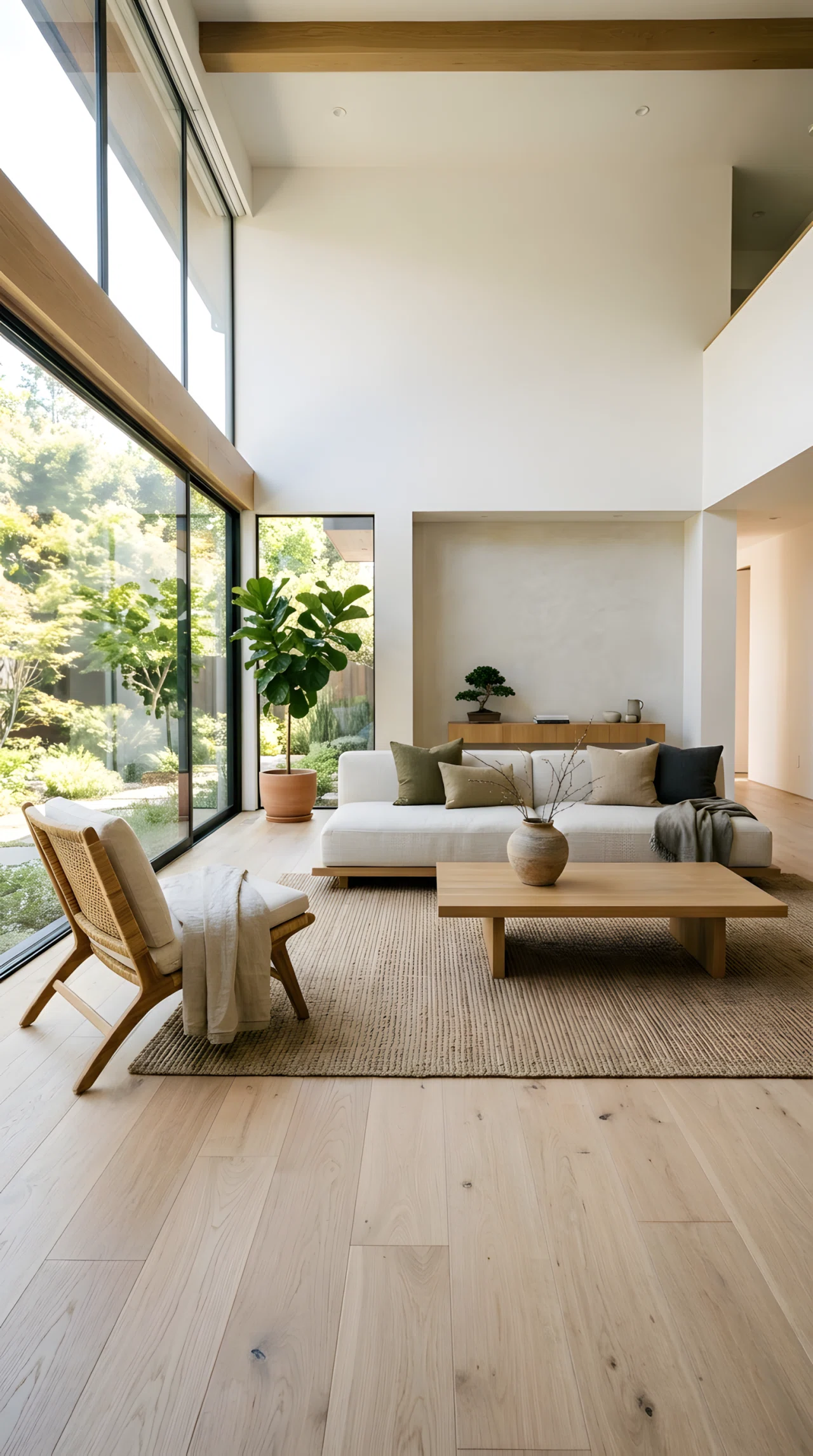
Japandi combines Japanese restraint with Scandinavian softness, and it’s quickly becoming one of the most requested minimalist living room aesthetics on Pinterest. Low-profile furniture, natural rattan, and unfinished wood grain bring quiet character without overwhelming the space.
Add a low platform sofa and a single ceramic vase to complete the look. Restraint here isn’t empty, it’s deliberate.
7. Add Depth to a Minimalist Living Room With Rich, Moody Tones
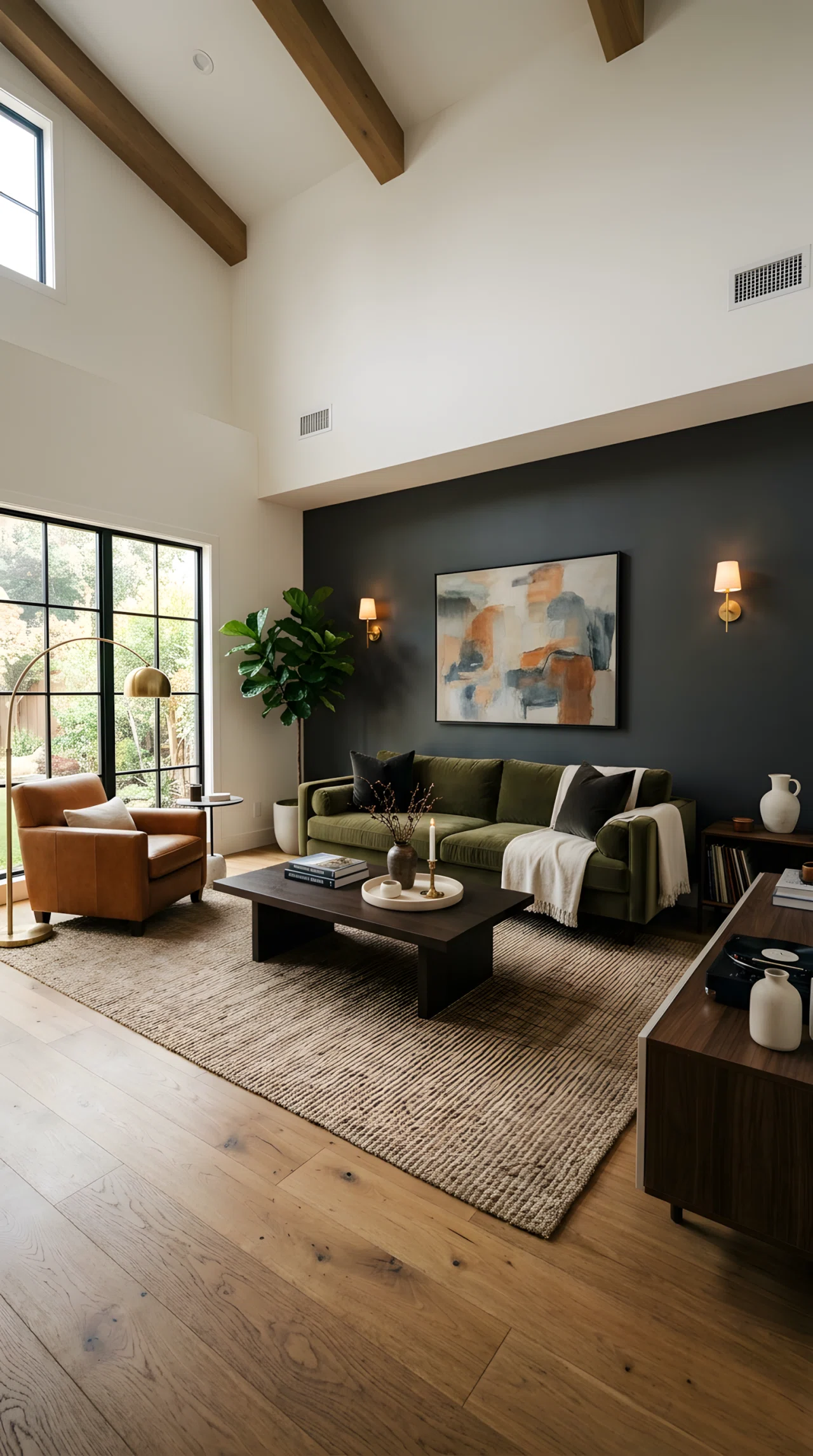
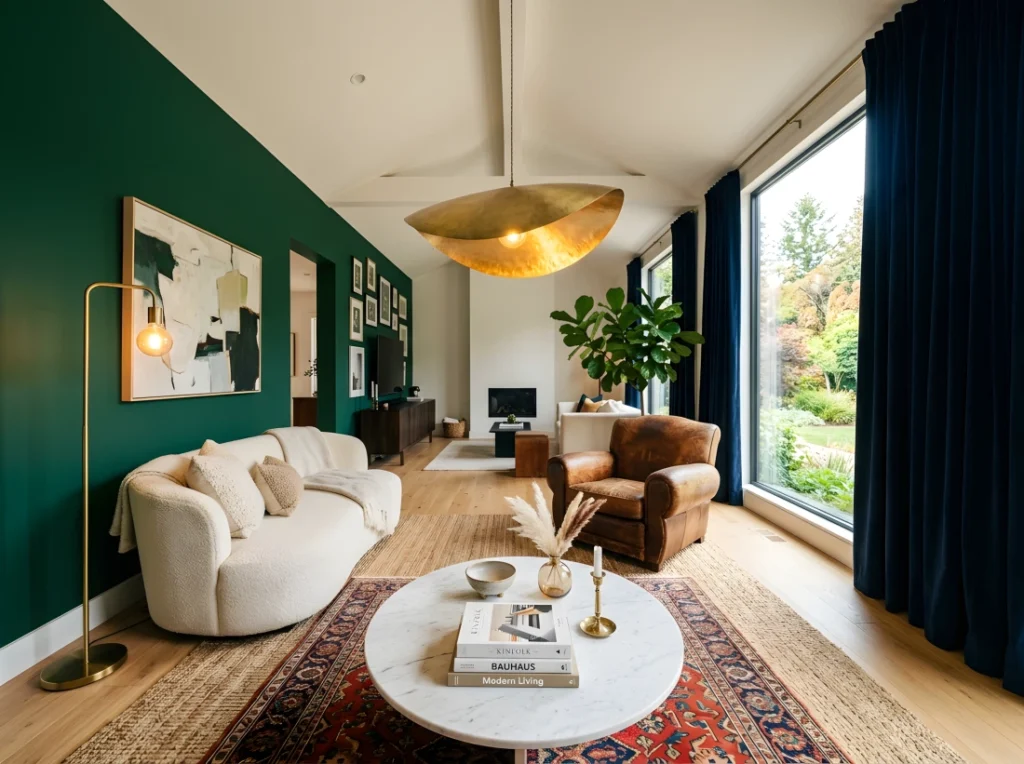
A rich living room doesn’t have to abandon minimalism, it just trades pale neutrals for deeper, more saturated hues. Charcoal walls, deep olive upholstery, or espresso wood furniture can still feel restrained if the layout stays simple and uncluttered.
Keep the shapes clean and the accessories minimal so the color itself becomes the statement. One bold tone is often enough.
8. Style a Minimalist Living Room on a Budget Without Looking Bare
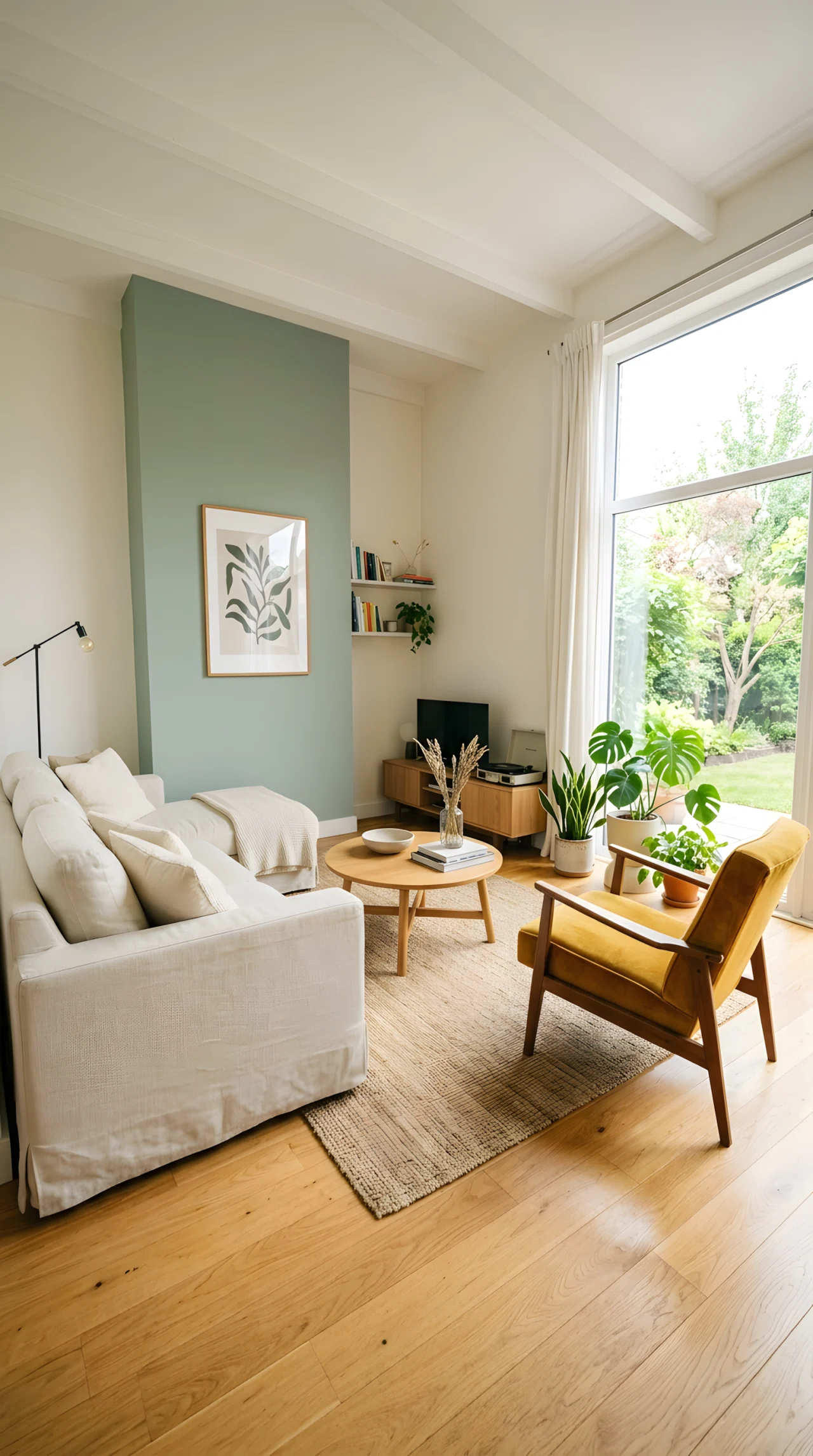
A simple living room doesn’t require an expensive overhaul. Swapping hardware, adding a slipcover, or repainting one accent wall can transform the space for a fraction of a full renovation. Minimalist living room styling rewards thoughtful edits over big spending.
Thrifted vintage pieces often add more character than anything brand new. Choose one or two standout finds instead of many small ones.
9. Use Hidden Storage to Keep a Minimalist Living Room Clutter-Free
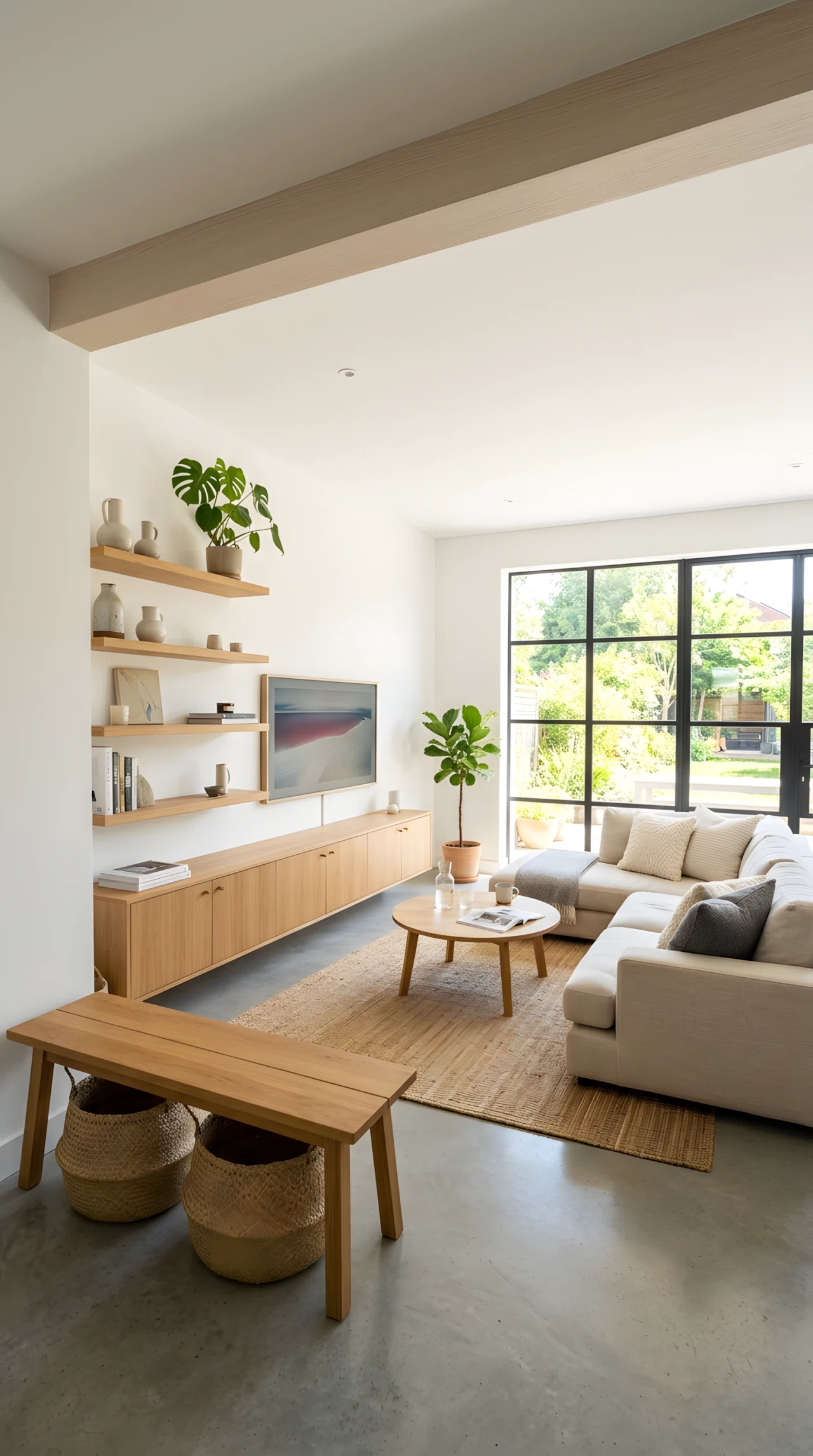
Clutter is the fastest way to break a minimalist living room, even when the furniture itself is simple. Wall-mounted floating shelves, a closed cabinet with cord management, and baskets tucked under a bench keep everyday items out of sight without sacrificing access.
Storage that stays hidden protects the calm visual line minimalism depends on. Function and simplicity can genuinely coexist.
10. Choose One Statement Piece to Anchor a Minimalist Living Room
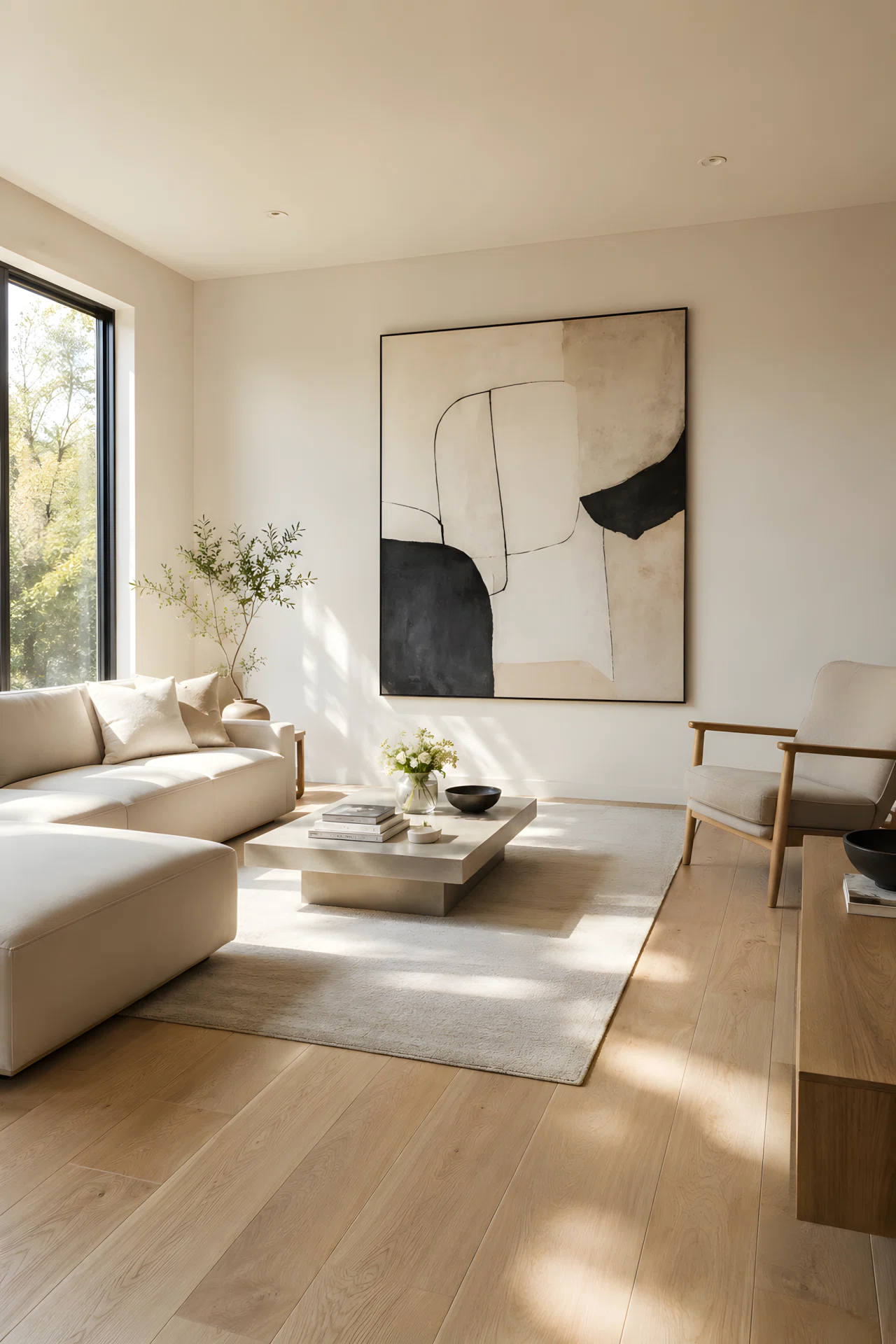
Instead of scattering small decor around the room, a minimalist living room benefits from a single statement piece, whether it’s an oversized abstract artwork, a sculptural floor lamp, or one dramatic piece of furniture. Restraint everywhere else makes that one piece hit harder.
Give the statement piece breathing room on a plain wall or open corner. Crowding it defeats the entire purpose.
11. Add Curved Furniture to Soften a Modern Minimalist Living Room
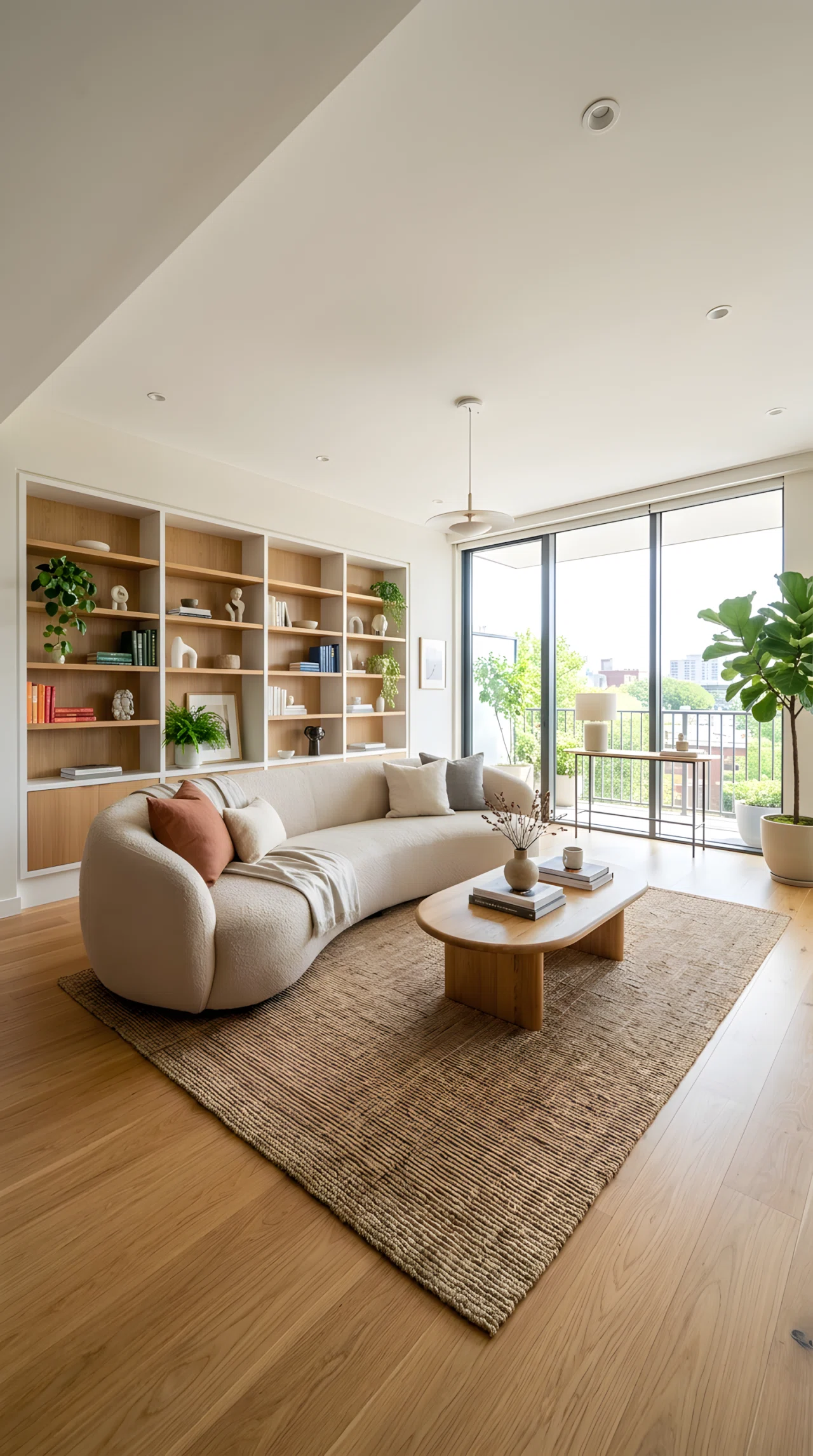
Sharp edges dominate most minimalist living room layouts, but curved silhouettes are quietly taking over as the softer alternative. A rounded sofa, an oval coffee table, or an arched mirror introduces gentle movement without adding visual clutter, keeping the modern minimalist living room feeling current and inviting.
Pair one curved piece with mostly straight lines so the contrast stays intentional. Too many curves at once can tip the room toward busy instead of balanced.
12. Zone an Open Living Room Layout Without Adding Walls
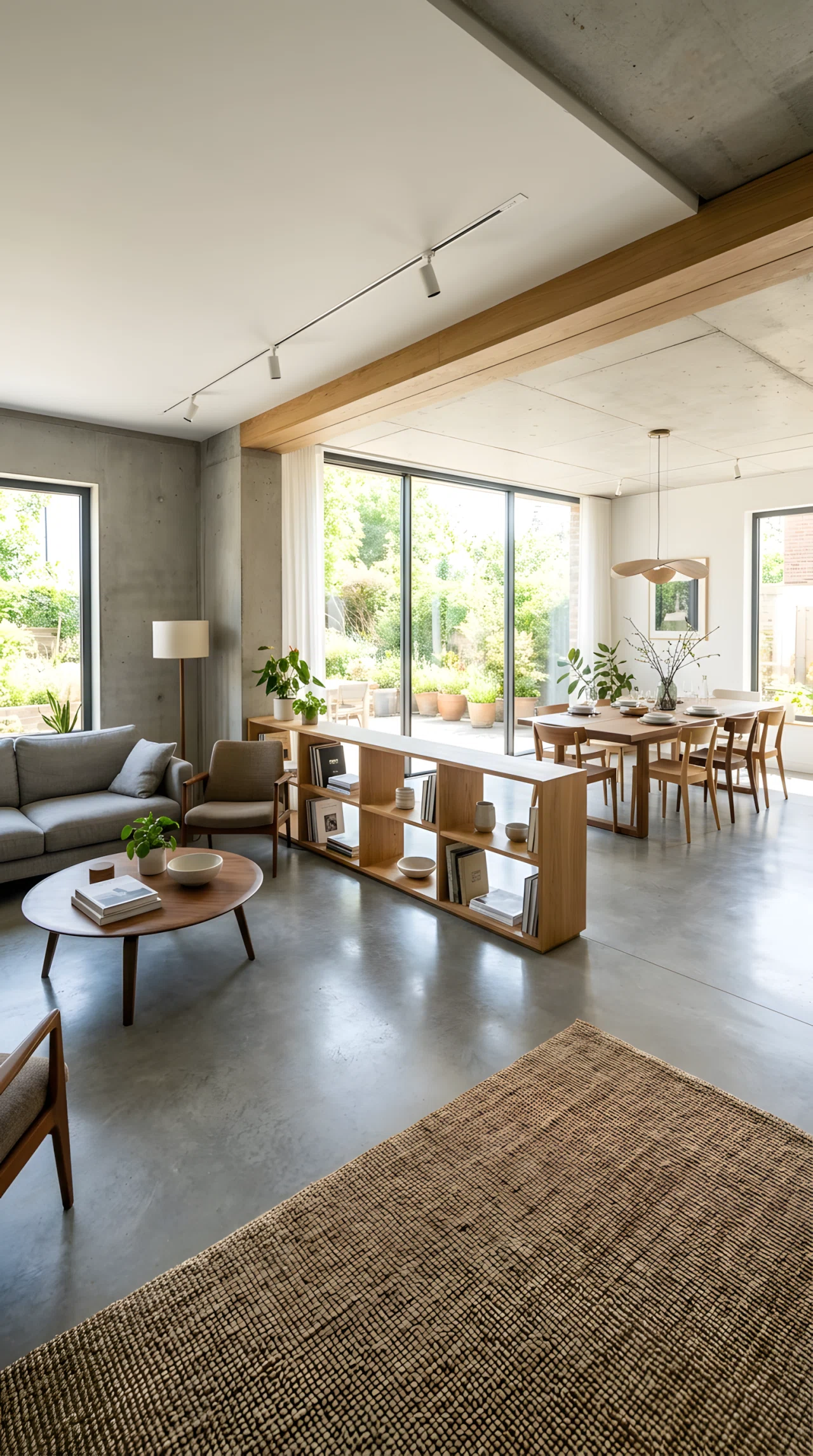
Open floor plans are common in modern homes, but they can make a minimalist living room feel undefined. A large area rug, a low bookshelf as a divider, or a shift in flooring material can quietly separate the living area from a dining or entry zone without closing off the space.
Keep the divider low enough that sightlines stay open across the room. Zoning should organize the space, not fragment it.
13. Bring Organic Greenery Into a Minimalist Living Room for Natural Softness
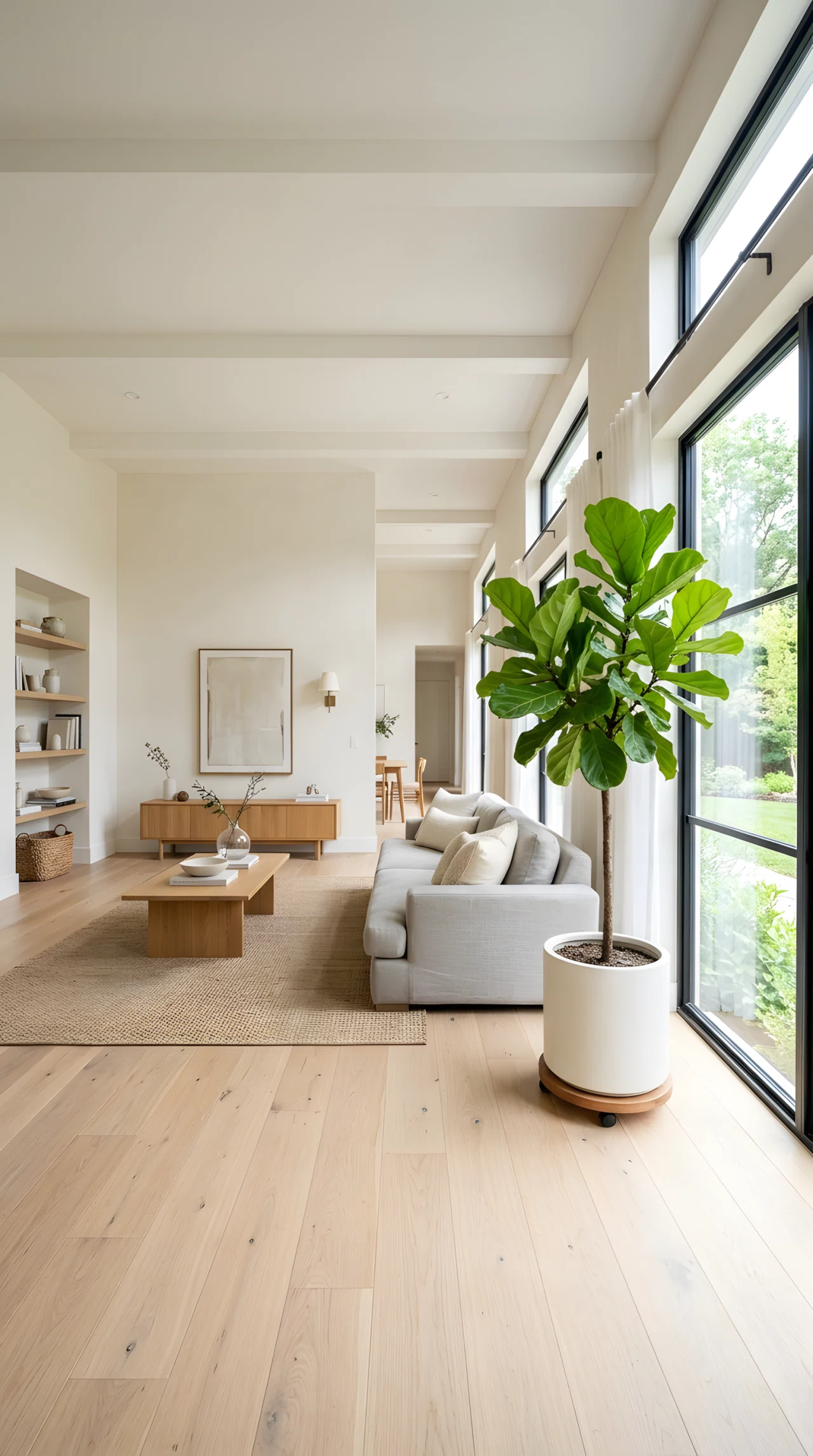
A minimalist living room can feel sterile without something alive in the room. One or two large leafy plants, like a fiddle leaf fig or an olive tree, add organic texture and a pop of natural green without cluttering the space with small decor.
Choose one statement planter instead of scattering several small pots around the room. A single large plant reads as intentional, not accidental.
14. Use Subtle Wall Moulding to Add Texture to a Contemporary Minimalist Living Room
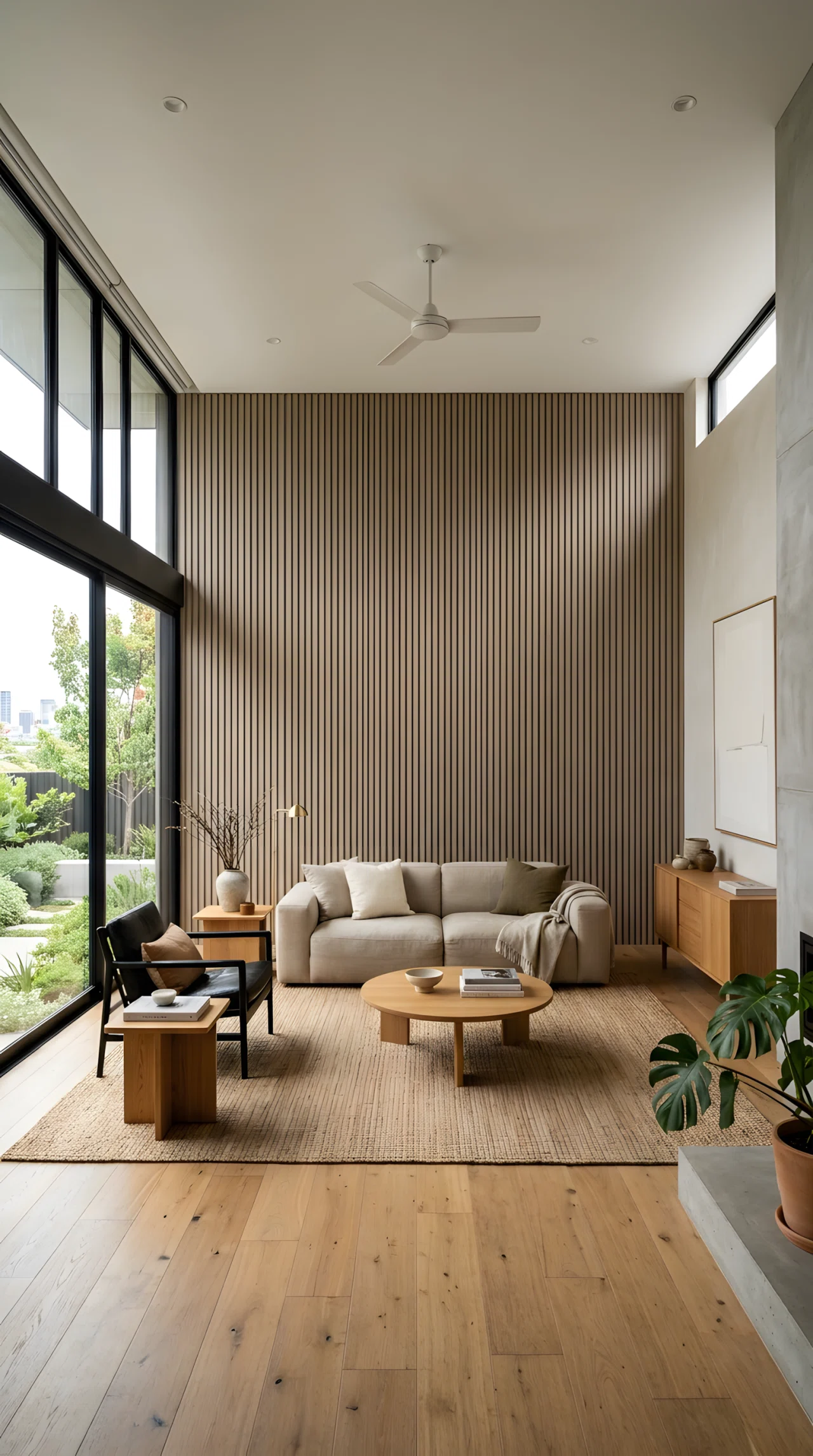
Flat walls can leave a contemporary living room feeling unfinished, even with great furniture. Subtle wall moulding, whether a simple picture frame pattern or vertical wood slats, adds architectural texture without introducing a single extra object into the room.
Paint the moulding the same tone as the wall for a subtle, shadow-driven effect. This keeps the room minimalist while adding real dimension.
15. Create a Serene Reading Corner in Your Minimalist Living Room
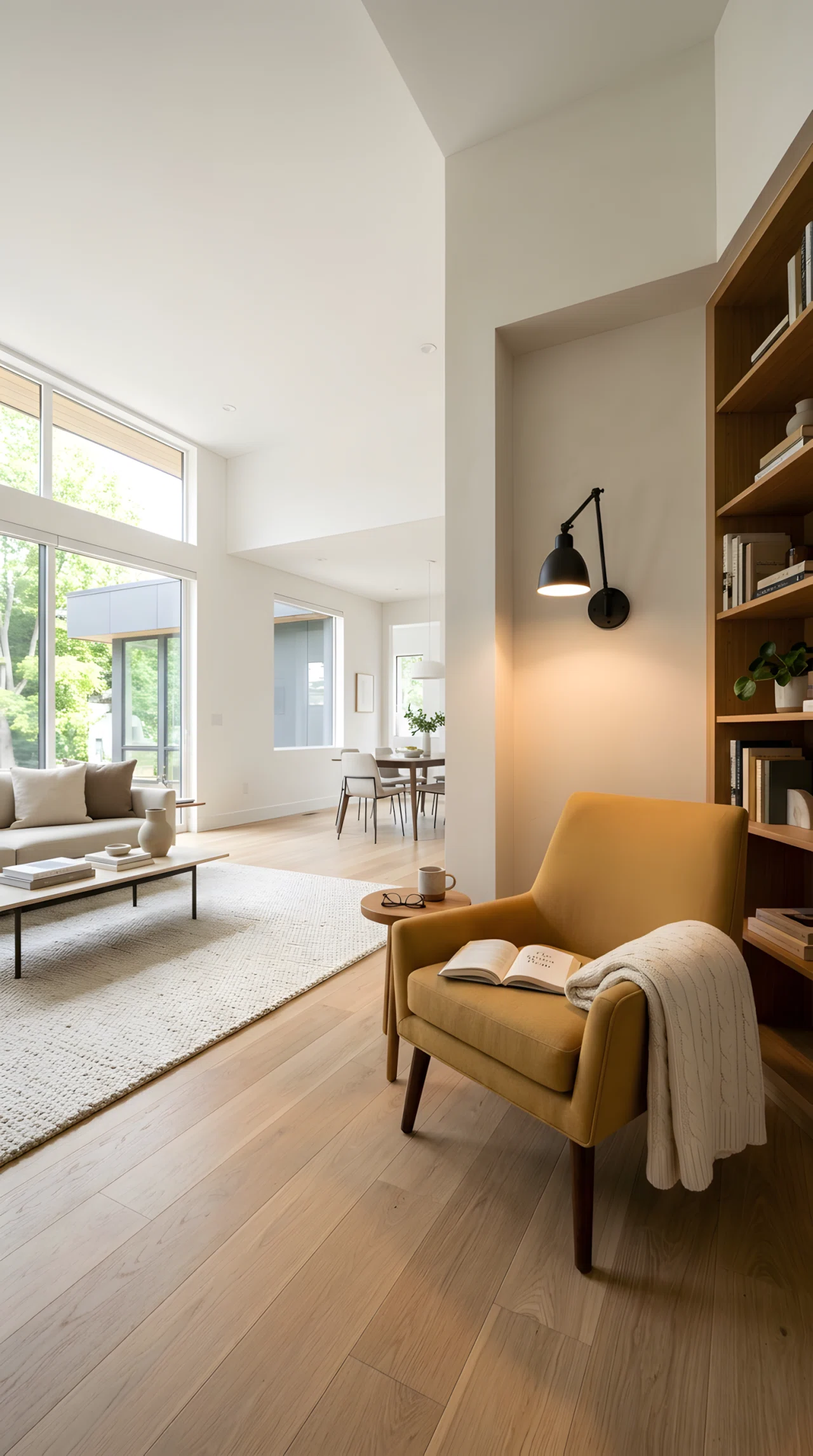
Some of the best minimalist living room ideas actually borrow from minimalist bedroom styling, especially the art of a quiet, layered corner. A single accent chair, a wall sconce mounted just behind it, and one folded knit blanket create a reading nook that feels calm and personal.
Keep this corner just outside the main seating zone so it stays distinct. A dedicated quiet spot makes the whole living room feel more intentional.
16. Style a Media Wall That Still Feels Minimalist
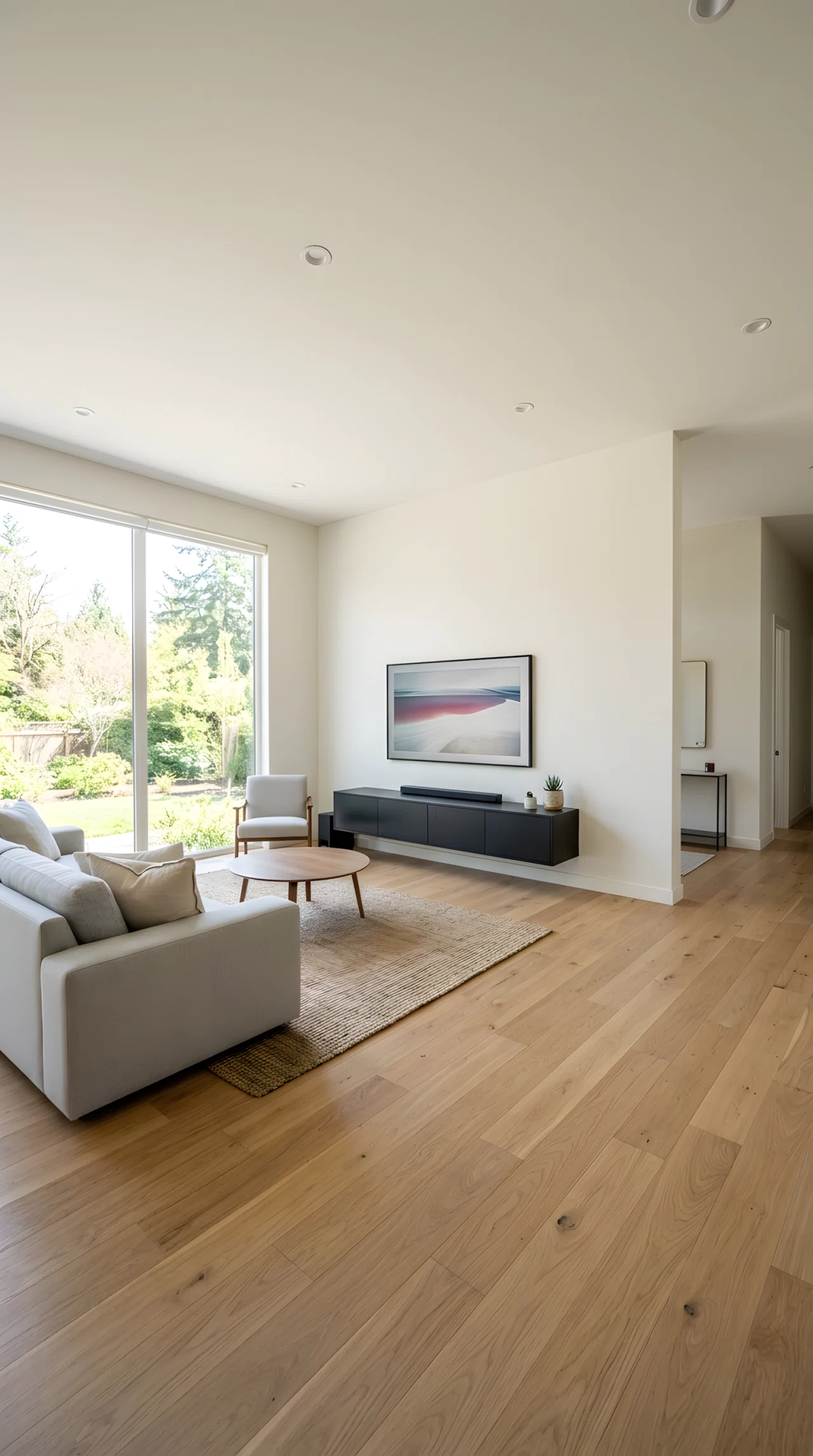
A television doesn’t have to disrupt a minimalist living room if it’s treated as part of the architecture instead of an add-on. A slim floating console, concealed cords, and a frame-style TV blend the screen into the wall rather than competing with it.
Skip the extra shelves of decor around the unit. One clean surface keeps the whole wall feeling intentional and calm.
17. Try a Soft Grayscale Palette for a Cool, Modern Minimalist Living Room
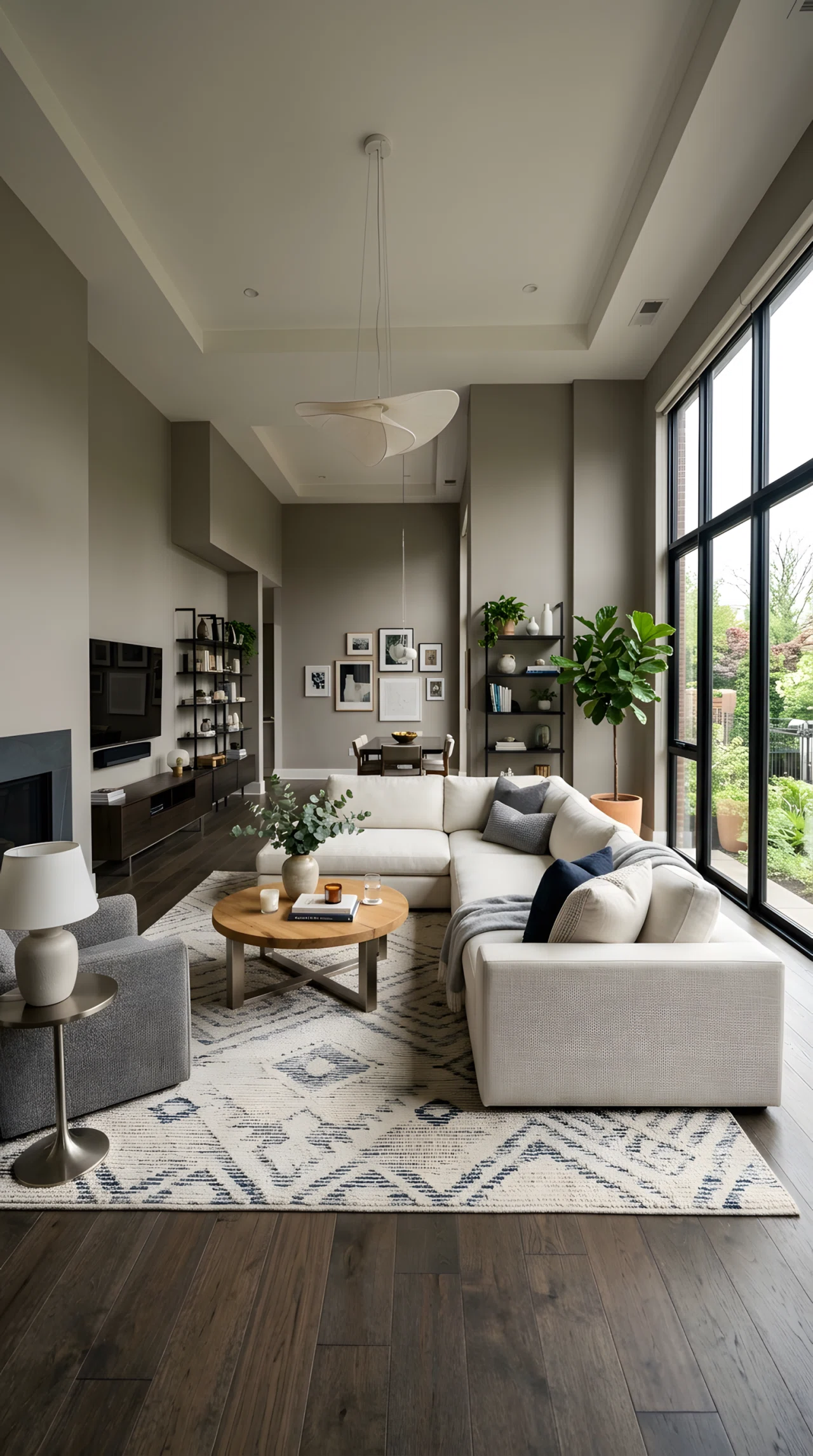
Not every minimalist living room needs warm tones. A soft grayscale palette, built from warm gray walls and off-white upholstery, gives the space a cool, modern edge while avoiding the sterile chill of pure white or icy gray.
Add brushed nickel or soft silver hardware to tie the metals together. This keeps the grayscale feeling deliberate rather than accidental.
18. Layer Two Rugs to Add Dimension to a Minimalist Living Room
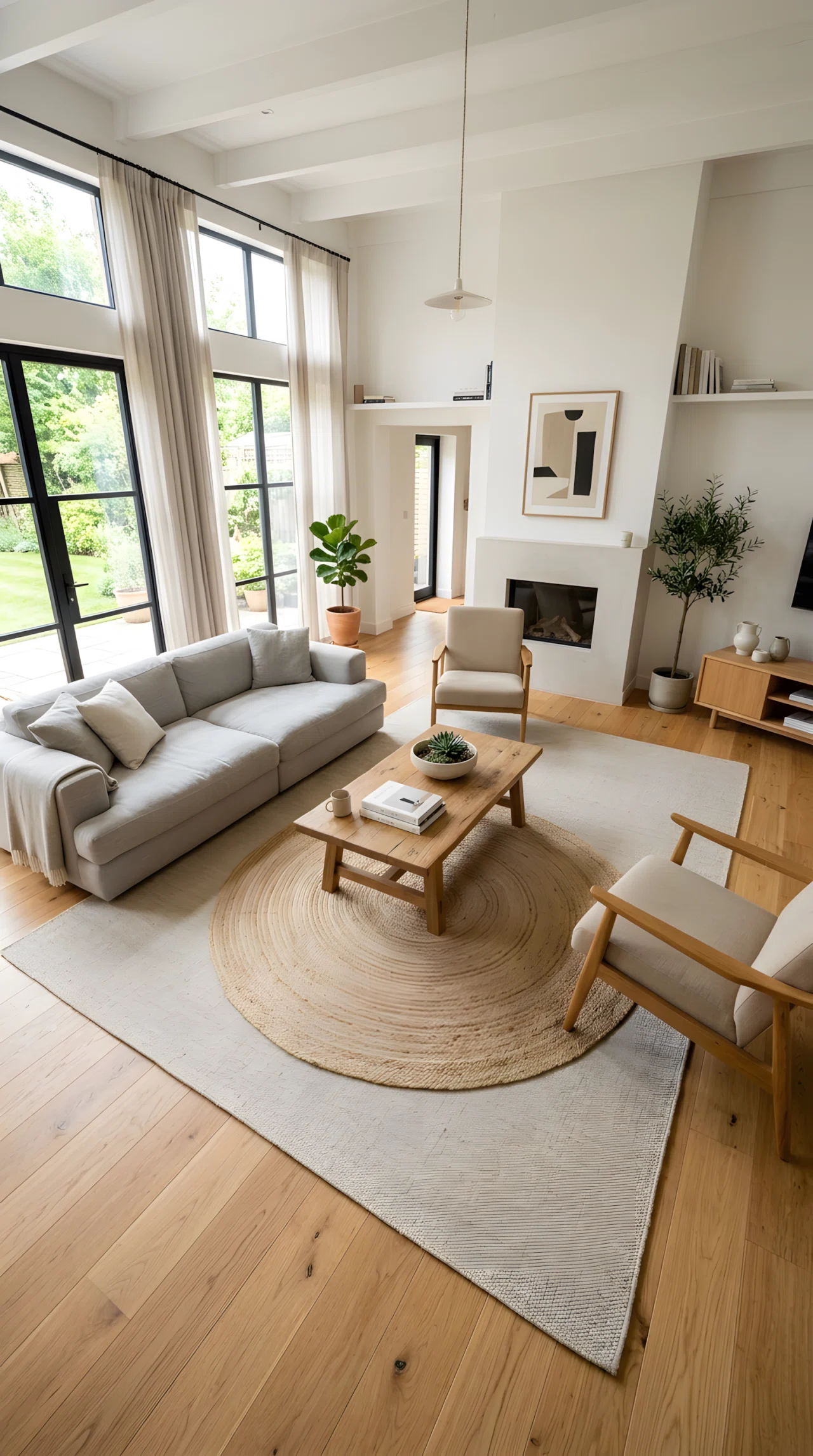
Rug layering is a simple trick that adds visual depth to a minimalist living room without adding clutter. A large flatweave rug as a base, topped with a smaller textured rug under the coffee table, creates dimension while keeping the floor plan feeling grounded and intentional.
Keep both rugs in the same neutral family so the layering reads as texture, not pattern. Contrast in material, not color, is the goal here.
19. Turn a Bay Window Into a Quiet Minimalist Seating Nook
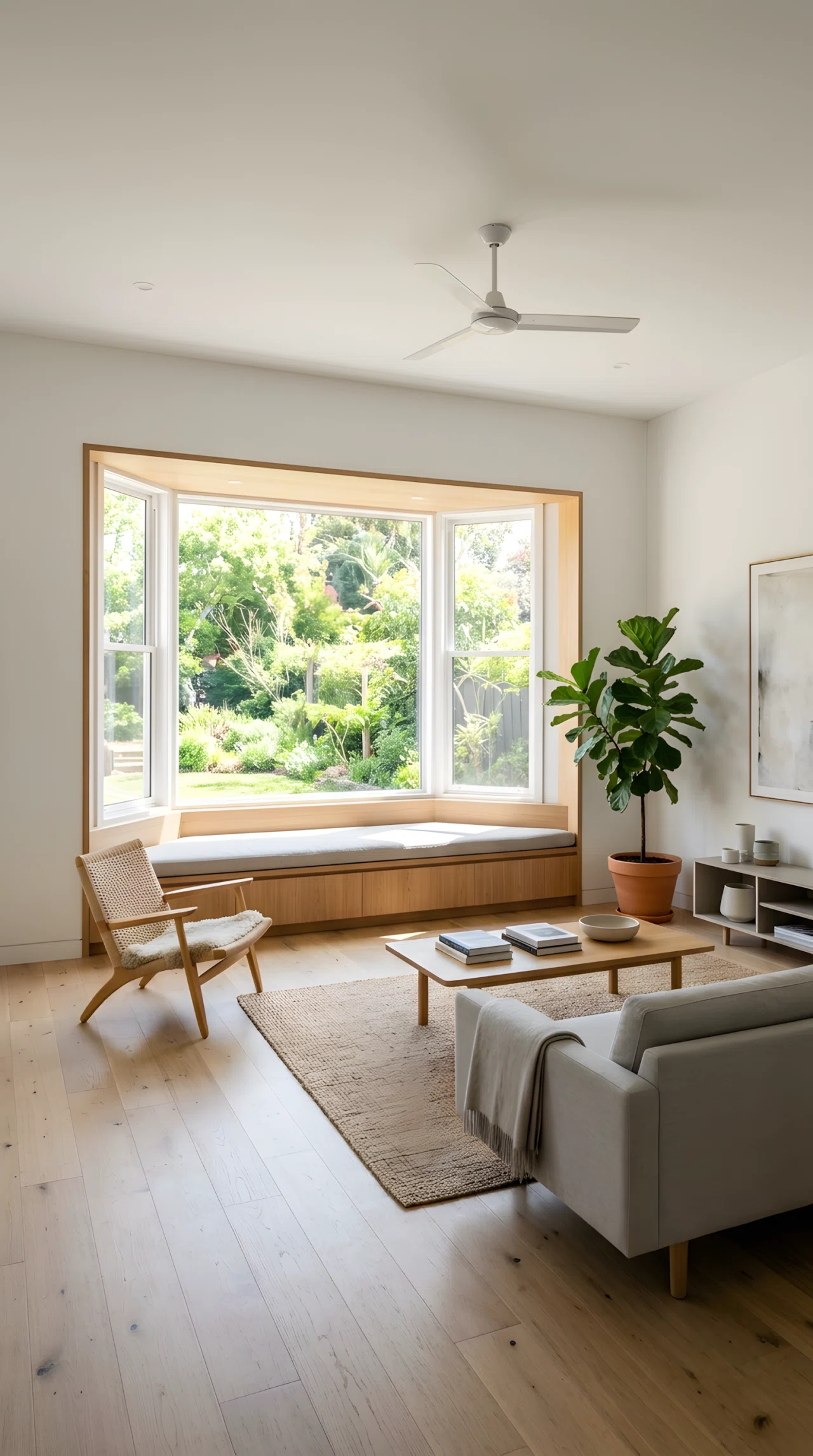
A bay or bow window is often underused space, but a simple built-in bench with a slim cushion turns it into one of the most inviting spots in the room. This nook adds seating to a minimalist living room without introducing another bulky chair.
Keep the cushion in one solid neutral tone and skip extra throw pillows. The window view becomes the decoration.
20. Draw the Eye Upward With Vertical Lines in a Minimalist Living Room
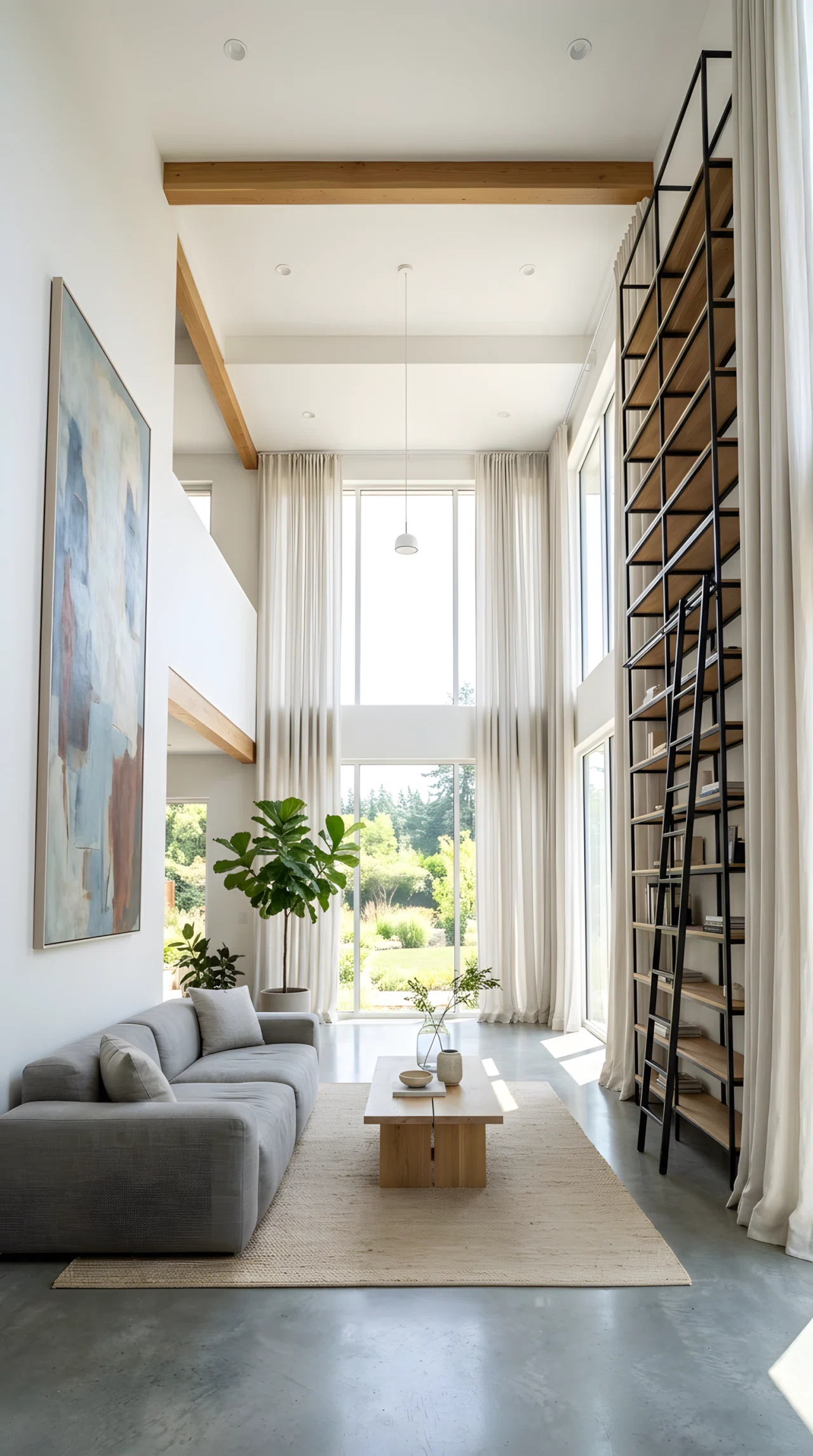
Tall spaces can feel empty if the furniture stays low and the walls stay flat. Vertical elements, like a floor-to-ceiling curtain, a tall slim bookshelf, or elongated wall art, pull the eye upward and make a minimalist living room feel more dramatic without adding clutter.
Keep the vertical piece slim so it doesn’t compete with the room’s simplicity. One tall element is usually enough to change the whole mood.
A minimalist living room isn’t about having less for the sake of it, it’s about making every choice count. From warm neutral palettes to hidden storage and thoughtful lighting, small intentional shifts turn a plain space into one that feels calm, curated, and genuinely lived-in.
Start with just one idea from this list and build from there. Your minimalist living room doesn’t need to be finished overnight, it just needs to feel like you.