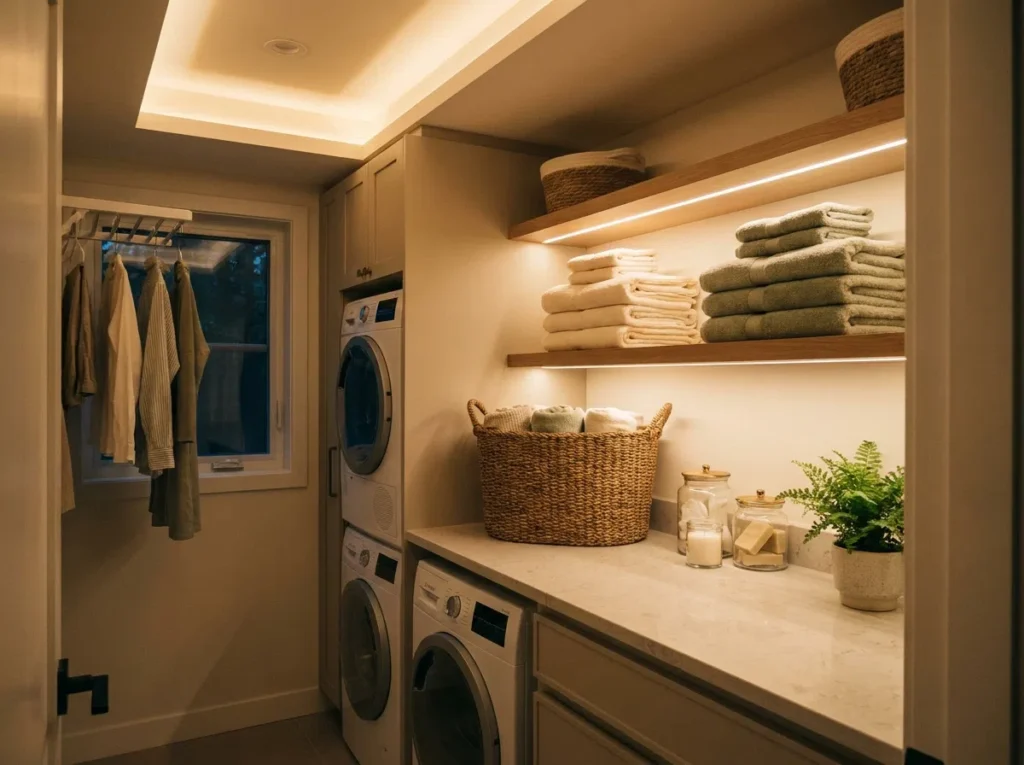
Stained shirt in one hand, dim ceiling bulb overhead, and you still cannot tell if that spot is coffee or grease. The problem is rarely the bulb itself, it is where the light sits. These 20 ideas rethink placement, direction, and layering, so your laundry room finally looks and works the way it should.
1. Cross Lighting the Folding Table to Erase Shadow Lines
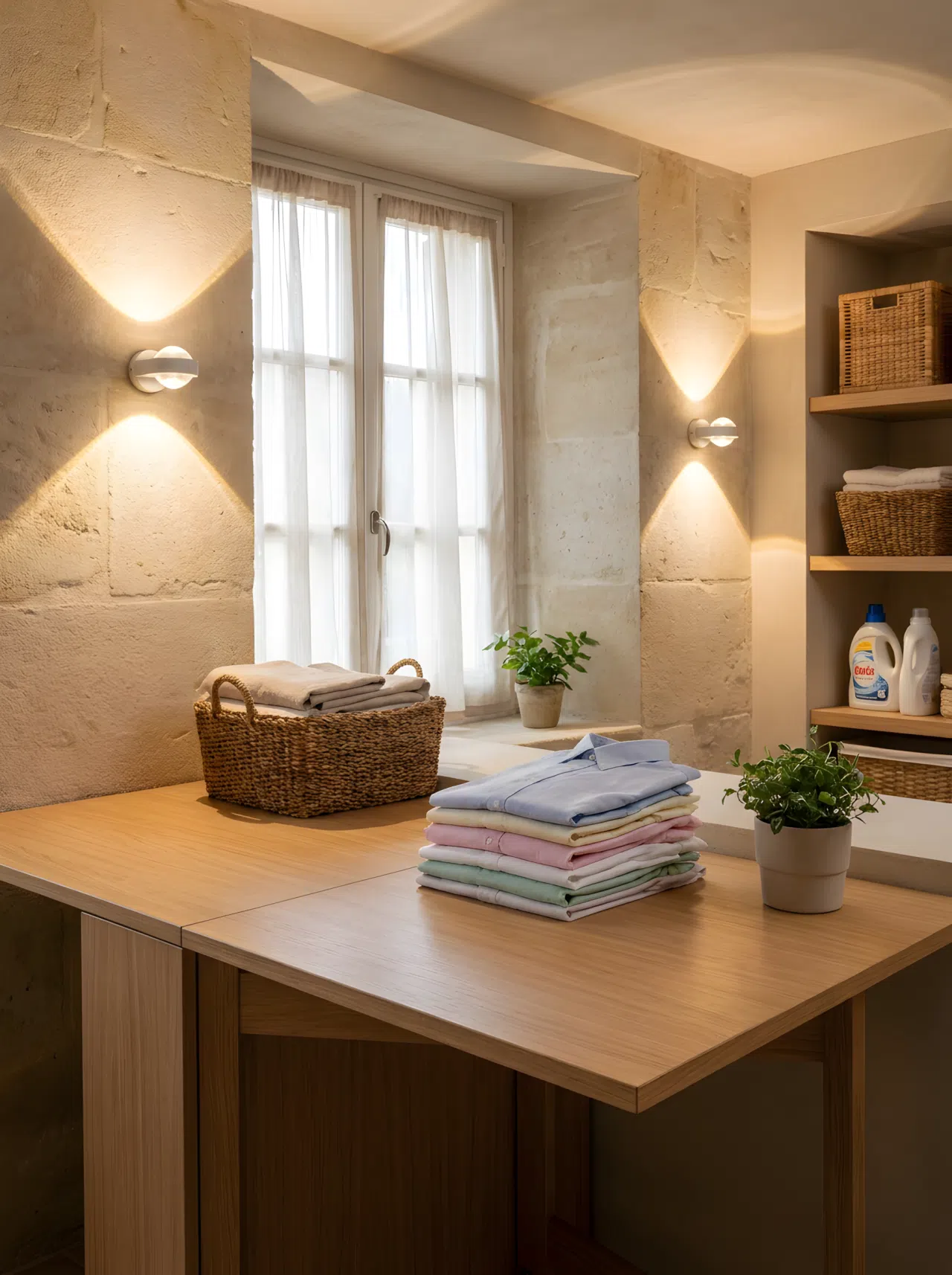
A single overhead bulb casts a shadow exactly where your hands work. Placing two smaller light sources on opposite sides of the folding table cancels that shadow out completely. This cross lighting trick is used in professional workspaces and instantly makes stain checking and folding far easier on the eyes.
2. Three Tier Vertical Layering from Floor to Ceiling
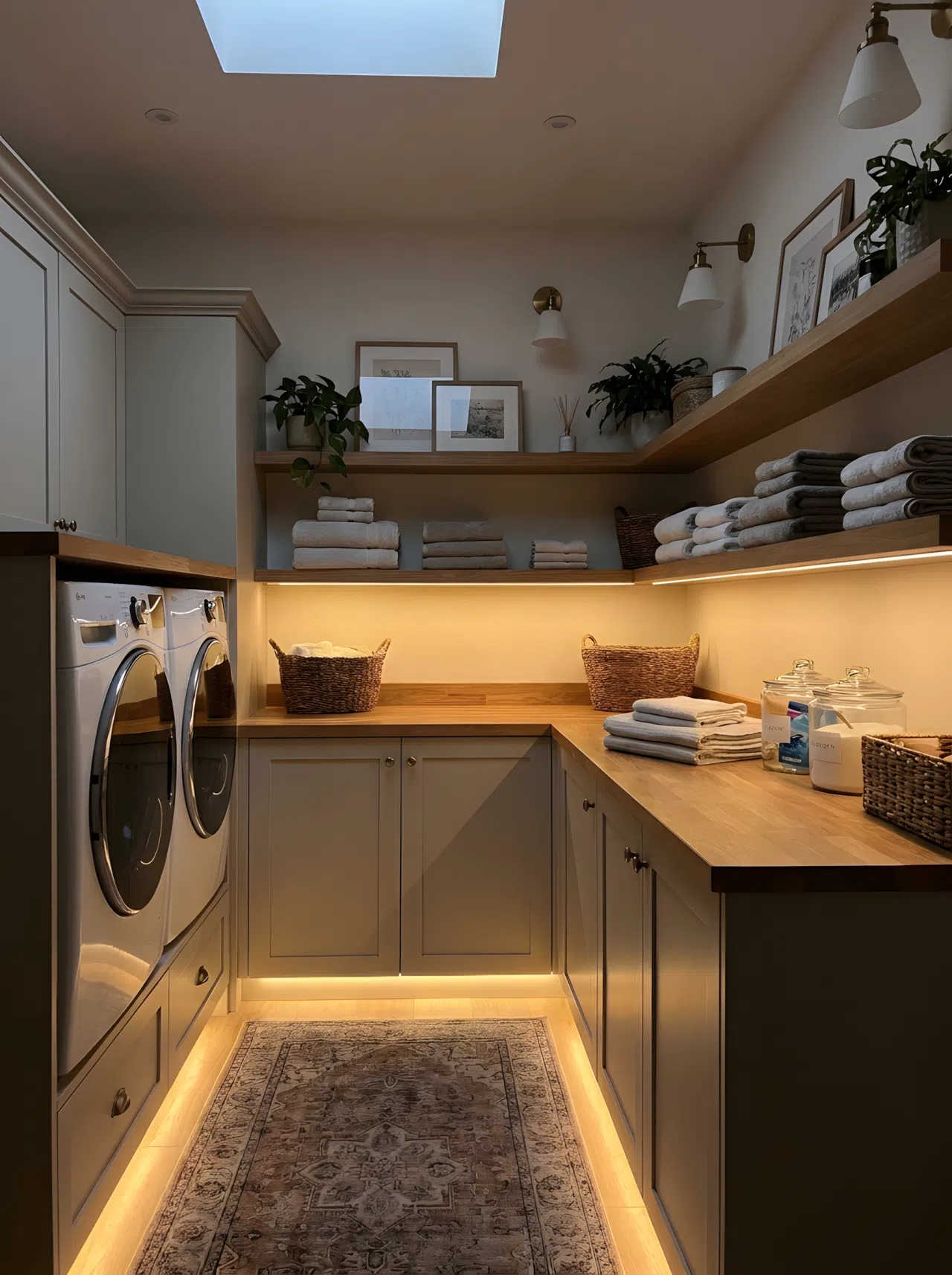
Instead of one flat source, layer light at three heights, low toe kick glow, mid level task lighting, and a softer ambient source near the ceiling. This vertical approach makes a small laundry room feel taller and more considered, the same layering trick high end interiors rely on to avoid a flat, single source look.
3. Wall Washing Light to Raise a Low Ceiling Visually
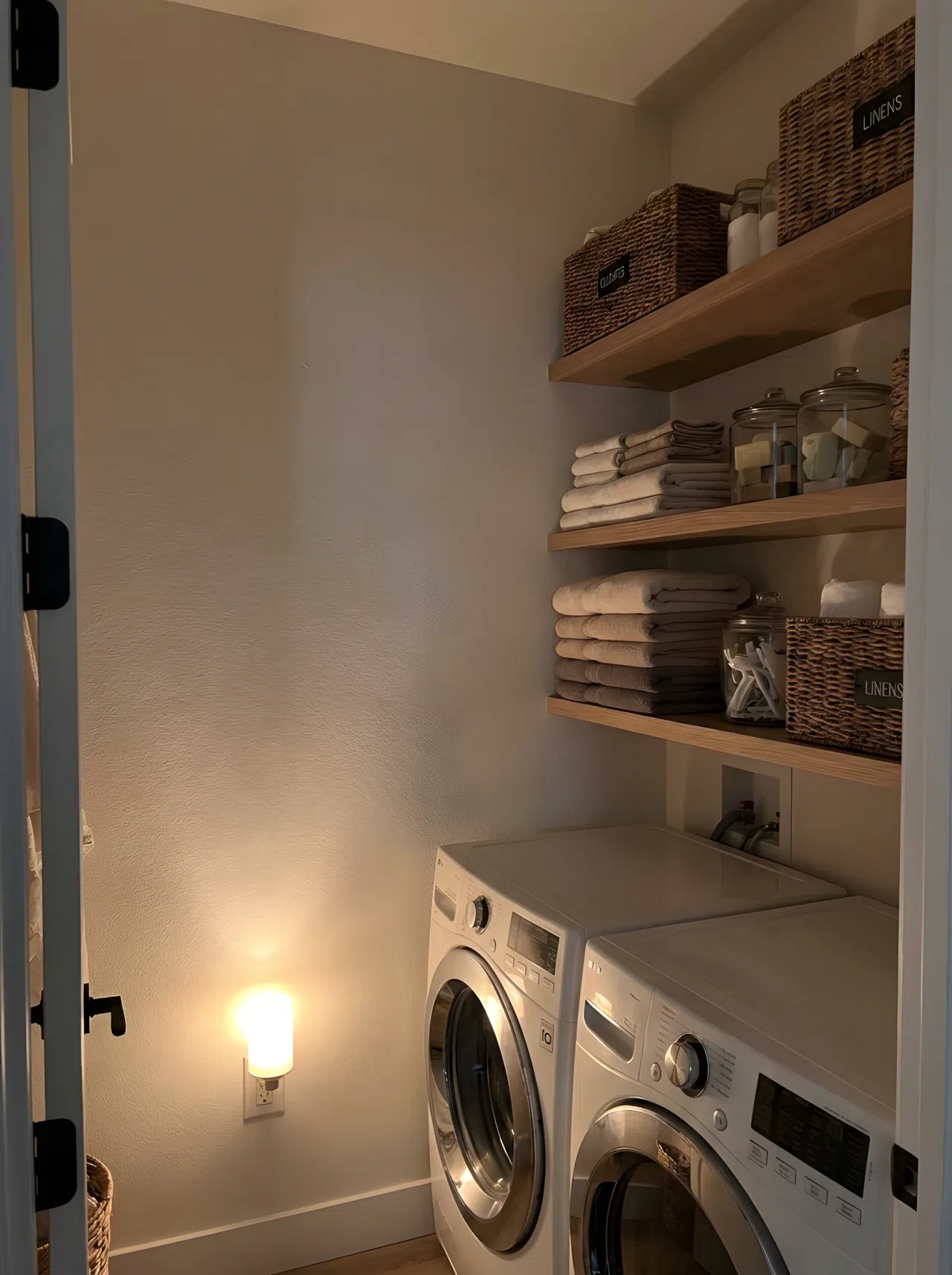
Aiming light upward along a wall, rather than straight down from the ceiling, spreads a soft wash that tricks the eye into perceiving more height. This wall washing placement works especially well in narrow laundry closets with low ceilings, where a downlight alone would make the space feel cramped and boxy.
4. Backlighting Open Shelves Like a Boutique Display
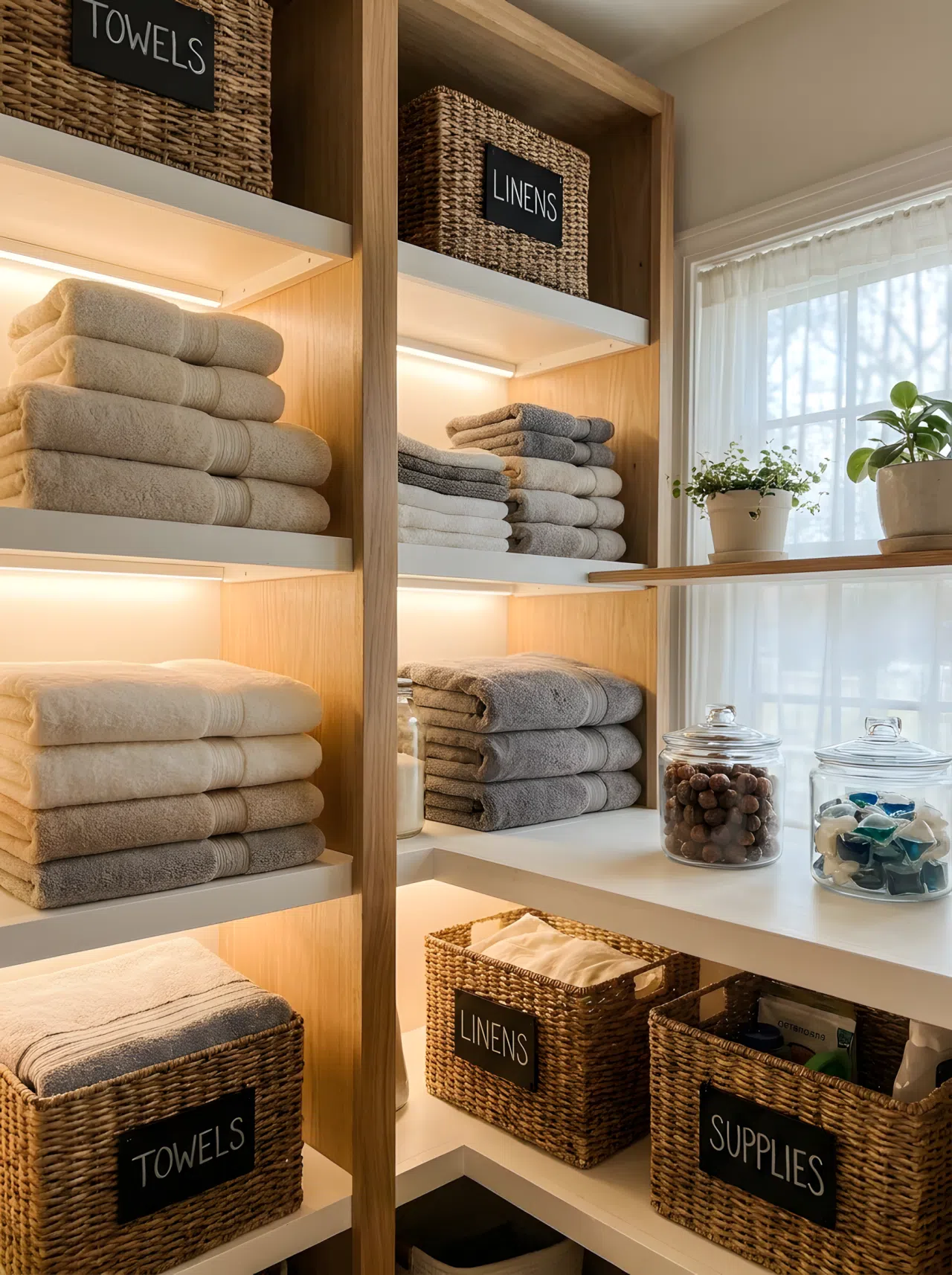
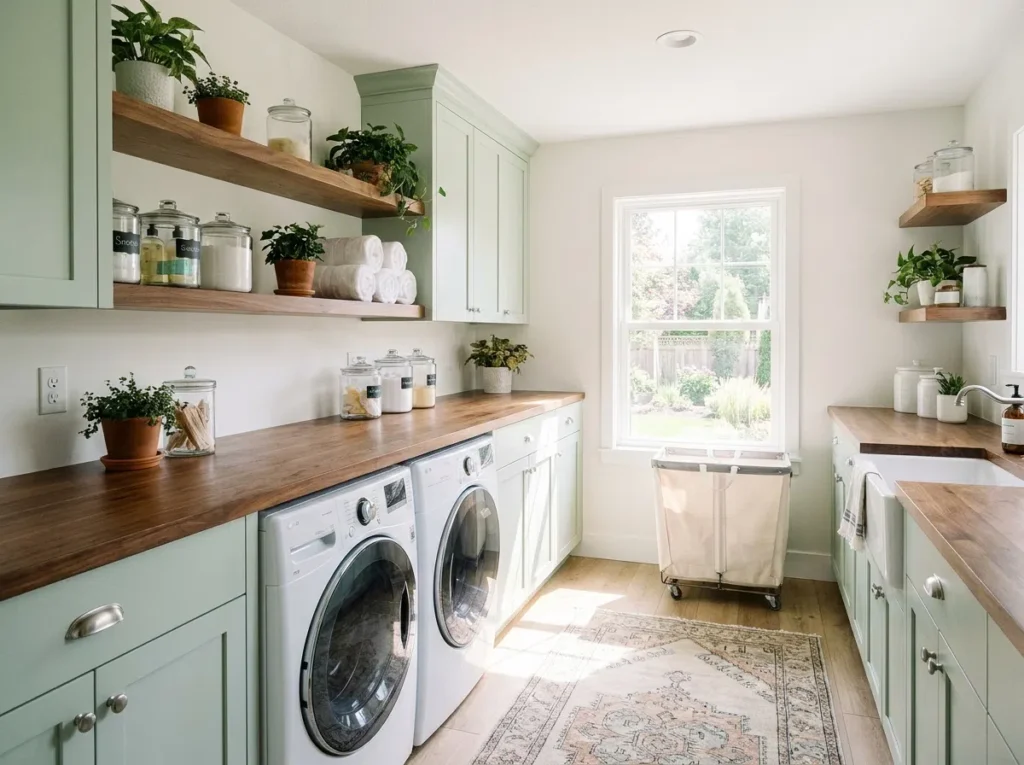
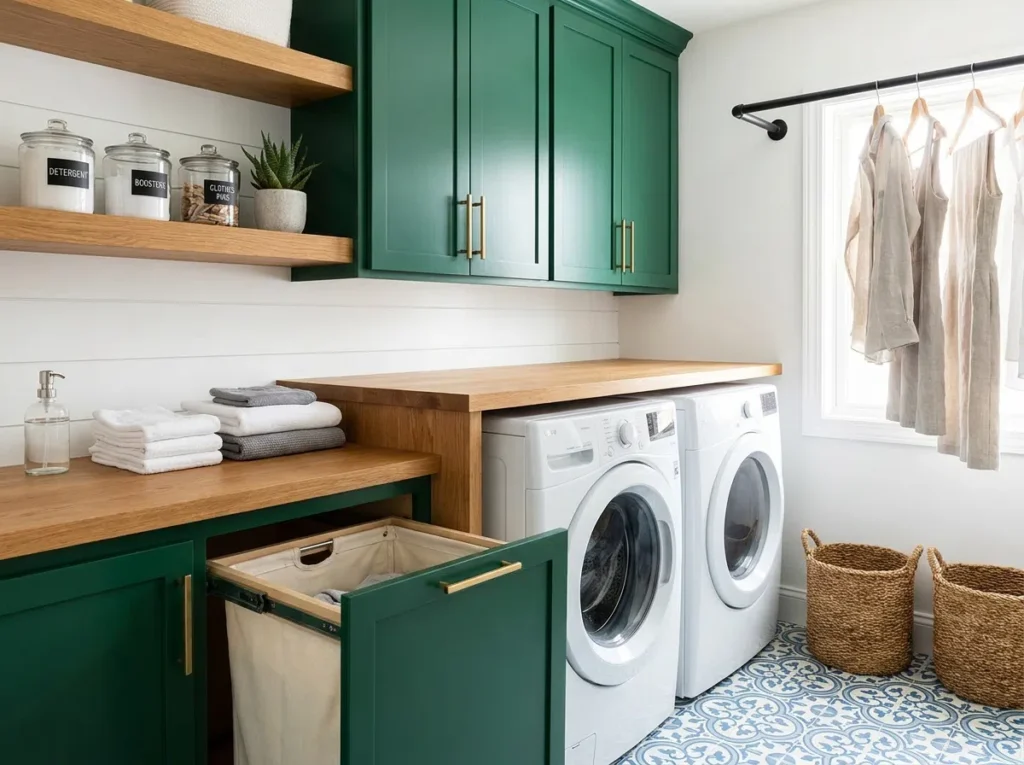
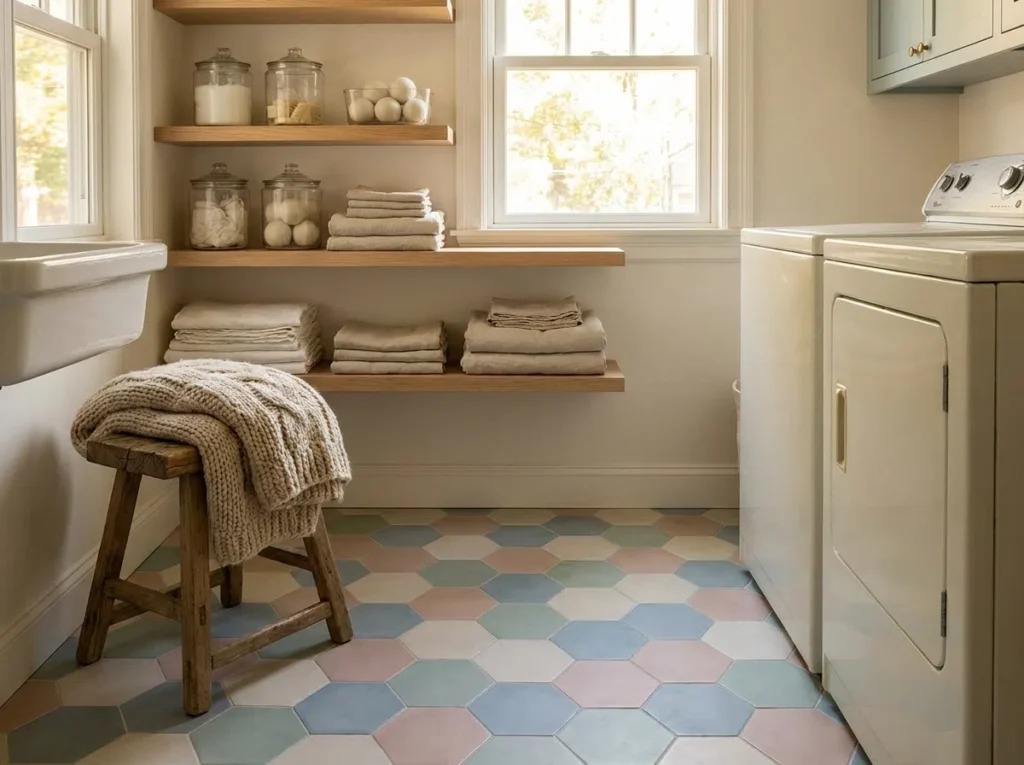
Position a slim light source behind or beneath each shelf so folded towels and labeled bins glow from within, similar to how retail stores light merchandise. This backlighting placement turns ordinary open storage into a styled display and makes the whole wall the visual anchor of the room, even before it is fully organized.
5. Hidden Ceiling Cove Lighting Around the Perimeter
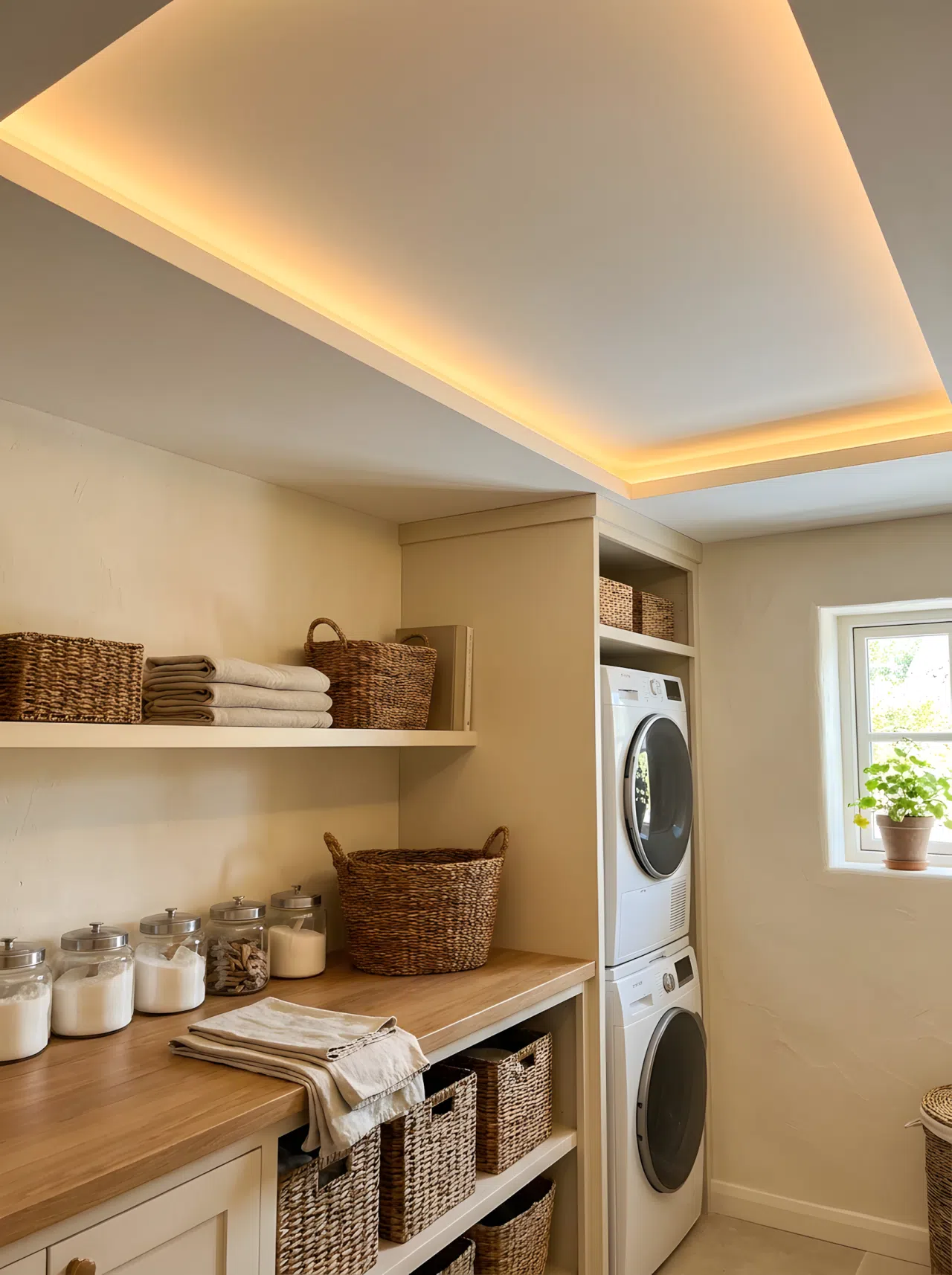
Tucking a thin light strip into a recessed cove along the ceiling edge bounces glow upward and outward instead of straight down. This perimeter placement eliminates the single harsh center shadow and gives the entire room a soft, even wash that feels closer to a boutique hotel than a utility space.
6. Spotlighting the Ironing Zone Only
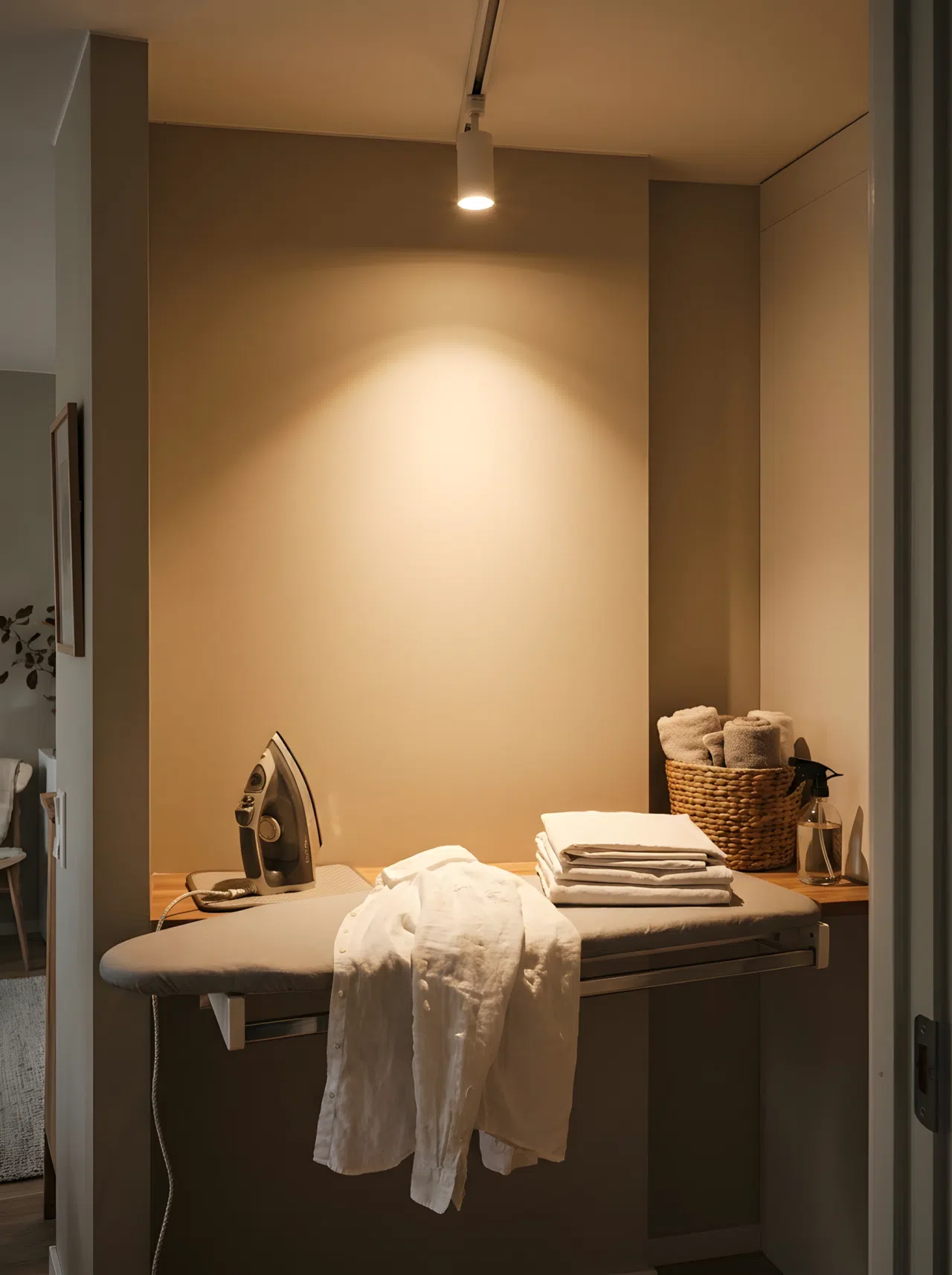
Rather than lighting the whole room evenly, aim a focused fixture directly above the ironing board so wrinkles and creases are impossible to miss. This zone specific placement treats the ironing station as its own task area, similar to how a kitchen dedicates separate, focused light to the stove or countertop.
7. Bouncing Light Off the Ceiling for Soft Fill
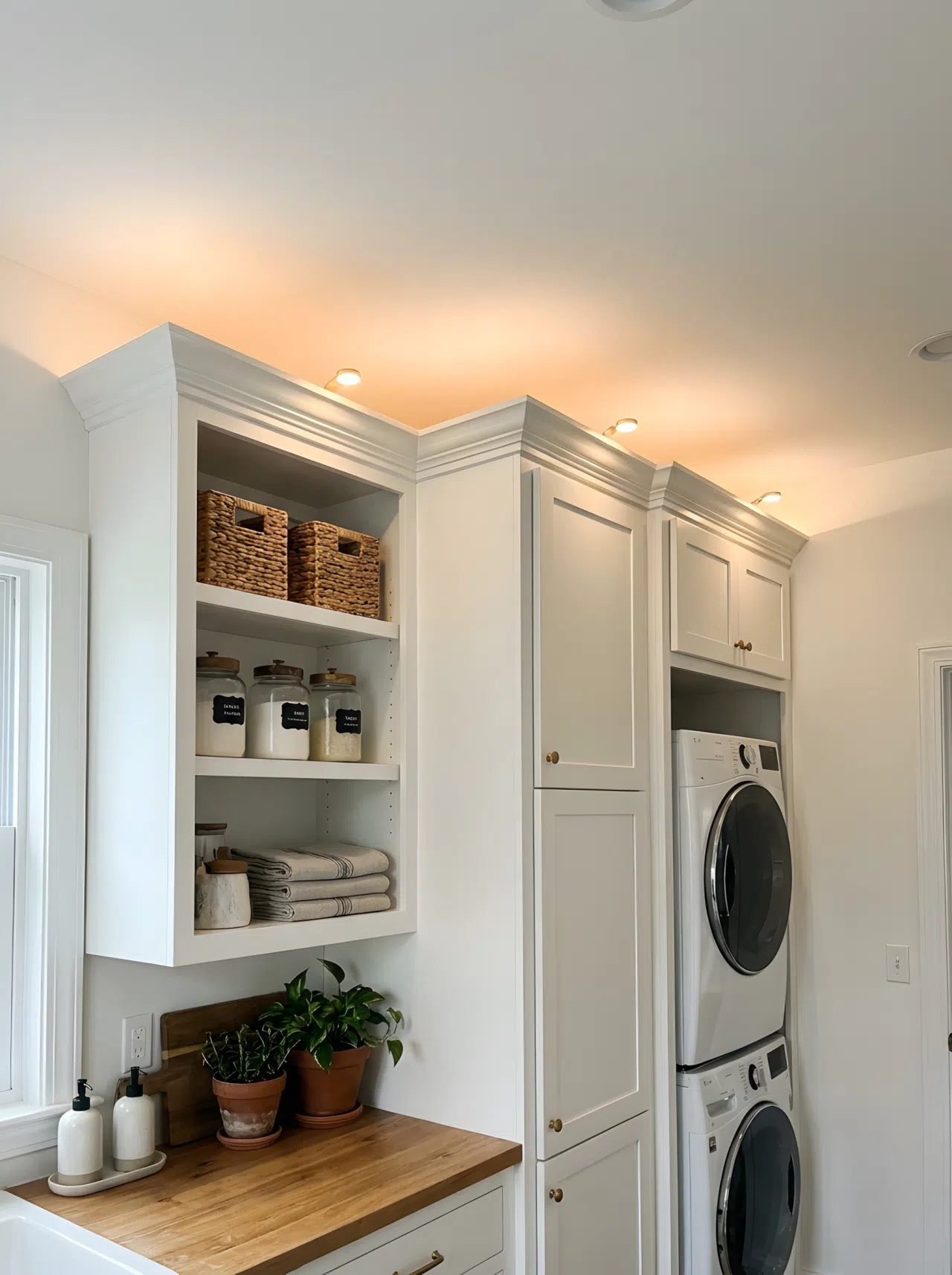
Uplights placed on top of tall cabinets or shelving send light upward to bounce off the ceiling before filling the room. This indirect placement removes harsh direct glare and creates a soft, diffused glow that flatters the whole space instead of harshly spotlighting one single point directly below the fixture.
8. Side Lighting a Mirror to Avoid Under Eye Shadows
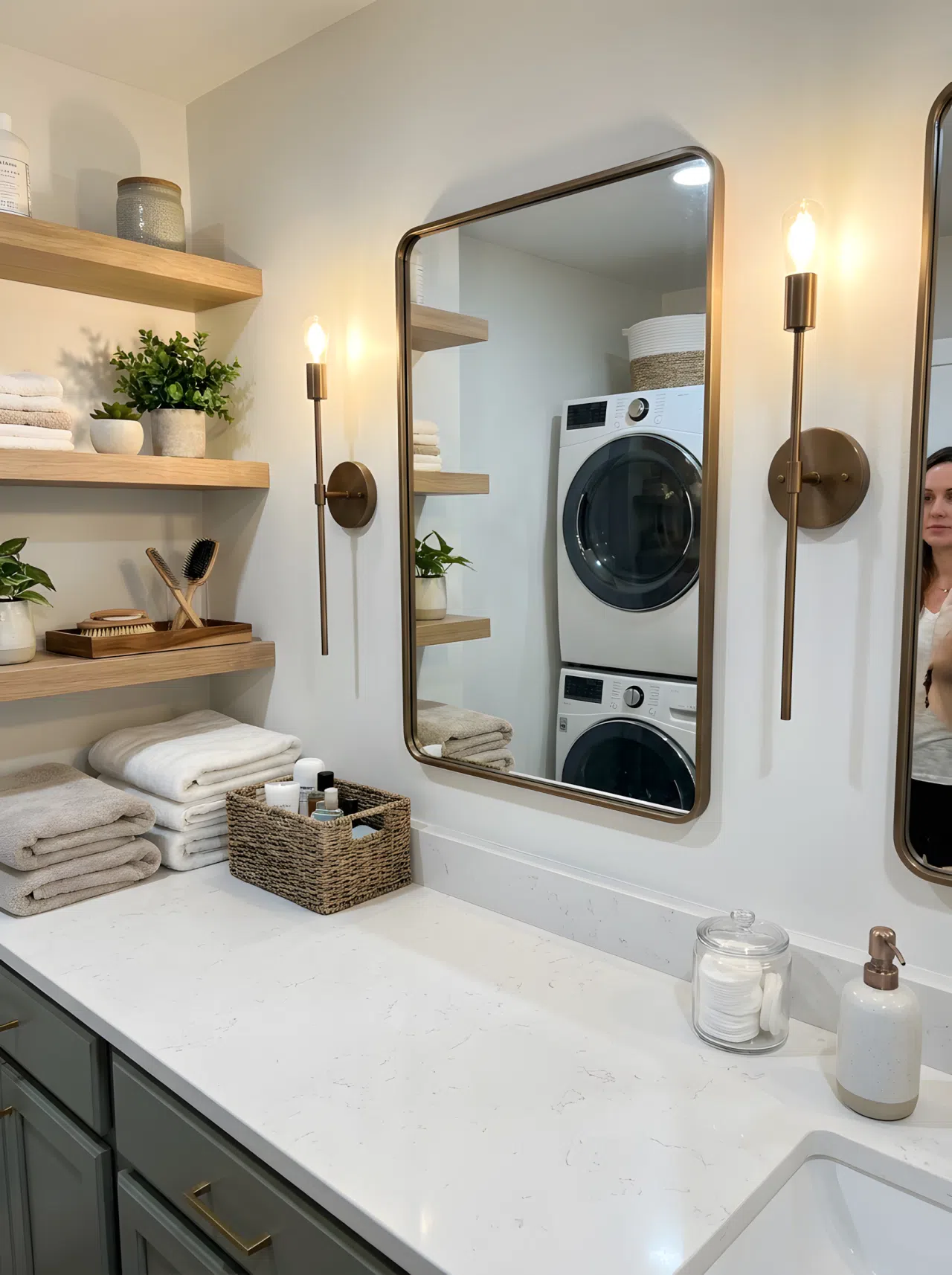
A light mounted directly above a mirror throws shadows downward across the face. Positioning two narrow sconces at eye level on either side instead lights the face evenly from the sides. This placement matters most if your laundry room doubles as a quick outfit or makeup check station before heading out the door.
9. Zoning the Room with Two Different Color Temperatures
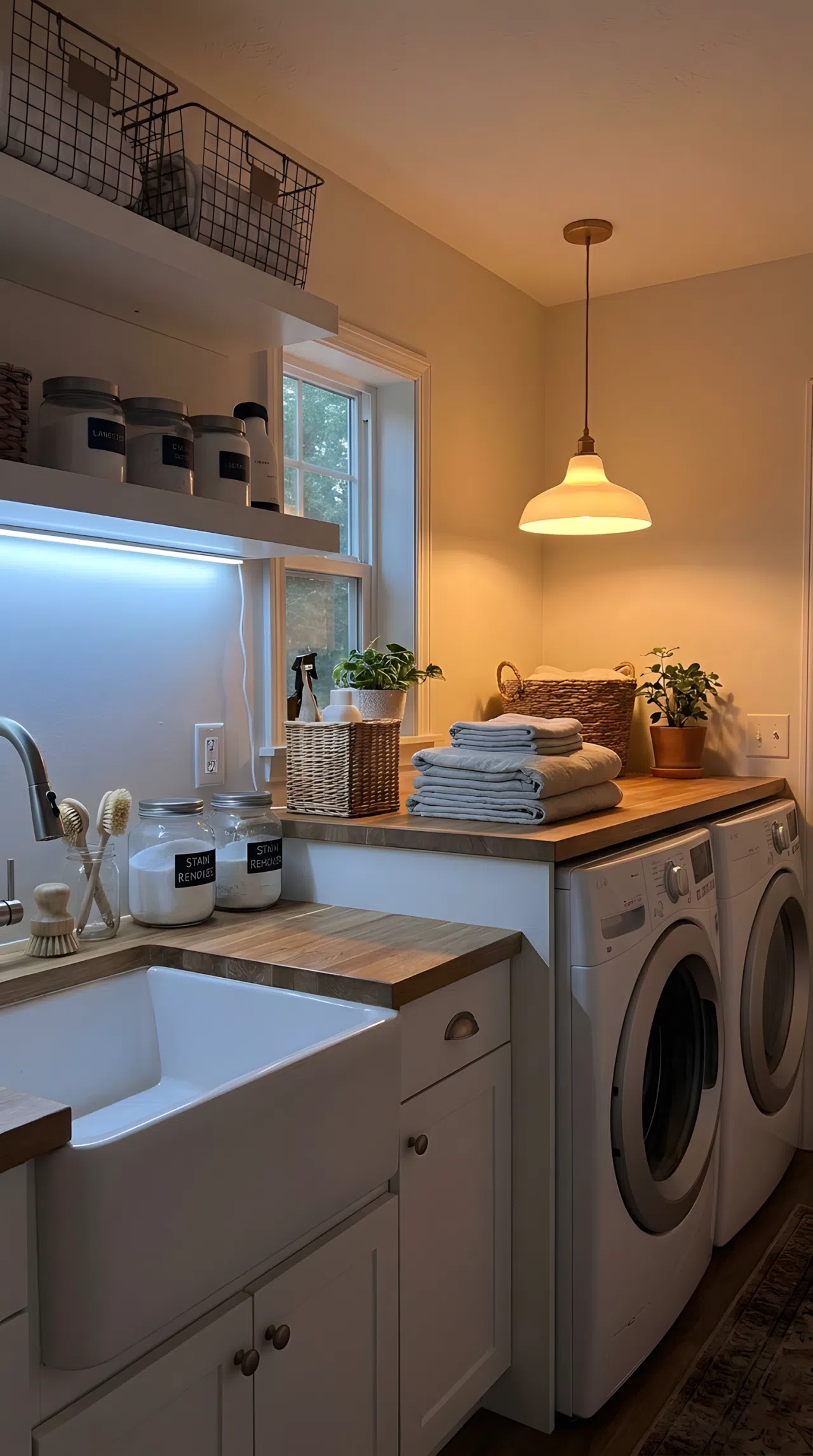
Position cooler toned light directly over the sink and stain treating area, then warmer toned light over the folding and storage zone. This placement based zoning helps your eyes actually distinguish stains under true color, while the rest of the room still feels warm, calm, and welcoming to spend time in.
10. Grazing Light Across a Textured Accent Wall
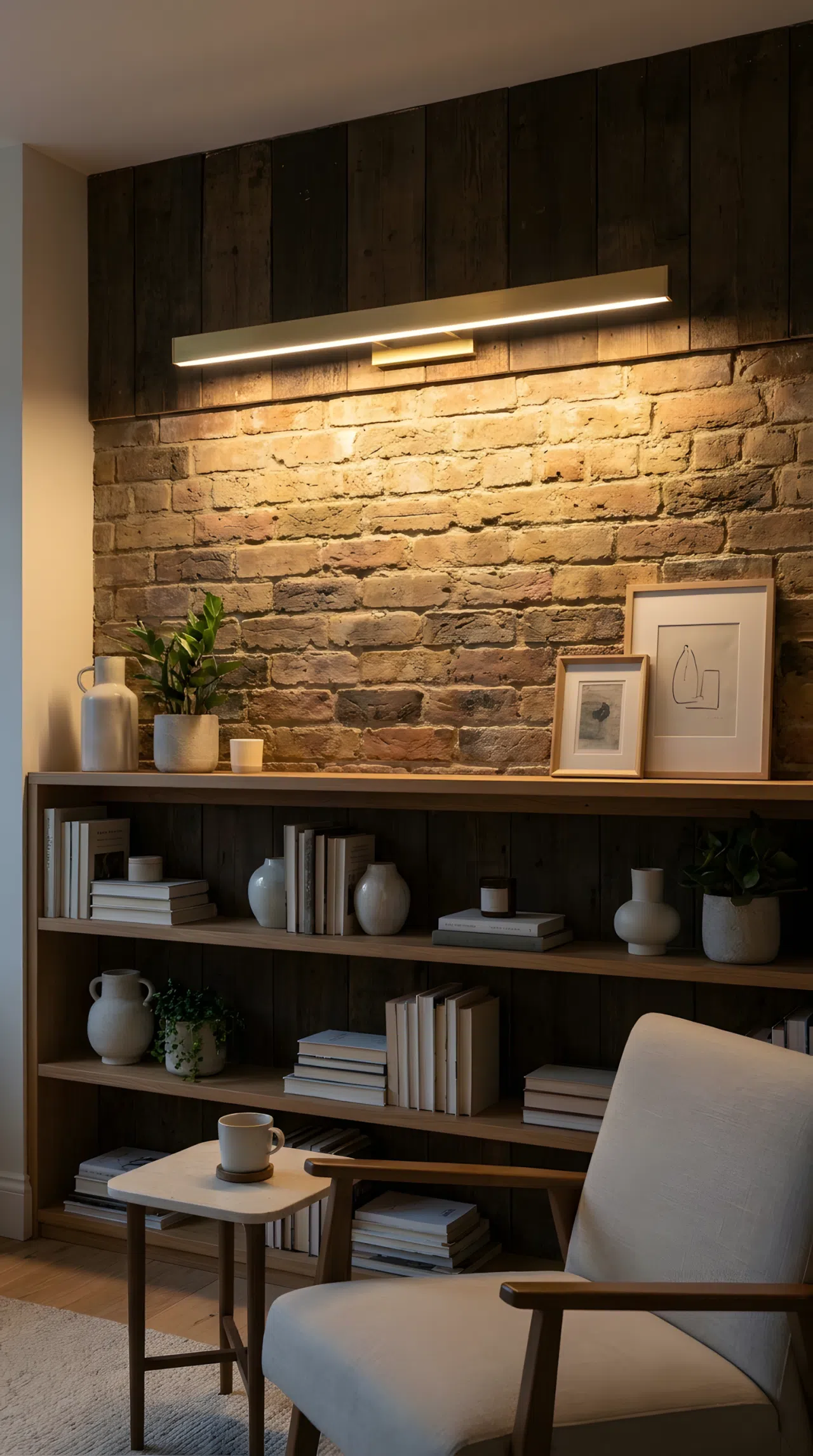
Placing a slim fixture close to a paneled, brick, or shiplap wall so light rakes across the surface at a low angle emphasizes texture and depth. This grazing placement turns a plain wall into a dimensional feature and adds real visual interest without needing any new decor, paint, or wallpaper at all.
11. Toe Kick Lighting at Floor Level for a Grounded Glow
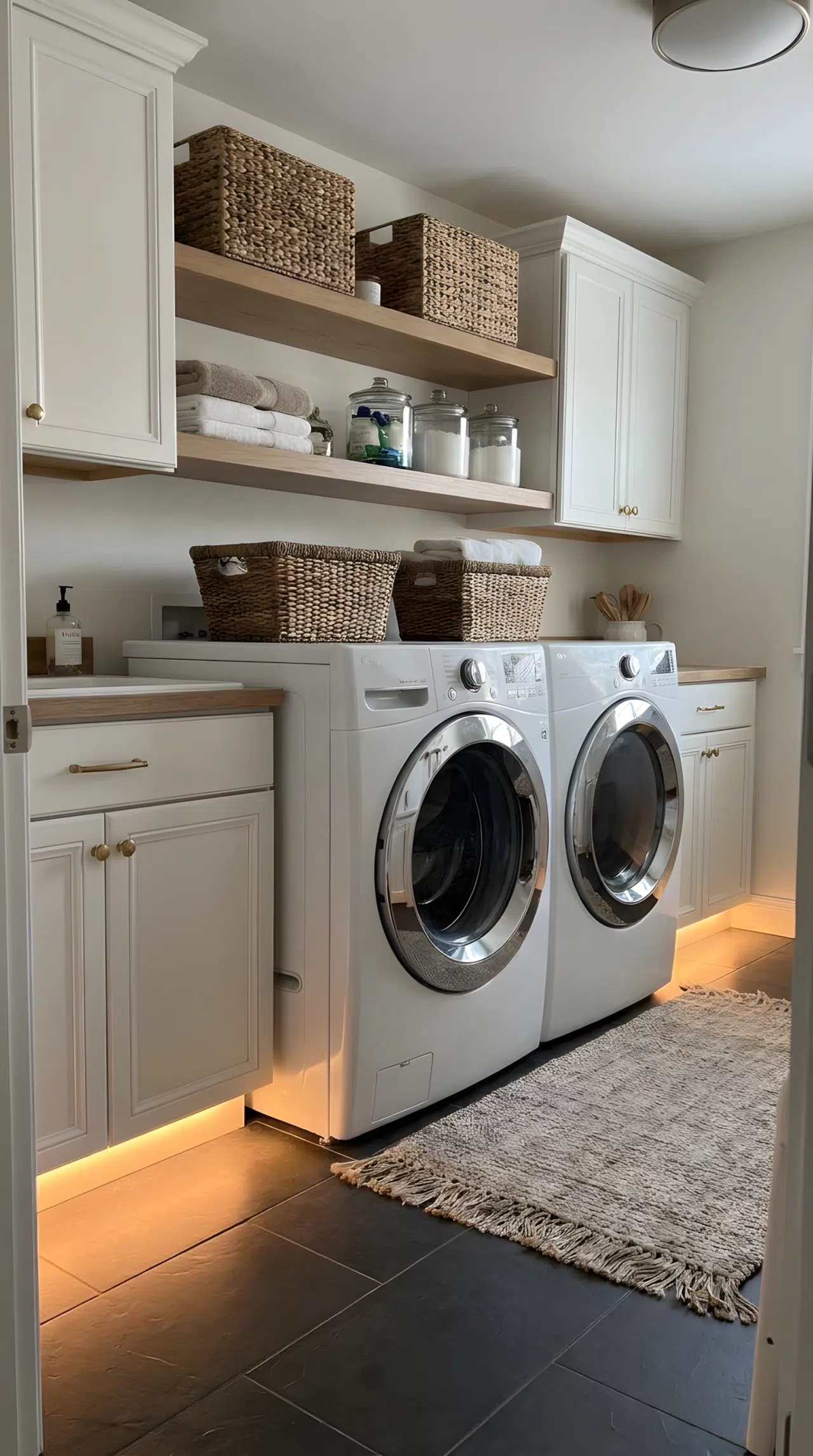
Tucking a thin light strip beneath cabinet toe kicks places the glow low and close to the floor rather than overhead. This low placement adds a soft, grounded ambiance in the evening and helps you navigate the room safely without switching on a harsh overhead light just for a quick task.
12. Symmetrical Pendant Pairing Down a Narrow Galley Layout
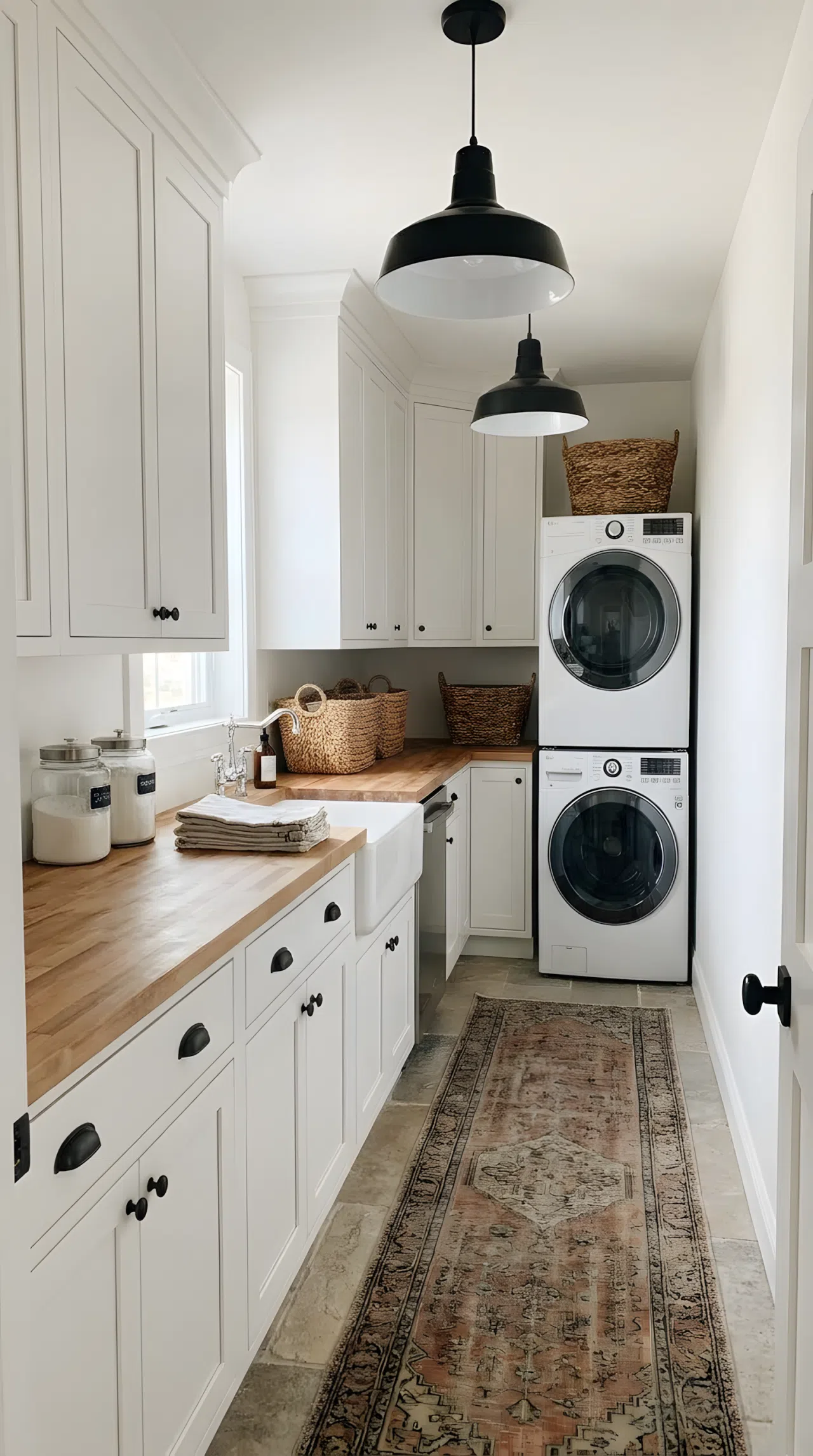
In a long narrow laundry room, hang two matching pendants spaced evenly rather than one centered fixture. This symmetrical placement distributes light evenly along the entire counter run, removing the dim end zones that a single central pendant would inevitably leave in shadow on both far sides of the room.
13. Triangulating Light to Eliminate Every Dark Corner
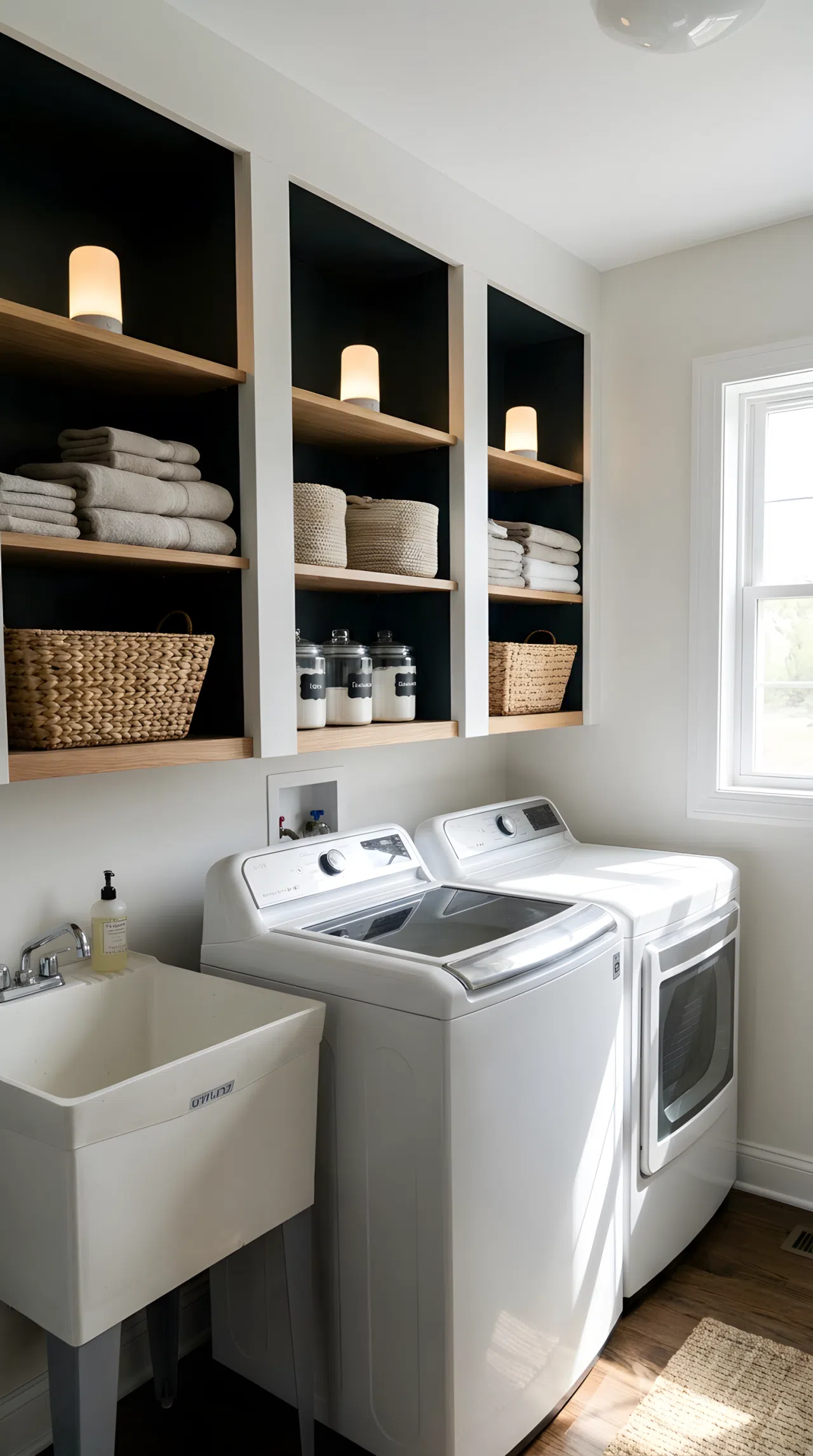
Map out the three darkest corners of your room and place a small fixture, sconce, or plug in lamp in each one. This triangulated placement approach eliminates dark pockets entirely, rather than relying on one central source to stretch evenly across a room with awkward angles or several odd corners.
14. A Vertical Light Column Beside Tall Storage
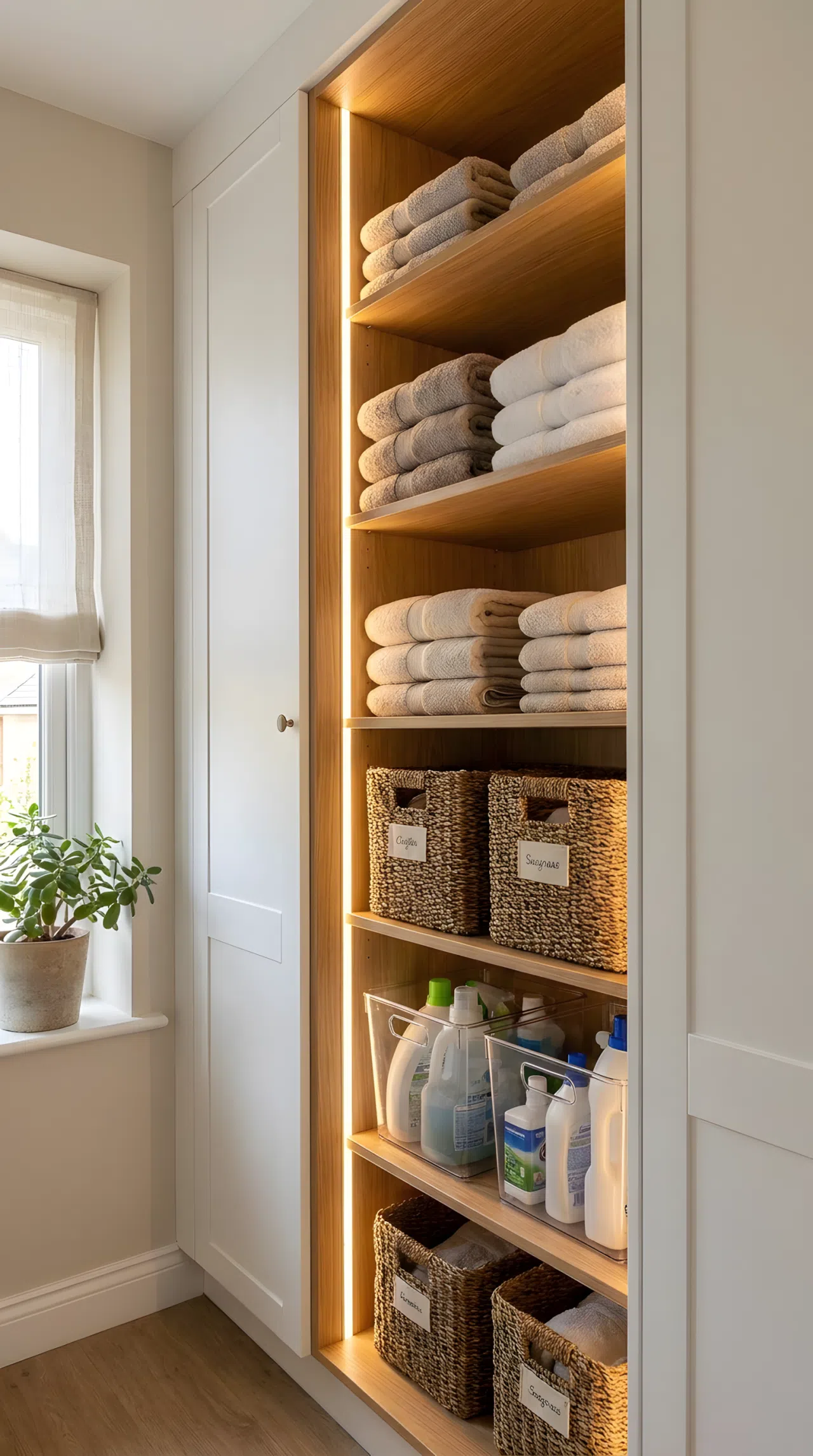
Running a slim vertical light strip along the edge of a tall cabinet or shelving unit draws the eye upward and makes ceilings feel higher. This vertical placement also softly illuminates the side profile of stacked bins and baskets, keeping tall storage from ever looking like a dark, flat, uninviting block.
15. Lowering a Pendant Cluster for an Intimate Feel
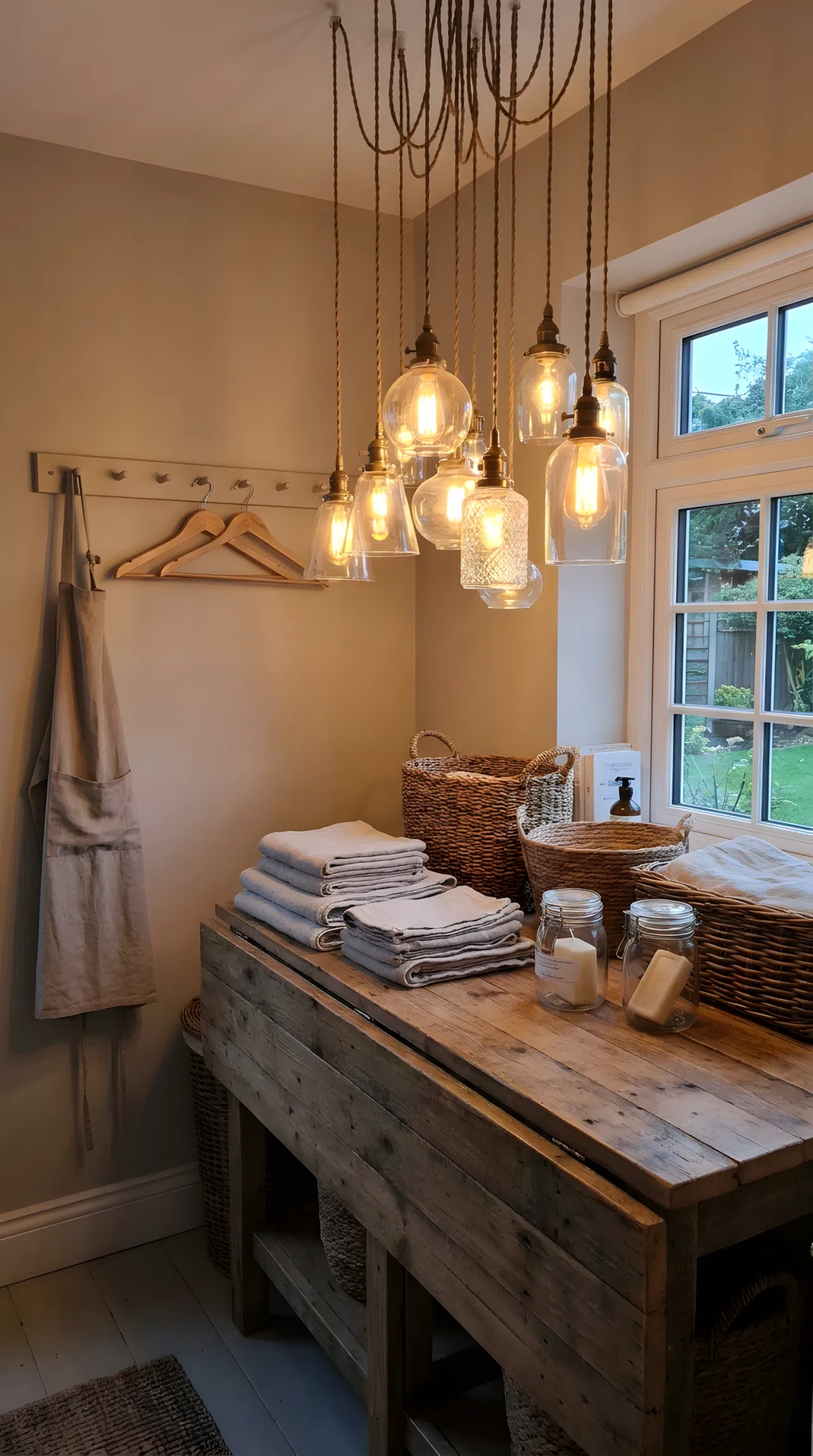
Hanging a cluster of small pendants lower than standard ceiling height, just above eye line near the folding area, creates a cozier, more intimate pocket of light. This lowered placement makes even a wide open laundry room feel more personal and considered, instead of vast, sterile, and echoing like a bare utility hallway.
16. Positioning Light to Frame Open Shelf Styling
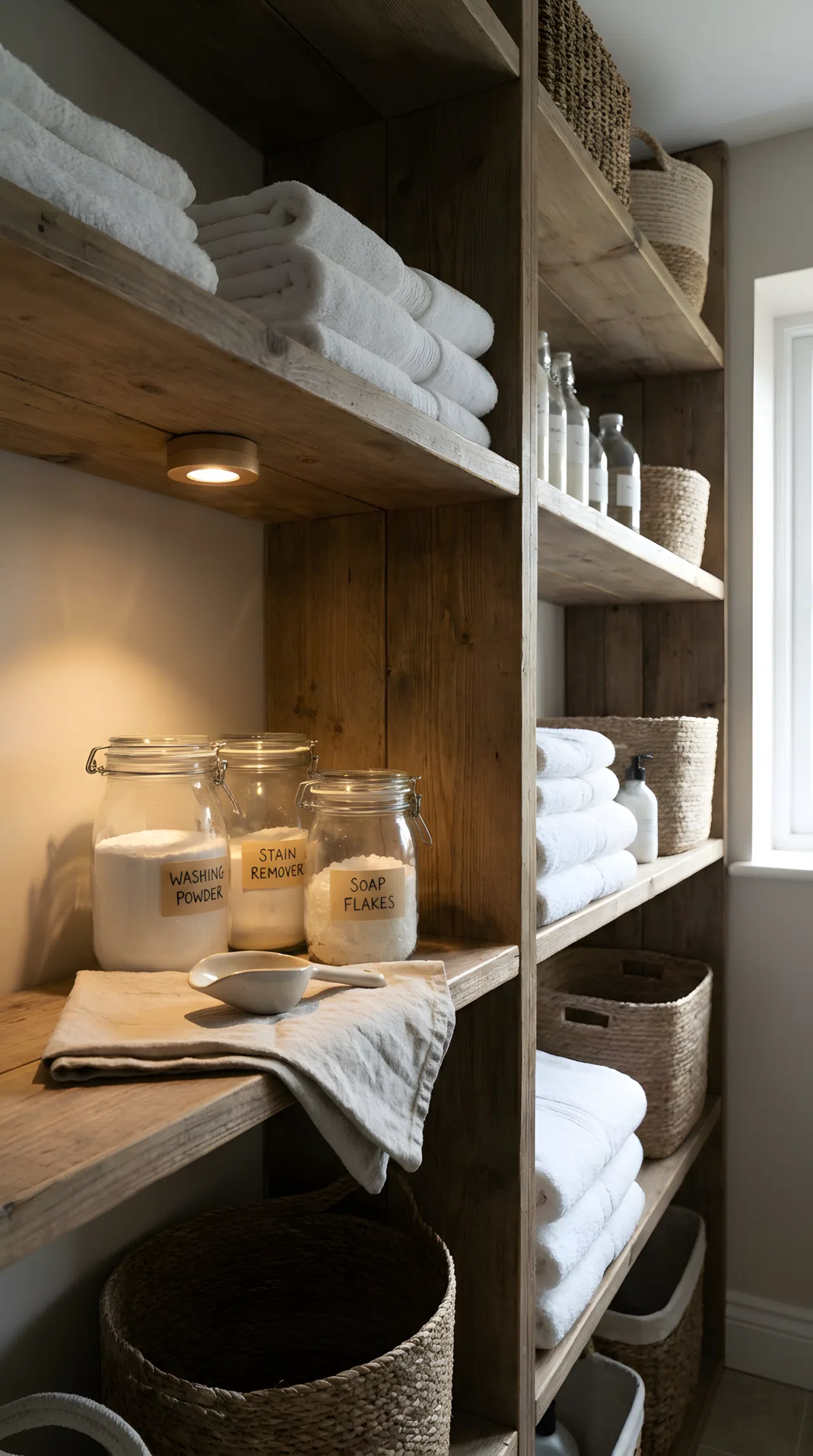
Rather than lighting the whole shelf evenly, place a small directional light to highlight one curated styling moment, a labeled jar trio or a folded stack, the way a gallery spotlights a single piece. This selective placement turns practical storage into an intentional design feature worth photographing, rather than a flat wall of evenly lit clutter.
17. Backlit Frosted Glass for a Soft Diffused Glow
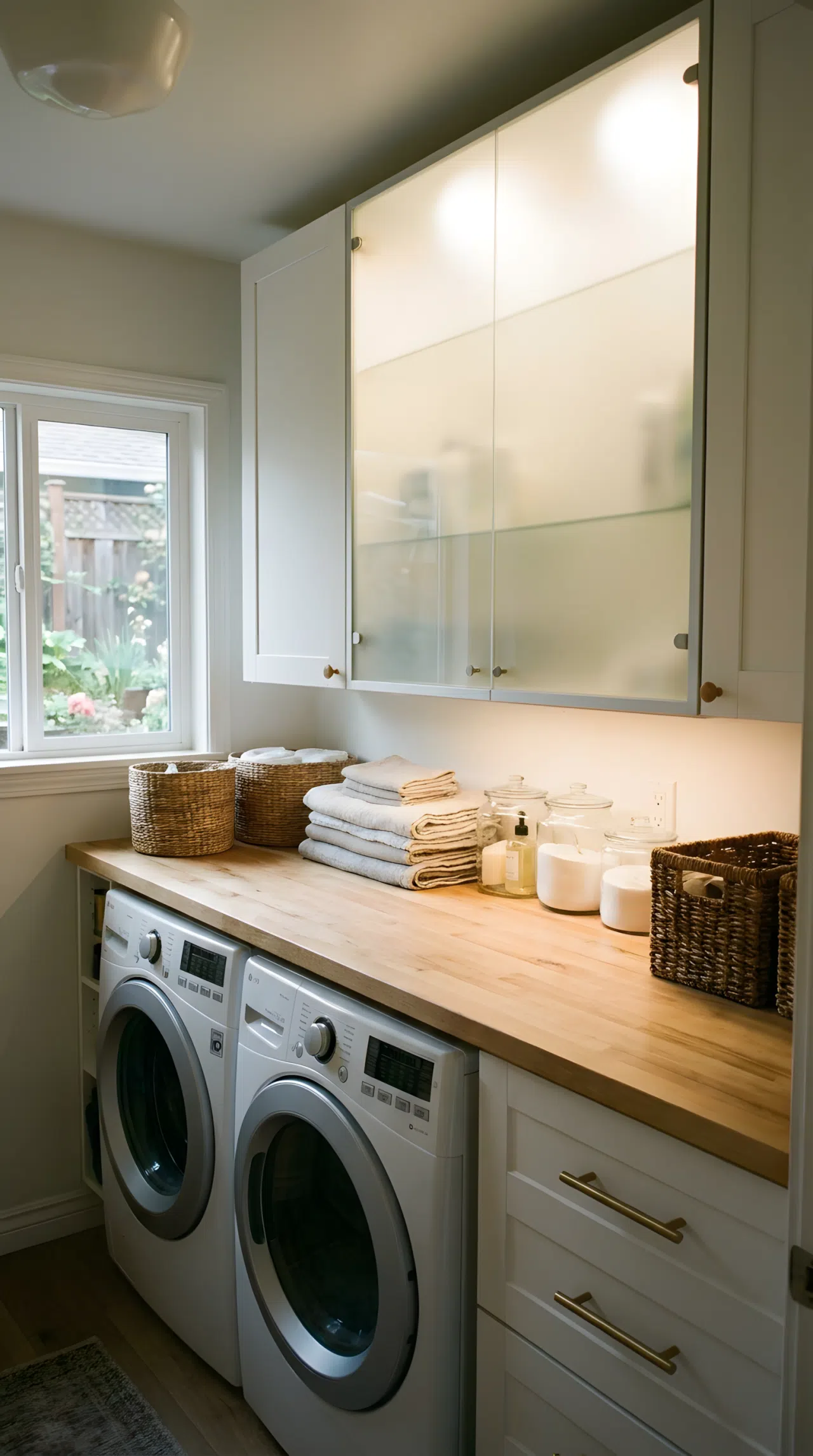
Placing a light source behind a frosted glass panel, cabinet door, or shade diffuses it into an even, shadow free glow rather than a single hot point. This placement flatters the whole room with soft light and adds a quiet, elevated glow that feels closer to spa lighting than a utility closet.
18. Adjustable Track Heads Aimed at Functional Zones
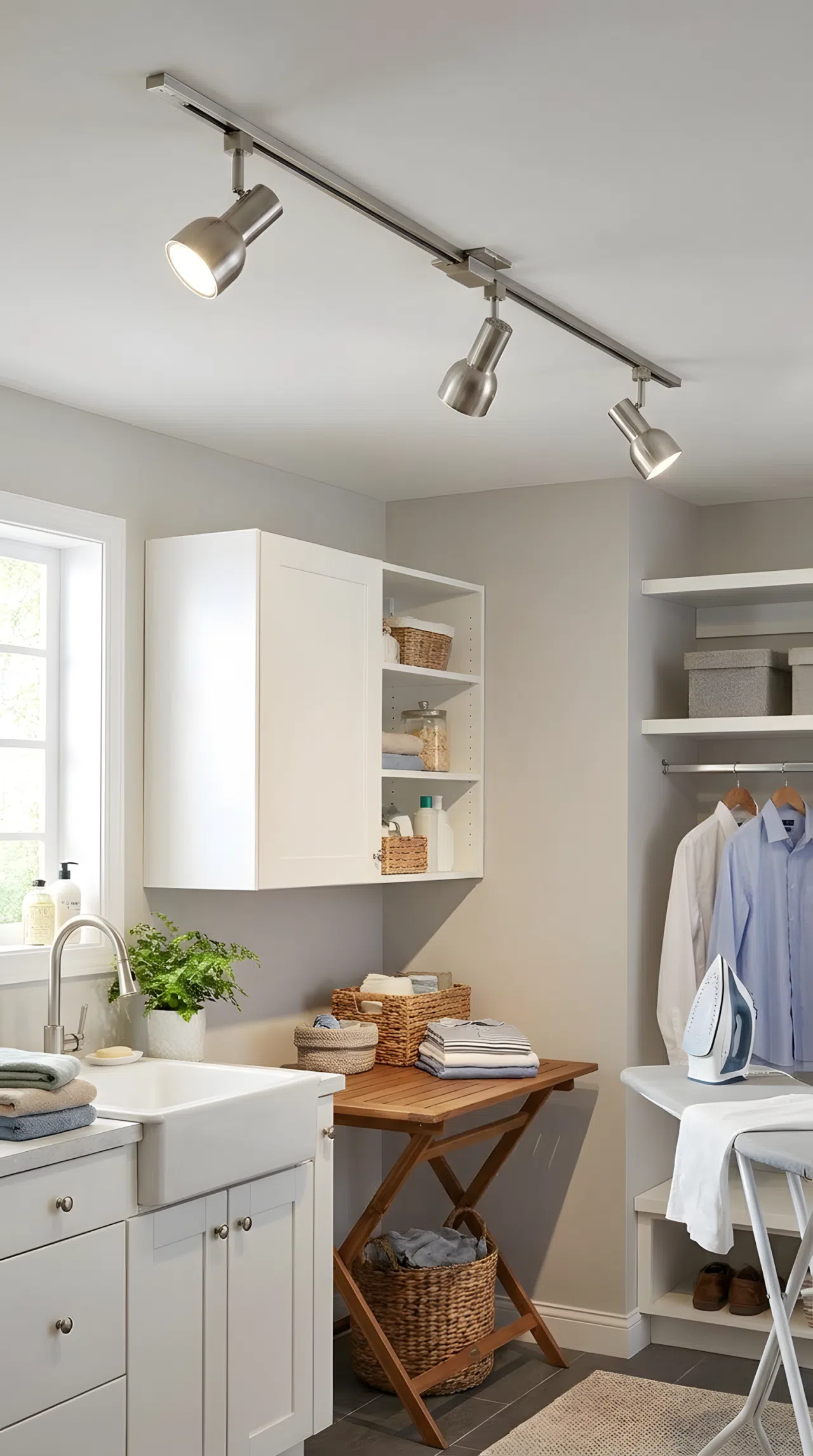
Instead of fixed downlights, install a track with adjustable heads so you can angle each light toward the exact zone you need, the sink, the folding table, or the ironing station. This flexible placement lets one single fixture adapt as your daily tasks, furniture, and layout shift over time, without any rewiring required.
19. Layering Ambient, Task, and Accent Light Together
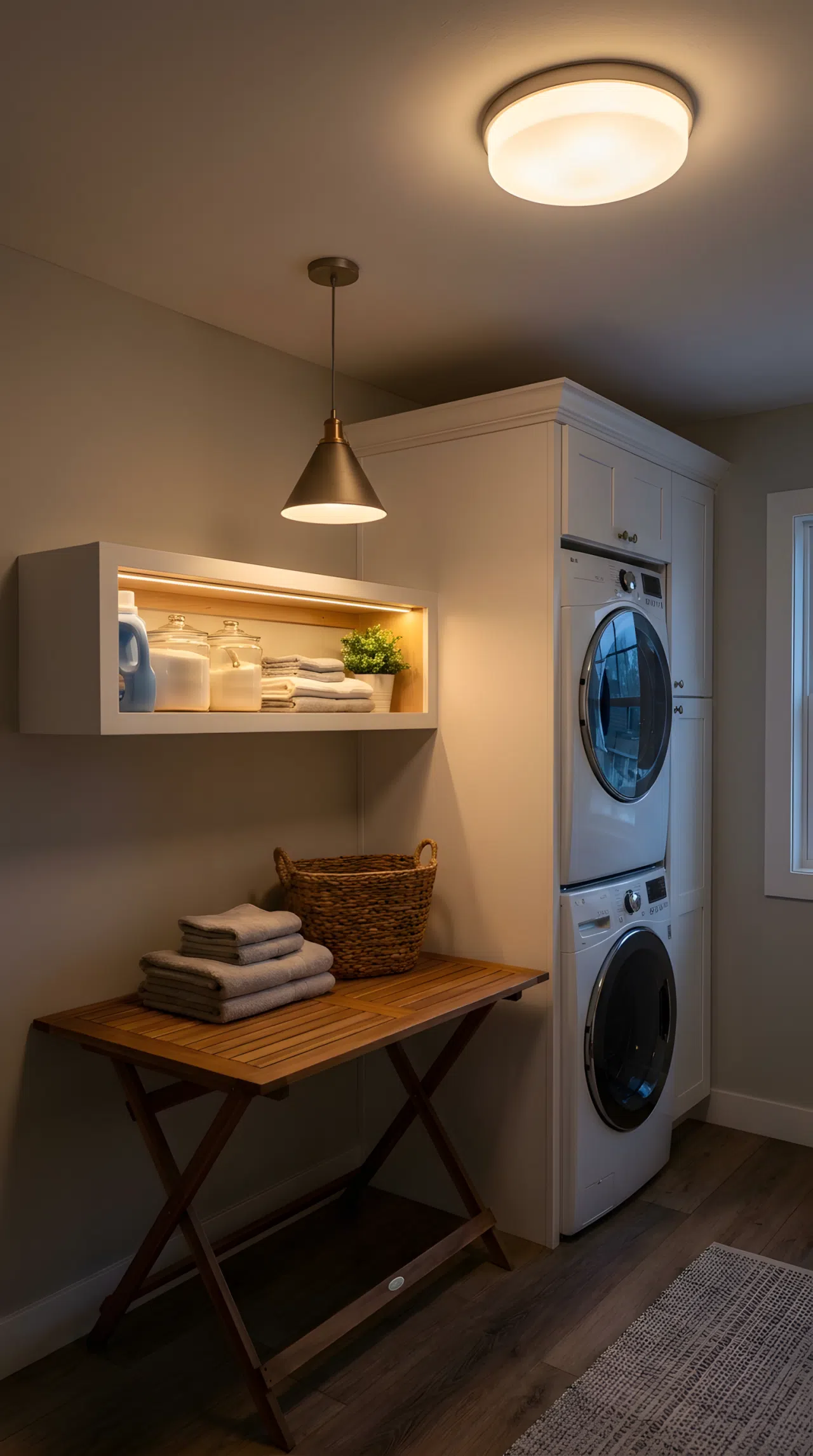
True high end lighting combines three layers, one general ambient source for overall glow, one focused task light for folding or ironing, and one accent light for a shelf or mirror. Placing all three deliberately, rather than relying on a single bulb, is what separates a flat room from a styled one.
20. Positioning a Warm Accent Lamp on the Counter
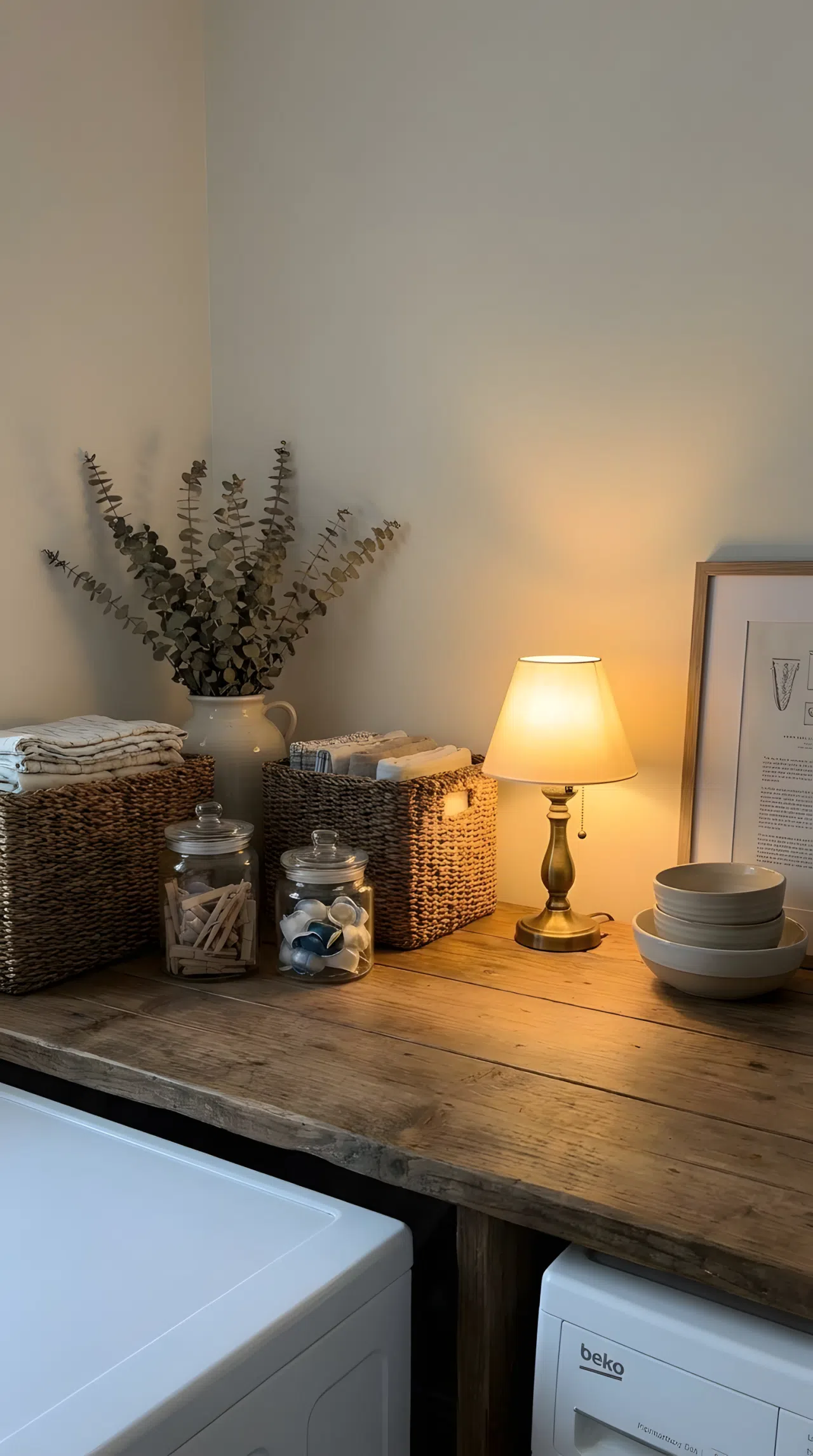
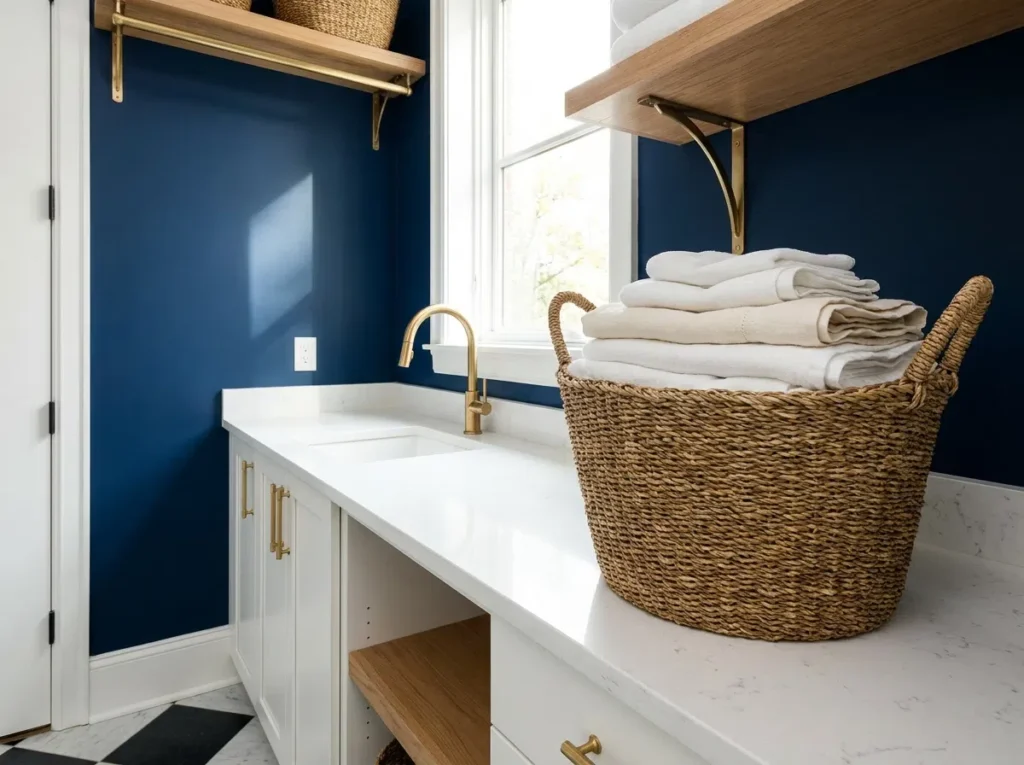
A small plug in lamp placed at counter height beside baskets or jars adds a warm, low pool of light that a ceiling fixture cannot replicate. This placement softens the room in the evening and gives the counter a lived in, styled glow that feels closer to a bedroom than a utility space.
Good lighting is never just about the bulb, it is about where you put it. Once every zone, corner, and task area has its own thoughtful source, your laundry room stops feeling like an afterthought and starts feeling like a considered, high level space you are actually happy to walk into.