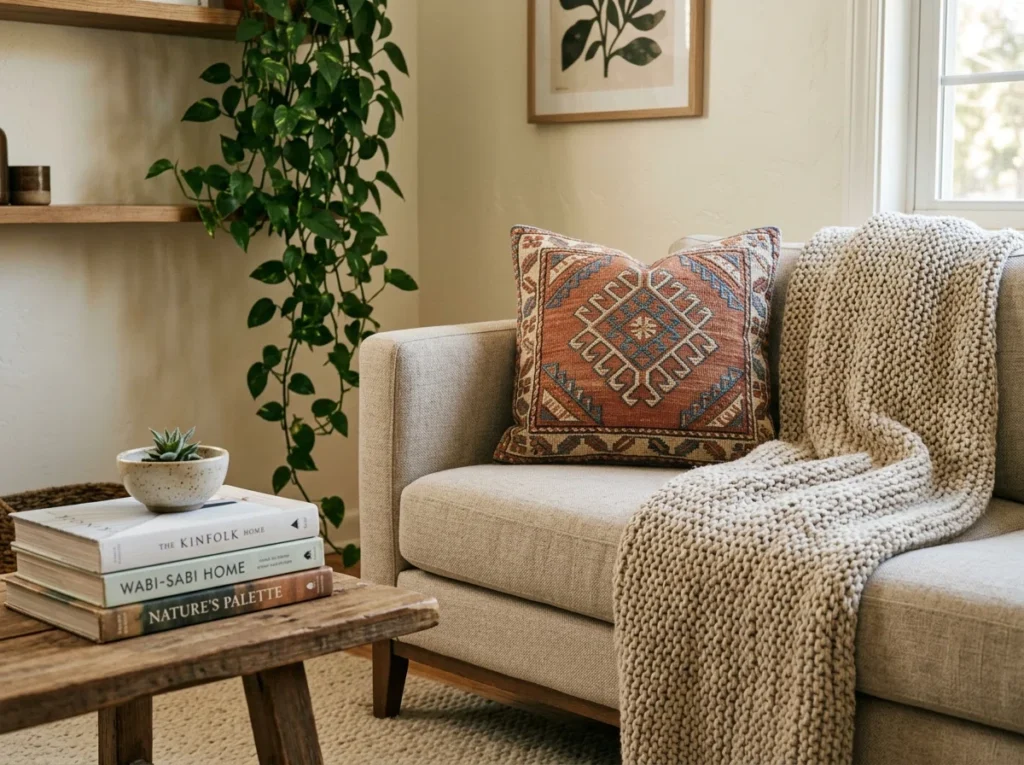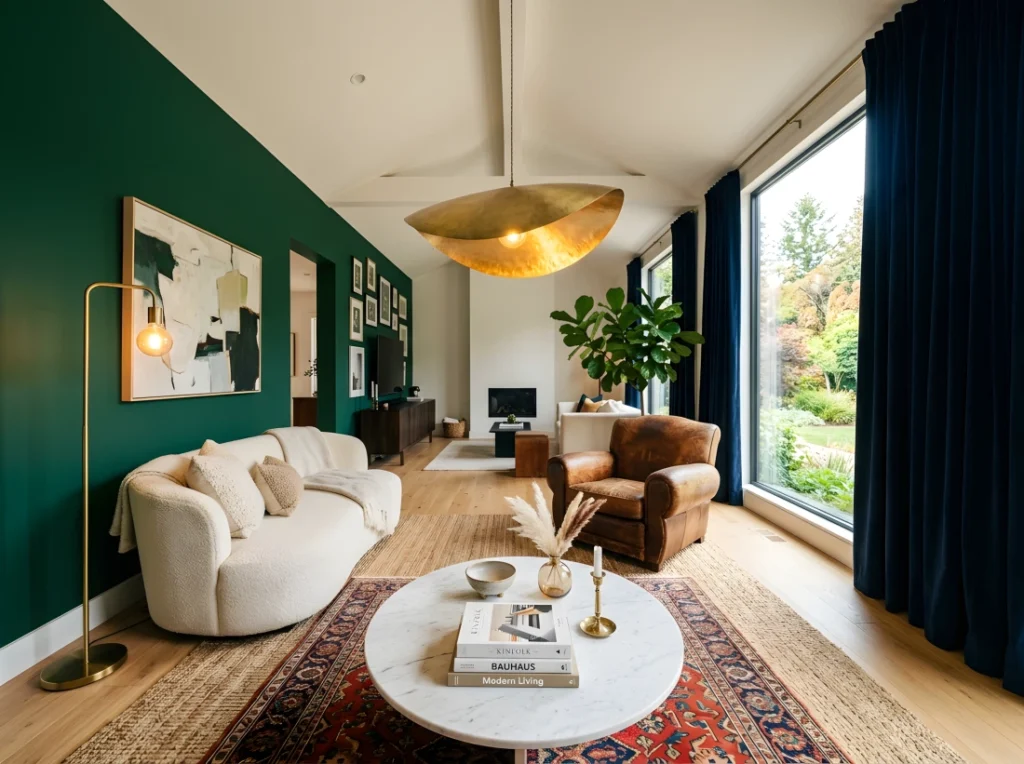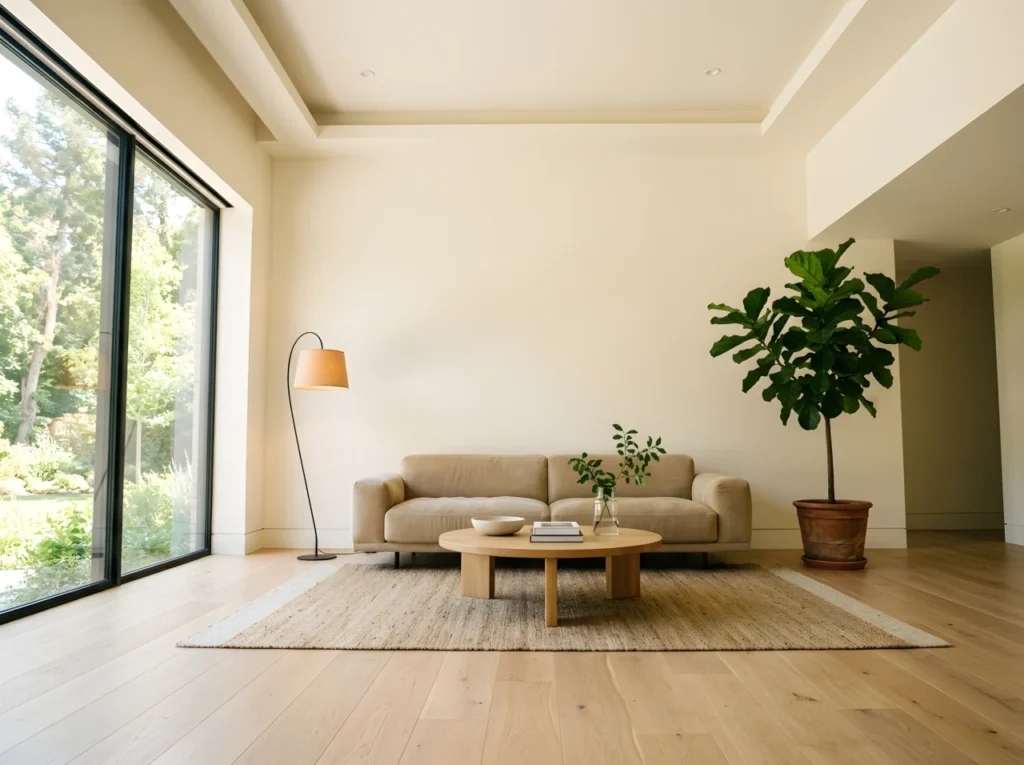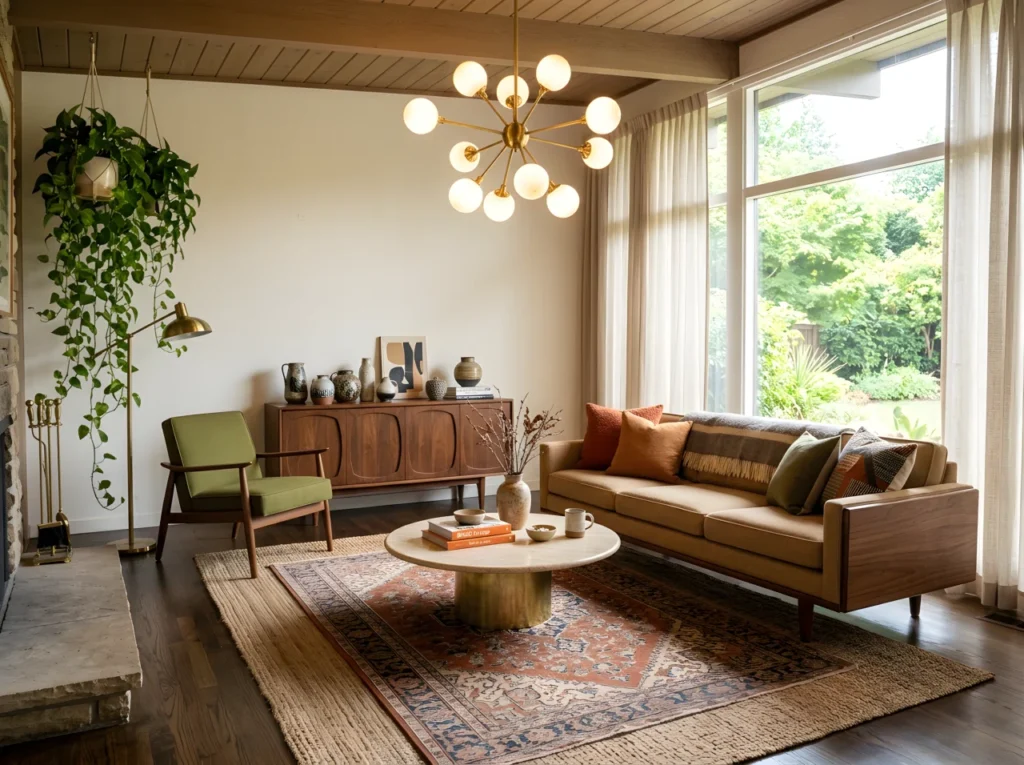
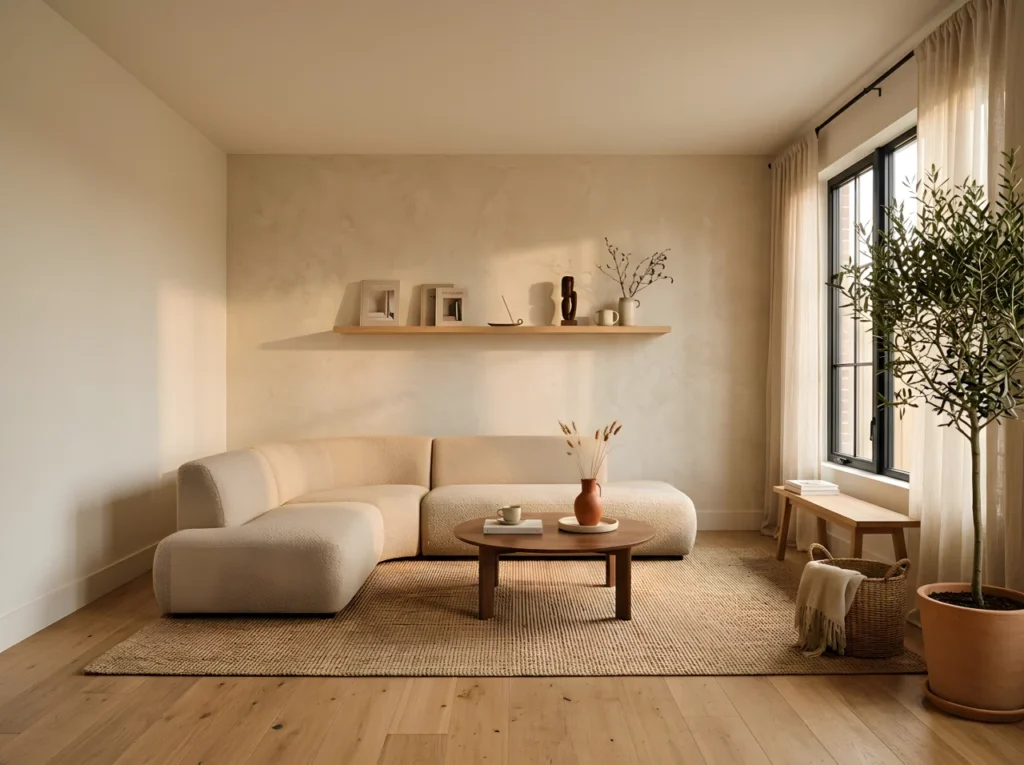
Your living room keeps collecting things you don’t need, yet somehow still feels empty of what matters. Sound familiar? That’s the gap japandi design quietly solves, blending Japanese restraint with Scandinavian warmth so a room can hold less and still feel complete.
This isn’t a stripped down or cold look. Japandi living room ideas lean into raw wood, soft linen, and warm layered light to create a space that actually invites you to sit down and stay a while.
1. Anchor the Room With a Low-Profile Curved Sofa
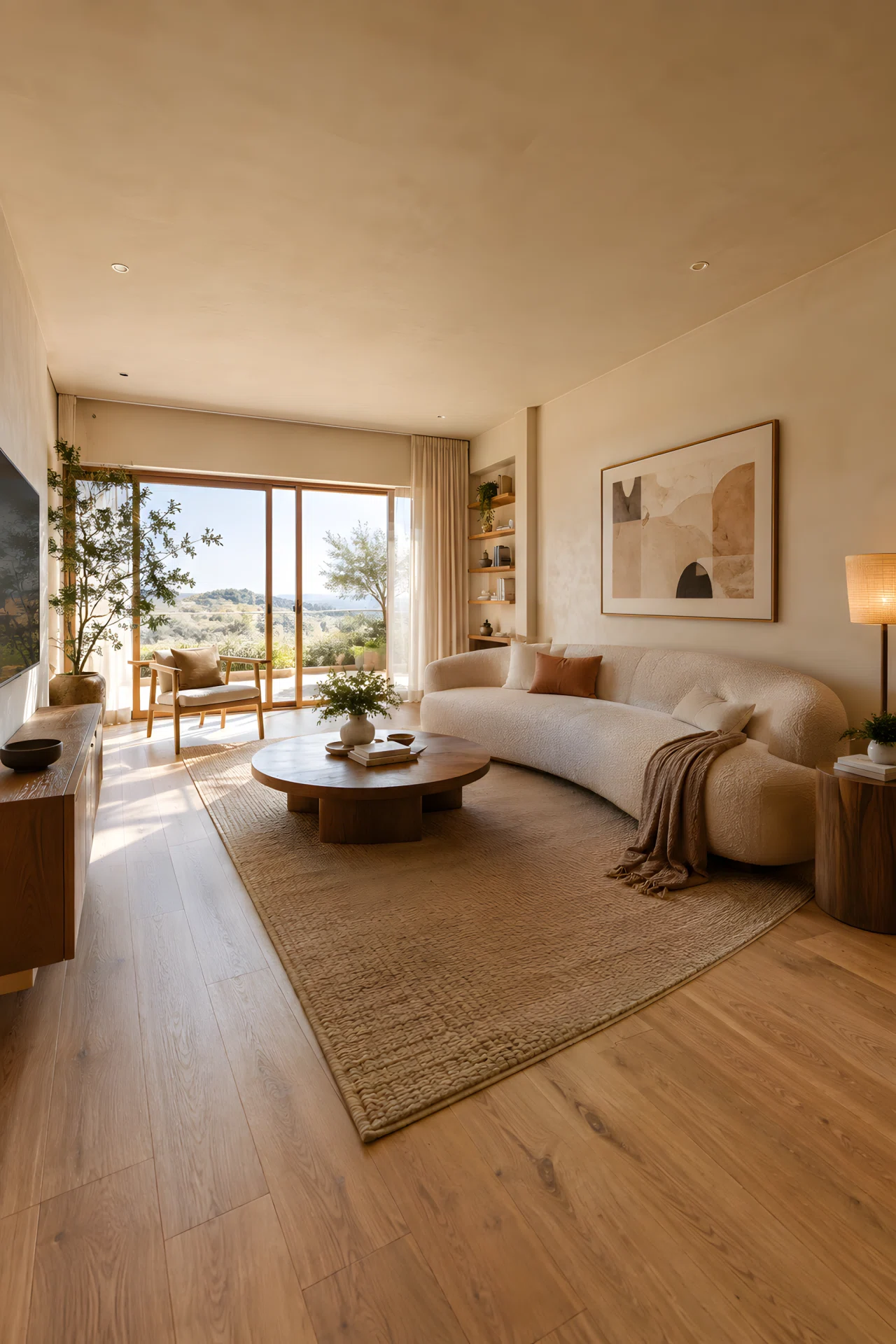
A boxy sofa with sharp corners can make a small japandi living room feel stiff instead of calm. Swap it for a low-profile piece with softly curved arms in warm bouclé or corduroy, sized so it floats a few inches from the wall rather than pushing against it.
This curved shape softens the whole layout and pairs naturally with a round coffee table, giving the room an easy, lived-in rhythm.
2. Add One Wabi-Sabi Wall Instead of Matching All Four
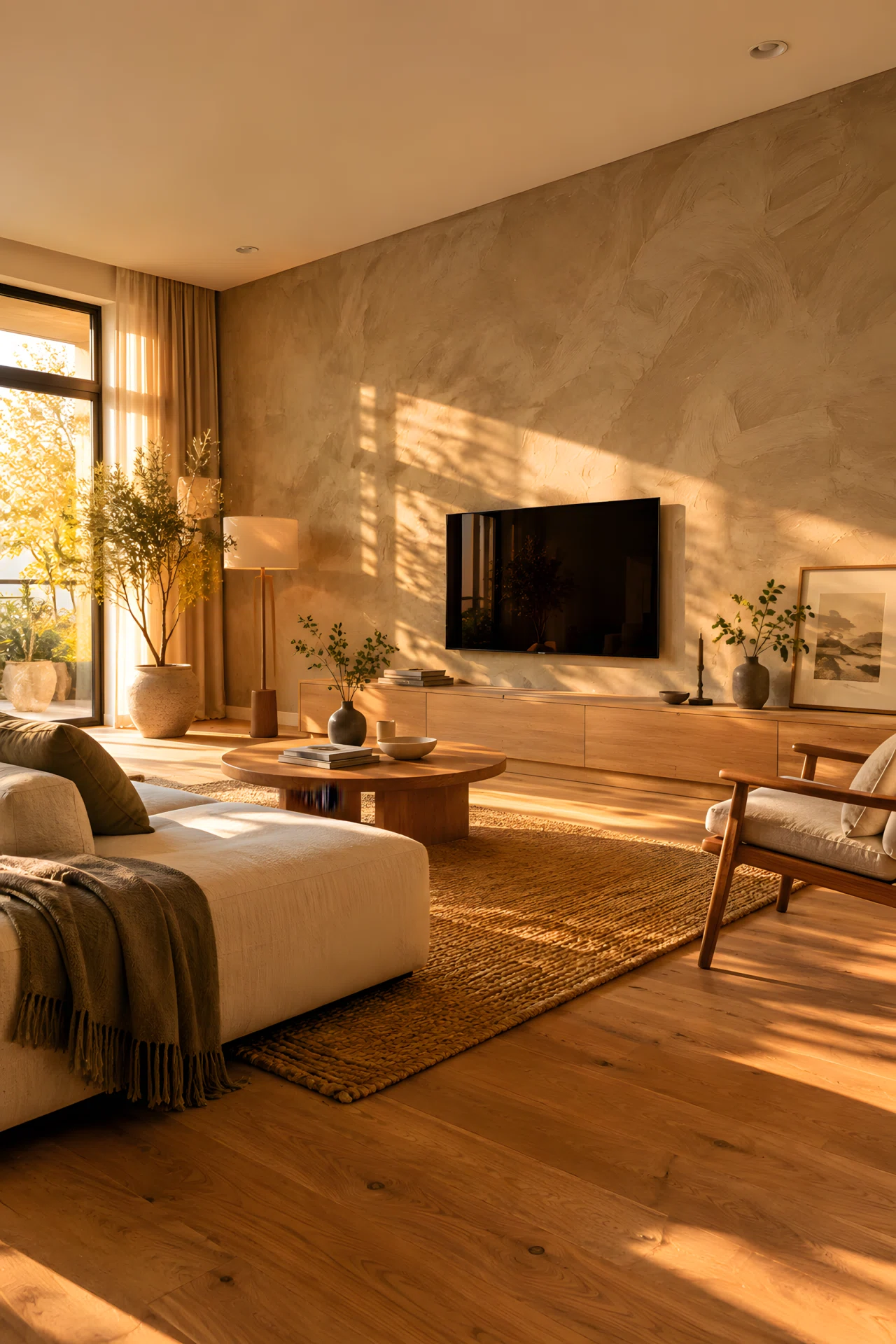
Painting every wall the same flat neutral is what makes a japandi living room look generic instead of intentional. Pick one wall and finish it in limewash or clay plaster so the brush marks and slight cloudiness stay visible, then leave the other three walls smooth and quiet.
That single textured surface becomes a quiet focal point, catching afternoon light differently throughout the day without adding a single extra object to the room.
3. Layer Light at Three Different Heights, Not Just Overhead
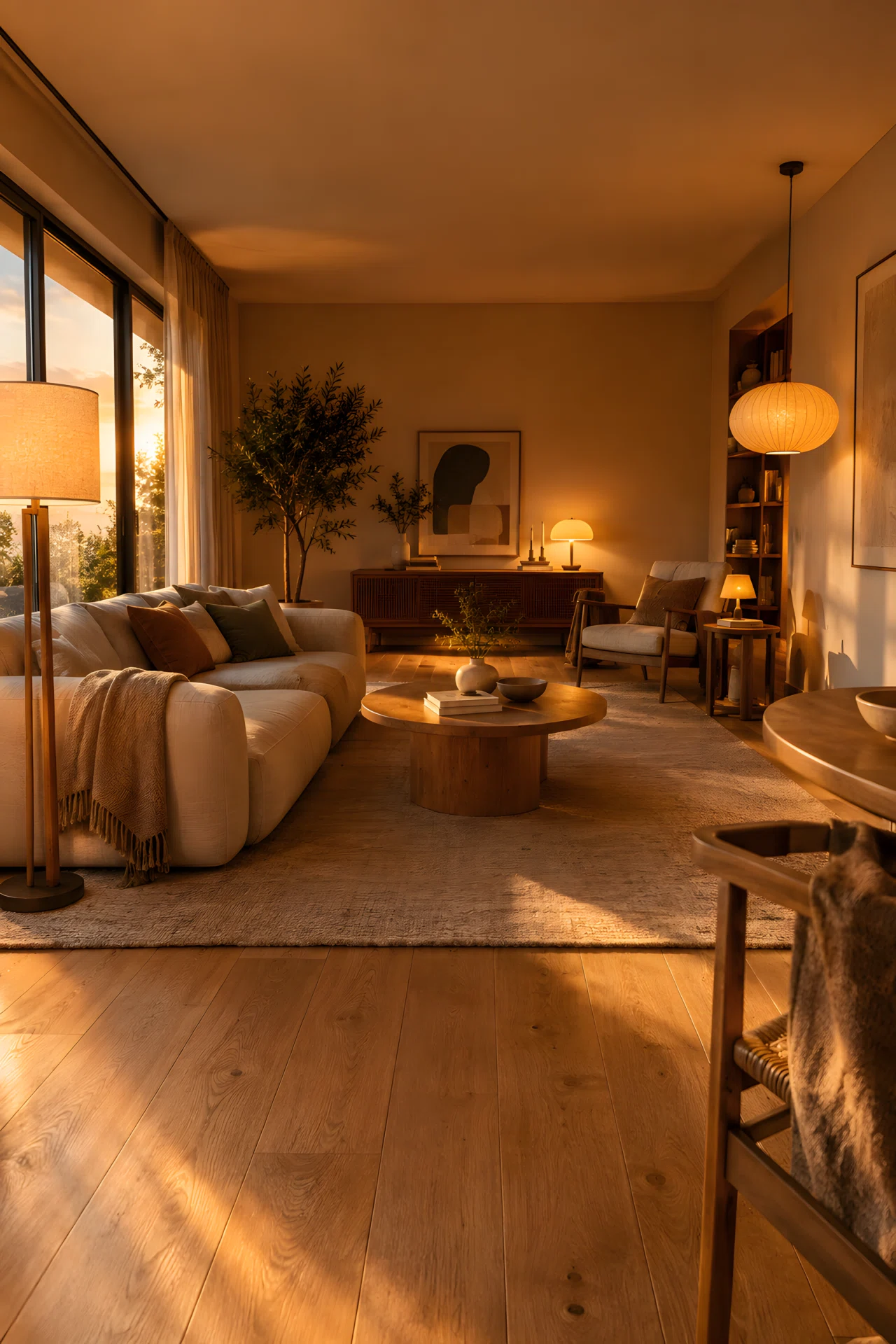
A single ceiling light leaves a japandi living room feeling flat once the sun goes down. Place a floor lamp beside the sofa, a low table lamp near a reading chair, and a pendant positioned off to one side rather than dead center over the coffee table.
This staggered placement creates soft pools of warmth at different heights across the room, so the space still feels calm and inviting long after daylight fades.
4. Let One Large Plant Do the Work of Five Small Ones
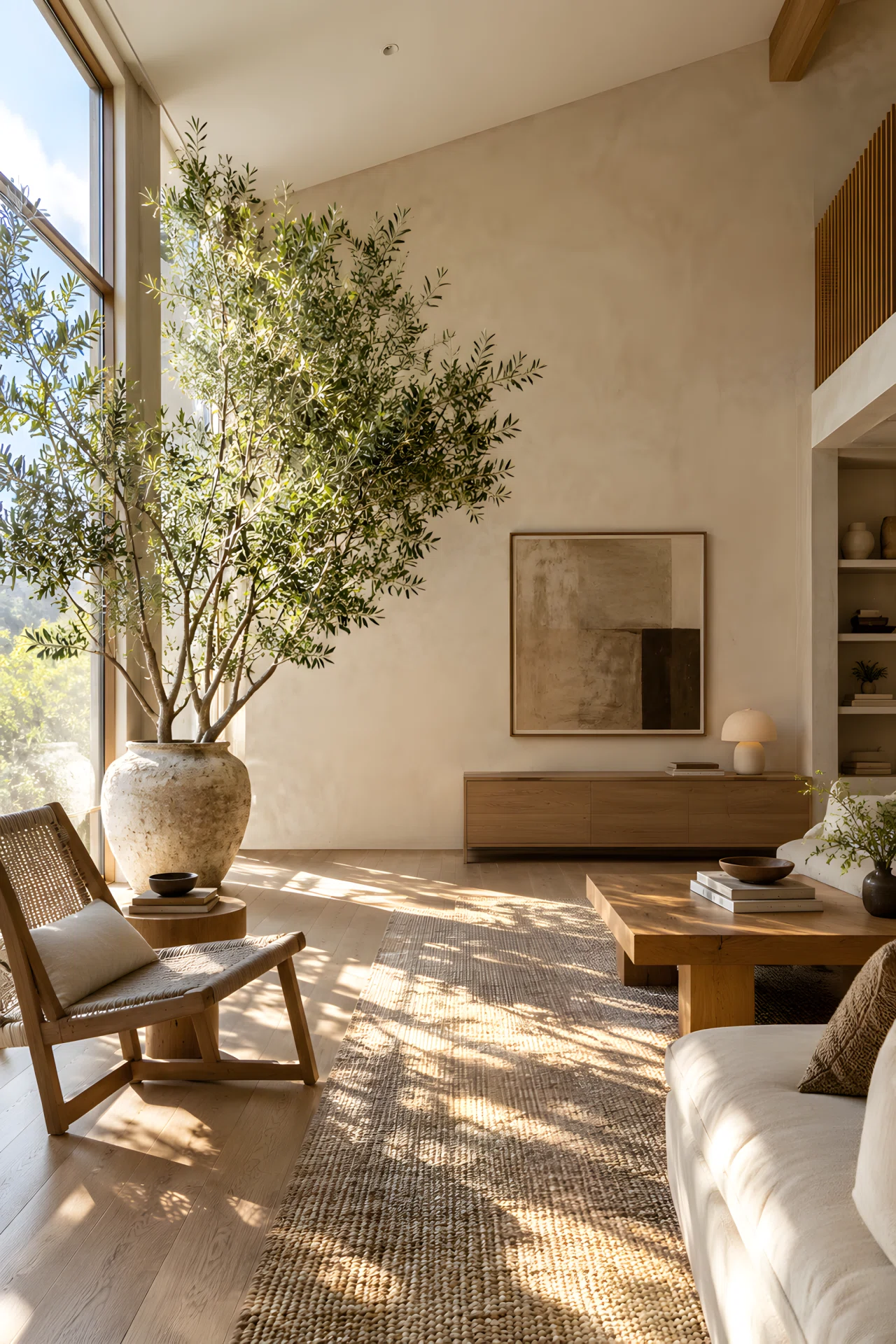
Scattering tiny succulents across shelves adds clutter, not calm, to a japandi living room. Choose one large floor plant instead, such as a fiddle leaf fig or an olive tree, and place it in an empty corner where it can stretch toward the light on its own.
One statement plant reads as intentional design rather than decoration, and it fills vertical space that would otherwise sit empty and unused.
5. Trade a Bulky TV Console for a Floating Wall Shelf
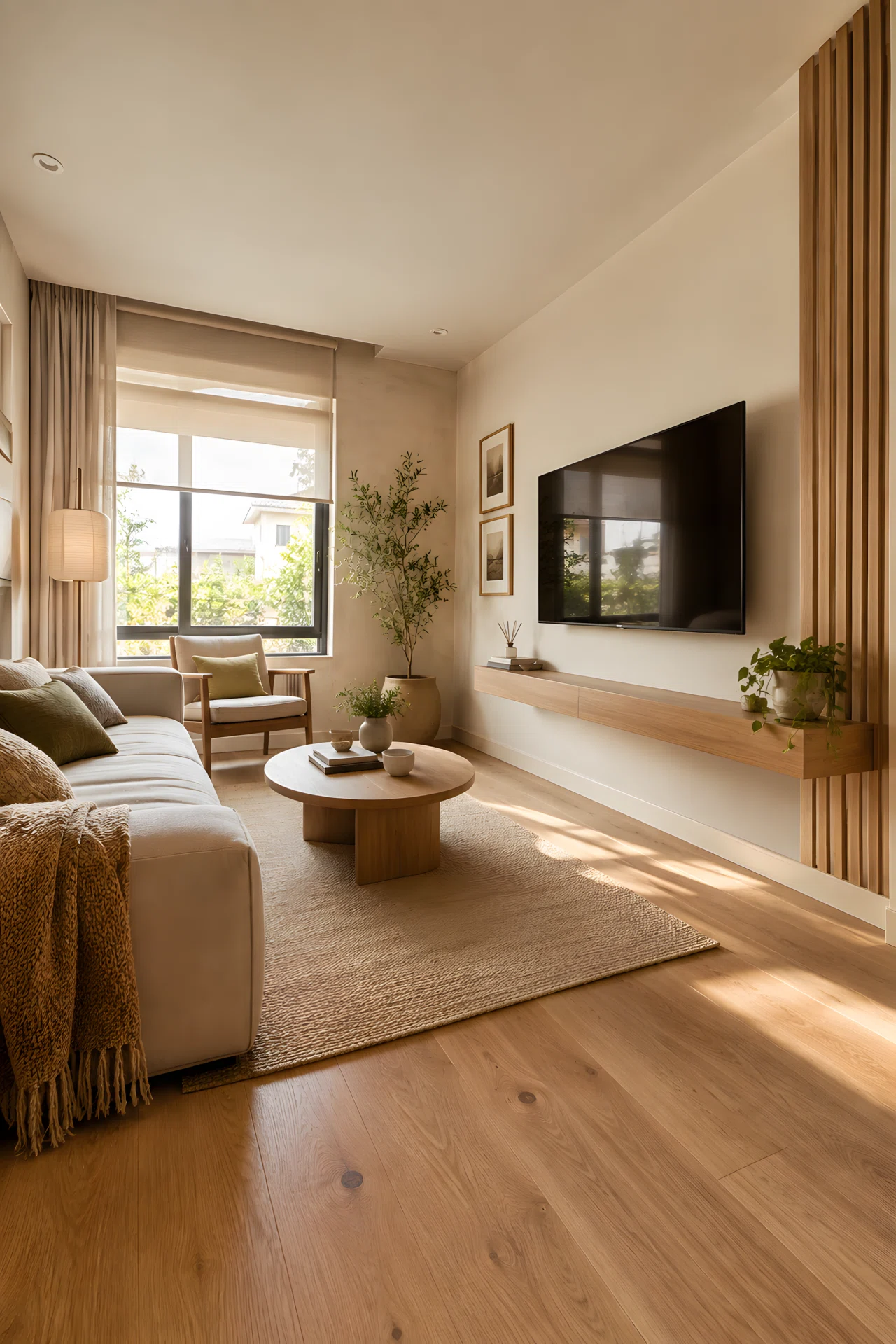
A heavy media console eats up floor space and visually blocks a small japandi living room. Mount a slim floating wood shelf under the TV instead, leaving the floor open and the wall below it bare so the eye has room to rest.
This simple swap makes a compact room read as larger immediately, and the shelf still holds everything the console did without the bulky footprint.
6. Layer a Natural Fiber Rug Under, Not Around, the Furniture
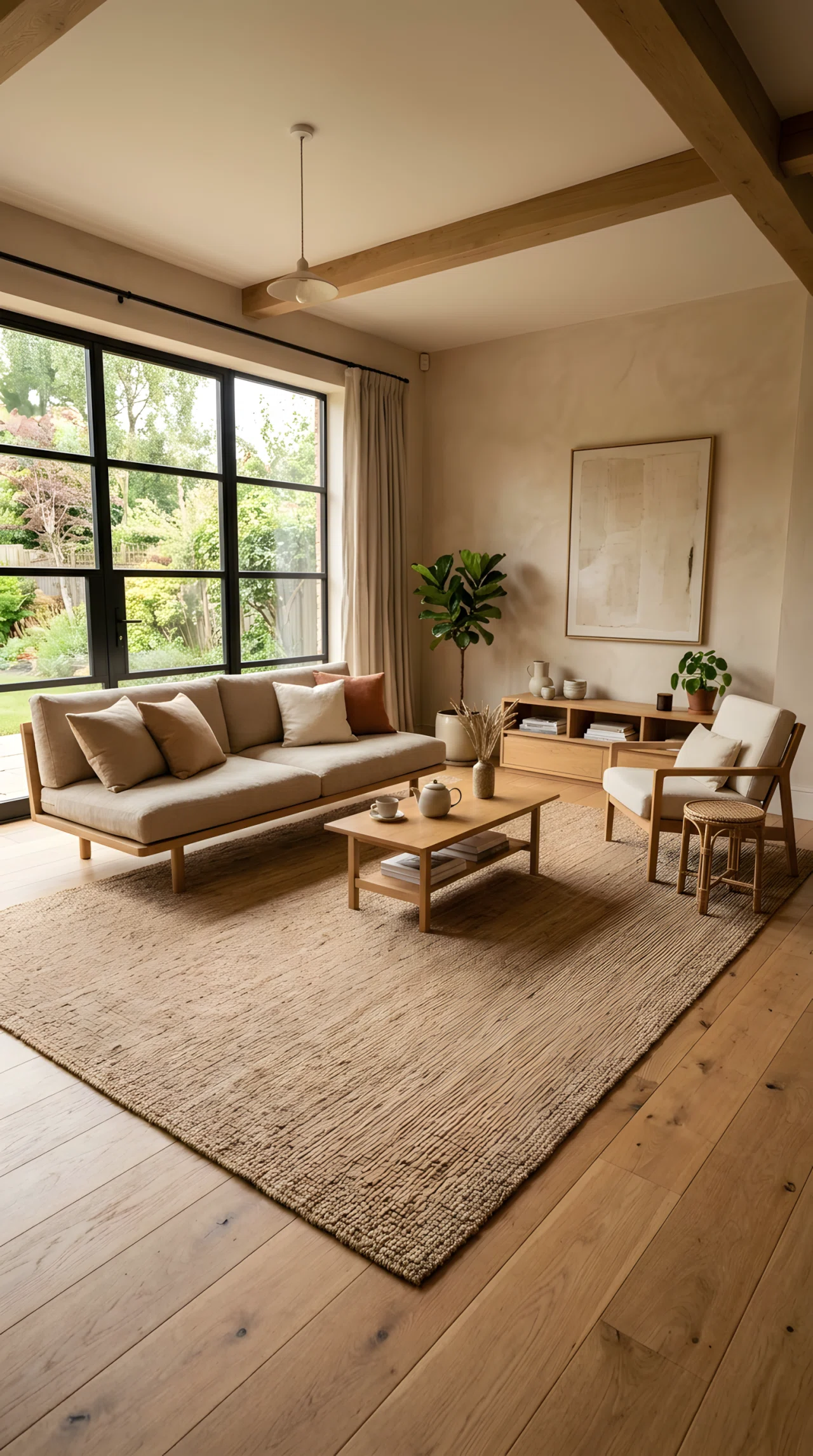
A rug that only sits in the open middle of a japandi living room makes the space look disconnected instead of grounded. Choose a natural fiber option like jute or sisal, sized so at least the front legs of the sofa and chairs rest on top of it.
This anchors every piece of furniture into one cohesive zone, adding warmth and texture underfoot without introducing a single new color to the palette.
7. Use One Terracotta Object as Your Only Color Accent
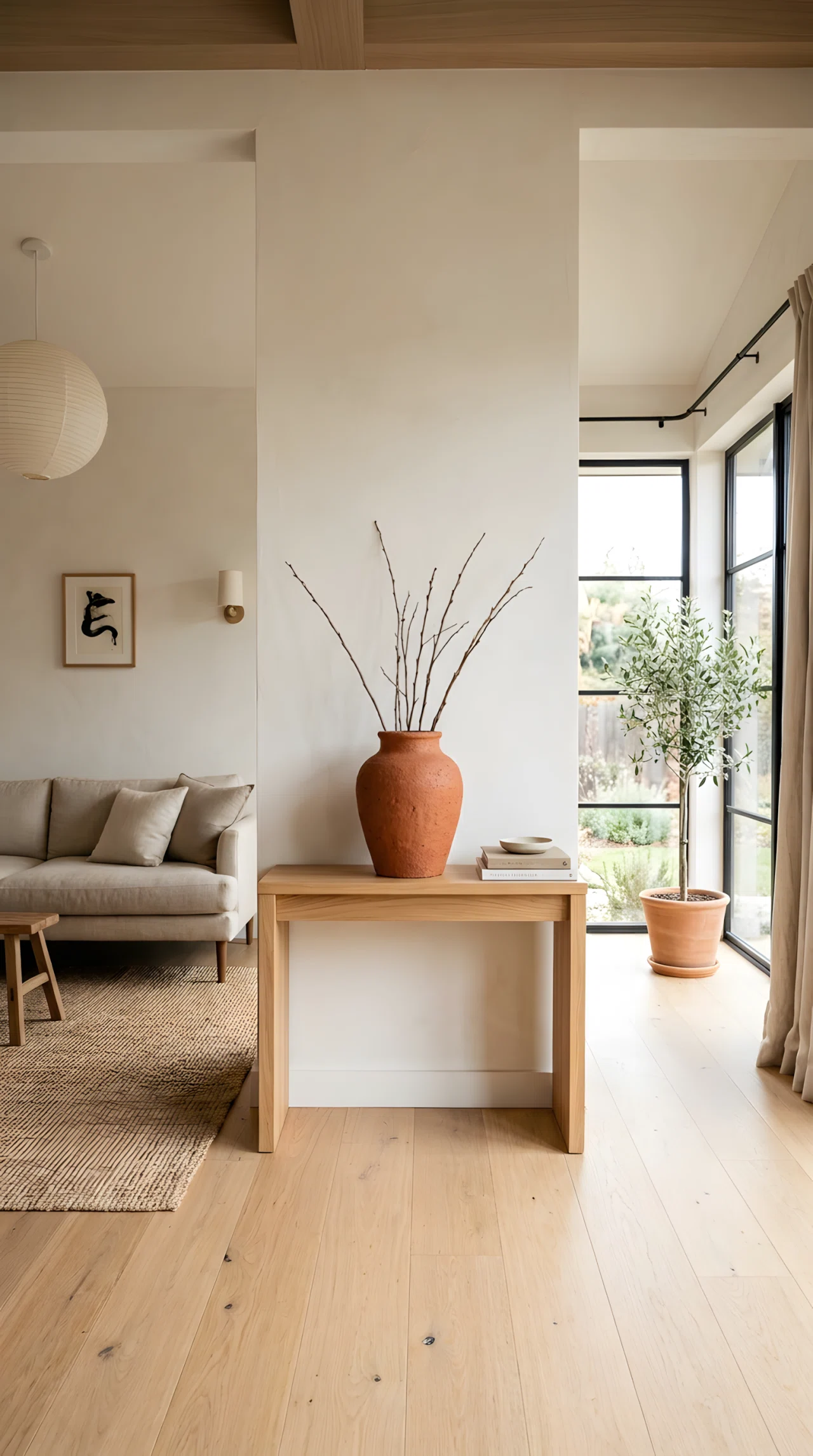
A japandi living room with zero color can start to feel sterile rather than serene. Instead of adding several small accents, choose a single handmade terracotta vase or bowl and place it where it catches the eye first, like a console table or windowsill.
One confident color note against a neutral backdrop reads as curated, while scattering the same tone across five objects just looks busy and unplanned.
8. Choose a Storage Ottoman Over a Traditional Coffee Table
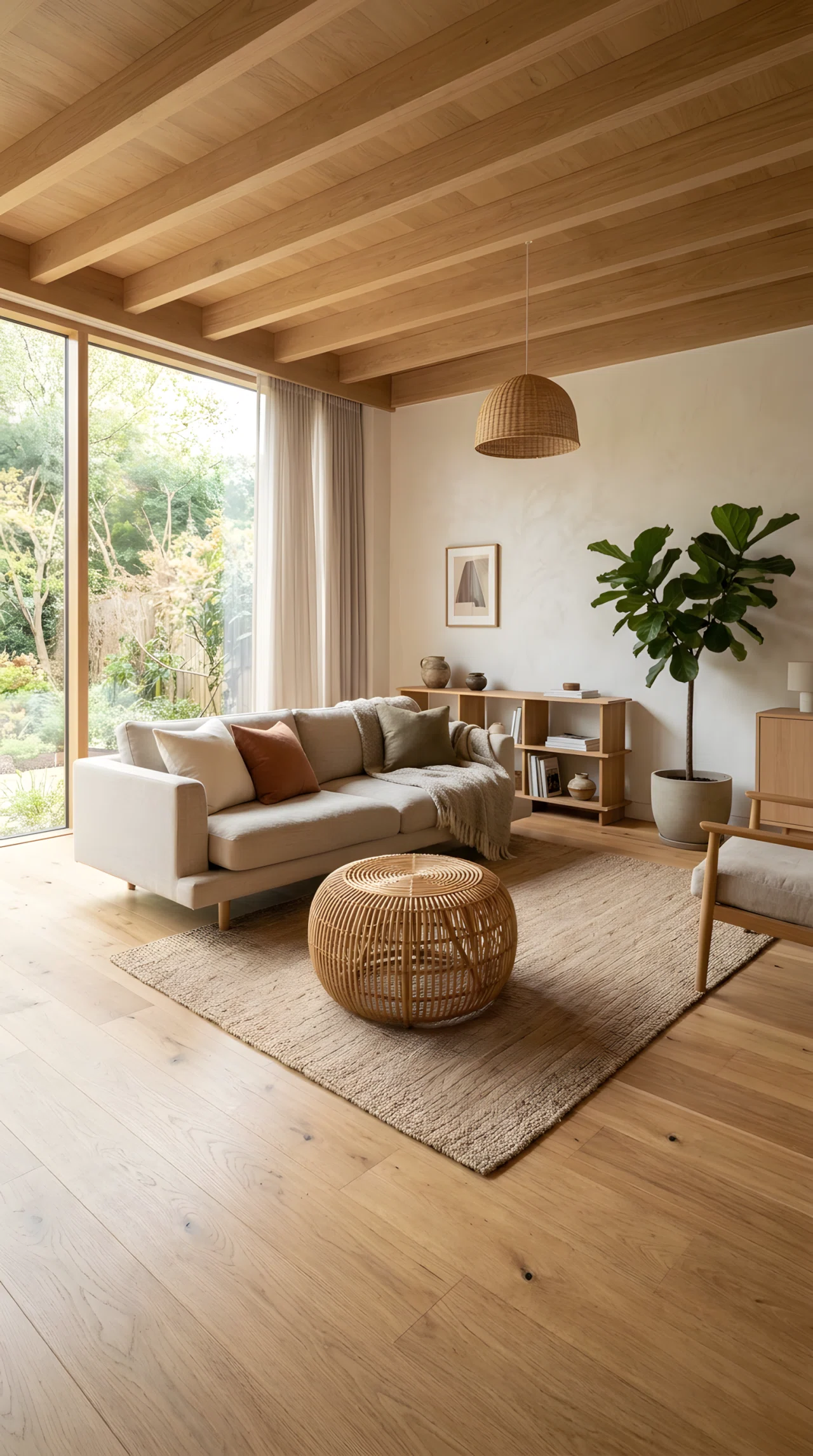
A solid coffee table often becomes a dumping ground for remotes and mail in a small japandi living room. Replace it with a woven or linen-covered storage ottoman that opens from the top, keeping everyday clutter hidden while still giving you a soft surface for feet or trays.
It solves the storage problem without adding visual weight, since the fabric exterior blends into the room instead of standing out like a bulky cabinet would.
9. Keep One Wall Completely Empty on Purpose
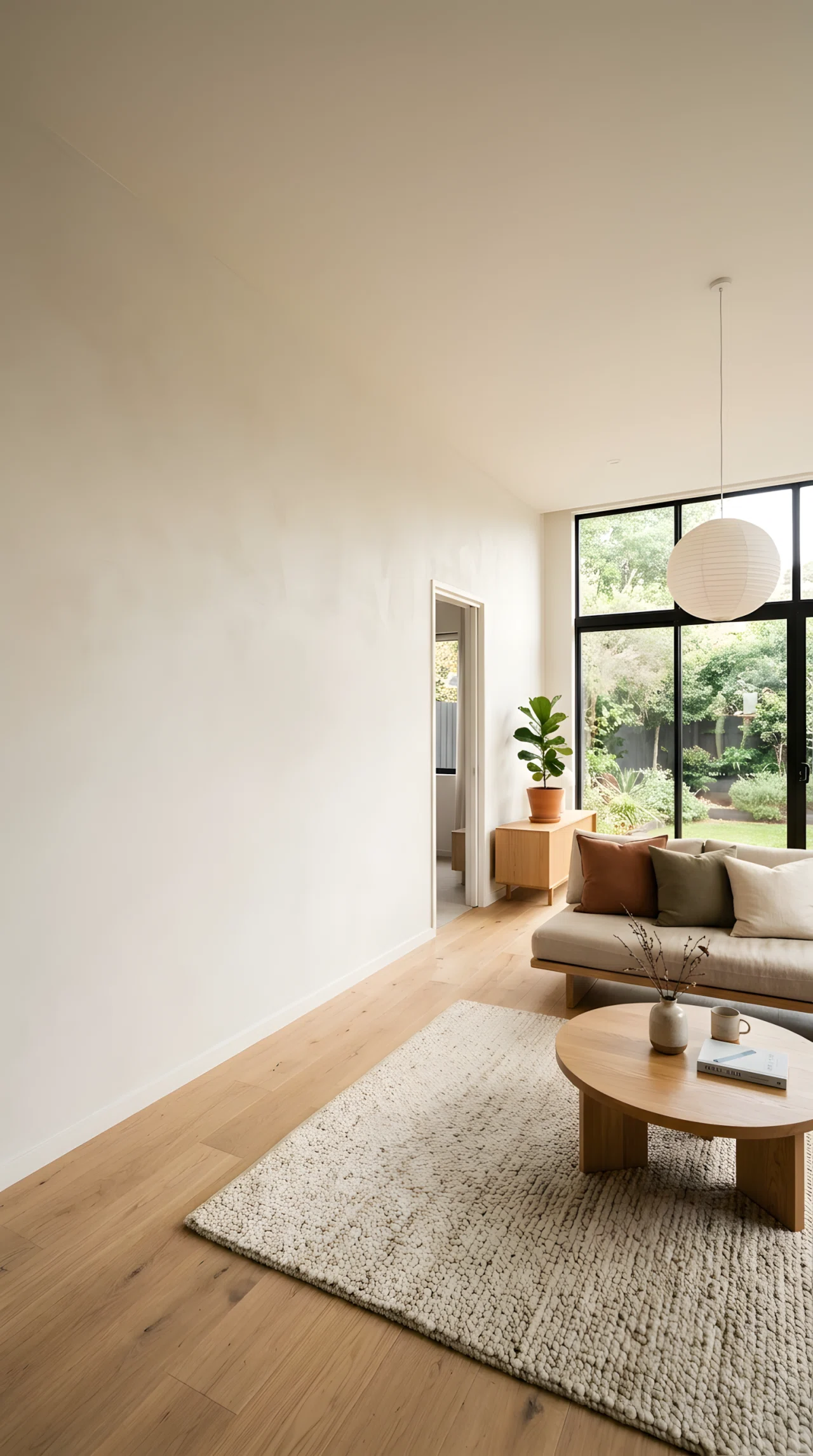
The instinct to fill every wall with art or shelving works against the calm a japandi living room is built on. Pick the wall your eye lands on first when entering the room and leave it bare, letting the paint or plaster finish be the only detail.
This deliberate emptiness, known as ma in Japanese design, gives the whole room visual breathing space and makes everything else you do keep feel more intentional.
10. Mix In One Walnut Mid-Century Chair for Contrast
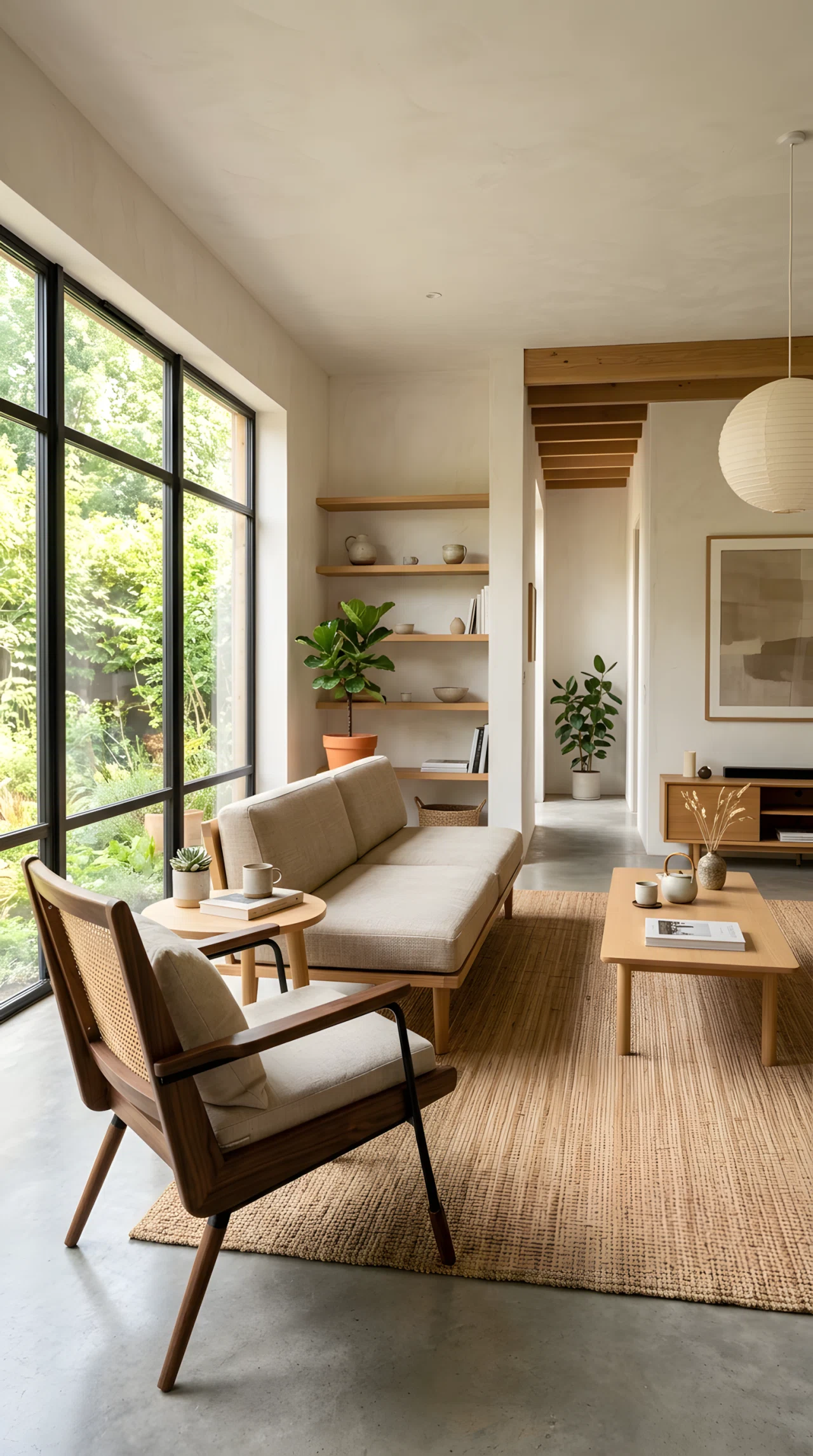
An all-Scandinavian palette of pale wood can start to feel one-note in a japandi living room. Bring in a single mid-century armchair in dark walnut with tapered legs, positioned at an angle to the main sofa rather than directly facing it.
The deeper wood tone grounds the lighter furniture around it, and the slight angle keeps the layout feeling relaxed instead of like a showroom display.
11. Swap Heavy Curtains for Sheer Linen Panels
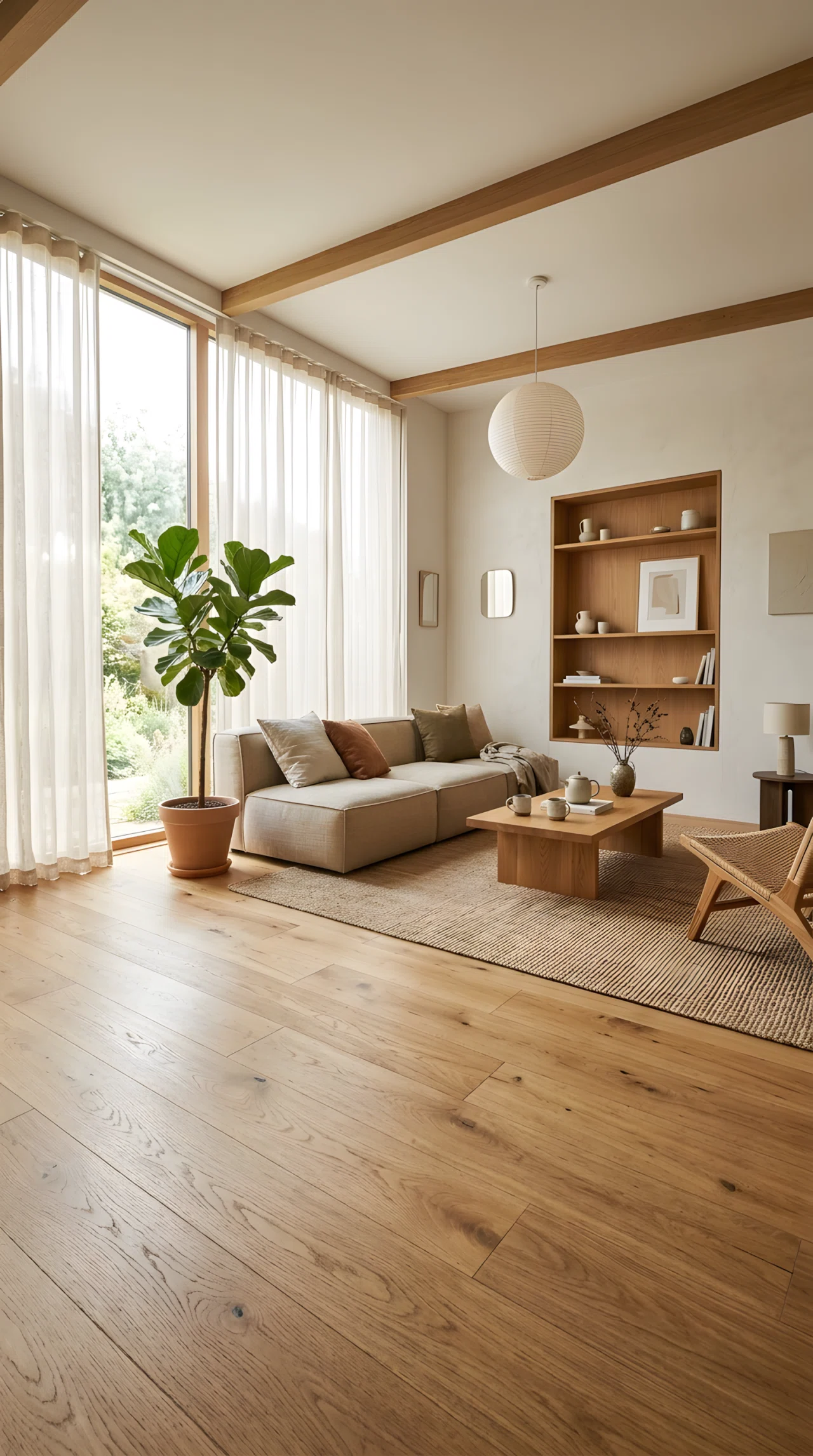
Thick blackout curtains block the soft, diffused light a japandi living room depends on for its calm feel. Replace them with unlined sheer linen panels that let daylight filter through gently instead of streaming in harshly or getting shut out completely.
The fabric softens direct sun into an even glow across the room, keeping the space bright without the glare that makes a neutral palette look washed out.
12. Follow the Five-Object Rule on Every Open Shelf
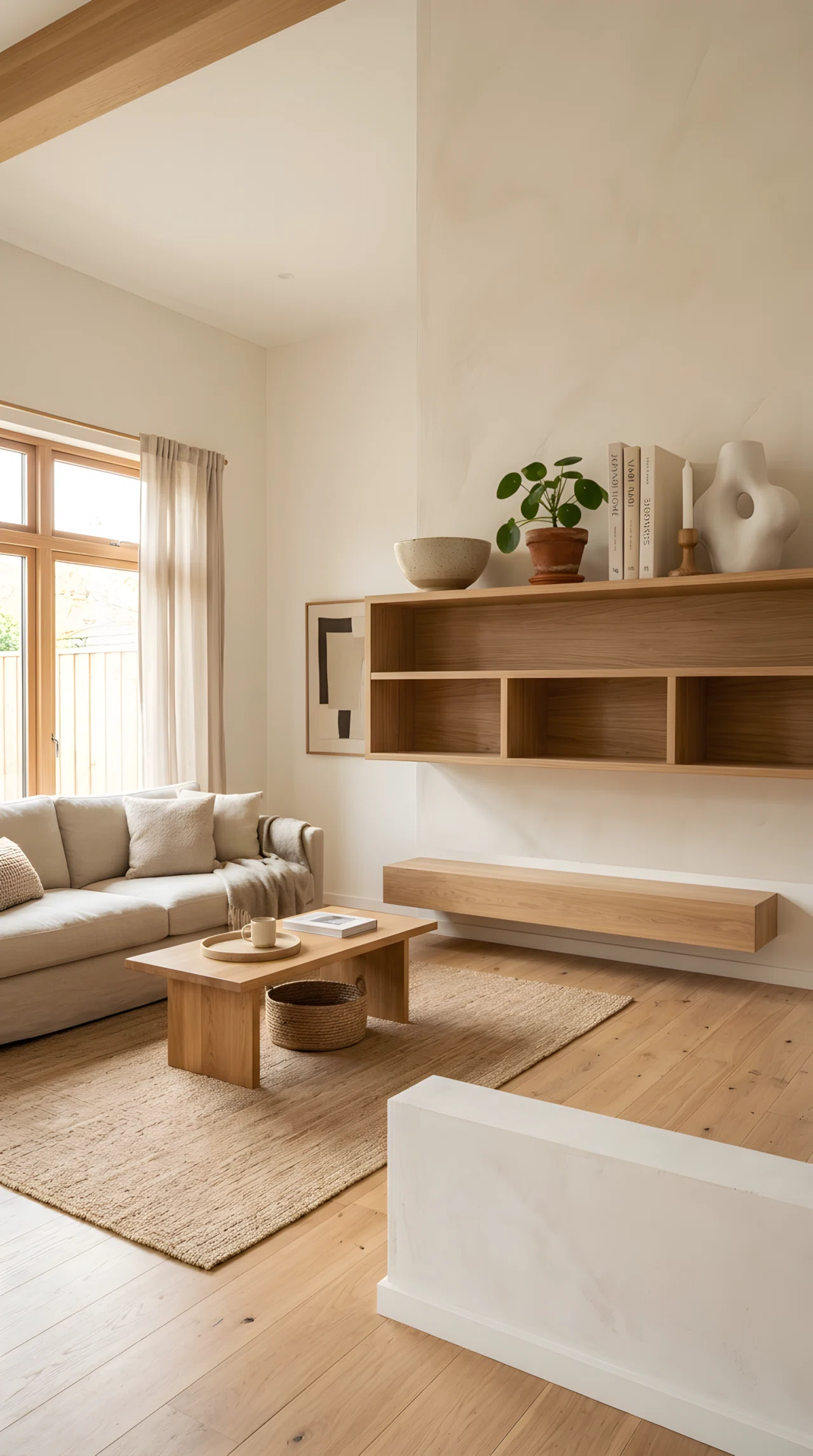
An open shelf that slowly fills with books, frames, and trinkets is one of the fastest ways a japandi living room starts to feel cluttered again. Cap each shelf at five objects total, mixing heights and shapes like a ceramic bowl, a small plant, and one stacked book.
This limit forces you to choose only what you actually love displaying, keeping the shelf feeling curated instead of accumulated over time.
13. Zone an Open-Plan Space With a Sliding Screen
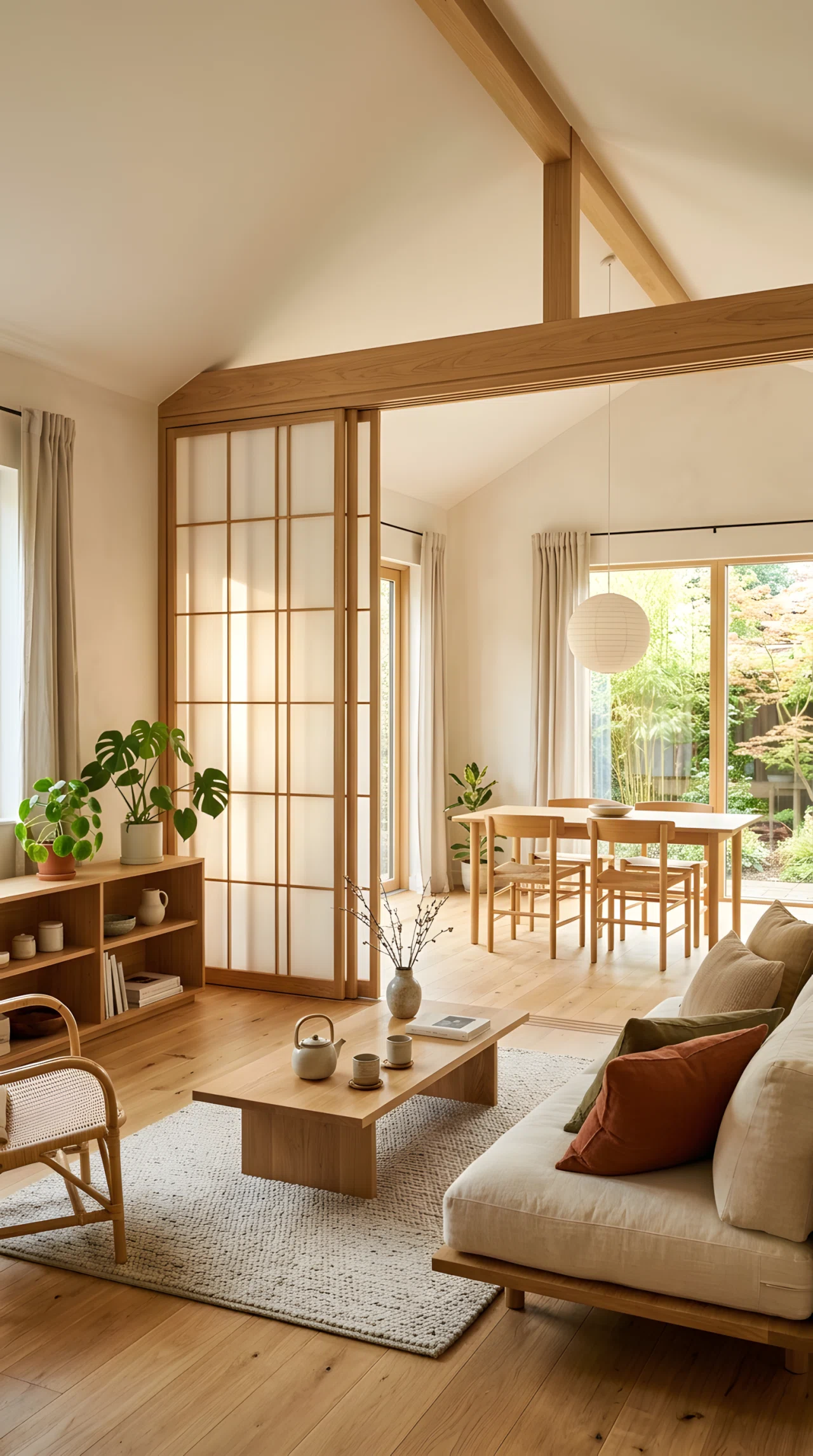
An open-plan layout can leave a japandi living room feeling exposed with no clear boundary from the dining or entry area. A slim shoji-inspired sliding screen in wood and translucent panel creates a soft division without closing the room off or blocking natural light.
It can slide open when you want full flow between spaces, or close partway to carve out a more private, cozy sitting area whenever you need it.
14. Mix Three Textures on the Sofa, Never More
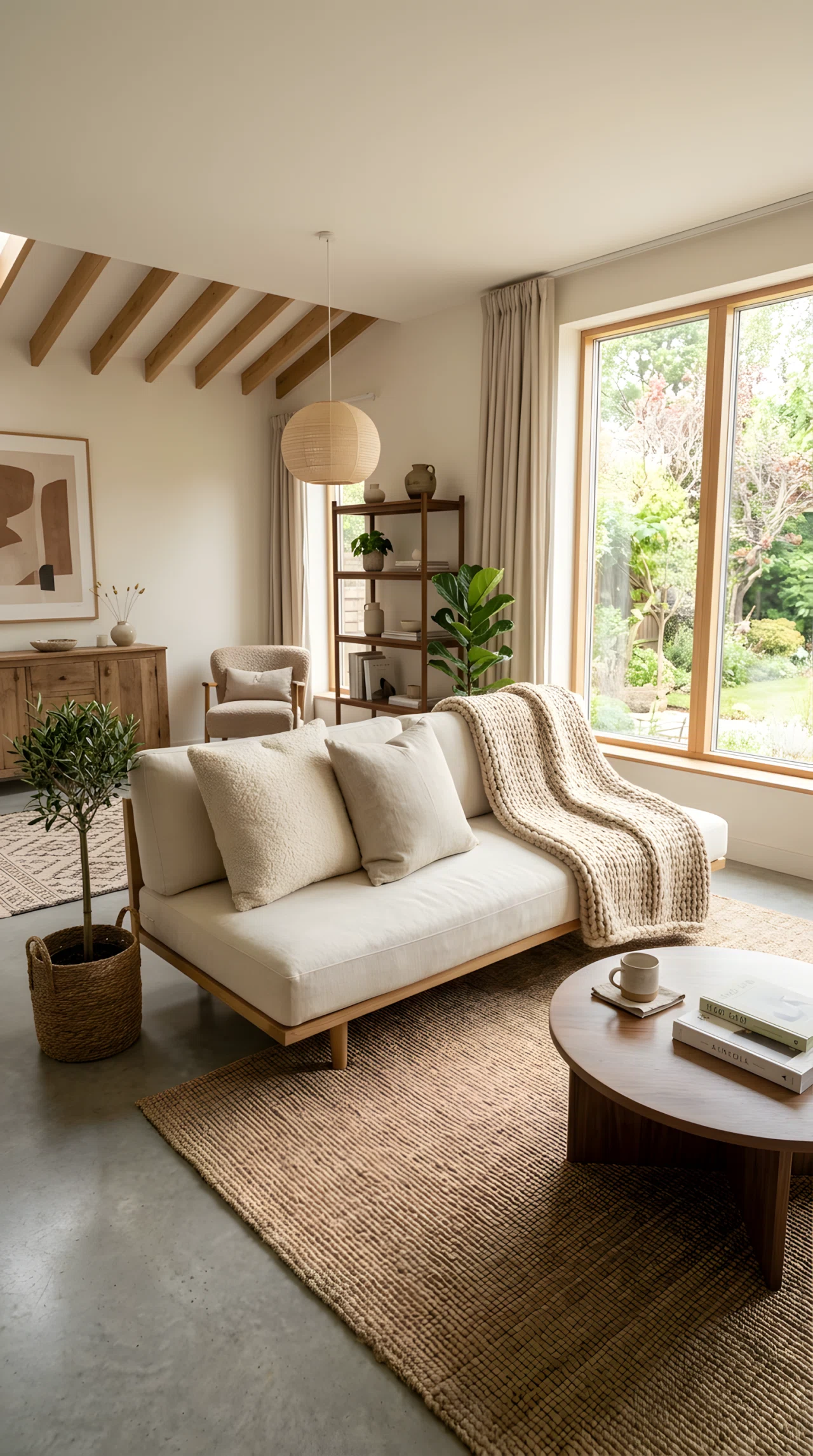
Piling on too many throw pillows turns a calm japandi living room sofa into visual noise. Limit yourself to three textures total, such as a bouclé cushion, a chunky knit throw, and one linen pillow, keeping the color family tight so the mix still reads as one cohesive layer.
This restraint gives the sofa a cozy, touchable quality without tipping into the overstuffed look that fights against the room’s minimal foundation.
15. Add a Low Floor Cushion Nook for Flexible Seating
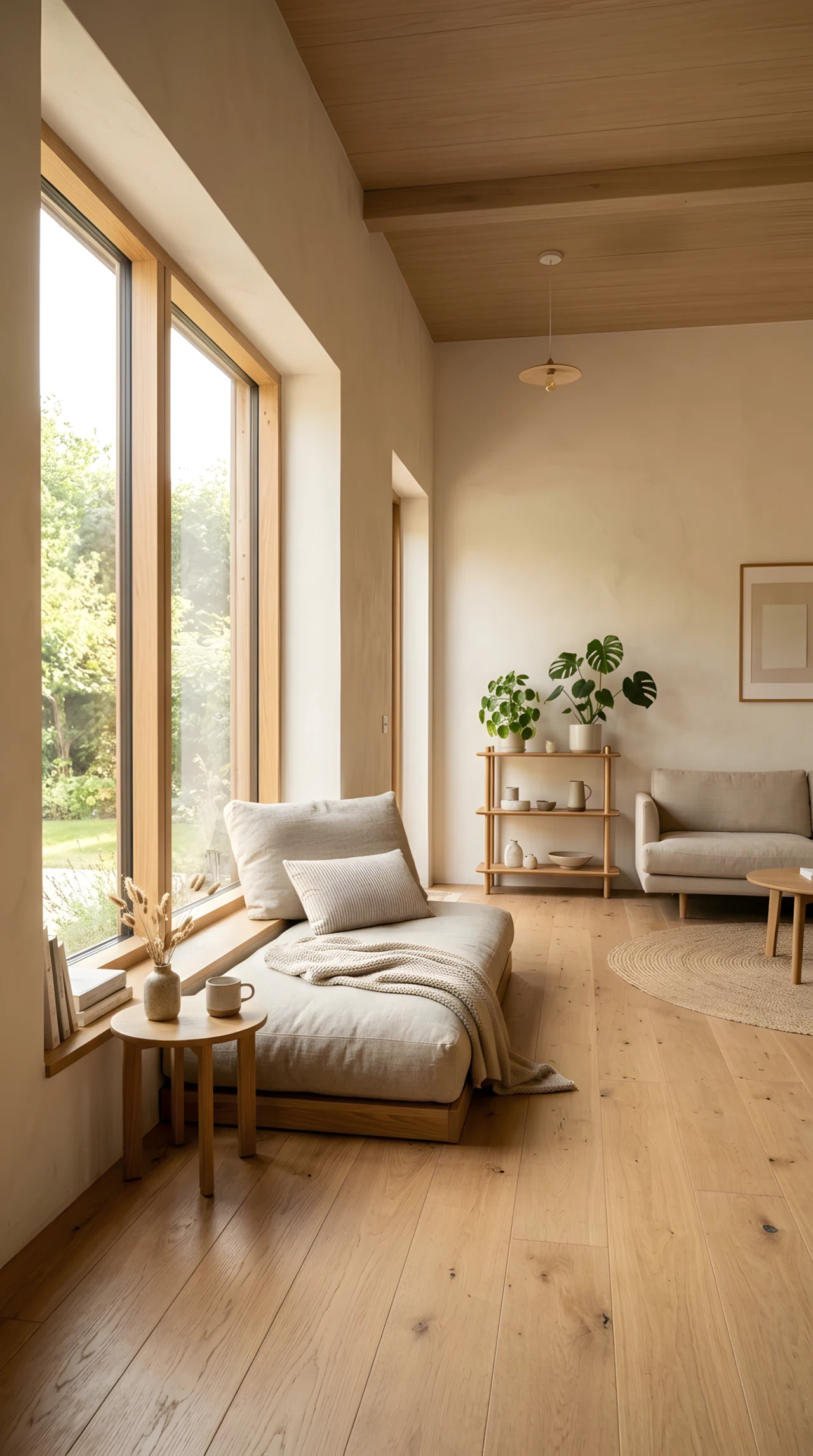
A fixed sofa and chair combo can leave a japandi living room short on seating when friends come over. Tuck a low floor cushion or two into an empty corner near the window, ready to pull out for extra guests or a relaxed reading spot on ordinary days.
It adds flexible seating without a single extra piece of furniture, keeping the room’s open, uncluttered feel intact while still solving a real everyday problem.
Bringing It All Together
A japandi living room isn’t about owning less for the sake of it, but about choosing pieces that genuinely earn their place, from a curved walnut chair to one bare wall left alone on purpose.
Start with just one idea instead of all fifteen at once. Layer in warm light, natural texture, and a little negative space, and watch your living room slowly turn into the quiet retreat japandi promises.