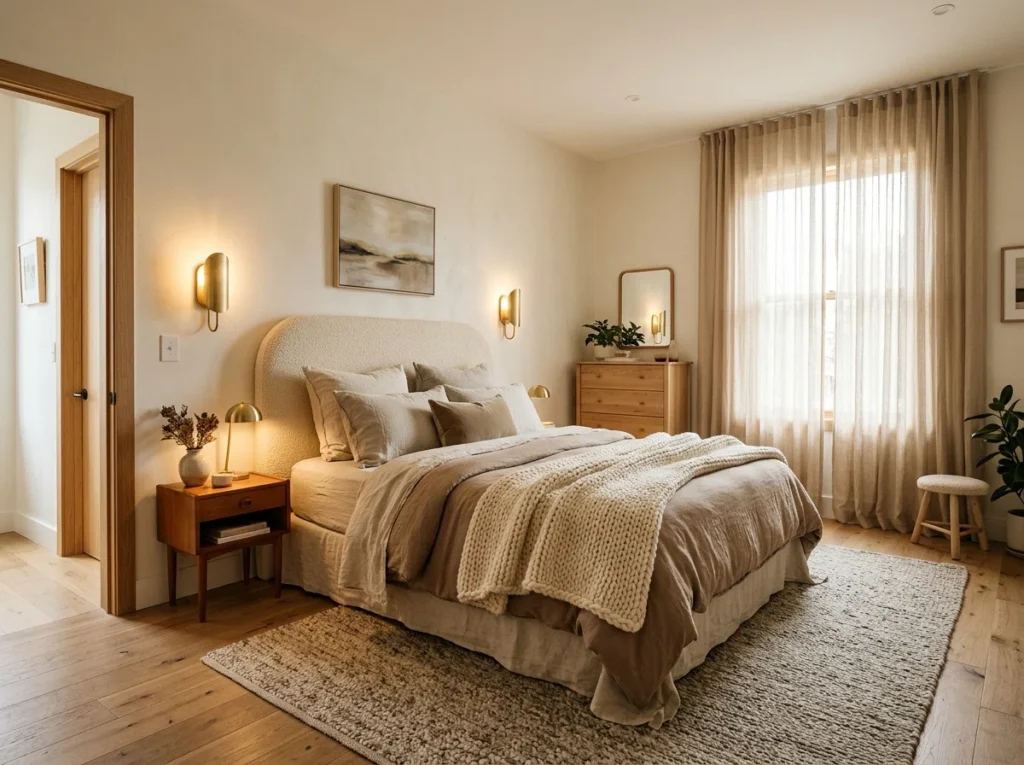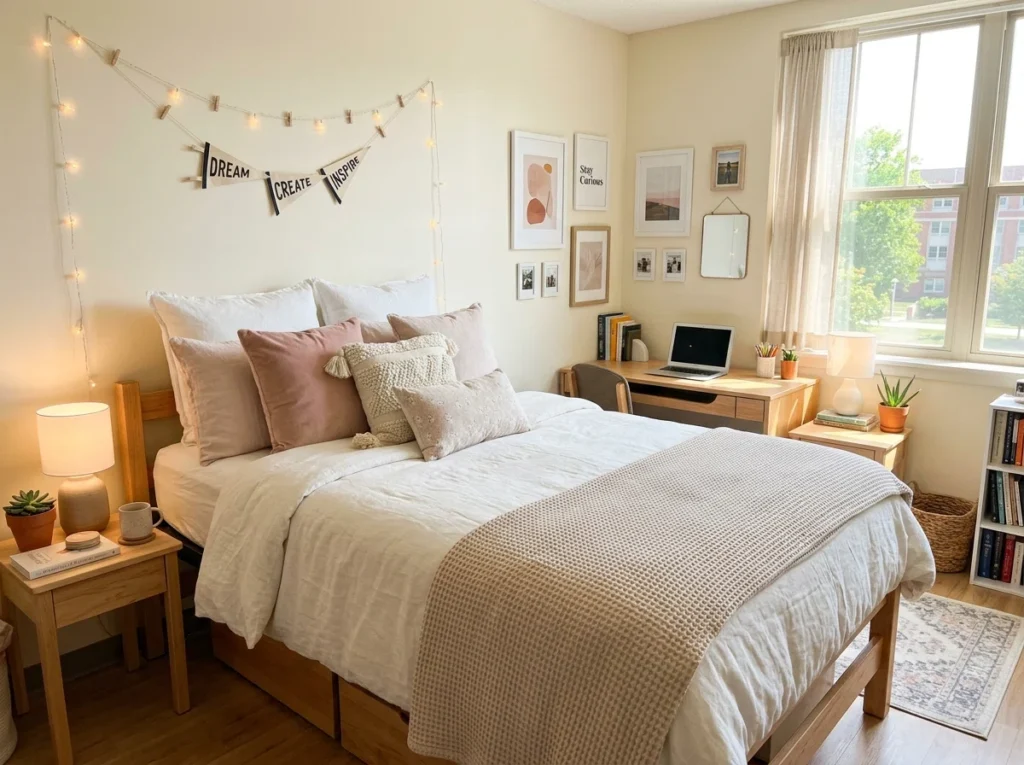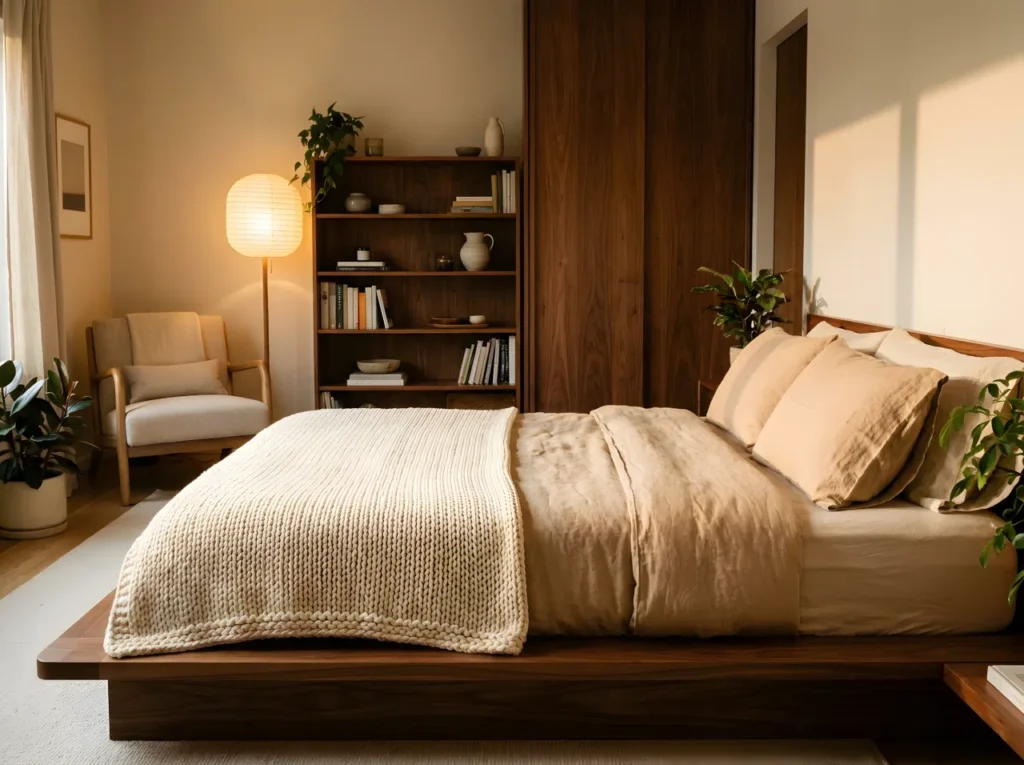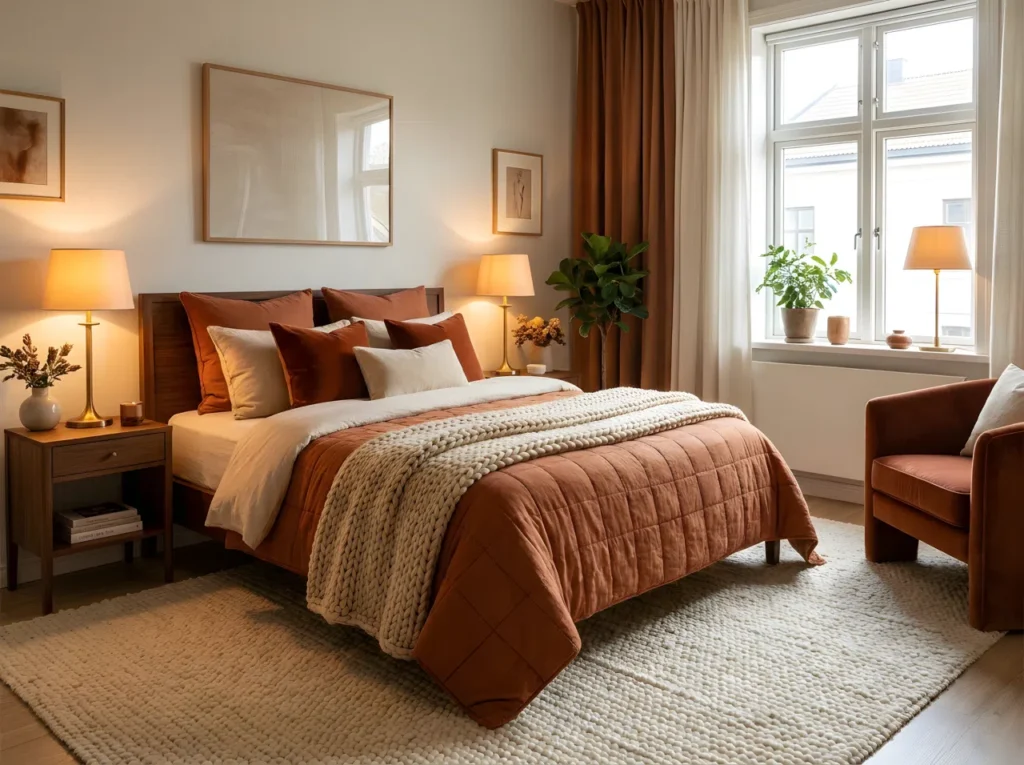
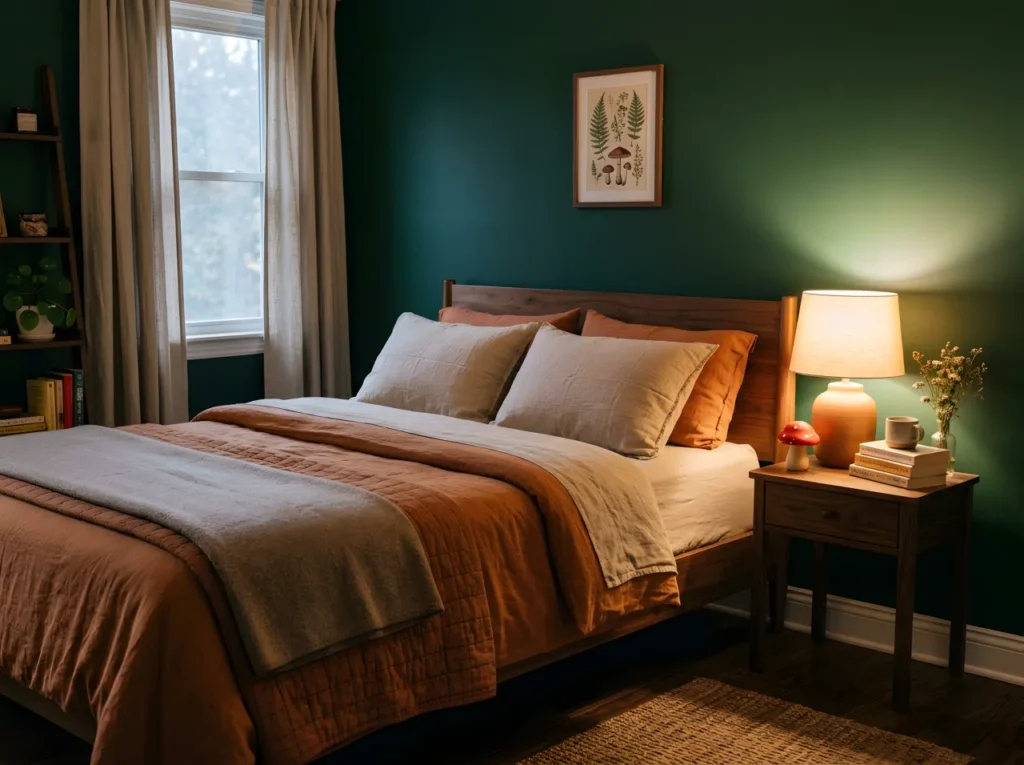
Your bedroom keeps ending up beige by accident. You start with a vision, then default to safe neutrals because color feels risky, and the room ends up forgettable instead of restful. Green solves this problem better than almost any other shade because it reads as calm rather than bold.
Nature already proved it works, so your walls can borrow that same quiet confidence. This roundup breaks green bedroom color ideas into shades, pairings, styles, and moods so you can pick a direction and actually commit to it tonight.
1. Sage Green Walls for a Softly Grounded Look
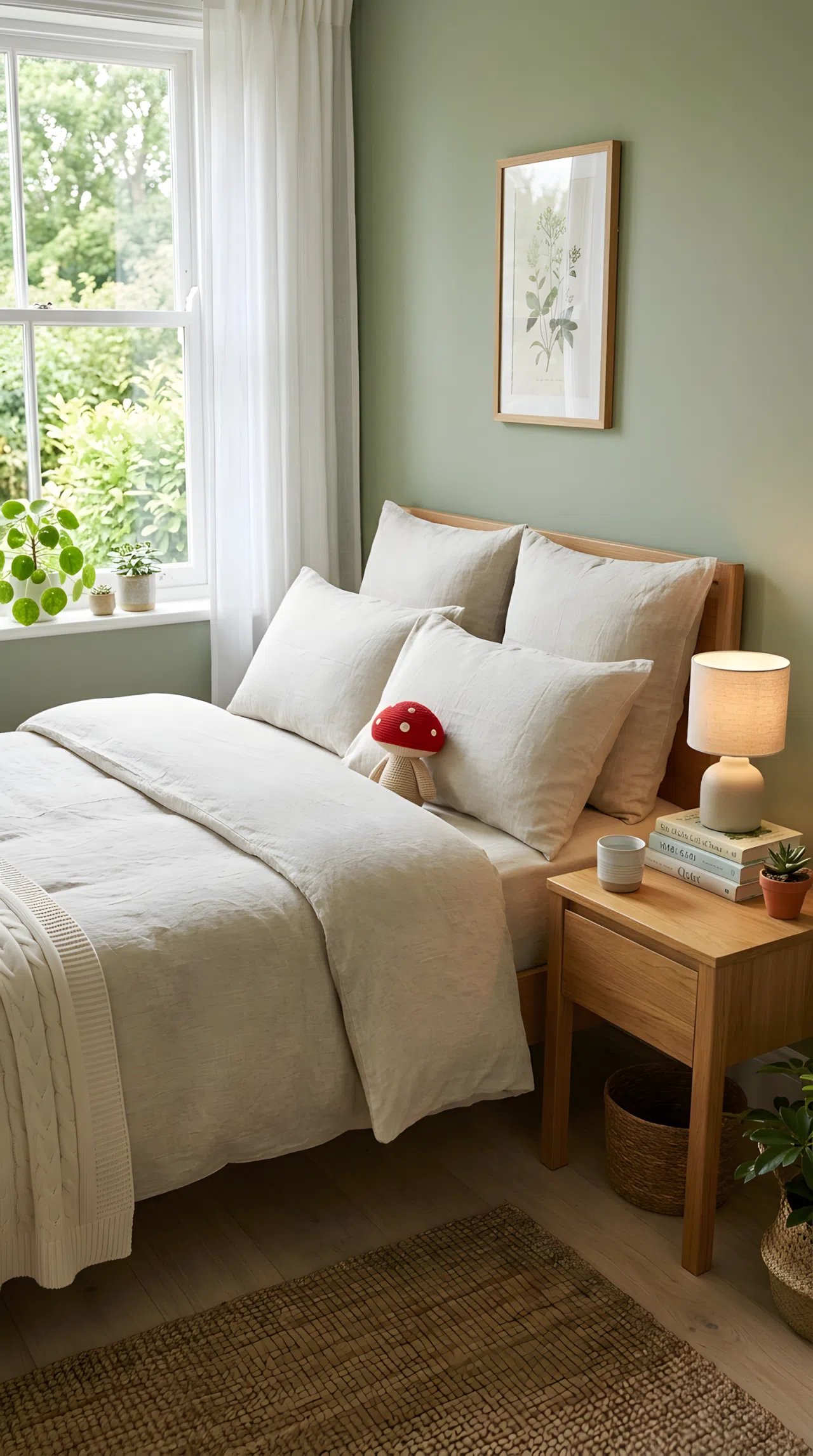
Sage green sits between gray and green, which makes it forgiving on almost any wall orientation and light exposure. It reads as muted and dusty rather than saturated, so the room feels grounded instead of themed. This makes it the easiest green to commit to if you are nervous about color.
Pair sage walls with warm wood furniture and linen bedding to keep the palette soft. The result feels like a bedroom that was designed slowly and intentionally, not decorated in a weekend rush.
2. Green and Terracotta for an Earthy, Sunlit Bedroom
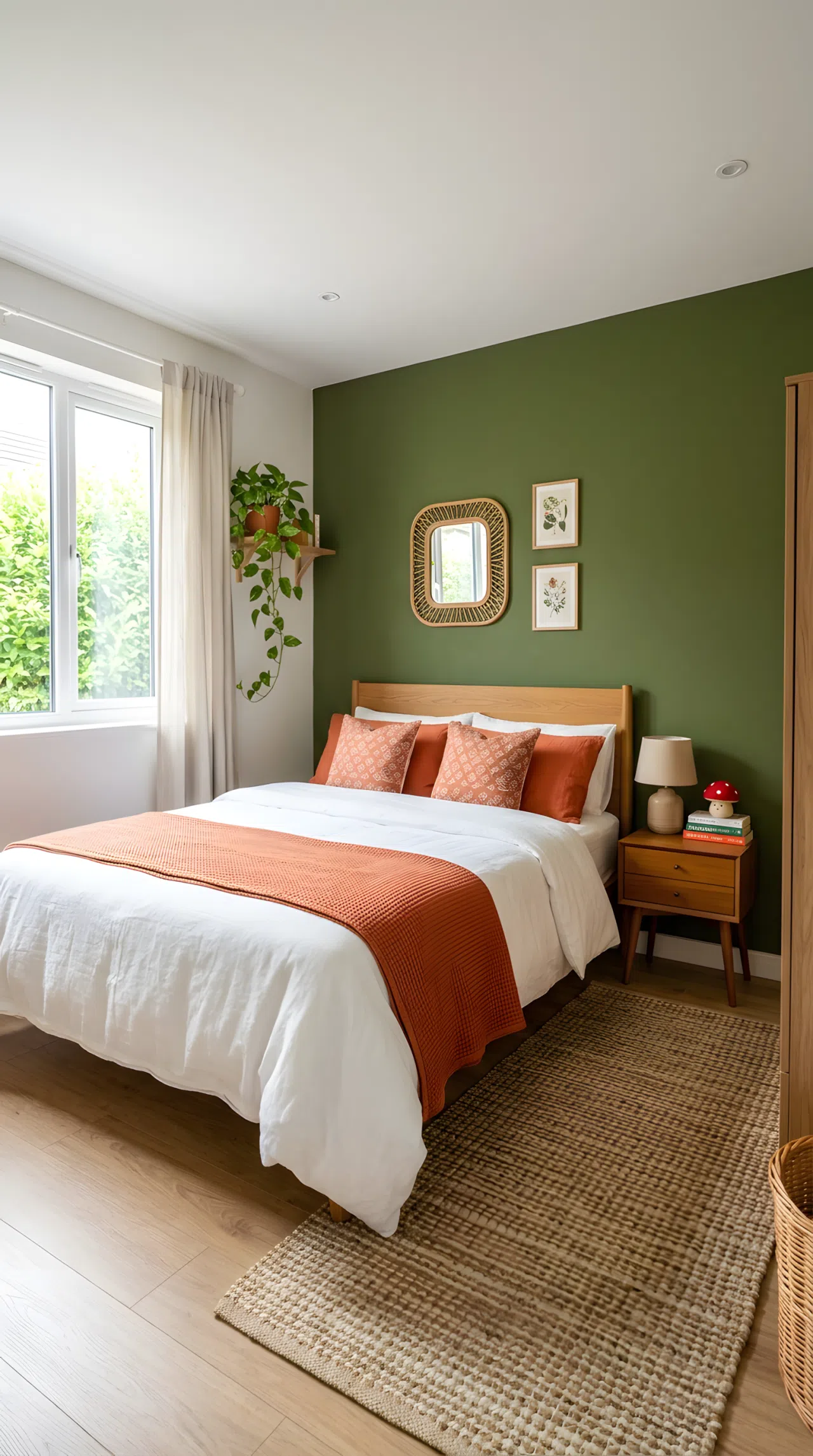
Green and terracotta borrow directly from landscape colors, forest against clay soil, so the pairing feels instinctively balanced. The green cools the room down while the terracotta keeps it from feeling sterile or cold. Together they photograph beautifully in both morning and evening light.
Use green for the larger surfaces like walls or bedding, then let terracotta show up in a throw blanket, ceramic lamp, or woven rug for contrast without overwhelming the space.
3. Boho Green Bedroom With Layered Textures
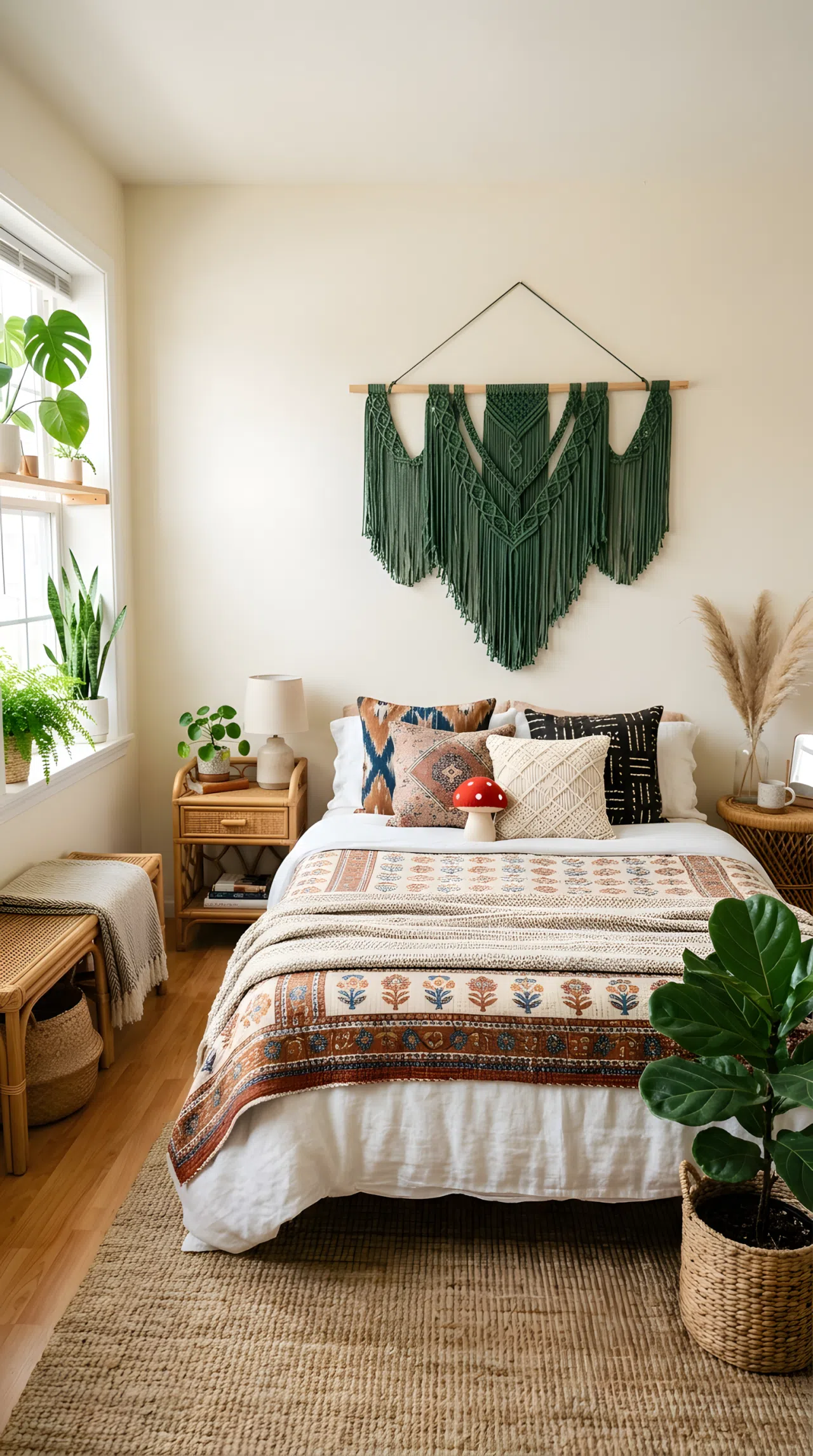
Boho styling leans on texture more than color intensity, so a deep green backdrop gives patterned textiles and natural materials somewhere calm to land. Rattan, macrame, and mismatched pillows all read as intentional against green instead of cluttered.
Keep the green consistent across one or two anchor pieces, like a headboard or curtain, so the layered textures do not compete with a busy wall pattern too.
4. A Single Green Accent Wall Behind the Headboard
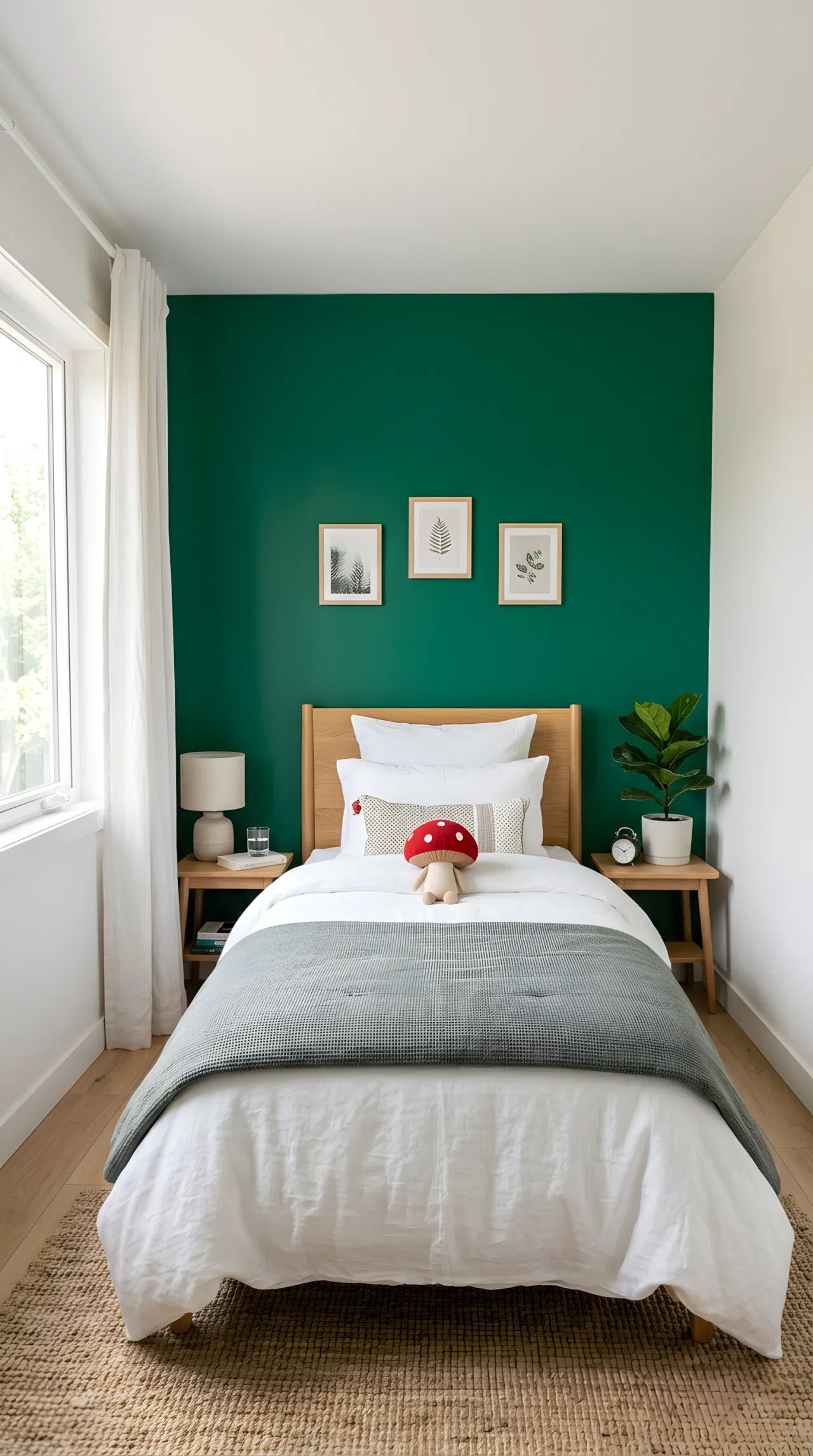
An accent wall lets you commit to a bold green without repainting the entire room, which makes it the lowest-risk way to test the color. Placing it directly behind the headboard also frames the bed as the visual anchor of the space.
Keep the remaining three walls neutral so the green wall reads as a deliberate design choice rather than an unfinished paint job. This contrast makes the color feel richer, not louder.
5. Cozy Green Bedroom With Warm Ambient Lighting
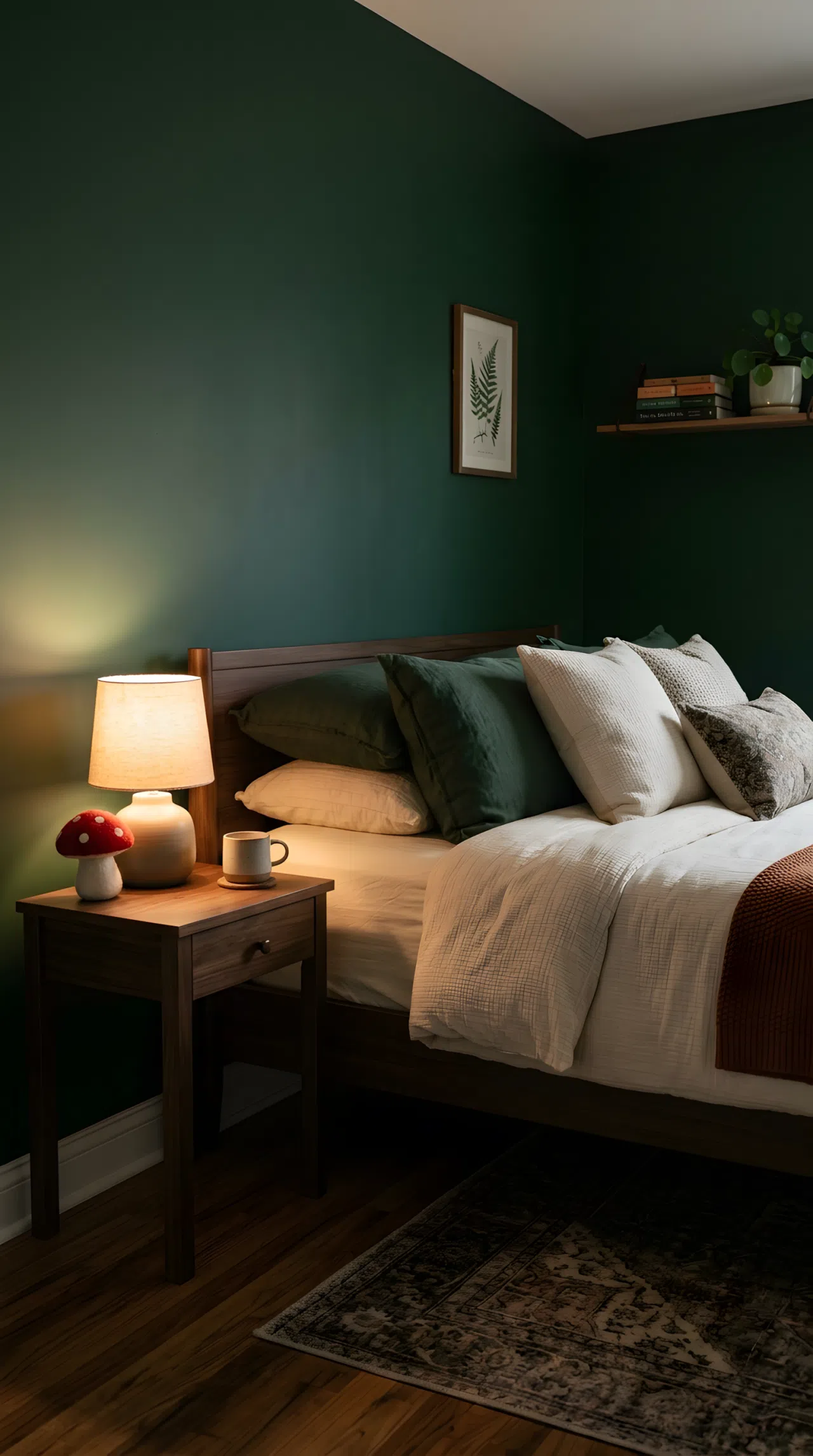
Green can feel cold under harsh overhead light, so the fix is not the fixture itself but where the light comes from. Position a warm-toned lamp low and close to the bed so light pools softly across the green instead of flattening it from above.
This single positioning change makes a dark green room feel like a retreat rather than a cave, especially in the evening when the lamp becomes the main light source.
6. Mint Green Bedroom for a Fresh, Airy Feel
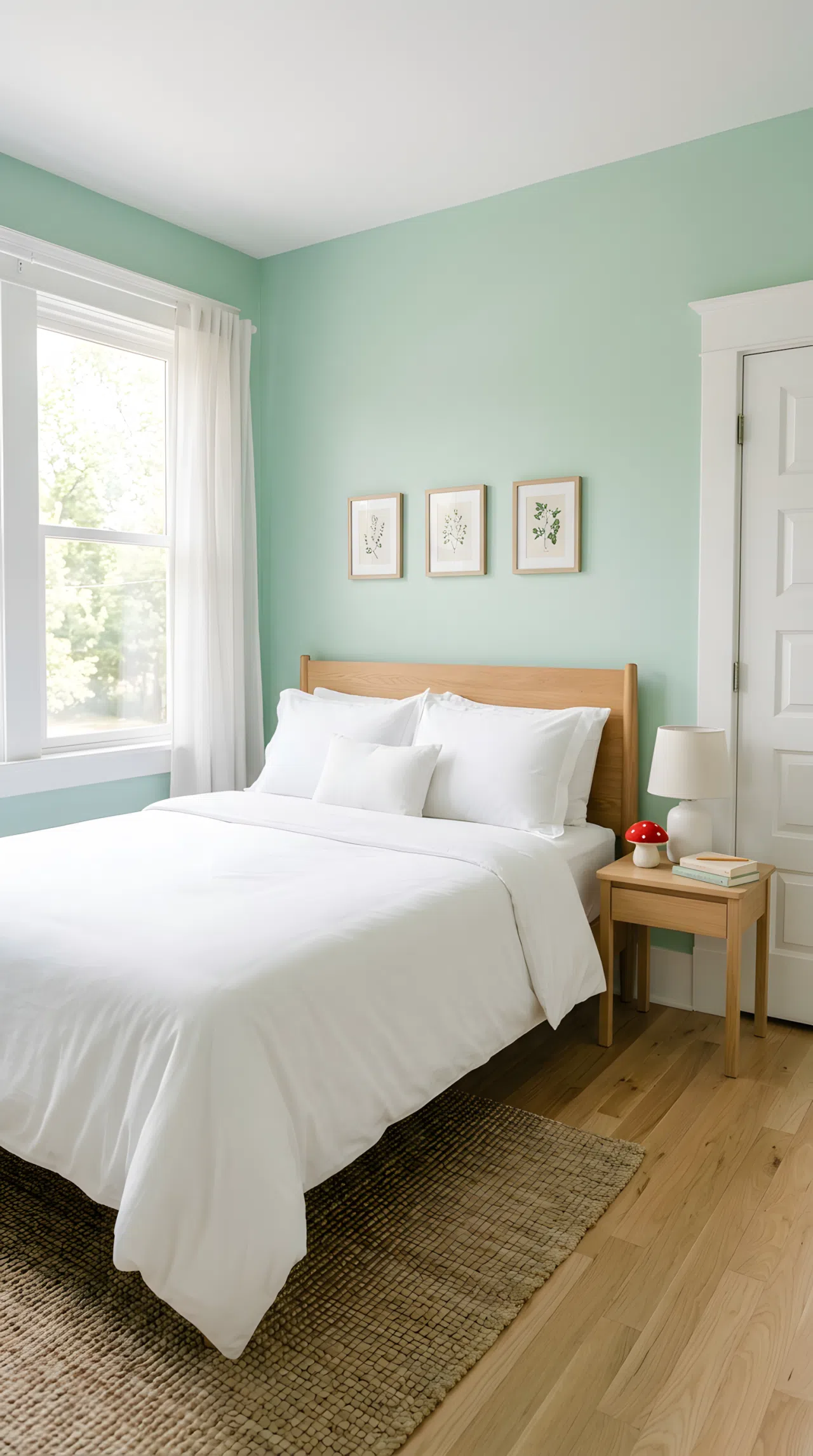
Mint sits lighter and cooler than sage, which makes it a better fit for small bedrooms or rooms with limited natural light. It reflects light rather than absorbing it, so the space feels more open and less closed in than deeper greens.
Balance mint with crisp white trim and light oak flooring so the room stays airy instead of feeling clinical. This combination works especially well in bedrooms that double as a reading nook.
7. Green and Navy for a Rich, Layered Palette
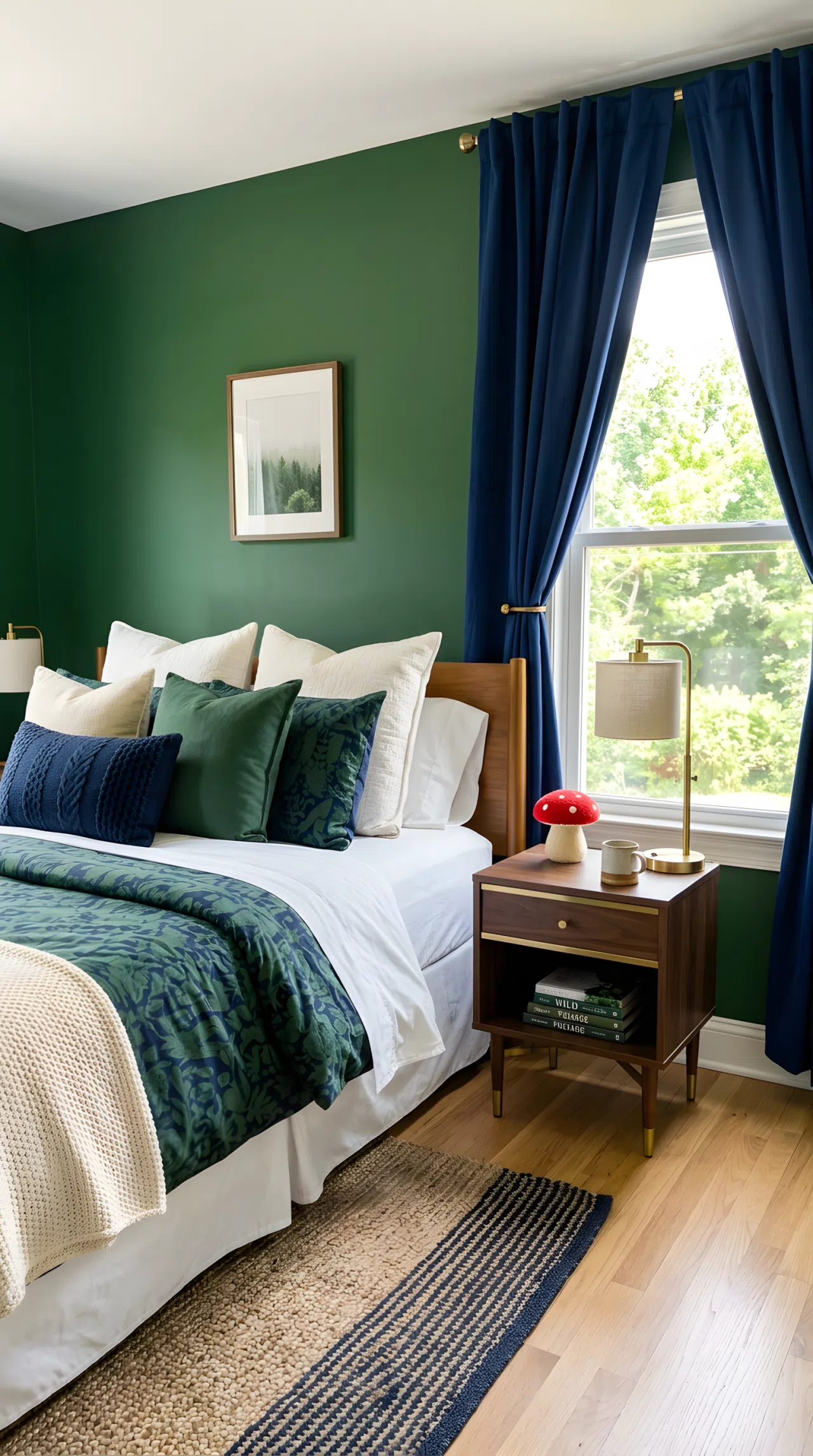
Green and navy are both deep, saturated tones, so together they read as a considered palette rather than two random colors thrown together. The combination leans traditional and grounded, closer to a study than a nursery.
Use navy for a headboard or curtains and green for walls or a throw so both colors get equal visual weight. Brass hardware finishes the pairing without pulling focus from either shade.
8. Scandinavian Green Bedroom With Minimal Clutter
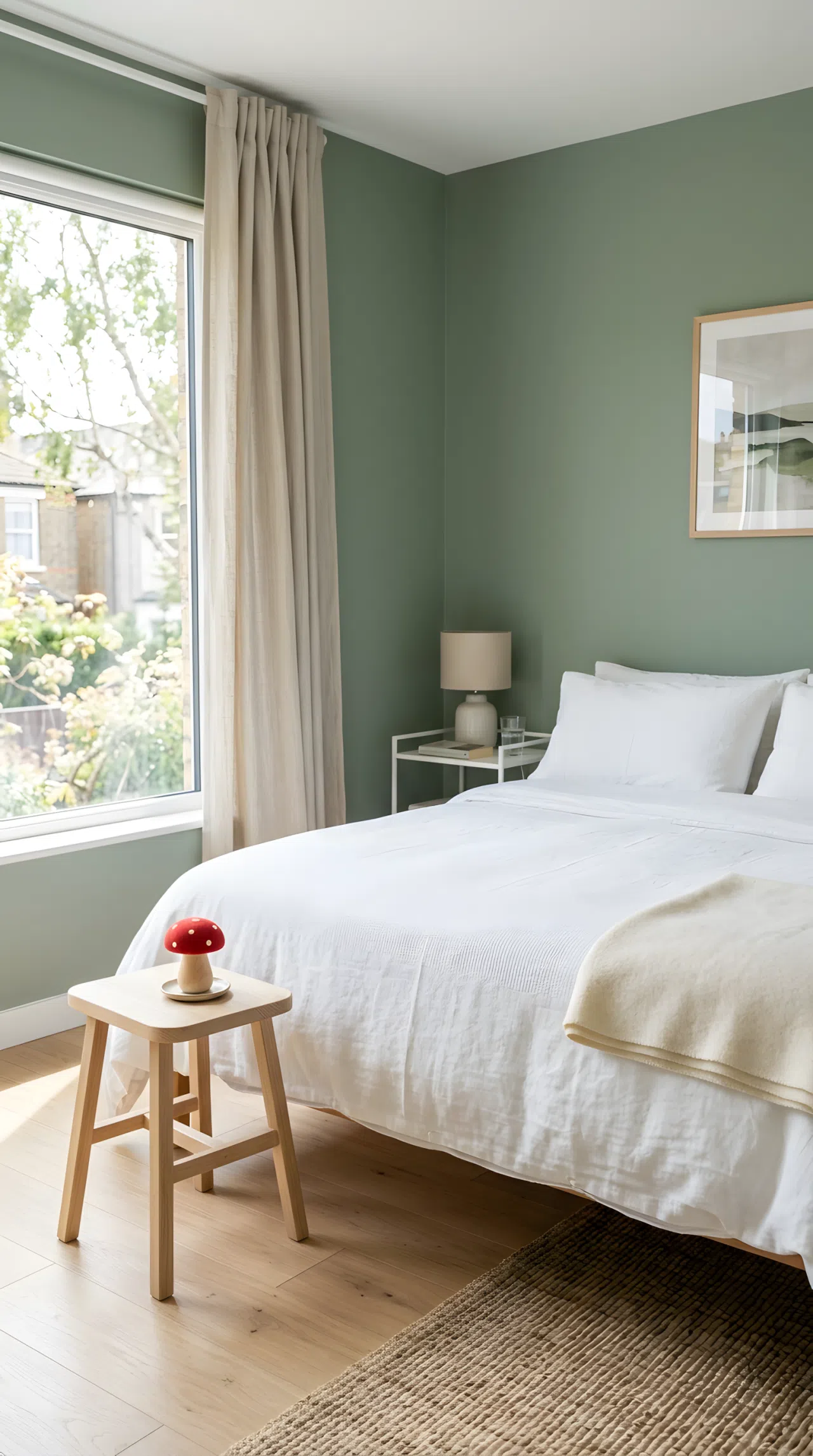
Scandinavian styling strips a room down to a few functional pieces, which lets a single green tone carry the whole aesthetic without competition. The approach works because empty space is treated as a design choice, not a gap to fill.
Choose one muted green for walls or bedding, then keep furniture pale wood and unadorned. The restraint is what makes the room feel calm rather than sparse.
9. Botanical Green Wallpaper as a Statement Feature
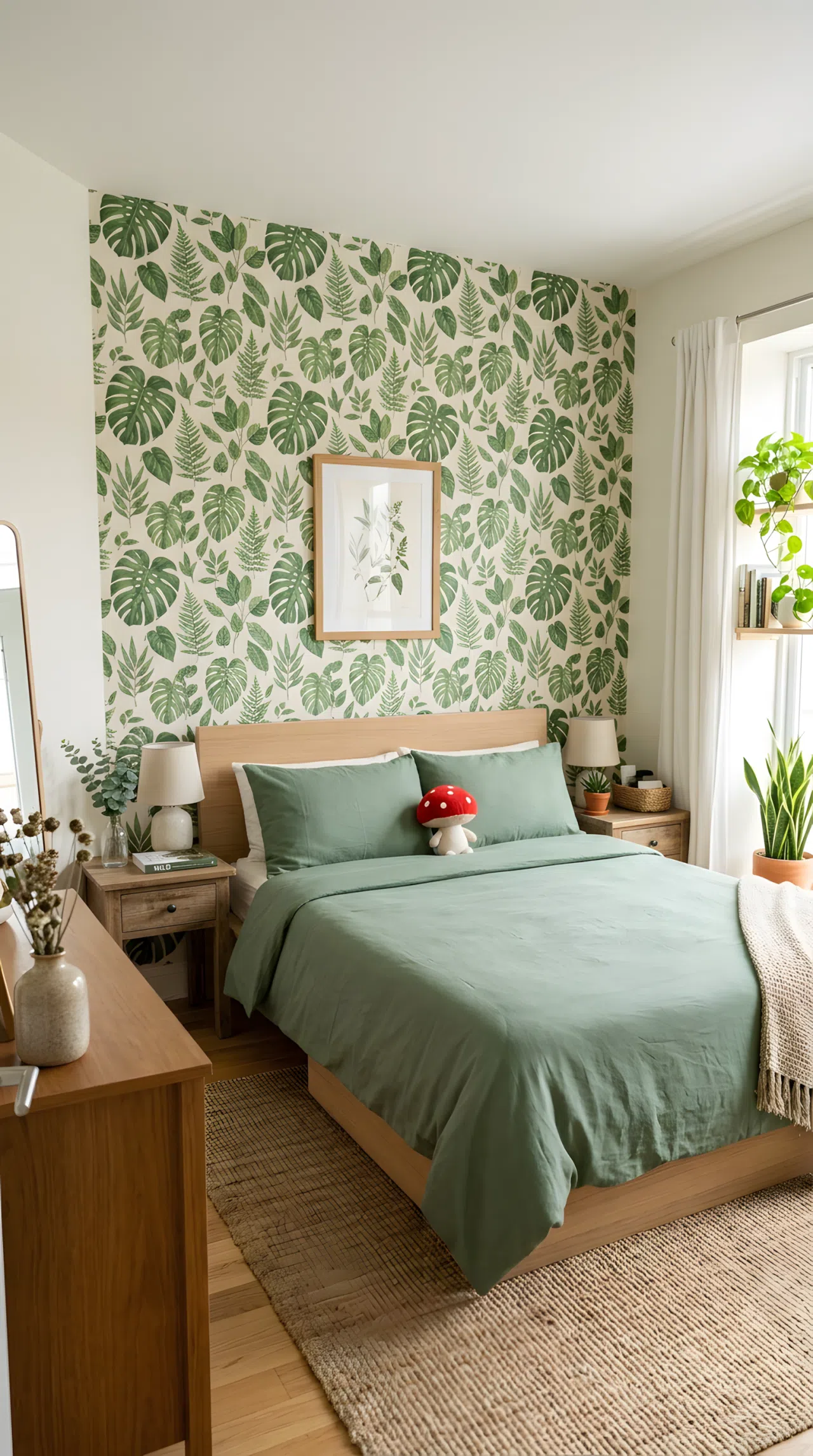
Wallpaper gives you pattern and depth that flat paint cannot, especially with botanical prints that echo the color without relying on a single solid shade. This makes the wall feel like a feature rather than a backdrop.
Limit wallpaper to one wall and keep bedding solid so the pattern has room to stand out. This prevents the space from feeling overly busy or maximalist when that is not the intended look.
10. Zen Green Bedroom Designed for Deep Rest
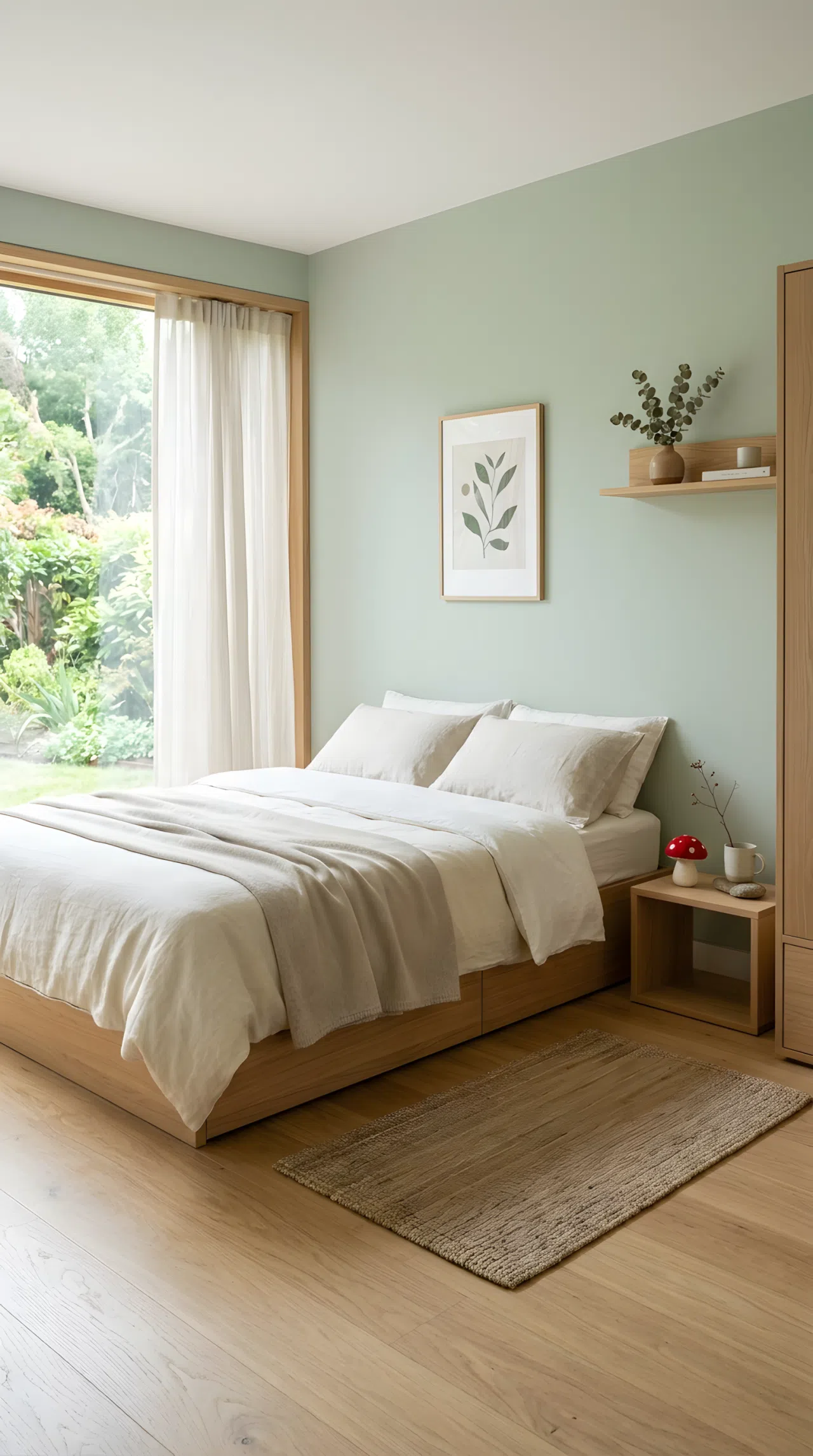
Zen styling treats color as a tool for calming the nervous system, and muted green is one of the few shades proven to lower visual stimulation. The goal here is not decoration but an environment built specifically for sleep.
Remove visual clutter, choose low furniture, and let the green tone be the quietest thing in the room instead of a focal point. This turns the bedroom into a space that actively supports rest.
11. Emerald Green Bedding for a Bold Pop Without Repainting
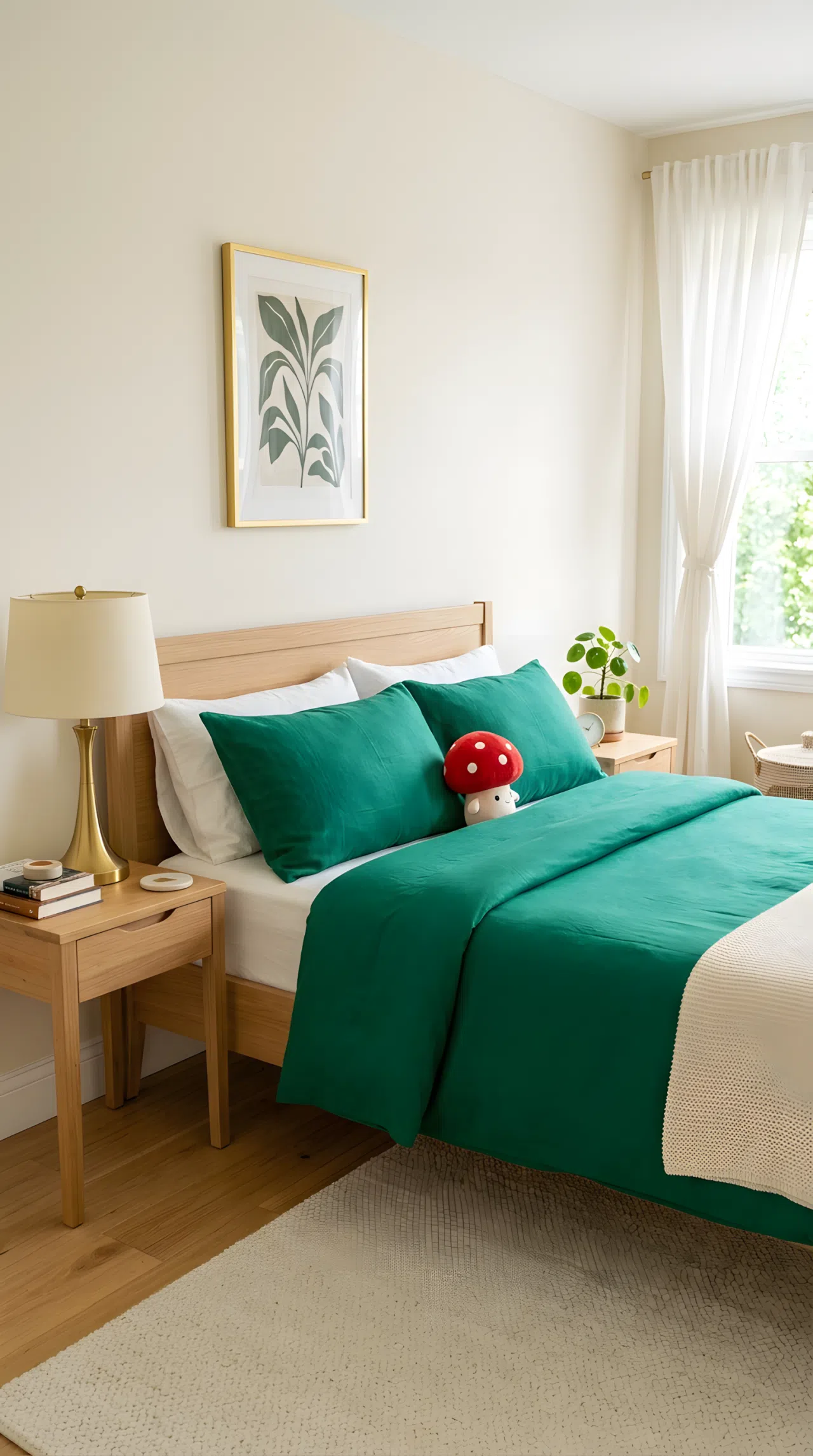
Bedding is the fastest way to test a saturated green without touching a paint can, and emerald reads as luxurious rather than overwhelming when it stays contained to the bed. This makes it ideal for renters or anyone hesitant to commit to walls.
Keep walls neutral white or cream so the emerald bedding becomes the clear focal point. Add gold or brass accents nearby to reinforce the richer, more elevated feel.
12. Green and Pink for a Soft, Feminine Contrast
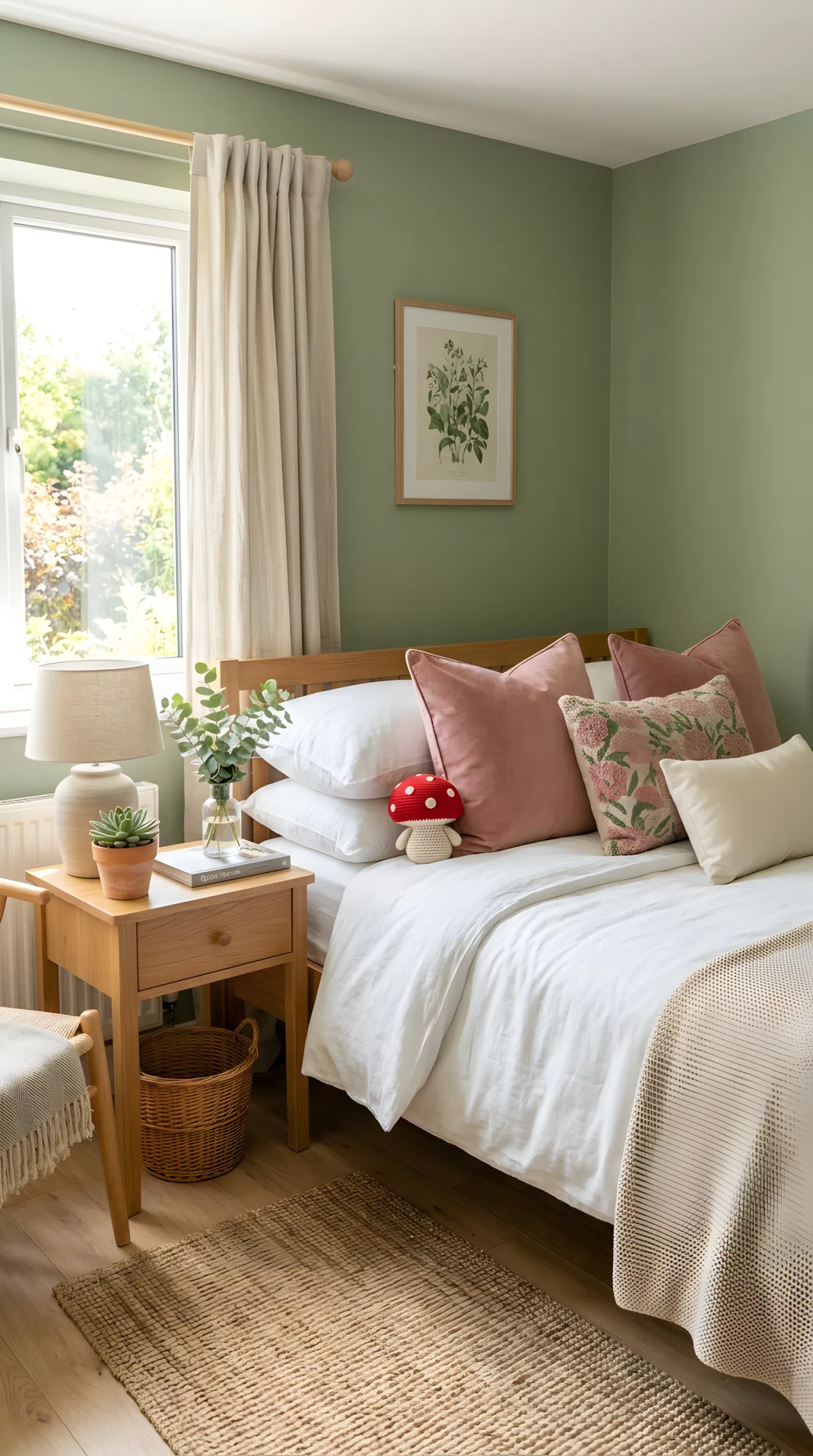
Green and pink sit opposite each other on the color wheel, which gives the pairing natural contrast without clashing when both tones are kept muted. Dusty rose against sage feels romantic rather than childish.
Use green as the dominant wall or bedding color and let pink appear in smaller doses like a cushion or vase. This keeps the palette balanced instead of overly sweet.
13. Vintage Canopy Bed With a Deep Green Backdrop
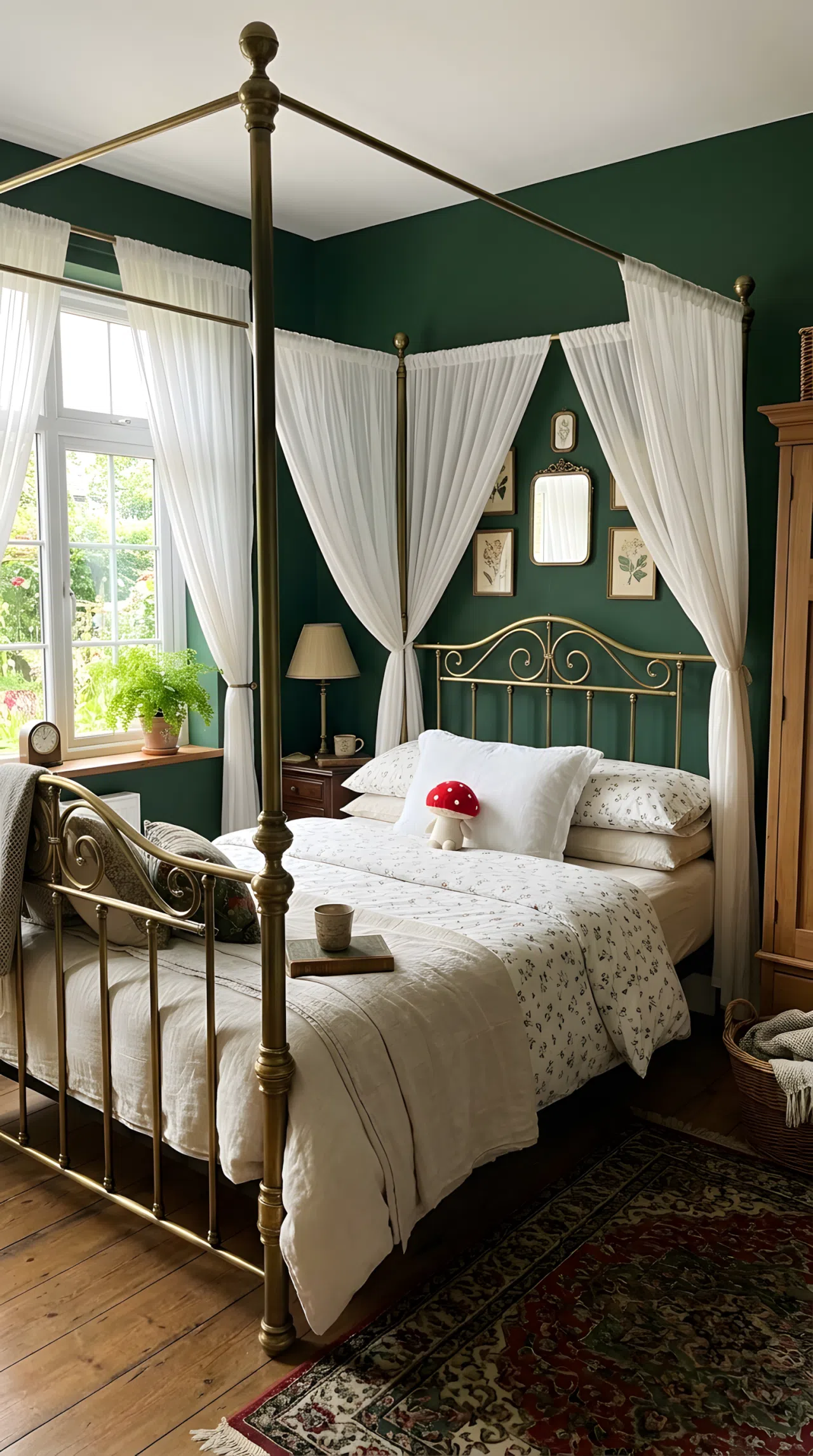
A canopy frame naturally draws the eye upward, so pairing it with a deep green wall creates a sense of drama without adding a single extra piece of furniture. The style leans traditional and feels collected rather than trend-chasing.
Choose antique brass or wood for the canopy frame so it complements the green instead of competing with it. This combination photographs especially well with soft window light filtering through sheer curtains.
14. Green Nightstand Accents for a Low-Commitment Update
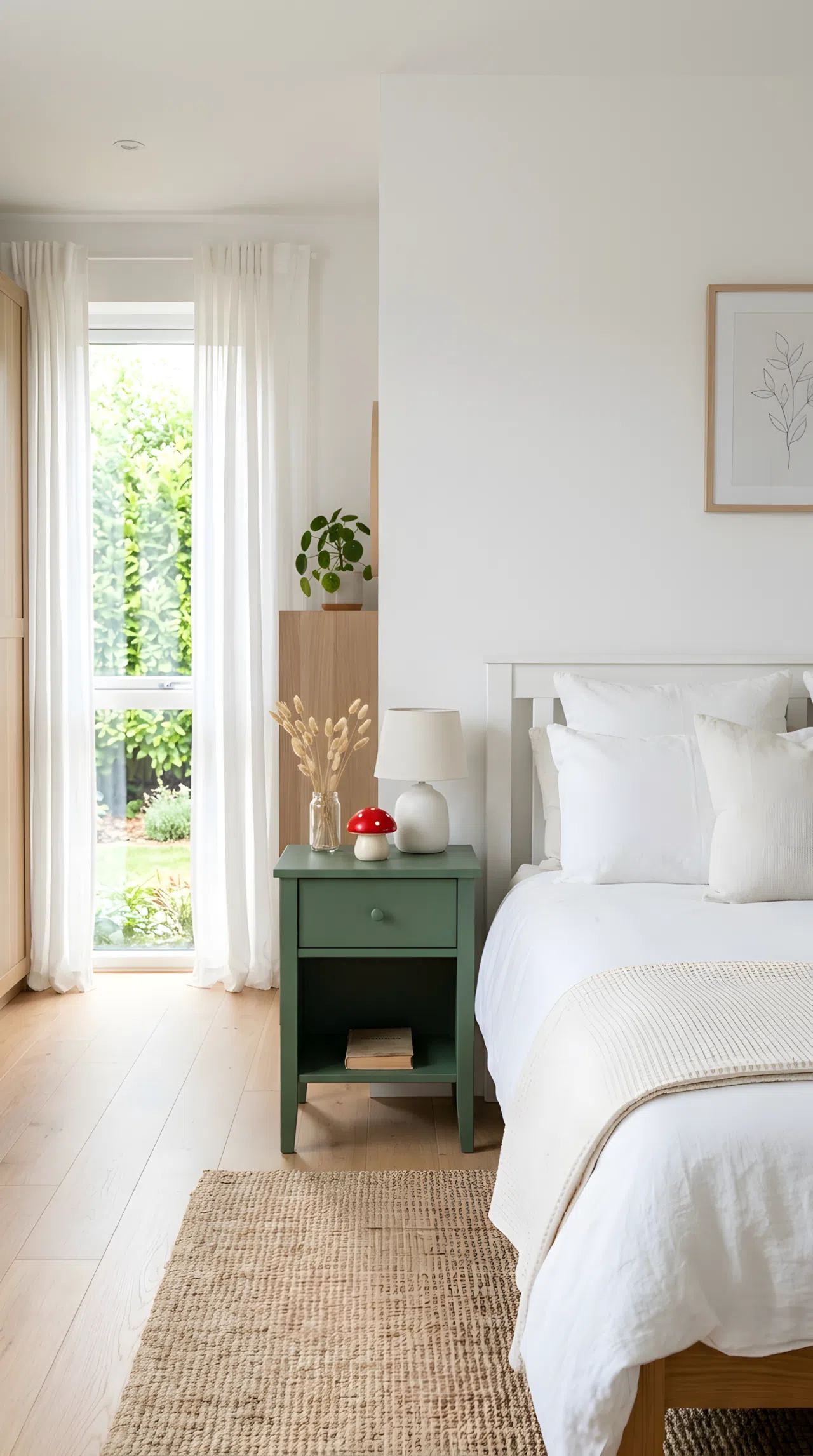
Not every green bedroom idea requires a wall or bedding change. A single green nightstand or dresser introduces the color as furniture rather than a backdrop, which works well in rentals or rooms with existing neutral walls.
Pick a matte green finish so the piece reads as intentional design rather than a mismatched thrift find. One piece is usually enough to shift the entire mood of the room.
15. Rustic Farmhouse Bedroom in Muted Olive Green
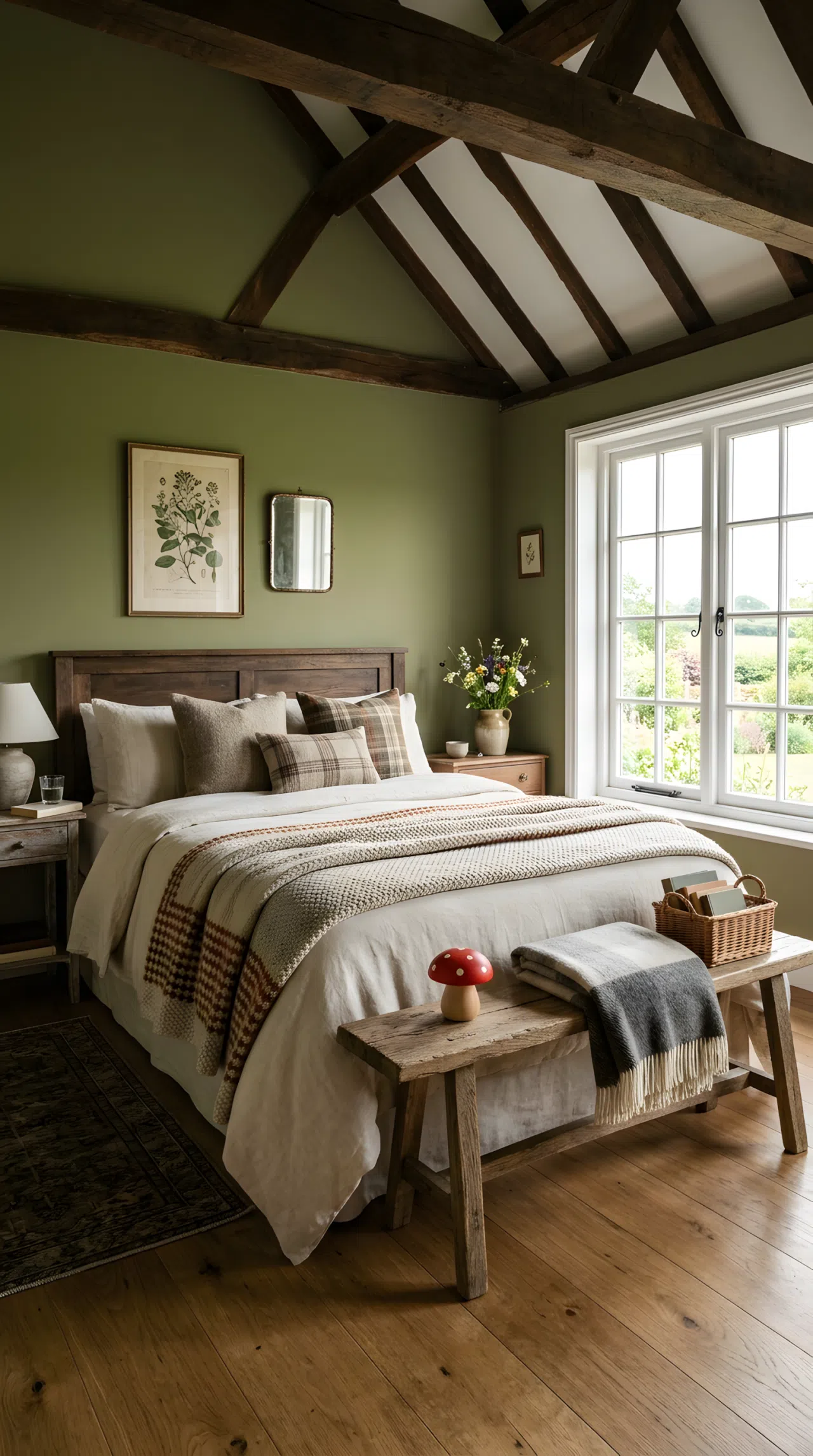
Farmhouse style depends on worn textures, so olive green works better here than a crisp saturated shade because it already looks slightly weathered. The color settles into the room instead of standing out.
Pair olive walls with distressed wood beams and woven baskets to keep the rustic character intact. This makes the bedroom feel lived-in and warm rather than newly decorated.
16. Moody Forest Green for a Dramatic Retreat
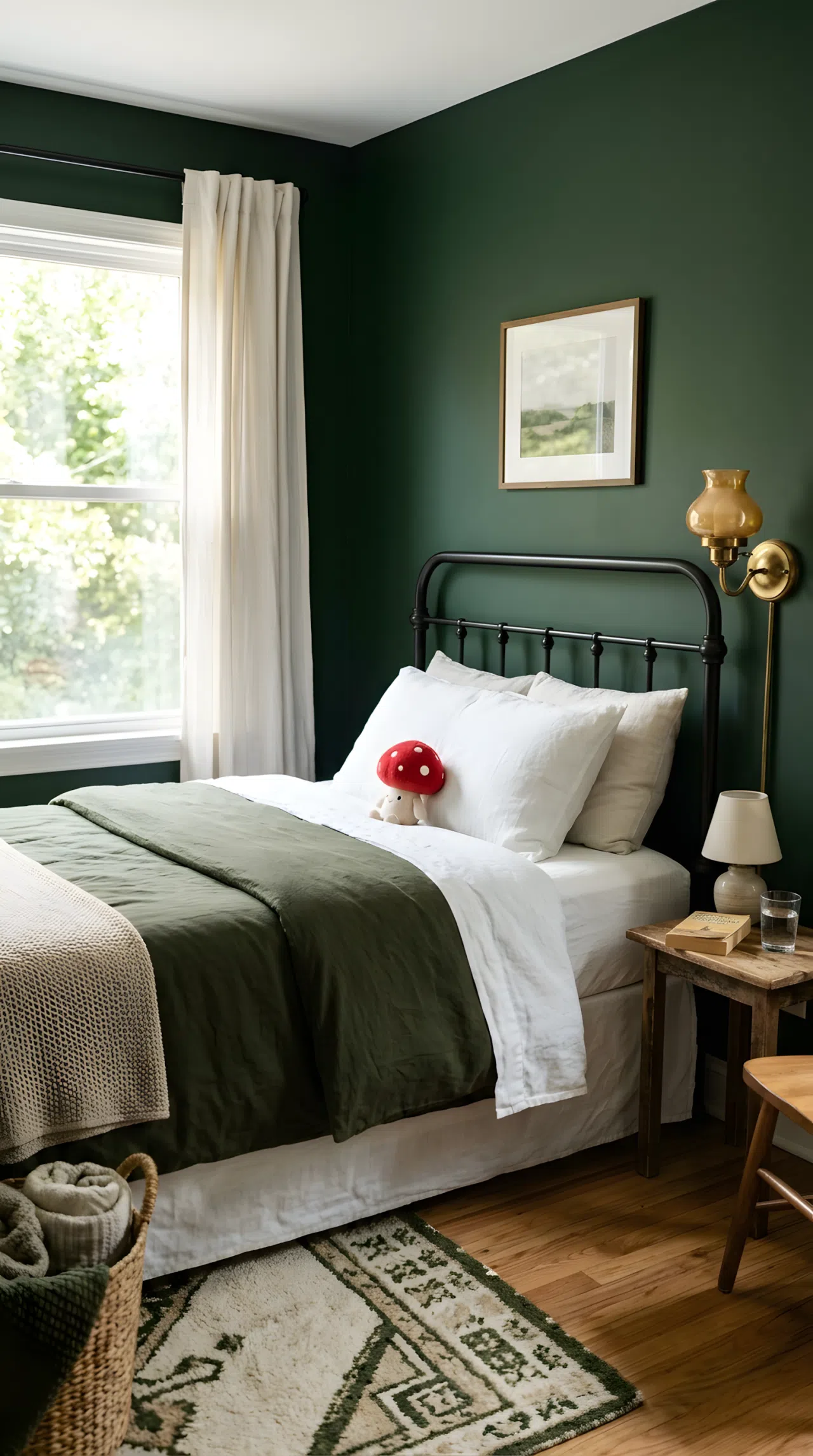
Moody green leans darker and cooler than olive or sage, closer to the deep shade of a forest canopy at dusk. It works best in bedrooms with strong natural light during the day, since the color needs contrast to avoid feeling heavy at night.
Pair it with black metal fixtures and warm brass details to keep the room feeling curated instead of cave-like. This shade suits anyone who wants a bedroom that feels intentionally dramatic.
17. Green and Warm Wood Tones for a Natural, Grounded Room
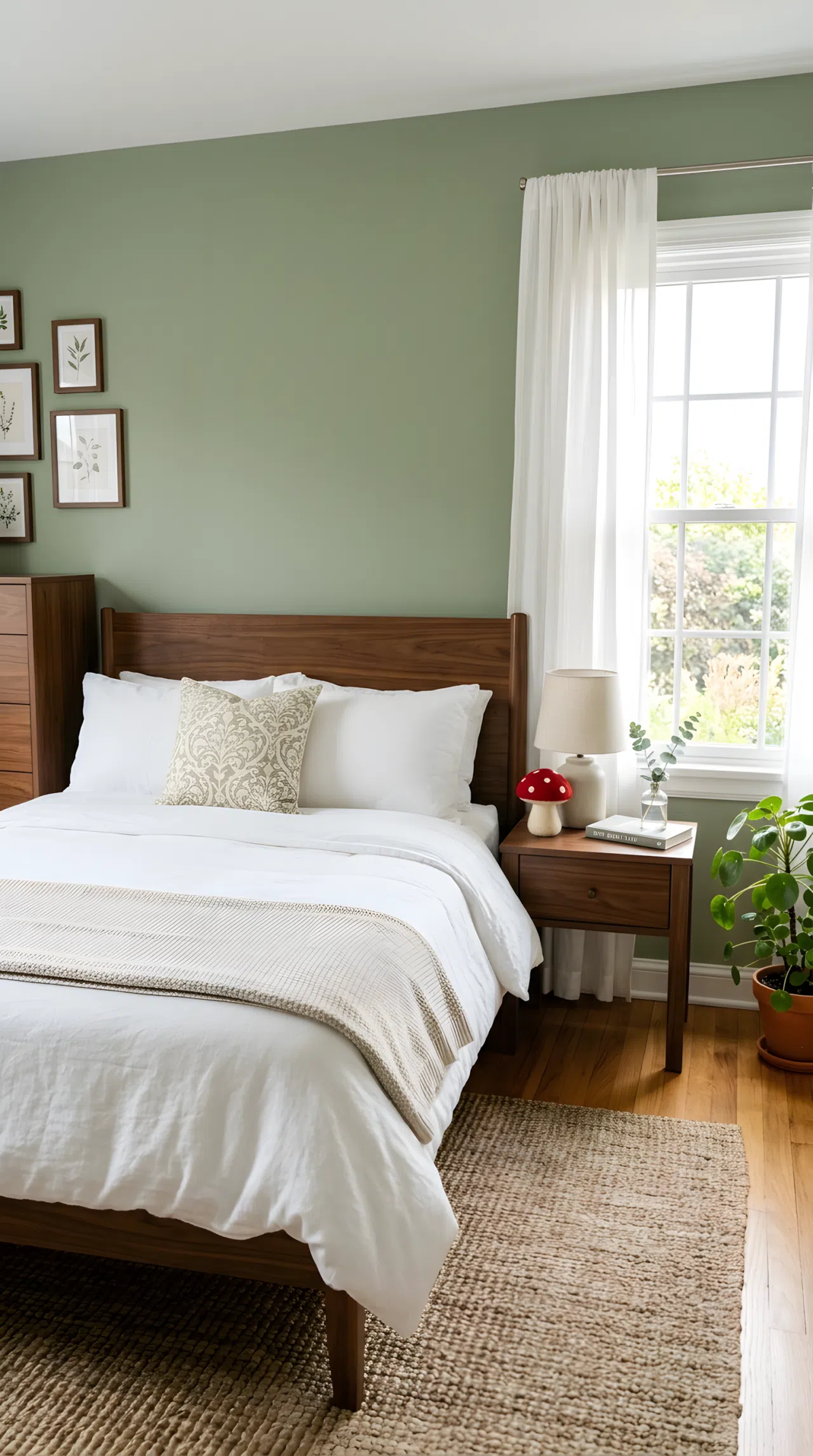
Green and wood share the same origin story, both come from nature, so this pairing never feels forced. Warm wood tones soften green’s coolness and keep the palette from reading too clinical or sterile.
Choose a mid-tone walnut or oak for furniture and let green appear on walls or textiles. The result feels like an extension of the outdoors brought calmly indoors.
18. Minimalist Green Bedroom With One Focal Color Block
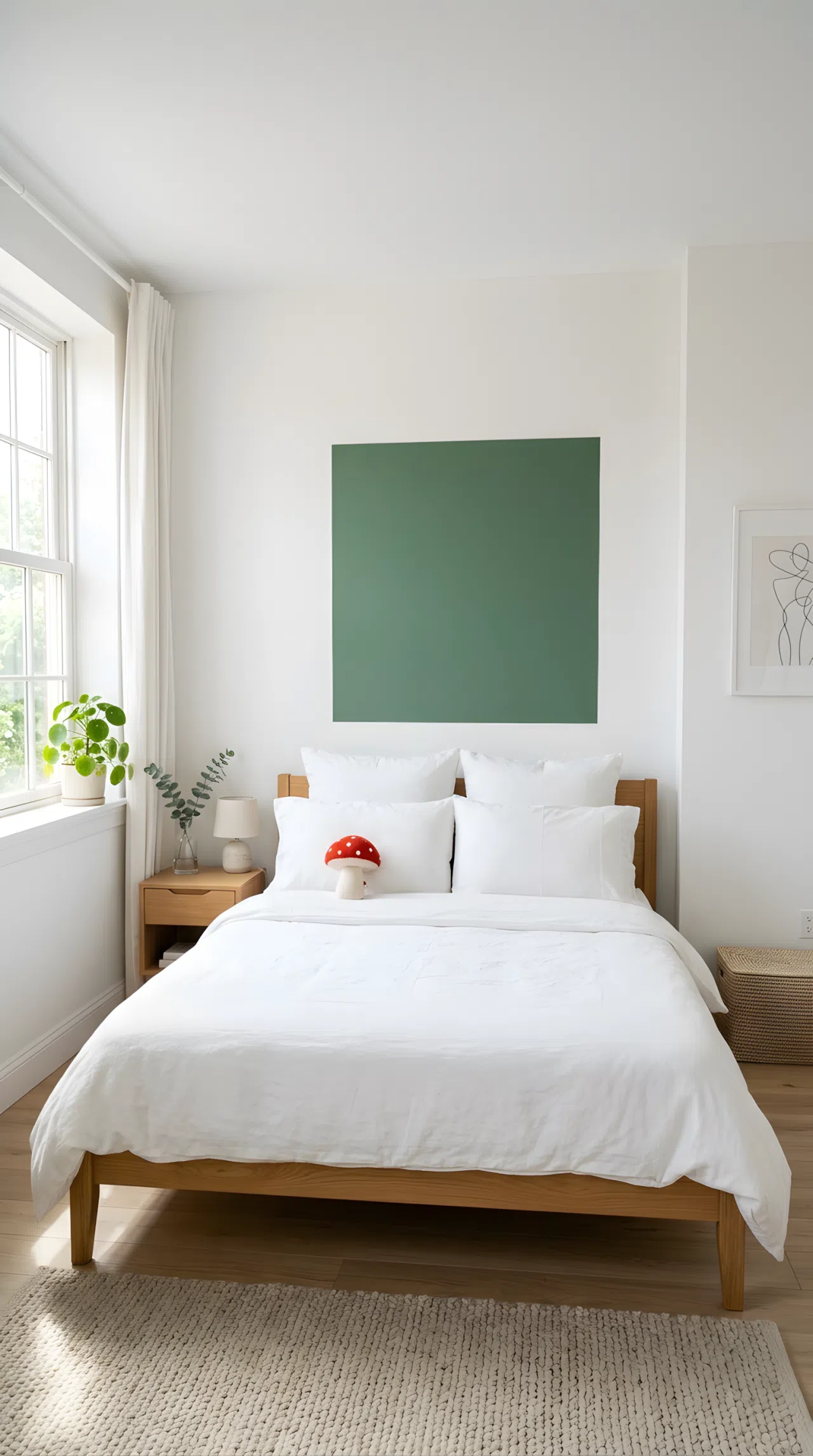
Minimalism relies on restraint, so instead of spreading green across multiple surfaces, this approach concentrates it into a single painted block behind the bed. Everything else in the room stays white or off-white.
This technique works particularly well in small bedrooms since it adds color without visually shrinking the space. The block shape can be squared off or rounded depending on preferred softness.
19. Green Curtains to Frame Natural Light Without Repainting
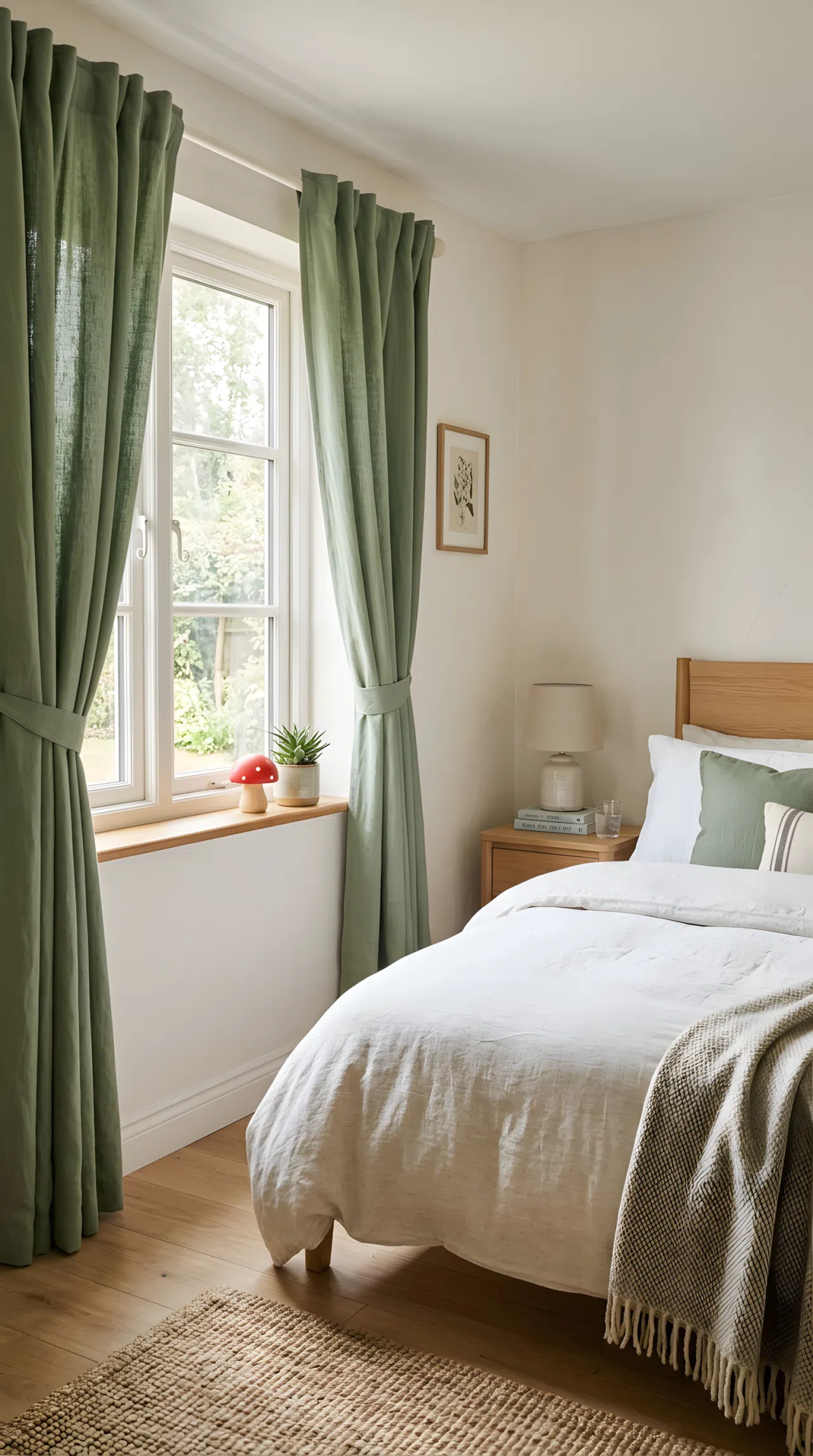
Curtains carry color at eye level and catch light throughout the day, which makes green drapery a subtle way to introduce the shade without altering walls or furniture. Sheer or linen green curtains soften harsh daylight instead of blocking it.
Hang curtains higher than the window frame to elongate the wall visually while the green fabric filters a gentle tint across the room as the sun moves.
20. Romantic Green Bedroom With Soft Floral Textiles
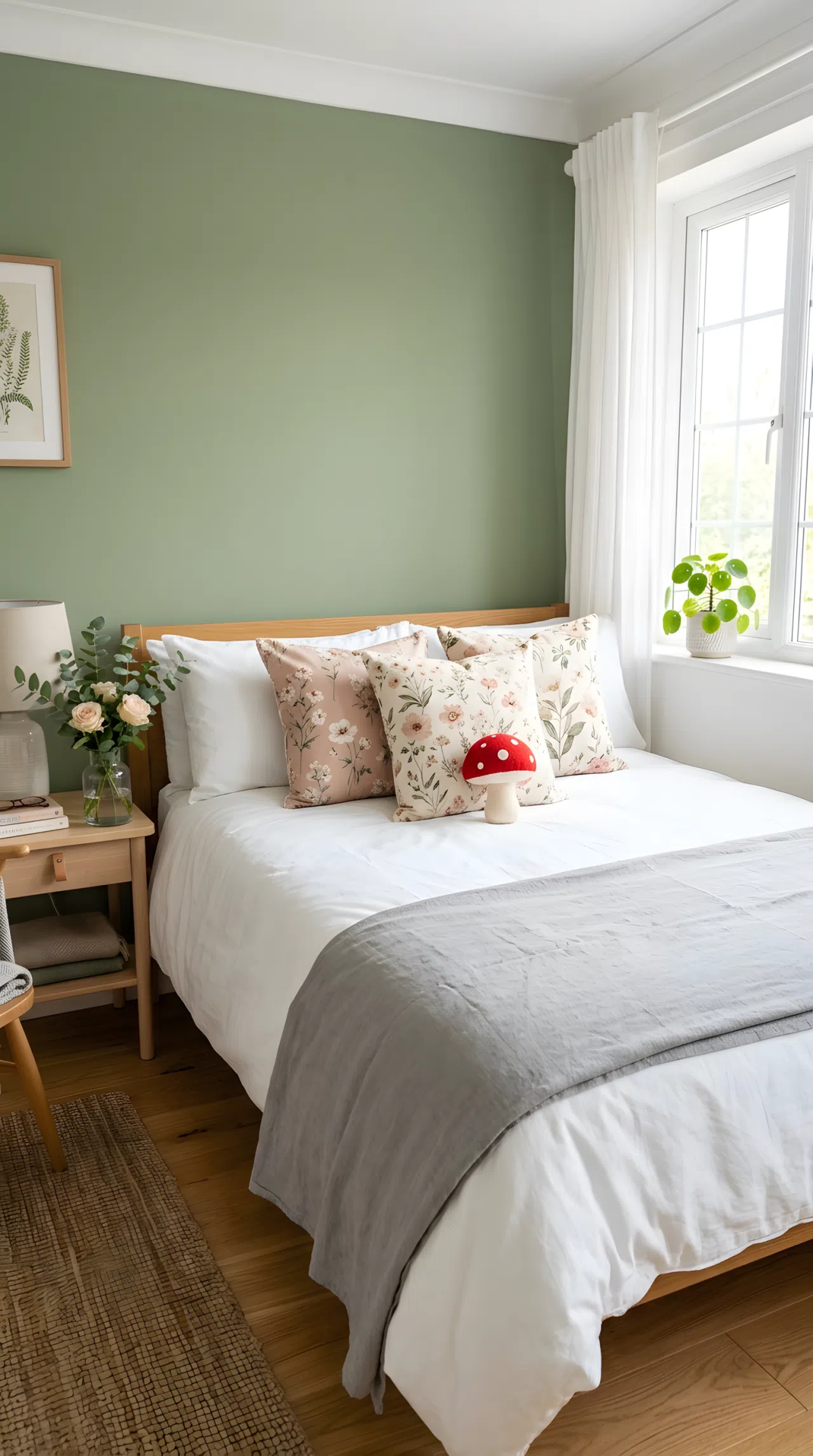
Romantic styling softens green with floral patterns and rounded silhouettes, moving the palette away from structured minimalism toward something dreamier. Small floral prints against a solid green wall keep the look cohesive rather than busy.
Choose a dusty or sage-leaning green as the base so florals in blush or cream stand out gently. This combination suits anyone who wants their bedroom to feel like a quiet garden retreat.
Green does not have to mean picking one perfect shade and hoping for the best. From a single sage accent wall to a fully layered boho retreat, the real work is choosing which mood you want to wake up to every morning.
Whatever direction you land on, keep the palette intentional rather than scattered, and let the room build slowly around that one grounding color. A green bedroom, done with care, becomes the calmest part of your entire home.