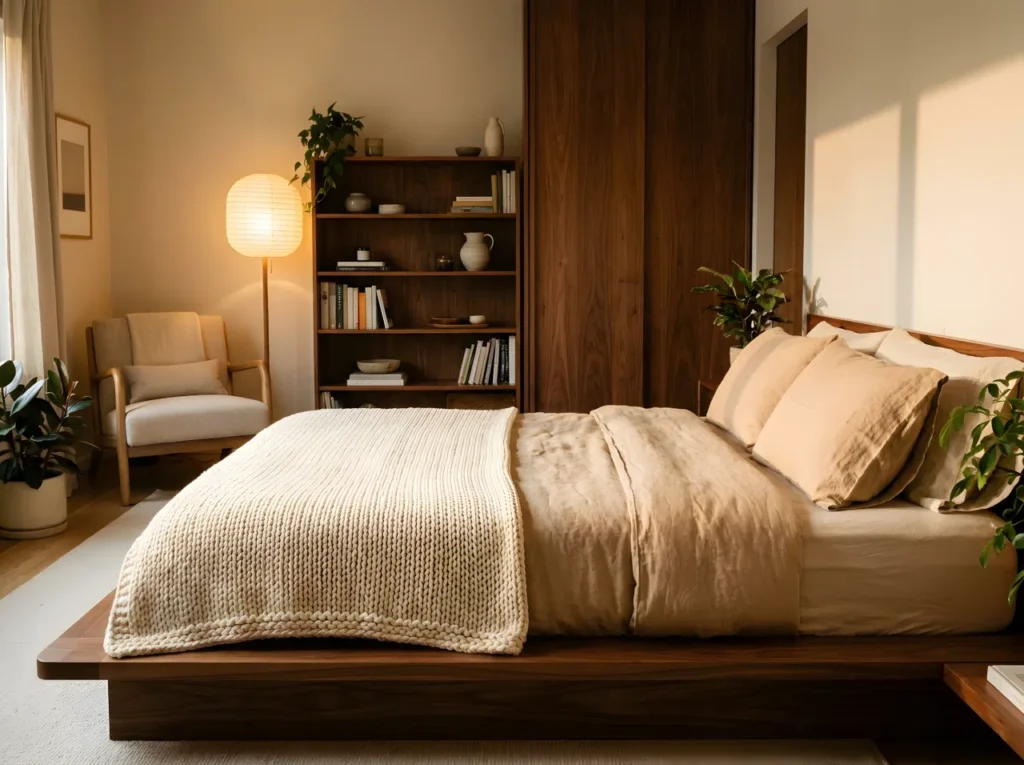
Your bedroom shouldn’t feel like a storage unit with a mattress in the middle. Yet somehow, between the pile of laundry, the tangle of charging cords, and furniture that serves no real purpose, that’s exactly what happens to so many small rooms.
Japandi bedroom ideas fix this without stripping away comfort. This growing style blends Scandinavian warmth with Japanese calm, turning cluttered spaces into serene retreats you’ll actually want to wake up in every single morning.
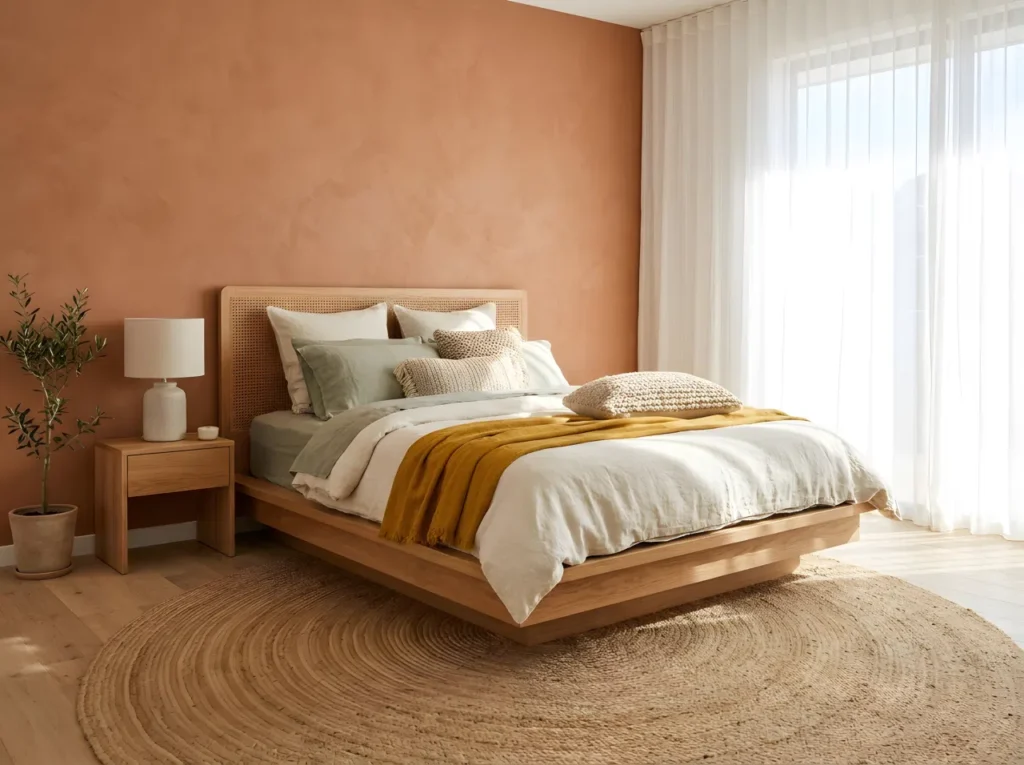
1. Embrace a Wabi-Sabi Wall Finish
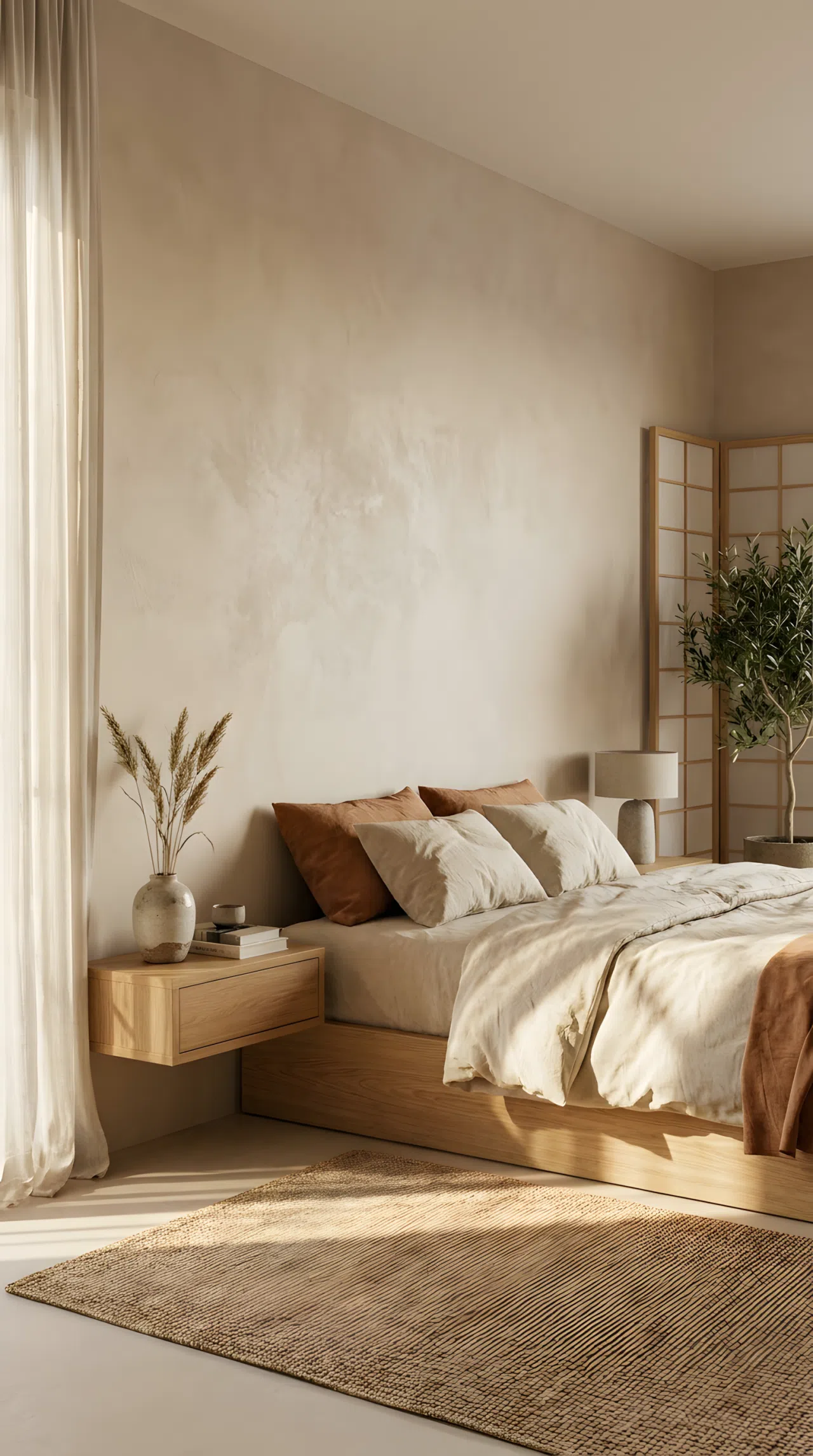
A perfectly smooth white wall can feel sterile, almost like a hospital room. Wabi-sabi textured plaster brings warmth instead, showing subtle imperfections that catch soft light throughout the day.
This finish pairs beautifully with wood furniture and linen textiles, creating a grounded, lived-in feel. It’s a small update that shifts your whole room away from generic and toward genuinely calming.
2. Choose a Low Platform Bed Frame
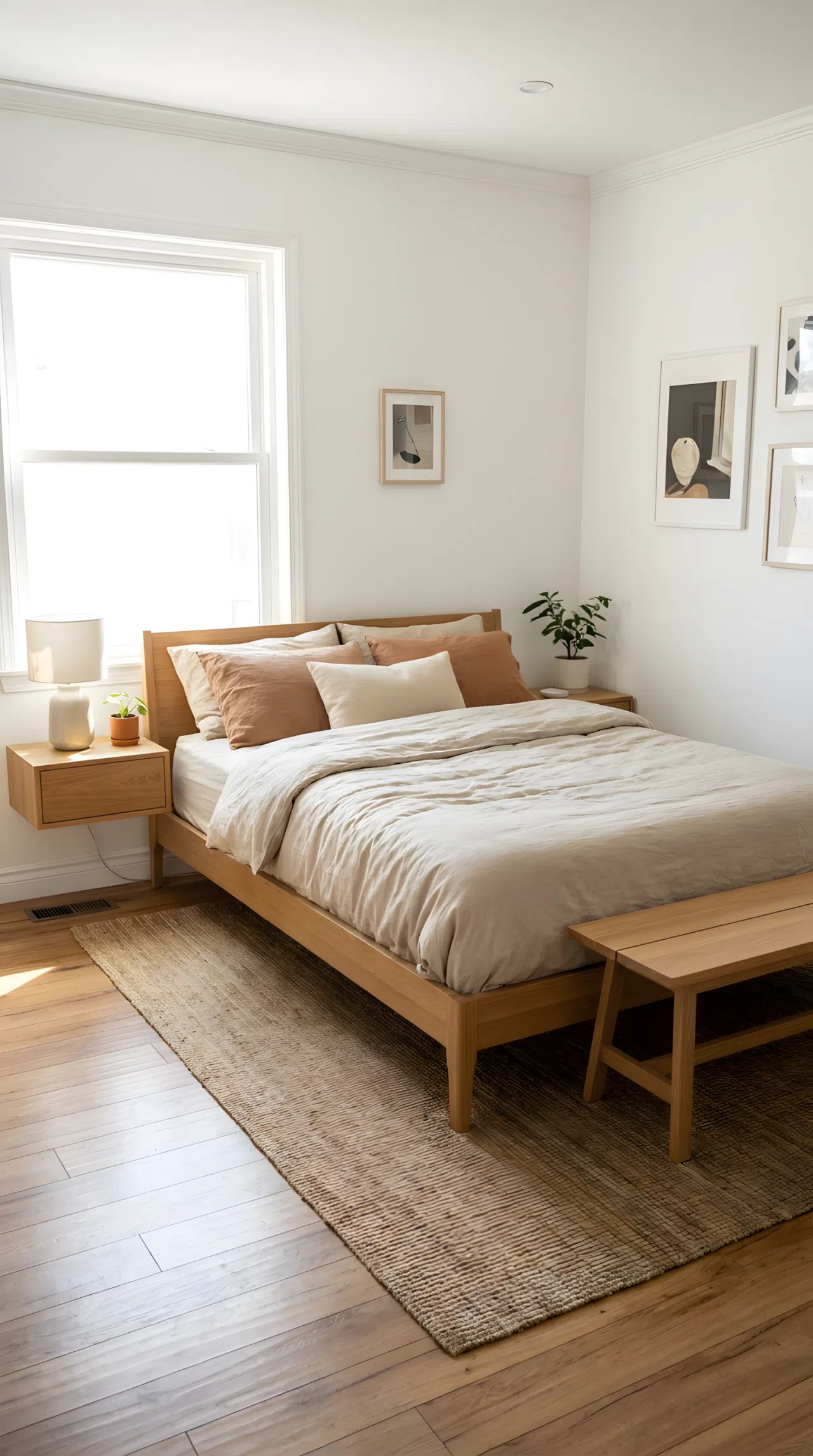
A tall bed frame with a bulky headboard eats up visual space fast in a small room. Switching to a low platform bed instantly opens up the ceiling and makes everything feel roomier.
Pair it with a slim wood frame and no footboard for that grounded Japandi look. This one swap does more for spaciousness than almost any other furniture change you could make.
3. Hunt Thrifted Wood Furniture First
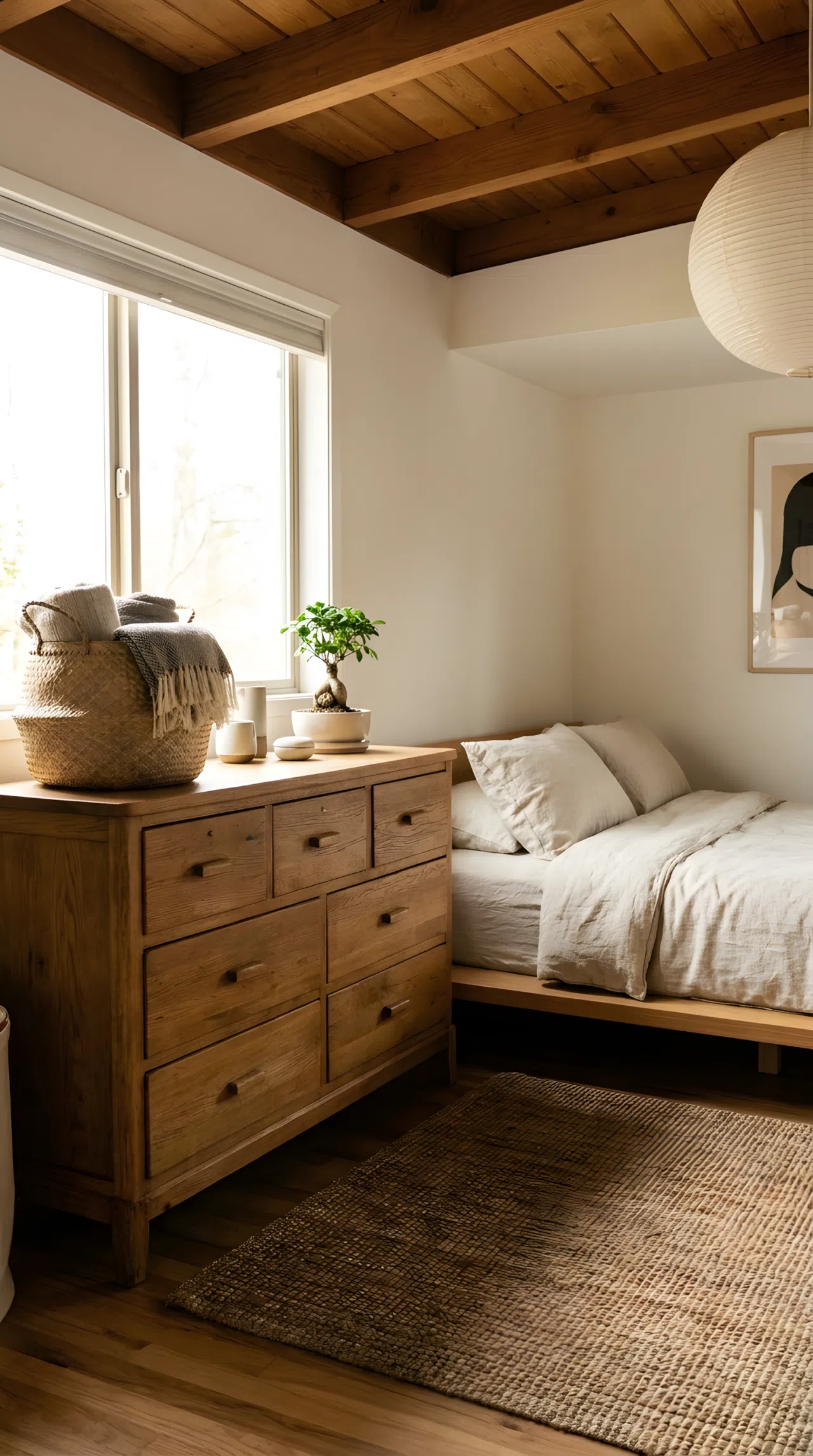
Brand new Japandi furniture can carry a surprisingly steep price tag. Secondhand shops and marketplace listings often hide solid wood nightstands and dressers that just need a light sand and oil finish.
This approach saves money while adding authentic character new furniture can’t fake. A slightly worn edge or faded stain actually fits the Japandi aesthetic better than anything straight from a showroom floor.
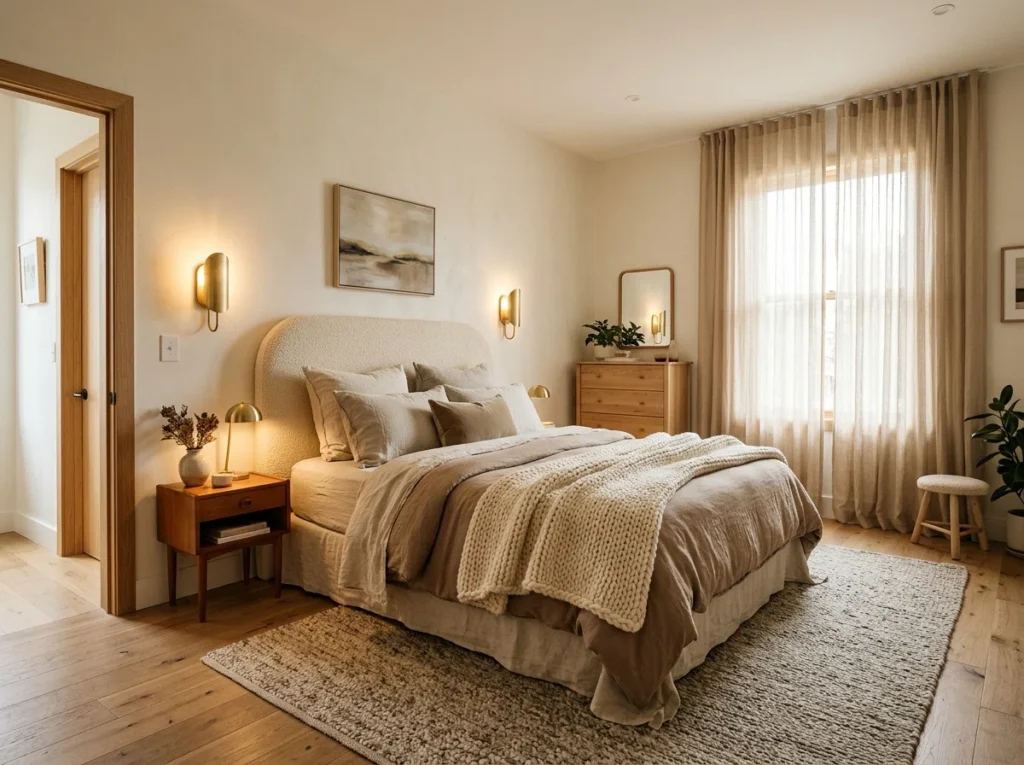
4. Layer a Warm Greige Color Scheme
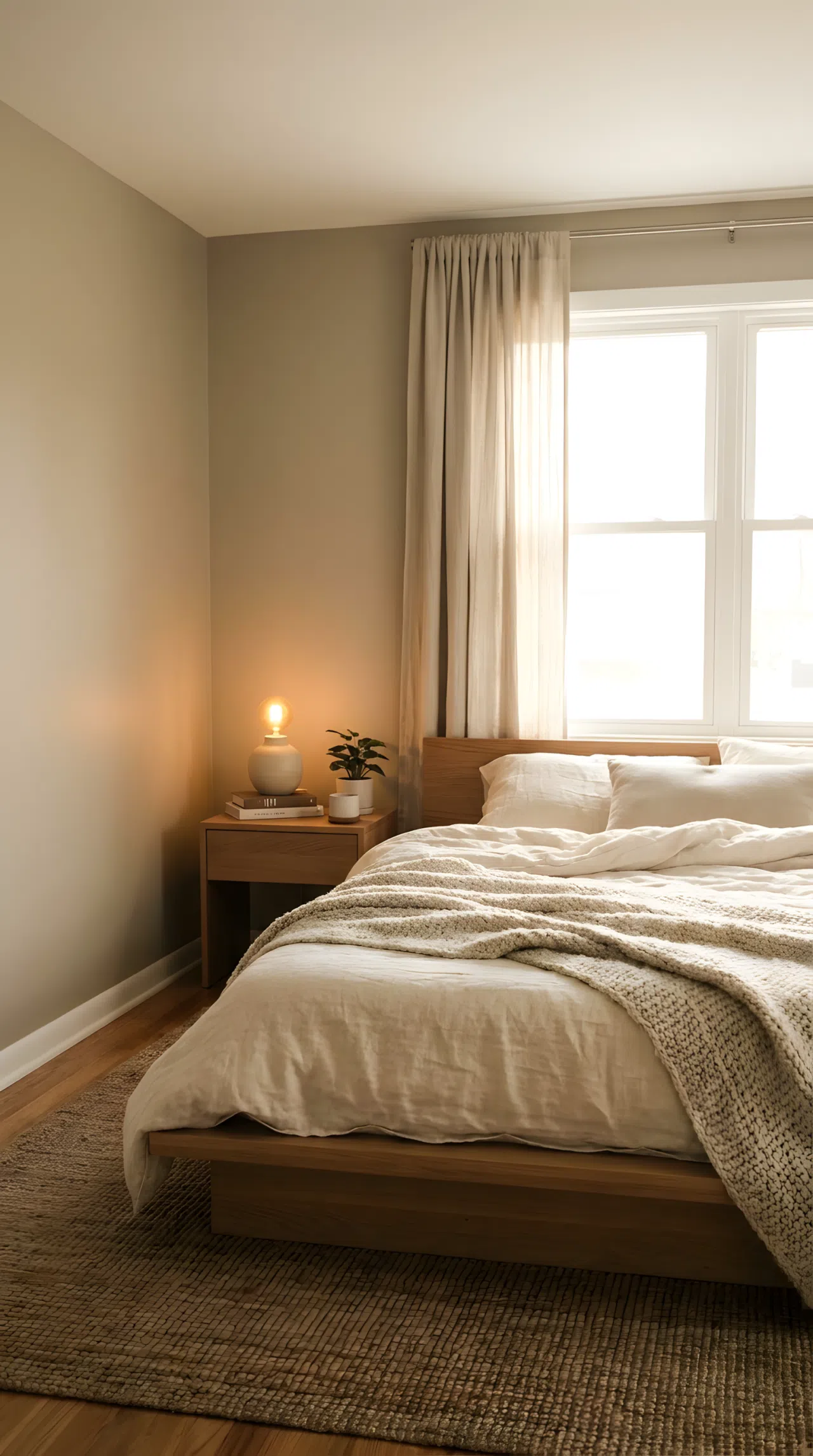
Stark white walls can leave a bedroom feeling flat and cold, especially under weak overhead lighting. A warm greige base ties beige and gray together, creating depth that shifts gently throughout the day.
Layer it with cream bedding and soft brown wood accents for balance. This palette feels calm without being boring, giving your room a quiet richness that pure white simply cannot deliver on its own.
5. Bring In Low-Maintenance Indoor Plants
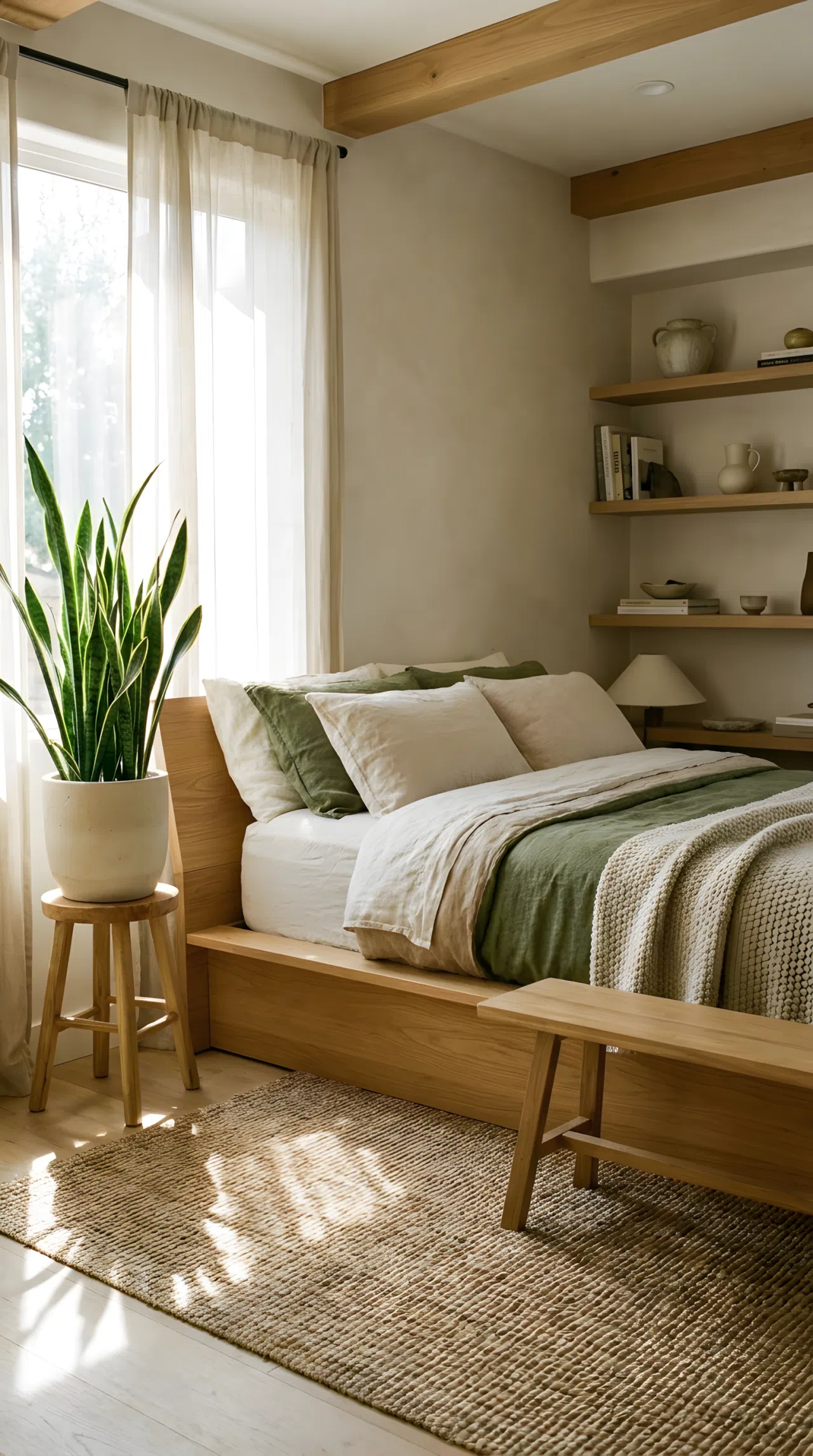
A bedroom without a single living thing in it can feel oddly lifeless, no matter how nicely it’s arranged. One or two low-maintenance plants add movement, texture, and a breath of fresh air.
Choose a snake plant or pothos in a simple ceramic pot near natural light. This small green addition softens hard furniture lines and pulls the whole Japandi look together effortlessly.
6. Go Monochrome With Natural Wood Tones
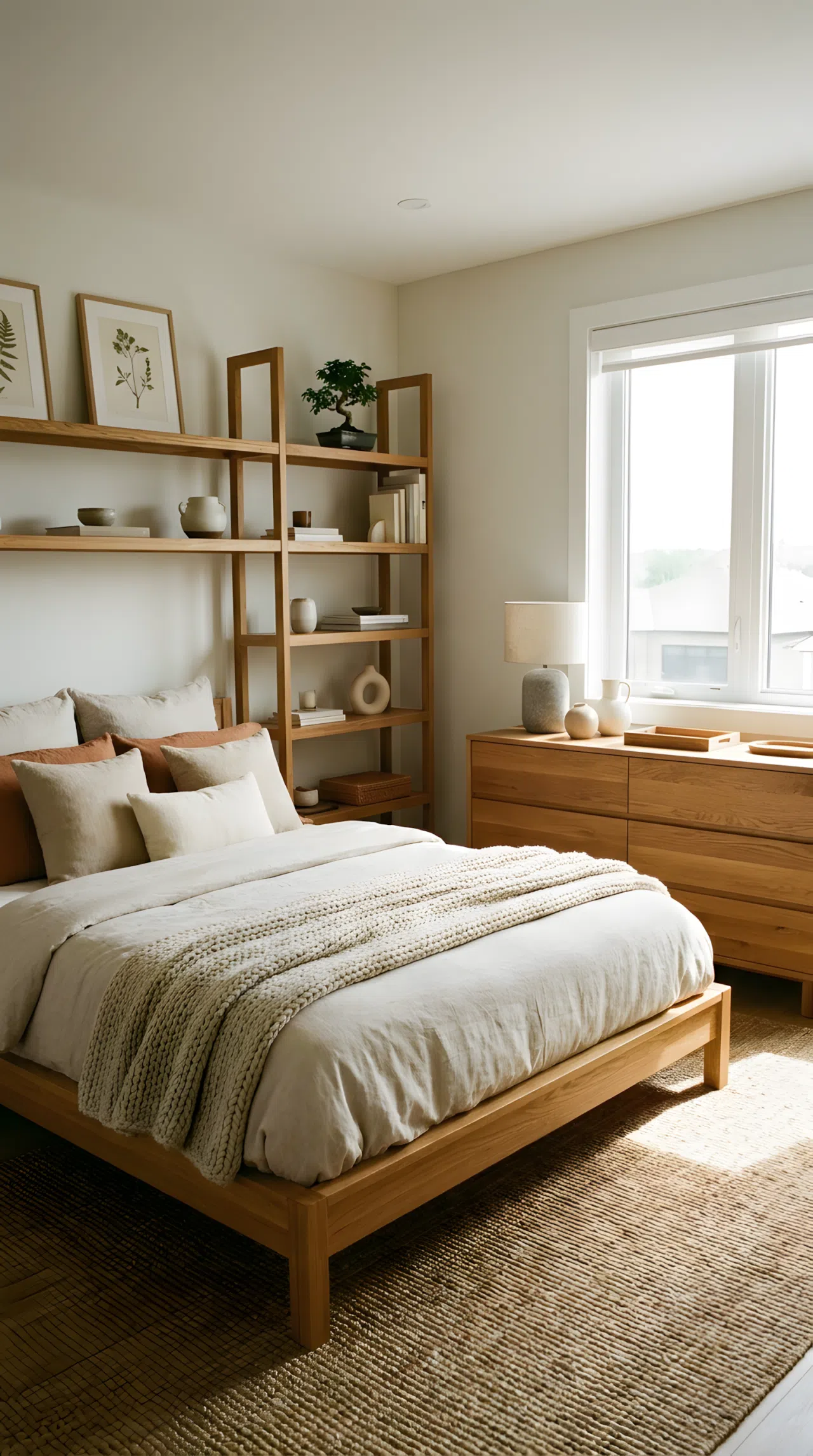
Mixing too many wood finishes in one room creates visual noise, even when each piece looks nice alone. Sticking to a single warm wood tone across your bed, dresser, and shelving unifies everything instantly.
Oak or ash tones work especially well with Japandi’s calm palette. This consistency makes a small bedroom feel intentional rather than pieced together from mismatched furniture over the years.
7. Add Built-In Wall Shelving Over Storage Furniture
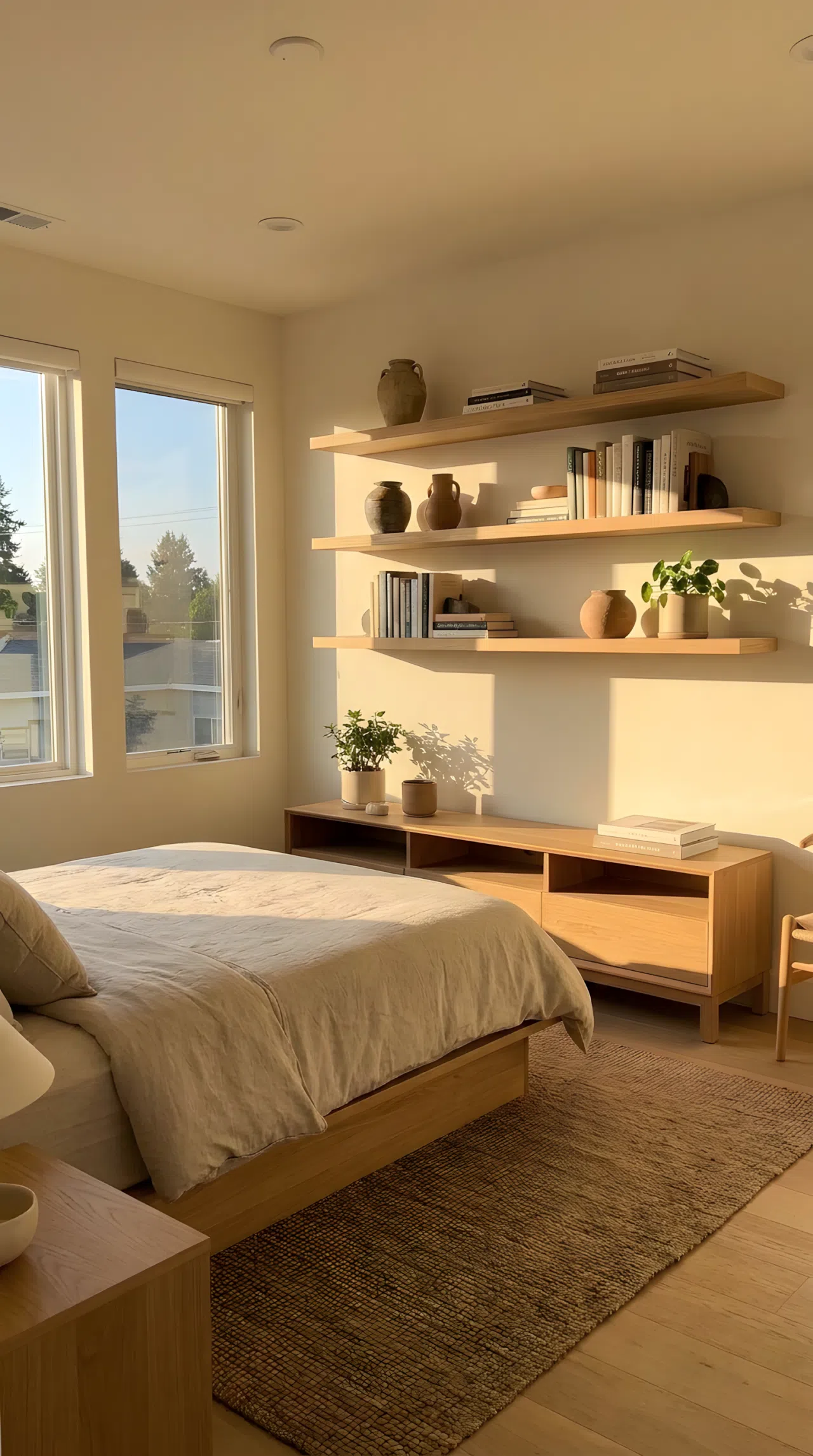
Bulky dressers and bookcases take up floor space you desperately need in a small room. Built-in wall shelving keeps your belongings organized while leaving the floor open and visually calm.
Mount slim floating shelves at staggered heights above a low console. This trick keeps storage functional without the boxy furniture footprint that so often overwhelms compact bedrooms.
8. Make Your Own Linen Throw Pillow Covers
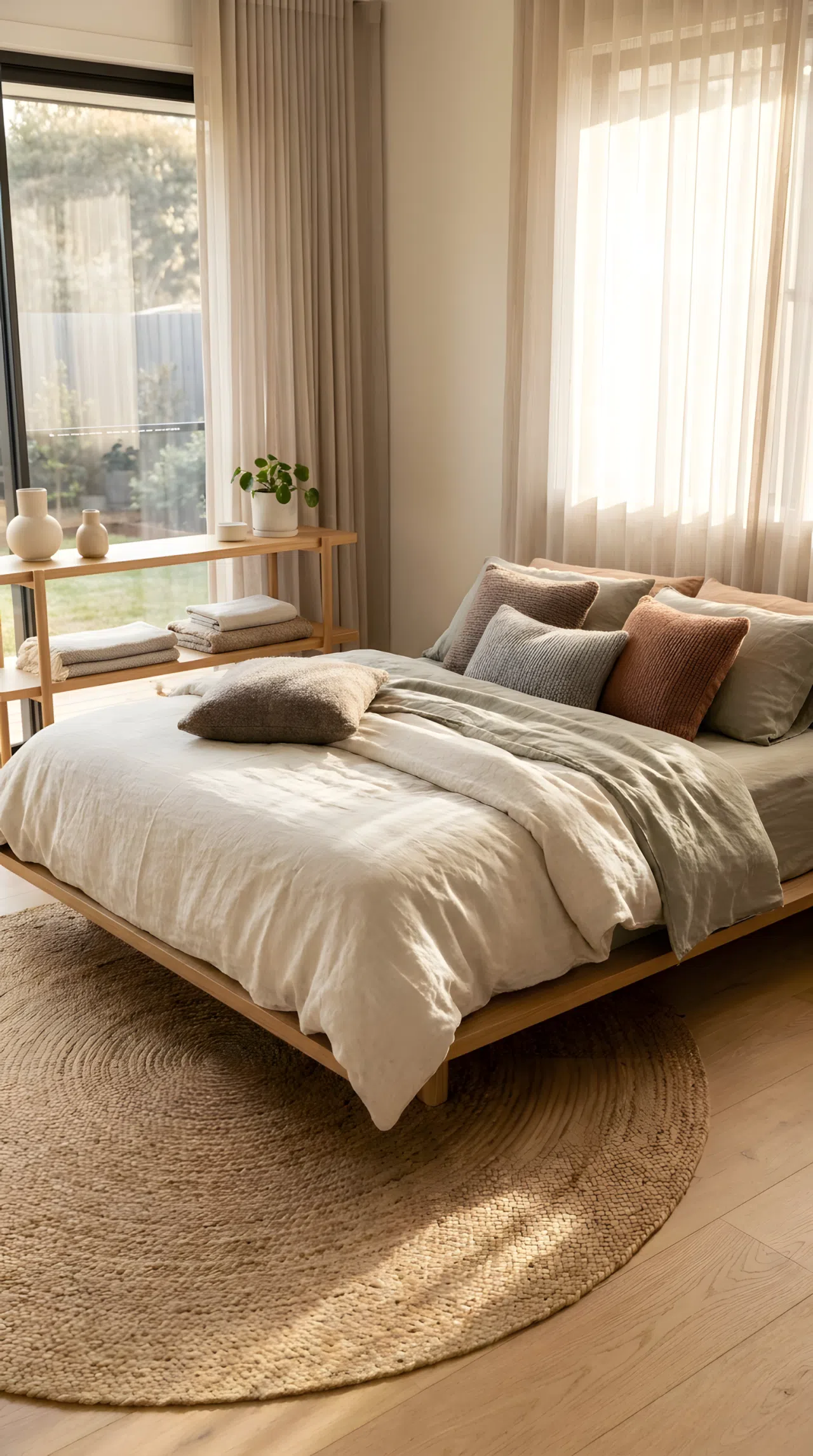
Designer linen pillow covers can cost more than the pillow insert itself. Sewing your own from affordable linen fabric gets you the same textured, relaxed look for a fraction of the price.
Stick to neutral tones and simple envelope closures for an easy beginner project. It’s a weekend task that instantly upgrades your bed without touching your furniture budget at all.
9. Anchor the Room With a Charcoal Accent Wall
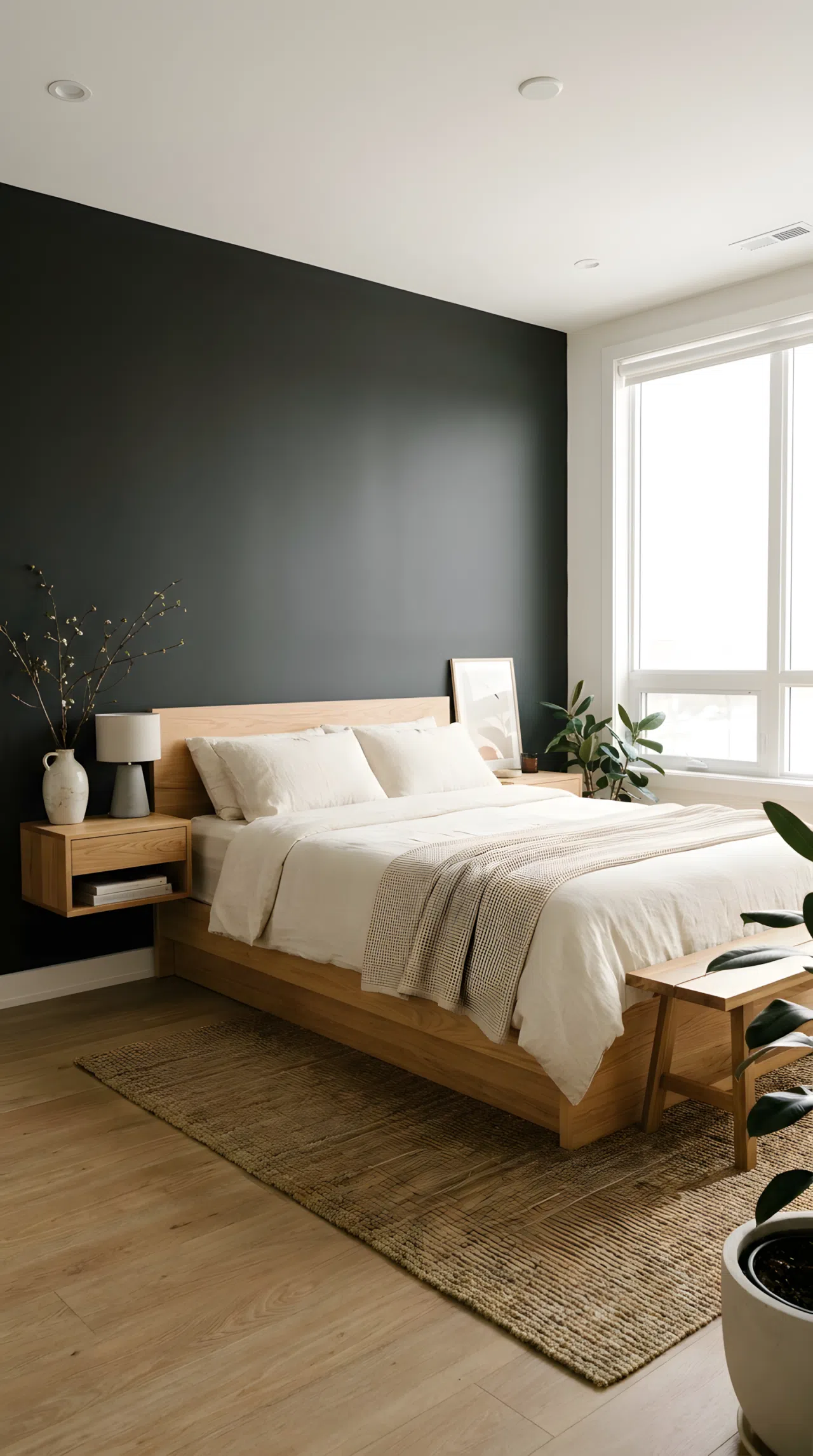
An all-neutral bedroom can start to feel flat after a while, lacking any real focal point. A single charcoal accent wall behind the bed adds depth and drama without overwhelming the space.
Balance the darker tone with light wood furniture and cream textiles nearby. This contrast is what gives Japandi rooms their signature calm-but-grounded feeling that neutral tones alone can’t achieve.
10. Pair Raw Stone Decor With Warm Wood Surfaces
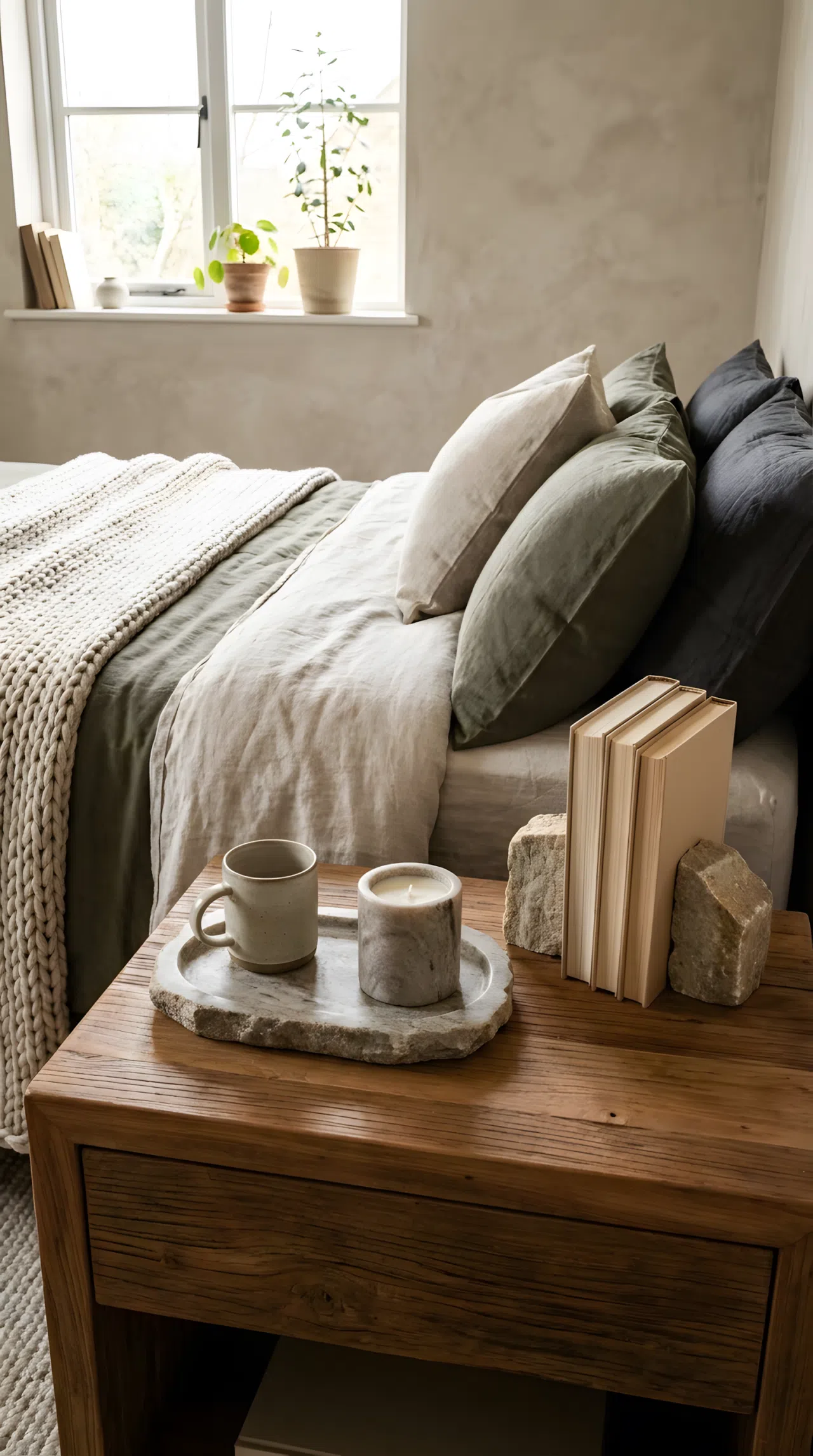
Wood alone can feel one-note without another natural material to contrast it. Adding a raw stone vase, tray, or bookend introduces texture and grounds the room in nature.
Place stone pieces on wood nightstands or shelves for balance. This pairing echoes Japandi’s core philosophy, blending natural materials so the room feels calm, tactile, and quietly sophisticated.
11. Choose a Sunken Futon-Style Bed Setup
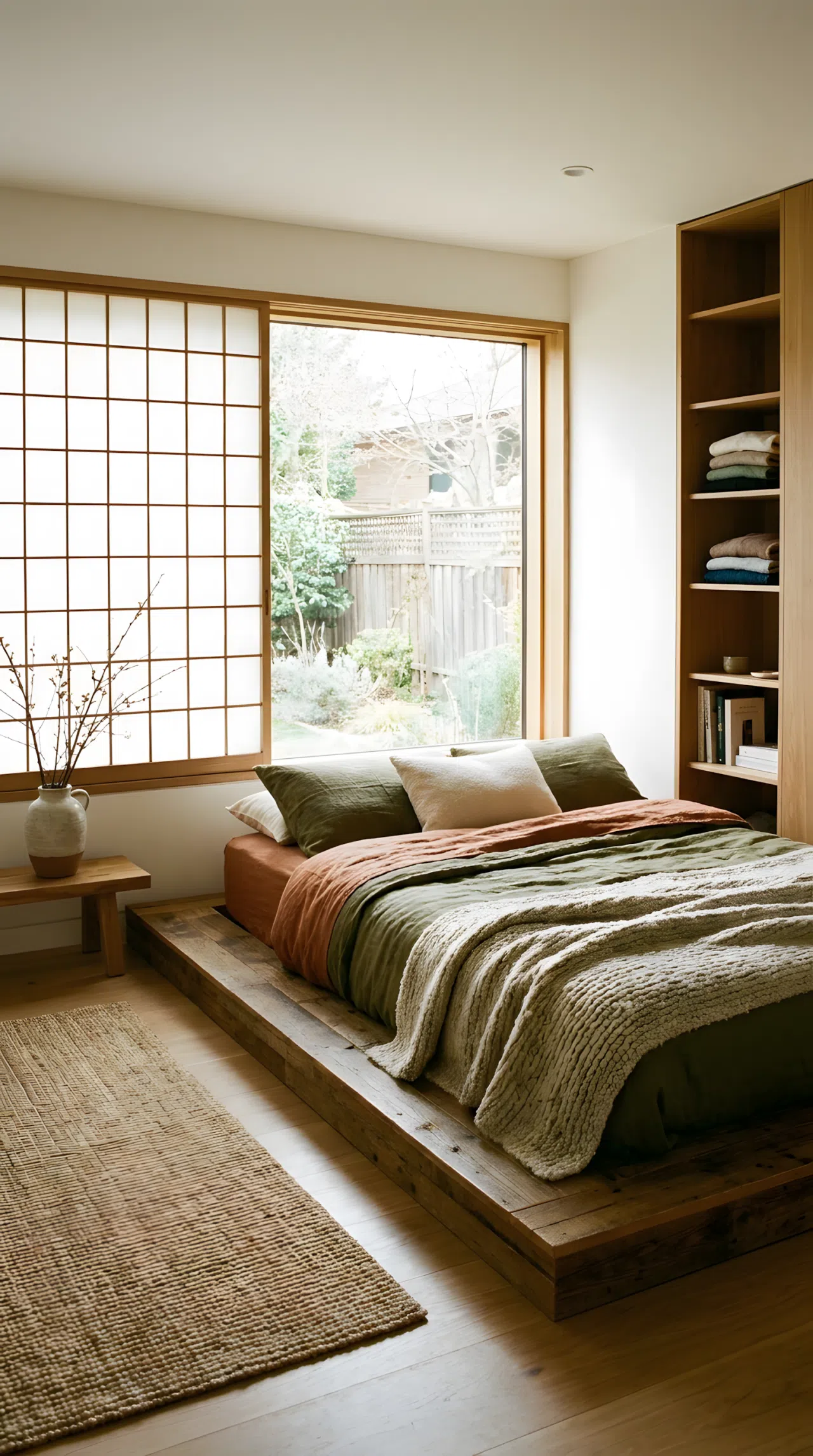
Traditional bed frames can feel bulky in a bedroom meant to feel airy and open. A futon-style setup sits directly on a low wood base, keeping the silhouette flat and unobtrusive against the rest of the room.
Add a thick, supportive mattress topper for comfort without sacrificing the look. This setup makes even a tiny room feel expansive, since your eye travels further across open floor space.
12. Repurpose Old Crates as Nightstands
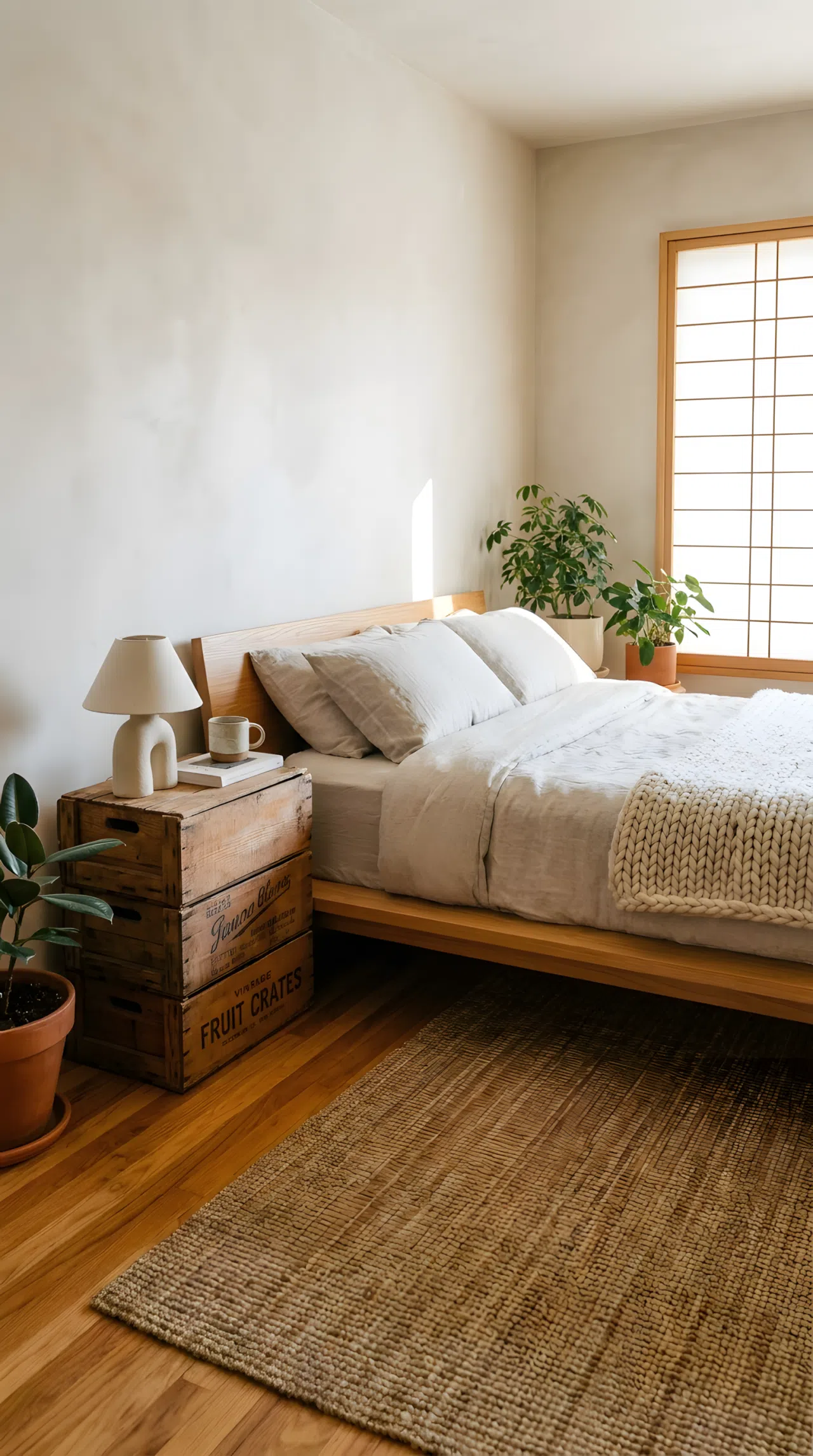
Matching nightstand sets from furniture stores rarely come cheap, especially in solid wood. Stacked wooden crates, sanded smooth and left unfinished, make a free or low-cost alternative with genuine rustic charm.
Turn one crate on its side for a small shelf, or stack two for extra height. This upcycled trick fits the Japandi ethos of valuing function and natural material over polished retail furniture.
13. Soften the Room With a Sage Green Headboard Wall
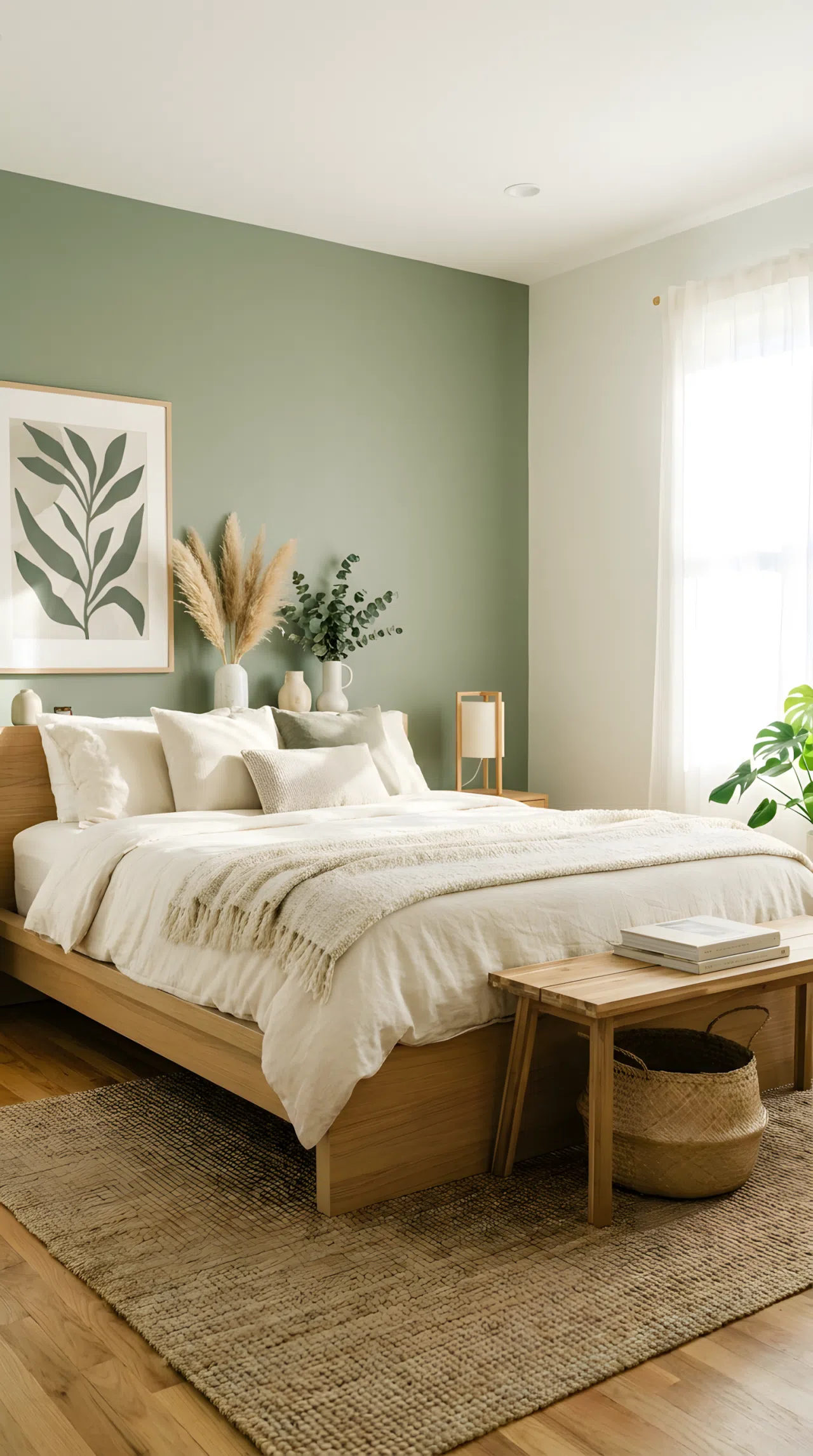
An all-neutral room sometimes needs one gentle pop of color to avoid feeling washed out. A muted sage green wall behind the headboard brings in nature’s calm without disrupting the room’s quiet mood.
Keep the rest of the palette neutral so the green stays the star. This soft, earthy hue pairs naturally with wood tones and linen textures already common throughout Japandi spaces.
14. Layer a Jute or Sisal Area Rug
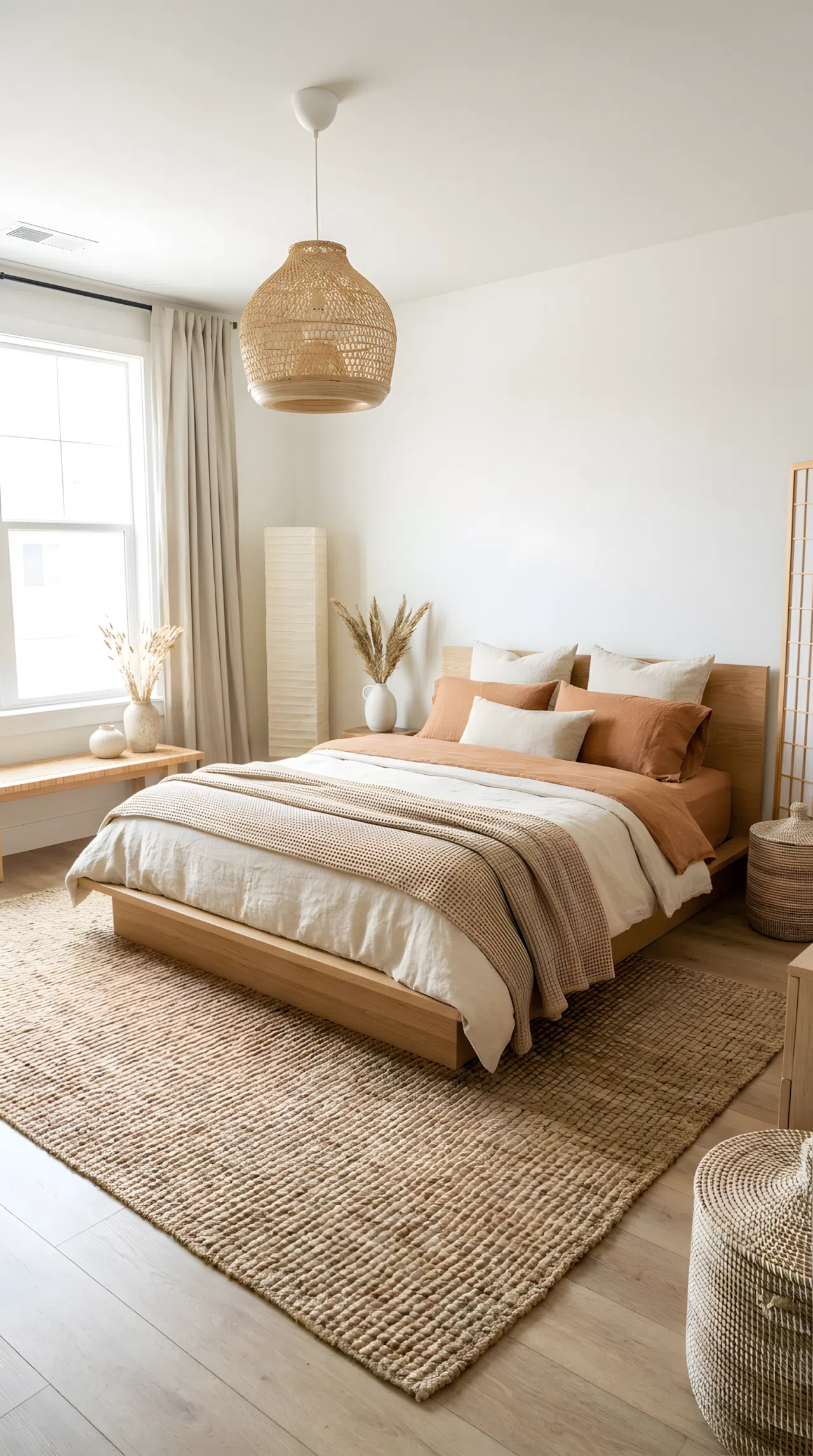
Hard flooring alone can leave a bedroom feeling cold underfoot and visually bare. A jute or sisal rug adds warmth and natural texture without introducing bright colors or busy patterns into the space.
Place it centered under the bed so it extends slightly on each side. This grounding layer ties the wood furniture and linen textiles together into one cohesive, textural story.
15. Grow a Small Bonsai or Potted Bamboo Accent
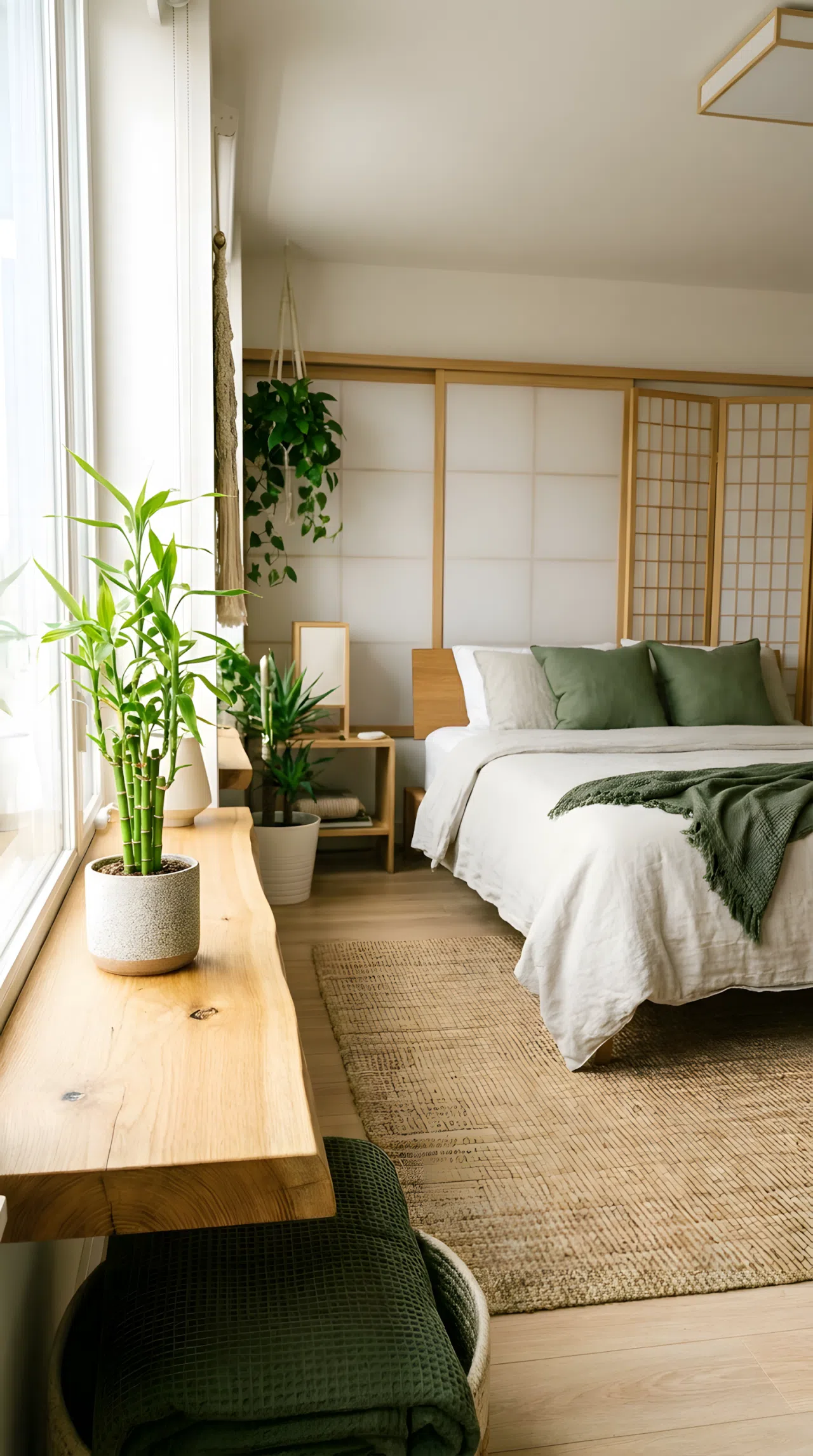
Standard houseplants are lovely, but a bonsai or potted bamboo brings a more distinctly Japanese touch to the room. Its sculptural shape adds quiet visual interest without competing with your existing decor.
Place it on a windowsill or low shelf where it catches natural light. This small living detail deepens the room’s connection to nature, a core value at the heart of Japandi design.
Japandi bedroom ideas prove that calm and character can coexist without competing for attention. From low platform beds to thrifted wood finds, every choice here leans into function first, letting beauty follow naturally from honest materials.
Start small. Pick one or two ideas that fit your space and budget, then build outward. A Japandi bedroom isn’t built overnight, but each thoughtful layer brings you closer to a room that truly feels like rest.